Ever tried to count seven weeks ahead on your fingers and lost track around week four? You’re not alone. Whether you’re planning a wedding, tracking a due date, or setting a deadline for a work project, knowing the exact date can save you from a scheduling headache later. Here’s the quick answer, plus everything else you might need to plan around it.
The date
7
weeks
from today is
Monday,
November 30, 2026
.
How Much Time Is
7
weeks?
7
Weeks
49
Days
1176
Hours
1.61
Approx. Months
The Quick Answer
Seven weeks from today (Friday, August 21, 2026) is Thursday, October 9, 2026.
That’s because seven weeks always equals exactly 49 days, and 49 is a multiple of 7. So no matter what day you start counting from, the date seven weeks out lands on that same weekday. Start on a Thursday, land on a Thursday. Start on a Sunday, land on a Sunday.
If you’re reading this on a different day, the process is the same: count forward 49 days from today’s date, and you’ll land on the answer.
Why the Weekday Never Changes
This trips people up more than it should. A week is exactly seven days, no more and no less. So every time you move forward by one full week, you end up on the same weekday you started with, just a week later.
Seven weeks is simply seven of those jumps stacked together. Since each jump preserves the weekday, so does the total.
1 week from Thursday → Thursday
2 weeks from Thursday → Thursday
7 weeks from Thursday → Thursday
This only holds when you’re counting in whole weeks. If someone asks “49 days from today” instead, the math is identical, since 49 divided by 7 is exactly 7 with nothing left over. But if you were counting something like 50 days, you’d land on a Friday instead, because that extra day shifts you forward by one.
How Many Days, Hours, and Minutes Is That?
Sometimes you need more than just a date. If you’re working with a countdown timer or a project tracker or are just curious, here are seven weeks broken down into smaller units.
Unit
Amount
Days
49
Hours
1,176
Minutes
70,560
Seconds
4,233,600
Keep in mind these numbers assume standard 24-hour days. If your seven-week window crosses a daylight saving time change, the actual hour count will be off by one hour in either direction, depending on which way the clocks move. It’s a small detail, but it matters if you’re building something that tracks exact elapsed time rather than just calendar dates.
How to Calculate 7 Weeks From Today Manually
You don’t need a calculator app for this. Here are two simple ways to do it by hand.
Method 1: Count by Weeks on a Calendar
Grab a physical or digital calendar and find today’s date. Then move down exactly seven rows, since each row on a standard month view represents one week. Wherever you land, that’s your answer. This works well if you’re a visual thinker, and it also makes it easy to spot which month you’ll cross into along the way.
Example 1: August 20, 2026
Suppose today is Thursday, August 20, 2026. Find August 20 on your calendar, then move forward one week at a time:
1 week: August 27, 2026
2 weeks: September 3, 2026
3 weeks: September 10, 2026
4 weeks: September 17, 2026
5 weeks: September 24, 2026
6 weeks: October 1, 2026
7 weeks:October 8, 2026
So, 7 weeks from August 20, 2026 is October 8, 2026.
Example 2: September 1, 2026
Now suppose your starting date is Tuesday, September 1, 2026. Count forward by one full week each time:
1 week: September 8, 2026
2 weeks: September 15, 2026
3 weeks: September 22, 2026
4 weeks: September 29, 2026
5 weeks: October 6, 2026
6 weeks: October 13, 2026
7 weeks:October 20, 2026
So, 7 weeks from September 1, 2026 is October 20, 2026.
Tip: Calendar par har baar exactly 7 days forward move karein. Is tarah aap bina calculator ke 7 weeks from any date easily find kar sakte hain.
Method 2: Add 49 Days Directly
If you’d rather work with numbers than a calendar grid, just add 49 to today’s date and adjust for month lengths as you go.
Here’s a worked example using August 20, 2026:
August has 31 days, so from August 20 to August 31 is 11 days.
That leaves 38 days remaining (49 minus 11).
September has 30 days, so subtract those: 38 minus 30 leaves 8 days.
Those final 8 days land you in October, on October 8.
So August 20, 2026, plus 49 days, gives you October 8, 2026. This method takes a little more arithmetic, but it’s fast once you get used to it, and it doesn’t depend on having a calendar in front of you.
Using an Online Date Calculator
If you’d rather skip the math altogether, a date calculator does the work instantly. Type in a start date, tell it to add seven weeks (or 49 days), and it returns the exact result. Most of these tools also account for leap years automatically, which matters if your seven-week window happens to include February 29 in a leap year.
The main advantage of a calculator over manual counting is speed and accuracy, especially if you’re doing this repeatedly for different dates, like scheduling a series of weekly check-ins or milestones.
Real-Life Reasons People Track a Date Seven Weeks Out
Seven weeks isn’t a random stretch of time. It shows up often in real planning situations because it’s long enough to matter but short enough to stay manageable.
Event planning: Weddings, baby showers, and birthday parties often need a seven-week runway for invitations, vendor bookings, or final headcounts.
Work and business deadlines: Marketing campaigns, product launches, and employee training programs frequently run on seven-week cycles because it maps cleanly onto a quarter split into smaller chunks.
Personal goals: Fitness challenges, habit-building programs, and short courses often use a seven-week structure since it’s roughly the length of time it takes for a new habit to start feeling automatic.
Medical and health timelines: Some prenatal milestones, recovery periods, and treatment schedules are tracked in weeks rather than months, making a “weeks from today” calculation genuinely useful rather than just a curiosity.
Academic planning: Semester checkpoints, assignment due dates, and exam prep schedules often get mapped out in weekly increments.
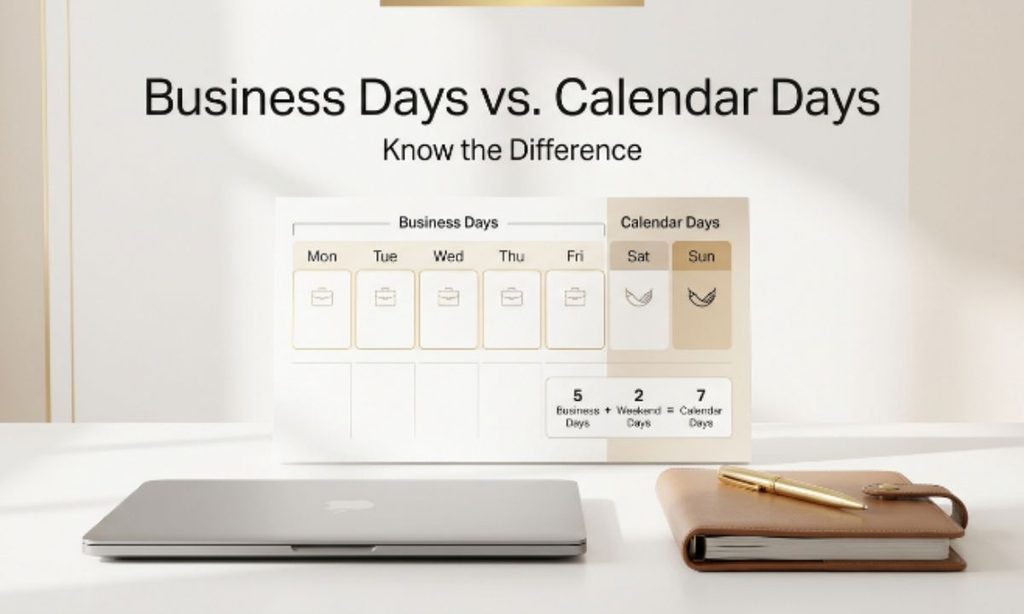
Business Days vs. Calendar Days: A Detail Worth Knowing
Here’s something that trips people up if they’re not careful: seven weeks from today gives you a calendar date, not a count of working days. If you’re planning around business operations, weekends and holidays inside that window don’t get skipped.
For example, seven weeks contains exactly 35 weekdays and 14 weekend days, assuming no holidays fall in between. If your deadline actually needs to be measured in business days rather than calendar days, you’ll need to add extra time to account for weekends or use a business-day-specific calculator instead of a standard one.
This distinction matters most in professional settings, like calculating a project deadline or a payment due date, where “seven weeks” might informally mean seven weeks of actual working time rather than seven weeks on the calendar.
Examples: 7 Weeks From Different Starting Dates
To make the pattern clearer, here are a few more examples showing how the same-weekday rule holds up no matter where you start.
Starting Date
Weekday
7 Weeks Later
Weekday
August 20, 2026
Thursday
October 8, 2026
Thursday
September 1, 2026
Tuesday
October 20, 2026
Tuesday
December 15, 2026
Tuesday
February 2, 2027
Tuesday
That last example is worth pointing out. Even when your seven-week window crosses over a new year, the math doesn’t change. You still just add 49 days and let the calendar handle the rest.
7 Weeks From Today vs. 7 Weeks Ago
These two calculations use the same logic, just pointed in opposite directions.
To find a date seven weeks from today, you add 49 days to today’s date. To find a date seven weeks ago, you subtract 49 days instead. Both preserve the weekday for the same reason: seven days times seven weeks is always a clean multiple of seven.
So if seven weeks from today is Thursday, October 8, 2026, then seven weeks ago from today would have been Thursday, July 2, 2026.
This is useful if you’re working backward, like figuring out when a seven-week program actually started based on today’s date, or checking how long ago an event took place.
Tips for Planning With a 7-Week Timeline
Knowing the end date is only half the job. Here’s how to actually use that seven-week window well.
Break the timeline into smaller weekly goals rather than treating it as one long stretch.
Mark the halfway point (around week 3 or 4) as a check-in to see if you’re on track.
Set calendar reminders a few days before your final deadline, not on the deadline itself, so you have buffer time.
If your plan depends on business days, map out which weeks contain holidays that might shift your actual working time.
Review progress weekly instead of waiting until the end, since small course corrections are easier than a last-minute scramble.
Frequently Asked Questions
How many days are in 7 weeks?
Seven weeks equals exactly 49 days.
What day of the week will it be in 7 weeks?
It will be the same weekday as today, since 49 days is an exact multiple of 7.
What is the date after 49 days from today?
It’s the same as the date seven weeks from today, since 49 days and 7 weeks are identical time spans.
Does the 7-week calculation account for leap years?
Yes, as long as you’re counting actual calendar dates, February 29 in a leap year is automatically included if it falls within the range.
Is 7 weeks from today different from 7 weeks from now?
No, both phrases mean the same thing and produce the same date.
Conclusion
Seven weeks from today comes down to one simple fact: 49 days, same weekday, no surprises. Whether you count it manually on a calendar, do the month-by-month math, or let an online tool handle it for you, the answer stays consistent.
What matters more than the date itself is what you do with the time in between, so use that seven-week window to break your goal into weekly steps, set a few check-in points, and give yourself enough buffer before the final deadline arrives.
I’m a passionate pet writer who loves sharing practical tips, trusted advice, and heartwarming stories about cats, dogs, and other beloved companions. Through PetCaffine.com, I help pet lovers better understand their furry friends with easy-to-read articles on pet care, nutrition, behavior, health, and everyday life.








1 thought on “What Date Is 7 Weeks From Today?”