James Quincey and Pedro Pizarro: Careers, Pay and Connections
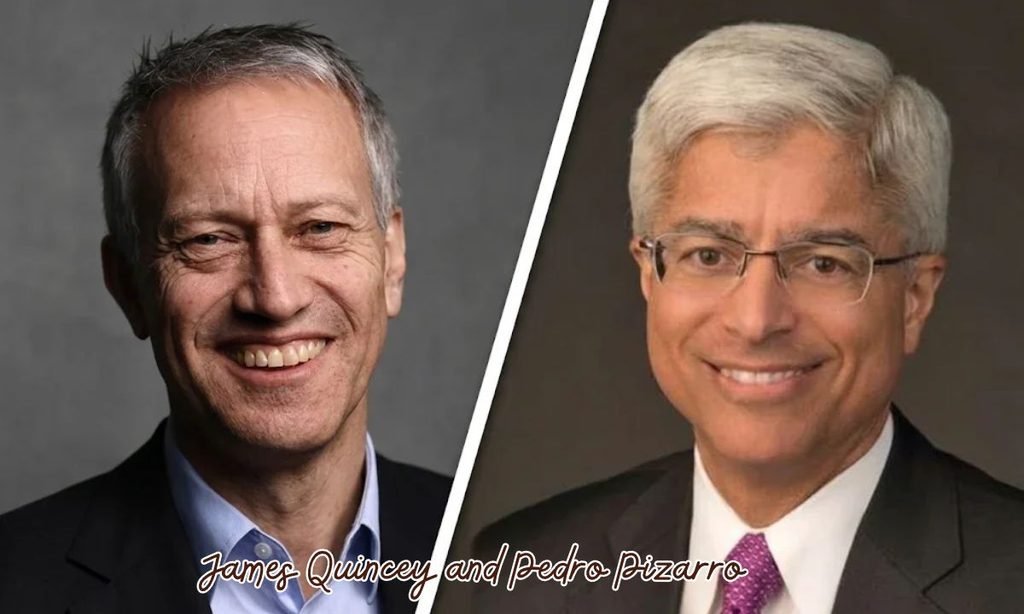
James Quincey and Pedro Pizarro lead two very different American giants. Quincey built his career at Coca-Cola. Pizarro built his at Edison International. People often search for the two names together and wonder if they are connected.
They are not business partners, and their companies share no joint venture. What they share is a similar path: consulting roots and decades of company service. This guide compares their careers, pay and leadership styles in plain language.
$1.2 million (executive chairman, from March 31, 2026)
Not the same as total pay (see below)
Reported 2025 total pay
About $31 million
About $16.6 million
Direct business partnership
None
None
Who Are James Quincey and Pedro Pizarro?
Quincey is the executive chairman of Coca-Cola. He spent years as CEO before handing that job to Henrique Braun. Pizarro is the president and CEO of Edison International, the parent company of Southern California Edison.
They work in different worlds. One sells drinks in more than 200 countries. The other keeps the lights on for millions of Californians.
That contrast makes the pairing interesting. It lets us ask a simple question: what does good leadership look like when the stakes change?
Current Roles at a Glance
Quincey: Executive chairman of Coca-Cola. He guides strategy and the board, while Braun runs daily operations as CEO.
Pizarro: President and CEO of Edison International. He answers to the board and to state regulators.
Key difference: Coca-Cola answers to shoppers. Edison answers to shoppers, regulators and public safety rules all at once.
Are James Quincey and Pedro Pizarro Connected?
Short answer: not in any way that matters for business. There is no joint company, no shared board seat and no partnership between them. Their firms do not compete, and they do not supply each other.
Their paths look alike on paper. Both started in consulting. Both rose inside one company for decades. Both reached the top job after years of operational work. That is a pattern, not a relationship. Two leaders can follow the same road without ever walking it together.
Documented Overlap and Unverified Claims
It helps to sort any claim about a link into four levels. Each level means something different.
Partnership: Two people run a project or company together. This does not exist here.
Shared board: Both sit on the same board. This does not exist here.
Shared event: Both attend the same conference. This tells us little about a bond.
Shared signature: Both sign the same public letter. This shows a shared position, not a friendship.
So when someone asks about a business relationship between James Quincey and Pedro Pizarro, the honest answer is simple. Their link is that of two peers who run big companies. Nothing more has been shown.
James Quincey’s Career at Coca-Cola
Quincey joined Coca-Cola in 1996. He climbed through regional and global roles and became CEO in 2017. He later added the chairman title and then moved to executive chairman in 2026.
His story is one of steady promotion. He did not arrive as an outsider with a rescue plan. He learned the system from the inside.
That inside view shaped his big bet: Coca-Cola should be a total beverage company, not just a cola company.
Education, Consulting and Career Milestones
Quincey studied at the University of Liverpool. He then worked in strategy consulting before moving to Coca-Cola.
Key milestones include:
1996: Joins Coca-Cola.
2017: Becomes CEO.
2019: Takes on the chairman role as well.
2026: Moves to executive chairman, with Henrique Braun stepping in as CEO.
Achievements, Trade-Offs and the 2026 Handover
Under Quincey, Coca-Cola pushed into water, tea, coffee, sports drinks and lower-sugar and no-sugar options. The company also worked closely with its bottling partners to move faster on new products.
The trade-off is real. A bigger portfolio brings more complexity. More brands mean more bets, and not every bet pays off.
The 2026 handover is a classic succession move. The outgoing CEO stays close as chair while a new leader takes the daily controls. It keeps knowledge in the building and reduces shocks for investors.
Executive Chairman Versus CEO
People mix up these titles all the time. The difference is simple.
CEO: Runs the business each day and reports to the board.
Executive chairman: Leads the board and stays involved in strategy and major decisions, but does not run daily operations.
Quincey now holds the second role. He is no longer the person running Coca-Cola day to day, so he should not be called its current CEO.
Pizarro joined Edison in 1999. He moved through several leadership roles, including time running Southern California Edison, the utility arm. He became CEO of Edison International in 2016.
His career is a story of infrastructure. Poles, wires, substations and wildfire risk fill his daily agenda. A mistake here is not a bad quarter. It can be a safety crisis.
That changes how a leader thinks. Speed matters less than reliability.
Education, Consulting and Leadership Roles
Pizarro studied at Harvard University and Caltech. He also has a consulting background, which gave him a structured way to solve complex problems.
His path looks like this:
Consulting: Early analytical and strategy work.
Edison, 1999: Joins the company and builds operating experience.
Utility leadership: Runs Southern California Edison.
2016: Becomes CEO of Edison International.
Grid Strategy, Safety and Accountability
Edison’s strategy rests on four themes: grid reliability, wildfire mitigation, grid modernization and the clean-energy transition. Customer affordability sits on top of all four, because every upgrade lands on a bill.
Permitting is another hurdle. Building new lines and equipment takes years, and delays raise costs.
Safety is the center of his job. Pizarro answers to regulators such as the California Public Utilities Commission, and to the public, whenever fire risk rises.
James Quincey and Pedro Pizarro Pay and Net Worth Explained
Pay figures get confusing fast. Three terms are often mixed together, so let’s separate them.
Salary: The fixed base paycheck.
Total compensation: Salary plus bonuses, stock awards and option awards.
Net worth: Everything a person owns minus debts. It is not a pay number.
Use the same year for both leaders, or the comparison will mislead you. Here we use 2025 for total pay.
Pay element
James Quincey
Pedro Pizarro
Base salary
$1.2 million as executive chairman (effective March 31, 2026)
Separate from total pay
Target annual incentive
200% of base salary
Cut in the latest pay cycle
2025 total compensation
About $31 million
About $16.6 million
Year-over-year change
Not stated here
Up about 20%
James Quincey’s Salary and Total Compensation
As executive chairman, Quincey earns a base salary of $1.2 million. His target annual incentive is 200% of that base, which means a target of $2.4 million.
A target is not a guaranteed payment. The final bonus depends on results.
His 2025 total compensation came to roughly $31 million. Stock and option awards drive most of that number, which is why total pay dwarfs base salary.
Pedro Pizarro’s Pay and Bonus Reduction
Pizarro’s 2025 total compensation was about $16.6 million, up roughly 20%. People often call that his salary. It is not. His base salary is a much smaller piece of the package.
His cash bonus was cut by more than $1 million. The board made that reduction after the Eaton Fire raised hard questions about accountability.
That is why searches for “Pedro Pizarro bonus cut” and “why was Pedro Pizarro’s bonus reduced” keep appearing. The cut shows the board linked pay to the company’s wildfire record.
What Net Worth Estimates Cannot Prove
Net worth lists mix stock holdings, past awards and guesses about private assets. They rarely tell you what a person earned in a single year.
So avoid comparing James Quincey and Pedro Pizarro net worth numbers as if they were measured on the same day. Pay for one year and wealth built over decades are two different stories.
If you want a fair comparison, stick to same-year compensation. It is cleaner and easier to check.
Pedro Pizarro and the Eaton Fire
The Eaton Fire is the hardest chapter in Pizarro’s tenure. It involves Southern California Edison, the utility subsidiary, and questions about whether its equipment played a role.
The issue touches many groups at once: residents, investigators, regulators, the board and shareholders. Each one has its own questions and its own timeline.
It also explains the bonus reduction. When safety is the core promise of a utility, a crisis reaches the pay table.
Verified Developments and Unresolved Questions
A clear timeline needs four separate buckets.
Company statements: What Edison says about its actions and its recovery efforts.
Investigator findings: What fire officials and regulators conclude about cause.
Legal claims: What residents and others allege in court and in compensation filings.
Board decisions: How the compensation committee adjusted executive pay.
In practice, the pay cut is the clearest decision on record. Cause, liability and final costs are still moving topics, so check the latest official updates before you rely on any single claim.
Edison has also set up a recovery program to compensate affected residents. That program is part of the story, and it belongs next to the hard questions.
Leadership Compared: Growth, Risk and Results
Quincey leads a brand business. His job is to grow demand, widen the product range and keep partners aligned. A failed product can be dropped.
Pizarro leads an essential service. His job is to keep power flowing safely at fair prices. A failure here can hurt lives, and regulators watch every step.
That is why the same skill looks different in each seat. Experimentation is a strength at Coca-Cola. At a utility, it must be tightly controlled.
Area
James Quincey
Pedro Pizarro
Core challenge
Growth and brand relevance
Safety and reliability
Main pressure
Consumer taste and health trends
Regulators and wildfire risk
Key strategy
Total beverage portfolio
Grid hardening and modernization
Succession
Planned handover to a new CEO
Still leading as CEO
Accountability test
Sales and market share
Safety record and pay decisions
Practical Lessons for Business Professionals
Some lessons transfer across industries. Others do not.
Transfers well: Build deep operating knowledge before you lead. Both men did.
Transfers well: Plan succession early. Quincey’s handover shows how.
Transfers well: Tie pay to outcomes. Pizarro’s reduced bonus shows how boards do it.
Does not transfer: Fast experimentation. It suits consumer brands, not safety-critical grids.
Does not transfer: Short-term wins. A utility’s decisions pay off over many years.
The best takeaway is to match your leadership style to the risks of your industry. One size does not fit both.
Frequently Asked Questions
Are James Quincey and Pedro Pizarro connected?
No, they have no business partnership, shared board or joint venture, just similar career paths.
Is James Quincey still the CEO of Coca-Cola?
No, he is now executive chairman, and Henrique Braun is the CEO.
What is Pedro Pizarro’s salary?
His total 2025 compensation was about $16.6 million, but that is total pay, not base salary.
Why was Pedro Pizarro’s bonus reduced?
The board cut his cash bonus by more than $1 million after the Eaton Fire raised accountability questions.
What is the difference between an executive chairman and a CEO?
A CEO runs daily operations, while an executive chairman leads the board and guides strategy.
Conclusion
James Quincey and Pedro Pizarro share a similar road but lead very different companies. Quincey grew Coca-Cola into a wider beverage business and now guides it as executive chairman, while Pizarro keeps Edison International focused on safe, reliable power under heavy public scrutiny.
They are not business partners, and no evidence links them beyond their parallel careers. Their pay, strategies and risks tell two separate stories, so compare them year by year and role by role, and you will see what each leadership style really demands.
I’m a passionate pet writer who loves sharing practical tips, trusted advice, and heartwarming stories about cats, dogs, and other beloved companions. Through PetCaffine.com, I help pet lovers better understand their furry friends with easy-to-read articles on pet care, nutrition, behavior, health, and everyday life.








1 thought on “James Quincey and Pedro Pizarro: Careers, Pay and Connections”