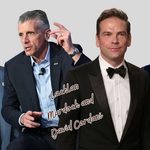
Mary Barra and David Cordani are two prominent executives who built long careers in major American corporations. Barra leads General Motors, while Cordani served as CEO of The Cigna Group for nearly 17 years.
Their careers offer useful examples of leadership, business transformation, and executive succession. Although they work in different industries, both developed their expertise through years of internal experience.
Their professional journeys also raise questions about whether they share a personal or business connection. This article examines their backgrounds, achievements, leadership approaches, and positions in 2026.
Who Are Mary Barra and David Cordani?
Mary Barra is the Chair and Chief Executive Officer of General Motors, one of the world’s largest automotive manufacturers. She became CEO in January 2014 after holding several senior positions in product development, purchasing, and supply chain management.
David Cordani is the Executive Chair of The Cigna Group, a global health services company. He served as its CEO from 2009 until July 2026, when Brian Evanko succeeded him.
Both executives are known for long careers within their respective organizations. Their leadership experiences demonstrate how internal knowledge, operational expertise, and strategic planning can prepare executives for senior corporate responsibilities.
Bio/Wiki Table
| Detail | Mary Barra | David Cordani |
|---|---|---|
| Full name | Mary Teresa Barra | David M. Cordani |
| Profession | Business executive | Business executive |
| Company | General Motors | The Cigna Group |
| Position in 2026 | Chair and CEO | Executive Chair |
| Previous CEO role | GM CEO since 2014 | Cigna CEO from 2009 to July 2026 |
| Education | Electrical engineering, Kettering University; MBA, Stanford | BBA, Texas A&M University; MBA, University of Hartford |
| Industry | Automotive | Healthcare and health services |
| Career beginning | GM co-op student in 1980 | Joined Cigna in 1991 |
Are Mary Barra and David Cordani Connected?
Mary Barra and David Cordani are frequently discussed together in executive biographies and leadership comparisons. However, their professional backgrounds do not establish a direct personal or business relationship.
Barra is associated with General Motors, while Cordani built his career at Cigna. They have led separate organizations operating in different industries.
There is no established evidence that they are related, married, or business partners. Their shared appearance in online searches should not be treated as proof of a private relationship or corporate agreement.
Debunking Personal and Merger Rumors
Claims suggesting that Barra and Cordani have a secret family connection or that GM and Cigna have merged are not supported by the information available. Mary Barra is married to Anthony Barra. David Cordani has his own family and professional background.
The companies they lead also have distinct business operations. General Motors develops and manufactures vehicles, while The Cigna Group provides health insurance and health services. The two executives can be compared as corporate leaders without suggesting that they have a personal connection.
Where Their Fortune 500 Paths Actually Cross
Barra and Cordani operate within the wider world of large American corporations. Their responsibilities include corporate governance, financial performance, workforce management, and long-term business strategy.
Executives of major companies may participate in industry associations, public policy discussions, and corporate leadership forums. Such activities can create professional intersections without establishing a direct partnership.
The more meaningful connection between Barra and Cordani is therefore their experience leading complex organizations through significant industry changes.
Mary Barra Rise and Strategy at General Motors
Mary Barra’s career is closely connected to the development of General Motors. She began working for the company as a co-op student in 1980, when she was 18 years old.
Her early experience gave her direct exposure to automotive manufacturing and operations. Over time, she moved into engineering, management, and executive leadership. Barra career demonstrates how technical knowledge and practical business experience can support advancement within a large organization.
From Plant Floor Intern to First Female Automaker CEO
Barra studied electrical engineering at General Motors Institute, now known as Kettering University. She graduated in 1985 and later earned an MBA from Stanford Graduate School of Business in 1990.
Her education combined technical expertise with business management. This combination became valuable as she moved into increasingly senior positions.
Before becoming CEO, Barra served in several important roles at GM, including executive vice president of Global Product Development, Purchasing, and Supply Chain.
She became CEO in January 2014 and was elected Chair of GM’s board in 2016. Her appointment made her the first woman to lead a major global automaker as CEO.
Her career progression reflects the value of understanding a company’s products, operations, employees, and customers before taking responsibility for its overall direction.
Do not miss this: Tim Dove and Shari Redstone: Are They Connected? The Facts
Navigating the 2014 Recall Crisis and EV Transition
Barra became CEO during a difficult period for General Motors. The company faced major scrutiny over an ignition switch defect linked to vehicle recalls, accidents, and deaths. The crisis placed pressure on GM’s safety practices, internal communication, and corporate accountability.
Barra faced congressional scrutiny and the challenge of restoring public confidence. The episode highlighted the importance of responding to safety concerns, improving organizational processes, and addressing problems directly. Beyond crisis management, Barra has led GM through a major transformation in automotive technology.
The company has invested in electric vehicles, battery development, software, and advanced driver assistance systems. These initiatives reflect the industry’s shift toward lower-emission transportation and more connected vehicles.
The transition has also involved financial and operational challenges. GM must manage vehicle affordability, production costs, consumer demand, charging infrastructure, and competition from established manufacturers and newer electric vehicle companies. Barra strategy requires balancing the company’s established vehicle business with investments in technologies that may shape its future.
David Cordani’s Legacy and Transition at The Cigna Group
David Cordani joined Cigna in 1991 and developed his career through a series of leadership roles. His experience included customer segments, marketing, healthcare operations, and executive management. He became president in 2008 and CEO in 2009. He was appointed Chair of the Board in January 2022.
Cordani’s leadership period coincided with significant changes in the American healthcare industry. Insurers faced increasing pressure to improve affordability, manage medical costs, and provide more accessible services.
Transforming Cigna into a Global Health Services Giant
Under Cordani’s leadership, Cigna expanded beyond its traditional health insurance business. The company developed a broader portfolio of health services, including pharmacy benefit management and healthcare delivery-related capabilities.
One important development was the expansion of Evernorth, Cigna’s health services business. Evernorth brought together capabilities designed to support clients, patients, and healthcare organizations through services such as pharmacy benefits, specialty care, and health management.
Cigna also completed major acquisitions during Cordani’s tenure, including its acquisition of Express Scripts in 2018. The transaction expanded the company’s pharmacy benefit management operations and strengthened its position in the healthcare services market.
Cordani’s approach emphasized customer relationships, operational performance, and the development of services beyond traditional insurance.
However, the broader healthcare business environment remained challenging. Rising medical costs, complex insurance arrangements, and public scrutiny of pharmacy benefit managers continued to affect the industry.
Stepping Down as CEO: The July 2026 Executive Chair Shift
Cordani’s CEO tenure ended on July 1, 2026. He transitioned to the position of Executive Chair of The Cigna Group’s Board of Directors. Brian Evanko, who previously served as president and chief operating officer, became CEO.
The transition followed a planned succession process. Evanko had spent nearly three decades at Cigna and held leadership positions across finance, healthcare operations, and business management. The leadership change illustrates the importance of preparing internal executives for senior responsibilities.
Cordani’s move to Executive Chair also allows him to continue contributing to the company’s governance and long-term strategic direction while Evanko assumes operational leadership.
4 Leadership Parallels Between Barra and Cordani
Although Barra and Cordani work in different industries, their careers reveal several important similarities.
Long-Term Internal Career Progression
Both executives advanced through their organizations rather than arriving as outside CEO appointments. Barra began as a GM co-op student in 1980 and spent decades developing experience across engineering, product development, and operations.
Cordani joined Cigna in 1991 and held multiple senior roles before becoming CEO. Their career paths show how institutional knowledge can help executives understand organizational strengths, weaknesses, and operational challenges.
Long service alone does not guarantee successful leadership. However, experience across different business functions can provide valuable preparation for complex executive decisions.
Balancing Shareholder Returns With Industry Disruption
Barra and Cordani have both faced the challenge of maintaining financial performance while investing in long-term business change. For Barra, the automotive industry’s transformation involves electric vehicles, software, manufacturing efficiency, and changing consumer expectations.
For Cordani, healthcare transformation involved expanding services, developing new business capabilities, and responding to rising healthcare costs. Both industries require substantial investment and careful financial planning.
Executives must decide how to allocate capital, manage risk, and maintain confidence among investors while preparing their companies for future market conditions.
Key Differences in Governance and Crisis Management
The responsibilities of Barra and Cordani differ because their industries operate under different conditions.
General Motors is responsible for designing, manufacturing, and selling vehicles. Its risks include product safety, manufacturing quality, supply chains, technology development, and environmental regulation.
The Cigna Group operates within a healthcare system shaped by insurance regulations, medical costs, pharmacy benefits, patient needs, and public policy. Barra’s leadership has involved highly visible product safety concerns and the transition to electric vehicles.
Cordani’s leadership has involved healthcare affordability, insurance operations, and the changing role of pharmacy benefit managers.
Their governance responsibilities also differ. Barra continues to serve as both Chair and CEO of GM. Cordani’s transition to Executive Chair separates his board leadership from the company’s day-to-day executive management. These differences show that leadership decisions must reflect the risks, regulations, and operational demands of each business.
Frequently Asked Questions About Mary Barra and David Cordani
Are Mary Barra and David Cordani related?
There is no established evidence that Mary Barra and David Cordani are related or share a family connection.
Do Mary Barra and David Cordani work together?
They lead separate organizations and have no publicly established direct business partnership.
What are Mary Barra and David Cordani’s current roles?
Mary Barra is Chair and CEO of General Motors, while David Cordani is Executive Chair of The Cigna Group.
Who replaced David Cordani as Cigna CEO?
Brian Evanko succeeded David Cordani as CEO of The Cigna Group on July 1, 2026.
What do Mary Barra and David Cordani have in common?
Both built long careers within major corporations, advanced through internal leadership positions, and led organizations through significant industry changes.
Conclusion
Mary Barra and David Cordani offer two distinct examples of corporate leadership shaped by long-term experience, industry knowledge, and strategic change. Barra’s career at General Motors reflects the challenges of automotive manufacturing, product safety, and electrification. Cordani’s tenure at Cigna demonstrates how a traditional health insurer can expand into a broader health services business while preparing for executive succession.
Their professional similarities make them useful subjects for comparison, but there is no established personal relationship or direct business partnership between them. Their careers ultimately show that effective corporate leadership requires operational understanding, thoughtful decision-making, and the ability to guide organizations through changing business conditions.

I’m a passionate pet writer who loves sharing practical tips, trusted advice, and heartwarming stories about cats, dogs, and other beloved companions. Through PetCaffine.com, I help pet lovers better understand their furry friends with easy-to-read articles on pet care, nutrition, behavior, health, and everyday life.