Scottish Straight Grooming: A Complete Owner’s Guide
Scottish Straights are among the cats that seem to need constant grooming. They are not, which is why this breed is perfect for people with busy schedules who want to minimize the time they spend cleaning their pet.
However, low-maintenance does mean no maintenance at all. If you are the type of person who forgets to brush their cat more than once a week, then you will end up with a cat covered in tangles and hair everywhere.
Scottish Straight cat grooming is a necessary form of maintenance for the breed’s coat, ears, nails, and teeth. It is not something that is hard to maintain, but it must be done regularly.
The breed’s coat is dense and has a double layer, but it is low to the body, so it is easy to keep it clean and tidy. The only thing to note is that it cannot be neglected for a long time, because then it will start to shed excessively.
Those who take care of their cats’ hygiene on a regular basis are the ones who have the most satisfaction from the breed. It is also a great chance to bond with the animal, as Scottish Straights are very affectionate and calm by nature.
Short-Haired vs Long-Haired Coats: Why It Matters
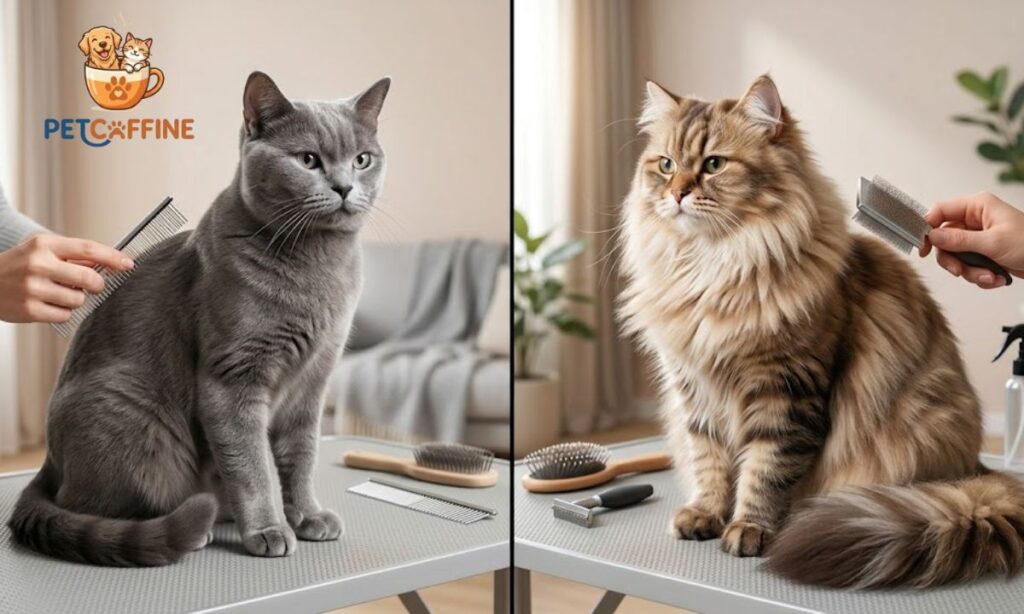
Not every Scottish Straight has the same coat. Some are short-haired. Others, often called Highland Straights, carry a longer coat with a thicker undercoat.
This distinction changes everything about your grooming plan.
Short-haired Scottish Straights have a tight, plush coat that resists matting and sheds in a predictable, manageable way.
Long-haired Scottish Straights (Highland Straights) carry more undercoat, which means more shedding volume and a real risk of tangles if you fall behind.
Knowing which type you have tells you how often to brush and which tools to reach for.
How Often Do Scottish Straights Actually Need Grooming?
Short-haired cats require one thorough brushing per week, whereas long-haired cats need 2-3 brushings per week. Focus on the hair around the neck, abdomen, and thighs during these sessions.
That’s the general rule. A cat owner should bring the number of procedures to 3-5 times per week if the animal is shedding heavily. Outside of the shedding season, occasional maintenance will be sufficient to prevent the formation of hair clumps and tangles.
Nail trimming, ear cleaning, and dental care are also essential but fall under different schedules, which will be discussed shortly.
Grooming Tools Every Owner Should Have
You don’t need a full grooming kit. You need the right handful of tools, used correctly.
The Essentials
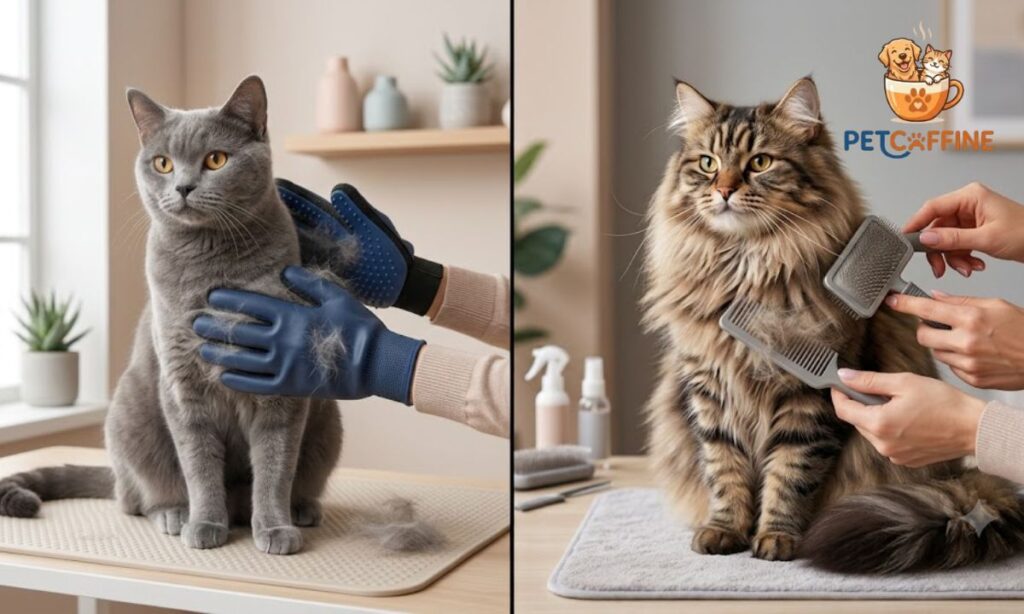
A rubber grooming glove or soft-bristle brush for short coats
A wide-tooth comb for working through longer fur without pulling
A slicker brush for loosening mats before they set in
Cat-specific nail clippers (never human clippers)
Styptic powder, in case you nick the quick
A gentle ear cleaner made for cats
Skip aggressive deshedding tools with sharp metal teeth. They’re built for heavier-coated breeds and can scrape or irritate a Scottish Straight’s skin if you’re not careful. A soft brush and a bit of consistency beat a harsh tool used once a month.
Brushing Routine by Coat Type
Short-Haired Routine
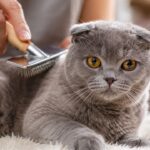
Brush your dog weekly, in the direction of the fur growth. Be especially thorough over the belly and the armpits. This is where stray hairs may gather and lead to mats. All this should take no more than five minutes.
Long-Haired (Highland Straight) Routine
Brush two to three times a week. First work with a wide-toothed comb in order to untangle any knots, and then finish with a slicker brush to get out the undercoat. The neck ruff, the back of the thighs, the belly, and the tail are problem areas that tend to mat the quickest, so spend extra time on these.
Working slowly is the key to a successful brushing session. It’s easy to overlook a few small tangles when working through a longhaired coat, and these can easily turn into matted clumps by the next brushing if you’re working quickly.
Ear Care: The One Big Advantage Over Scottish Folds
The Scottish Staghounds have correct and upright ears of a normal shape. This is an advantage in terms of grooming. The Scottish Folds, on the contrary, have folded ears that are subject to increased wax buildup.
The ears of the Scottish Straights allow for a better flow of air, resulting in less buildup of wax. The folds of the Scottish Folds’ ears lead to higher chances of infections and require more grooming.
In terms of cleaning, it is necessary to inspect your cat’s ears every two or three weeks and wipe them with a cotton pad and an appropriate cleaner if there is a visible amount of wax. A vet should be contacted if there is a presence of redness, a smell, or black discharge.
Nail Trimming Made Simple
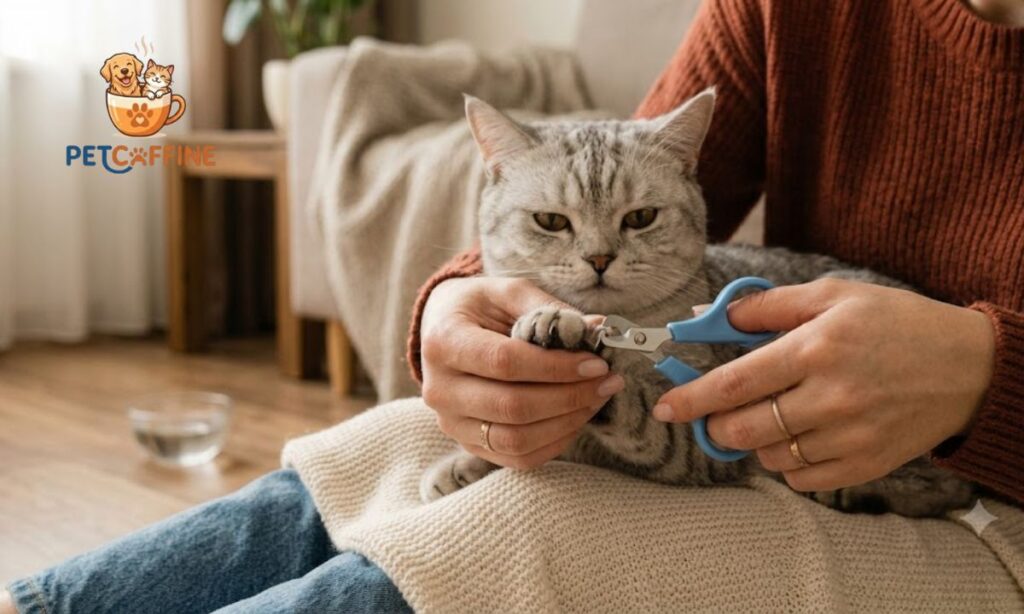
Trim your Scottish Straight’s nails every two to three weeks. Longer gaps mean sharper nails and a higher chance of snags on furniture or your skin.
A few tips that make the process smoother:
Trim only the clear, pointed tip of the nail. Avoid the pink quick, which contains blood vessels and nerves.
Keep styptic powder nearby for the first few sessions. A small nick happens even to experienced owners.
Trim in short sessions. Two or three nails at a time, with treats in between, beats forcing a full trim in one sitting.
If your cat fights every attempt, don’t force it. A stressed cat and a nervous owner make an easy task dangerous.
Bathing: Why Less Is More
Scottish Terriers do not require a bath often. The cat’s coat is naturally oily, and the cat grooms itself; therefore, a bath is often unnecessary.
You should only bathe your cat if your cat gets dirty or your veterinarian instructs you to do so for a skin condition. If you decide to bathe your cat, brush its coat to get any loose fur, and use a shampoo made for cats. You should not use human shampoo, even if it is mild, because it can dry out your cat’s coat and make it even oilier.
Do not bathe your cat too often. This can strip away its natural oils and make your cat’s coat look even oilier.
Dental Care and Everyday Hygiene
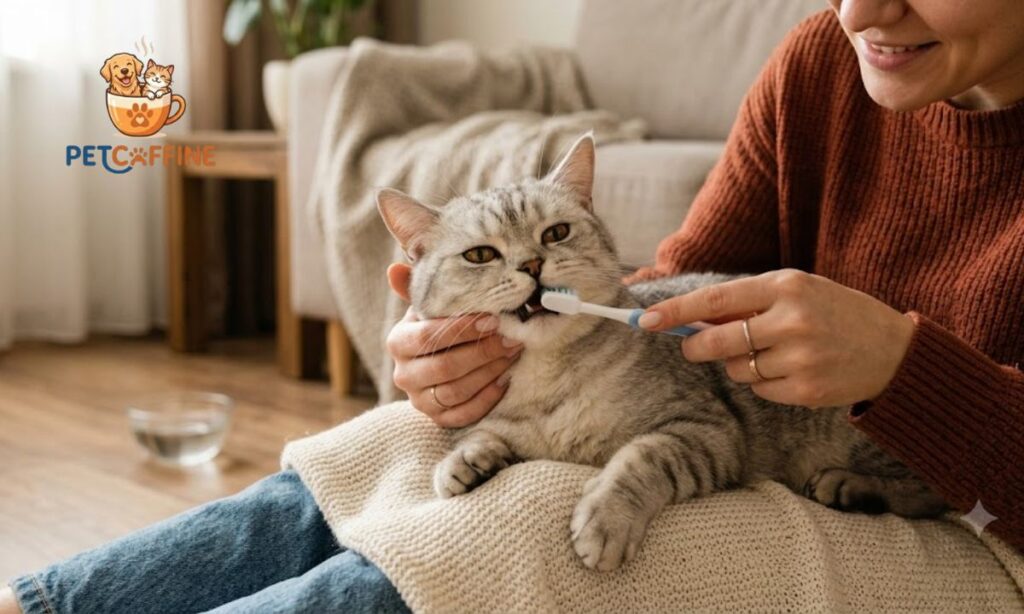
Grooming includes several different procedures, and dental hygiene and cleanliness are among them. It is essential to brush your cat’s teeth a few times a week and use special dental treats to clean them in case of an absence. Dental diseases are common in felines, and they are frequently discovered too late because cats often hide their symptoms.
The procedure of cleaning the exterior of the animal is also vital. Cats spend most of their time grooming themselves, and, consequently, the cleanliness of their paws determines how dirty their coat can be.
Seasonal Shedding and How to Handle It
Scottish Strains tend to shed more intensively during the spring and autumn months, as they prepare their coat for the warm or cold season. However, this is not the reason to be concerned.
During these months, you should brush your Scottish Straight about one or two extra times per week, regardless of the length of its coat. This will prevent the accumulation of hair around your home and reduce the chance of the cat ingesting too much hair during its self-grooming.
During the winter months, you may notice that your Scottish Straight is shedding its coat due to a dry climate inside your home, particularly if you use a heater. Make sure to brush it more often to spread its natural oil throughout the coat.
Using Grooming Time as a Health Check
Every brushing session doubles as a quick physical check. Use it that way.
While you brush, run your hands over your cat’s body and look for:
Lumps or unusual bumps under the skin
Bald patches or thinning fur
Flaky, red, or irritated skin, especially near the base of the tail
Sudden sensitivity or pain when you touch certain areas
Scottish Straights carry a known predisposition to health issues such as hypertrophic cardiomyopathy and polycystic kidney disease. Grooming sessions won’t diagnose these conditions, but noticing early physical changes gives you a reason to schedule a vet visit sooner rather than later.
Scottish Straight vs Scottish Fold: Grooming Compared
These two breeds share almost the same care routine, with one key difference: ear structure.
Grooming Area
Scottish Straight
Scottish Fold
Brushing frequency
Weekly (short-hair) to 2-3x/week (long-hair)
Same as Straight
Ear care
Every 2-3 weeks, low risk of buildup
Weekly checks recommended, higher risk of trapped wax
Nail trimming
Every 2-3 weeks
Every 2-3 weeks
Bathing
Rarely needed
Rarely needed
Dental care
Regular brushing recommended
Regular brushing recommended
The takeaway: if you already know how to groom a Scottish Fold, you can groom a Scottish Straight with almost no adjustment, aside from spending less time on ear checks.
When to Call a Professional Groomer
Most Scottish Straight owners never need a professional groomer. But there are moments when it makes sense to call one in:
The coat has developed severe matting you can’t safely work through at home
Your cat becomes aggressive or highly stressed during nail trims
Your cat is a senior with mobility issues that make self-positioning difficult
A professional groomer isn’t a sign you’ve failed at home grooming. It’s a practical option when a specific situation calls for it.
Quick Grooming Checklist
Task
Short-Haired
Long-Haired (Highland)
Brushing
Once a week
2-3 times a week
Matting risk
Low, mainly belly/armpits
Higher, focus on neck, thighs, belly, tail
Nail trimming
Every 2-3 weeks
Every 2-3 weeks
Ear checks
Every 2-3 weeks
Every 2-3 weeks
Bathing
Rare, only if needed
Rare, but slightly more common
Dental care
A few times a week
Few times a week
Frequently Asked Questions
Do Scottish Straight cats need haircuts?
No, their coat doesn’t require trimming; regular brushing is enough to keep it healthy.
How often should I bathe a Scottish Straight?
Only when necessary, since they groom themselves efficiently and rarely get dirty enough to need a bath.
Is grooming different for Scottish Straight kittens?
Kittens need the same routine but shorter, gentler sessions to help them get comfortable with brushing and nail trims early.
What’s the simplest grooming setup for a beginner?
A soft brush, cat-specific nail clippers, and a gentle ear cleaner cover almost everything you’ll need.
Do Scottish Straights shed a lot?
They shed a normal, manageable amount, with noticeably more volume during spring and autumn coat changes.
Final Words
Groom a cat regularly and do not try to turn it into a big deal. You can do it while you are feeding the animal or sitting and relaxing on the couch in the evening. It is necessary to give the pet some reward for the session, and do not continue the procedure if the animal begins to resist.
Your Scottish Straight will start to perceive daily grooming as something enjoyable, and it will become one of the simplest joys of life for your feline friend.
I’m a passionate pet writer who loves sharing practical tips, trusted advice, and heartwarming stories about cats, dogs, and other beloved companions. Through PetCaffine.com, I help pet lovers better understand their furry friends with easy-to-read articles on pet care, nutrition, behavior, health, and everyday life.