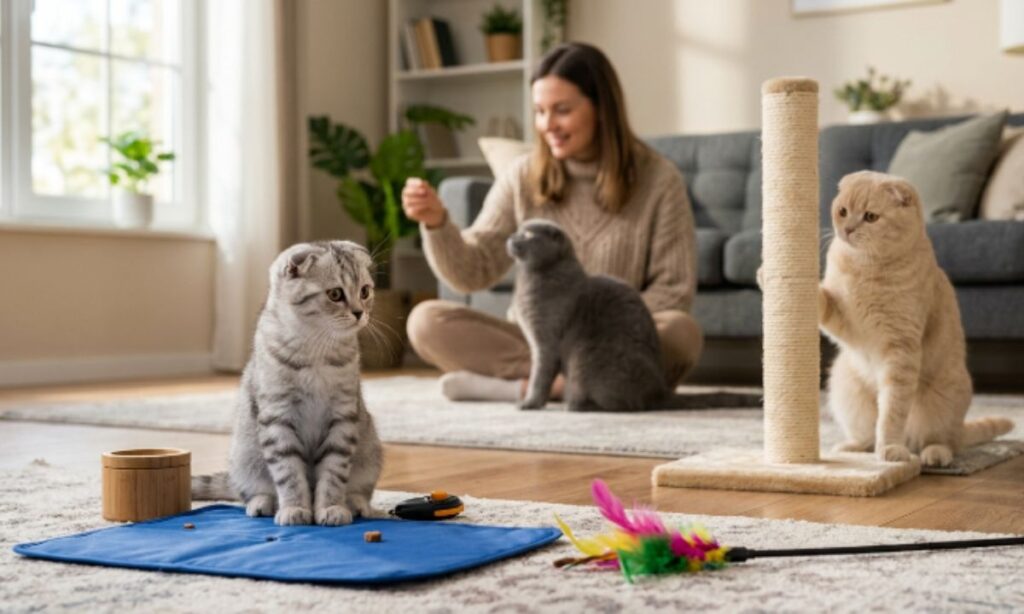
Scottish Fold Cat Training: A Complete Owner’s Guide
Those folded ears make people stop and stare. But underneath the famous look is a cat that actually wants to learn from you. Get the approach right, and training becomes one of the easiest parts of Scottish Fold ownership. Get it wrong, and you’ll fight habits that never needed to form in the first place.
Understanding Scottish Fold Temperament Before You Start
Training works best when it matches the cat in front of you. Scottish Folds are known for a calm, easygoing nature. Many owners describe them as quiet, affectionate, and content to sit nearby rather than dominate a room.
That temperament matters for training. A Scottish Fold isn’t fighting you for control the way some more independent breeds might. They’re generally cooperative, curious, and responsive to routine, which makes them a good match for reward-based methods.
A few temperament traits worth knowing before you begin:
Moderate energy levels rather than high-octane activity
Strong attachment to their owners, sometimes following them room to room
A tendency to vocalize softly rather than demand attention loudly
Comfort with handling once they’re used to it, which helps with grooming and vet-related training
None of this means training happens on its own. It means the groundwork is already in your favor.
Keep in mind that individual personality still varies. Some Scottish Folds lean toward the classic laid-back reputation, while others stay playful and mischievous well into adulthood. Watch your own cat’s cues for a week or two before locking in a training plan, since a routine built around their actual habits will always stick better than one copied from a general breed profile.
Litter Box Training Made Simple
Litter box training is usually the first task new owners tackle, and Scottish Folds tend to pick it up fast. Cleanliness matters to them, so a well-kept box does a lot of the work for you.
Setting Up for Success
Placement and consistency matter more than any special trick. Follow this basic setup:
Step
What to Do
1
Choose a quiet, low-traffic spot away from food and water bowls
2
Use unscented litter at a depth of about two inches
3
Scoop waste daily and do a full clean weekly
4
Place your kitten in the box after meals and naps
5
Praise calmly when they use it correctly
If accidents happen, resist the urge to scold. Cats don’t connect punishment with an action after the fact, so it just adds stress. Clean the spot thoroughly with an enzyme cleaner so the smell doesn’t invite a repeat visit.
Persistent litter box avoidance in an adult cat is often a signal, not a training failure. It can point to a dirty box, a disliked litter type, or a health issue like a urinary tract infection. A vet visit is the right next step if the problem continues past a few days.
Scratch Post Training Without the Furniture Damage
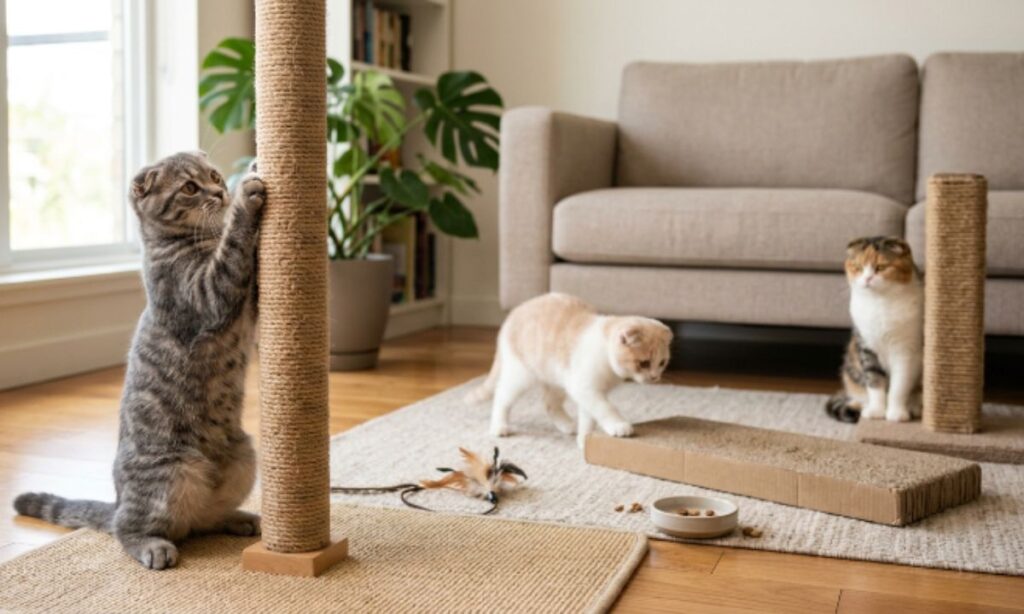
Scratching isn’t bad behavior. It’s a normal way for cats to stretch, shed old claw layers, and mark territory. The goal isn’t to stop it; it’s to redirect it.
Here’s what tends to work:
Place a sturdy scratching post near the furniture your cat already targets
Offer both vertical posts and horizontal scratchers, since preferences vary by cat
Rub a small amount of catnip on the post to draw interest
Reward scratching on the post with a treat or verbal praise
Trim nails every two to three weeks to reduce damage during the learning phase
If your cat keeps returning to the couch, move the post closer to that exact spot before gradually shifting it to where you’d rather have it. Sudden relocation usually backfires.
Clicker Training and Positive Reinforcement
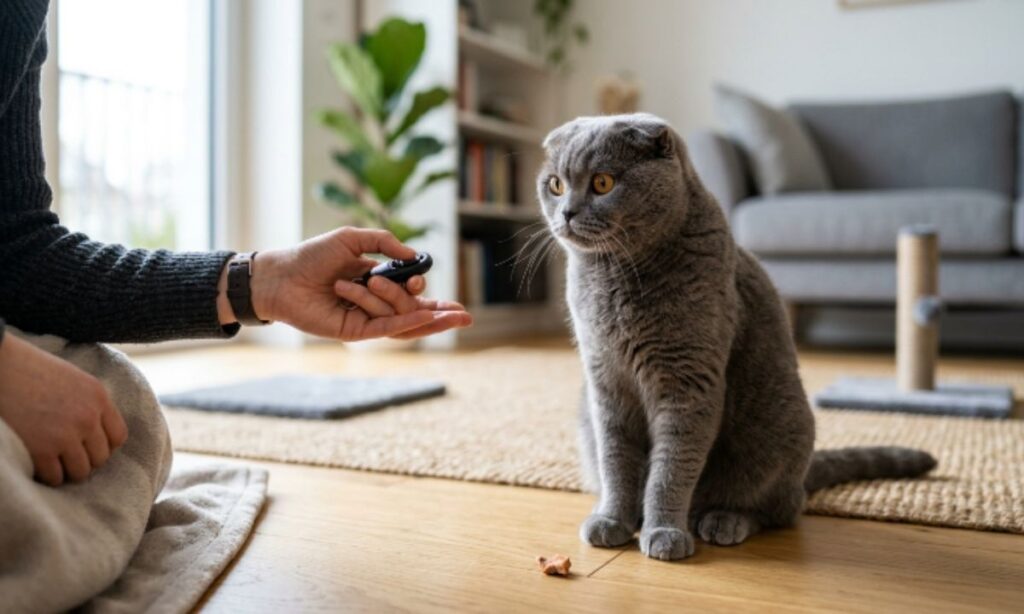
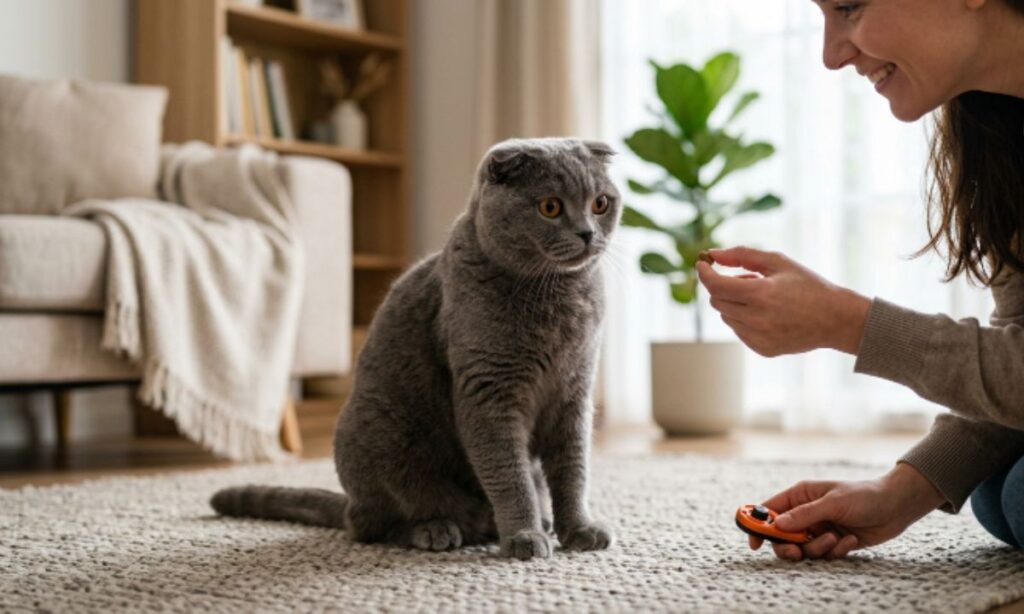
Clicker training gives your cat a clear, consistent signal that they did something right. The click marks the exact moment of good behavior, followed immediately by a small reward.
How to Start Clicker Training
Click once, then immediately give a treat, repeated ten to fifteen times so your cat links the sound to a reward.
Once the connection is clear, click only when your cat performs a wanted behavior, like sitting or approaching you.
Follow every click with a reward, without exception, at least in the early stages.
Keep sessions to five or ten minutes so your cat stays engaged instead of checking out.
End on a success, even a small one, so the session closes on a positive note.
Scottish Folds respond well to this method because it rewards effort rather than punishing mistakes. Common early goals include sitting, coming when called, and simple tricks like a paw touch. Food rewards work fastest, but praise and play can substitute once the behavior is established, which helps with weight management long-term.
A cheap clicker from a pet store works fine, and a snapped tongue click with your mouth is a reasonable substitute if you’d rather skip the tool. What matters most is timing. The click needs to land at the exact second the correct behavior happens, not a beat before or after, since cats connect the sound to whatever they were doing in that instant. If your timing feels off, slow the whole exercise down rather than speeding through it.
Age-Specific Training Stages
Training a kitten looks different from training a full-grown cat, and expecting the same pace from both sets owners up for frustration. Here’s a rough timeline that many trainers and vets use as a guide.
Age
Focus Areas
What to Expect
8–12 weeks
Litter box basics, gentle handling, name recognition
Short attention span, needs frequent breaks
3–6 months
Scratch post habits, clicker introduction, socialization
Fast learner, high curiosity, good window for new experiences
6–12 months
Basic cues, carrier training, grooming tolerance
More focus, testing boundaries occasionally
1 year and up
Trick refinement, routine reinforcement
Habits are set, so consistency matters more than new lessons
Kittens absorb new experiences quickly, which makes the first six months a good window for socialization. Older cats can still learn new behaviors; it just takes more repetition and patience.
Socialization and Enrichment Activities
A well-socialized Scottish Fold handles new people, new places, and everyday disruptions with less stress. Socialization works best as a slow, positive process rather than a single big exposure.
Useful socialization habits:
Introduce new people calmly, letting the cat approach on their own terms
Get your cat used to a carrier by leaving it open at home, not just before vet visits
Handle paws, ears, and mouth gently and often so grooming and vet exams go smoother later
Expose kittens to different sounds and surfaces early, since this builds confidence into adulthood
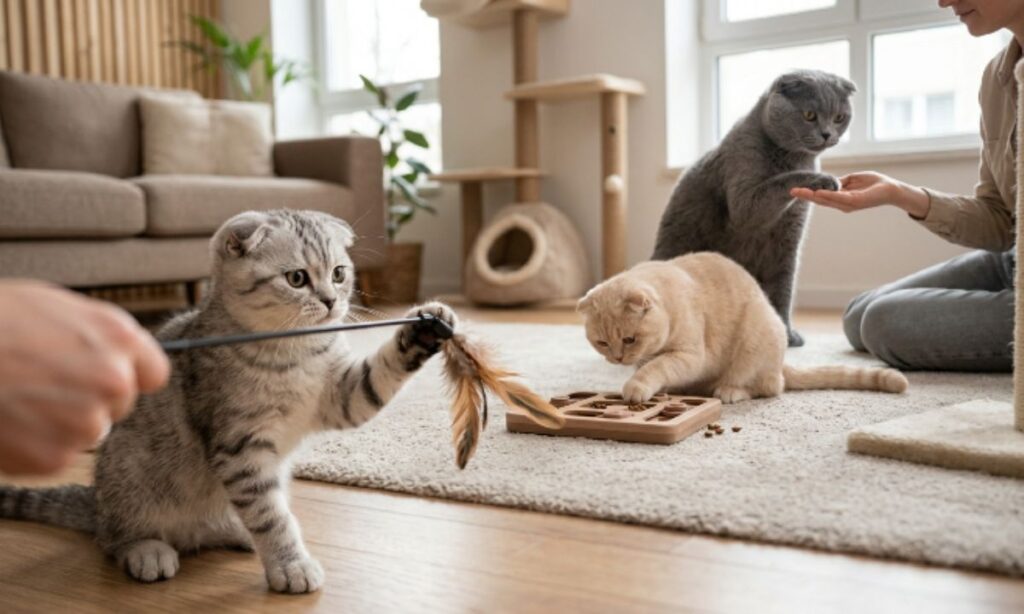
Enrichment keeps a Scottish Fold’s mind active, which supports better behavior overall. Rotate toys weekly so nothing gets stale, use puzzle feeders to slow down mealtime and add mental effort, and set aside a short play session before bed to burn off evening energy. Wand toys that mimic prey movement tend to hold their interest longest.
Vertical space matters too, even for a breed that isn’t a big jumper. A cat tree, window perch, or a few sturdy shelves give your Scottish Fold somewhere to observe the room from a height they’re comfortable reaching. This satisfies a natural instinct to watch territory from above, and it doubles as a safe alternative to countertops and bookshelves you’d rather keep off-limits.
Training for Health, Safety, and Handling
Some training exists purely to make health care easier down the line. A cat that tolerates nail trims, ear checks, and carrier rides without a fight saves everyone stress.
Build this gradually:
Touch paws briefly during calm moments, rewarding stillness before moving to actual nail trims
Wipe ears with a damp cloth occasionally so a real cleaning doesn’t feel unfamiliar
Practice short carrier trips around the house before an actual vet visit is required
Keep dangerous areas like stovetops and open windows off-limits using consistent redirection rather than punishment
Safety training also covers everyday boundaries. If your cat jumps on counters, don’t yell. Calmly remove them and redirect to an approved perch or shelf instead. Repetition, not intensity, builds the habit.
Training Cats With Joint Sensitivity
Scottish Folds carry a genetic condition called “osteochondrodysplasia,” tied to the same gene responsible for their folded ears. It can cause joint stiffness, a thickened tail, and reduced mobility in some cats.
This matters for training because standard advice doesn’t always fit a cat dealing with joint discomfort. A few adjustments help:
Skip high jumps and instead use ramps or low steps for climbing training
Keep play sessions shorter and lower impact if you notice stiffness after activity
Watch for reluctance to jump or a change in gait, and mention it at the next vet visit
Avoid tricks that require repeated jumping or twisting motions
A cat showing signs of joint pain isn’t being stubborn during training. Pain is often the real reason behind a sudden drop in cooperation, so ruling out a health cause should come before assuming it’s a behavior problem.
Common Behavioral Issues and How to Fix Them
Even well-trained cats develop occasional behavior problems. Most trace back to stress, environment, or an unmet need rather than defiance.
Clean more often, try a different litter, check with a vet
Aggression or hissing
Pain, fear, or overstimulation
Rule out injury, give space, avoid forced handling
Excessive scratching indoors
No accessible post, boredom
Add posts near targeted areas, increase play
Destructive behavior when alone
Under-stimulation
Add puzzle feeders and rotate toys before leaving
Separation anxiety shows up as excessive vocalizing, destructive scratching, or accidents outside the litter box when the cat is left alone. A consistent departure and arrival routine, paired with enrichment during your absence, usually eases it over a few weeks.
Aggression deserves extra attention with this breed specifically. A sudden hiss or swat from a normally gentle cat is often a pain response rather than a mood change, especially given how common joint stiffness is in Scottish Folds. Before assuming a behavior problem, rule out a physical cause. A quick vet check costs less time and stress than weeks spent troubleshooting a training issue that was never really about training.
Troubleshooting Common Training Setbacks
Training doesn’t always go smoothly, and a few sticking points come up often enough to plan for.
The cat ignores the clicker or treats. Try a higher-value treat, like a small piece of cooked chicken, and make sure your cat isn’t already full from a recent meal.
Cat gets overstimulated during play. Shorten the session and end it before excitement turns into biting or scratching. Watch for tail flicking and dilated pupils as early warning signs.
Progress stalls after early success. Go back to a simpler version of the behavior and rebuild from there instead of pushing forward. Cats often need more repetition than owners expect.
Cat seems food-motivated only at certain times. Train before a meal rather than after one, when hunger naturally increases focus.
Helpful Tools for Training Sessions
You don’t need much to get started, but a few basic items make sessions run smoother.
A handheld clicker or a soft verbal marker word like “yes”
Small, soft treats that don’t require chewing time, so the reward stays fast
A sturdy scratching post and at least one puzzle feeder
A carrier left out and accessible, not just stored away for vet trips
A quiet training space free from other pets or loud noise
None of this needs to be expensive. A budget clicker and a bag of freeze-dried treats cover most early training needs, and you can add tools like puzzle feeders or climbing shelves as your cat’s interests become clear.
Tips for Long-Term Training Success
A few principles carry through every stage of training, from the first litter box lesson to advanced tricks years later.
Stay consistent with commands, tone, and timing of rewards
Keep sessions short; five to ten minutes works better than one long attempt
Reward generously early on, then taper as the behavior becomes routine
Never use punishment, since it damages trust without teaching the right behavior
Watch for signs of discomfort or fatigue and stop before frustration sets in
Training is really about building trust, not control. A Scottish Fold that trusts you will offer cooperation far more readily than one trained through pressure.
Frequently Asked Questions
Are Scottish Fold cats easy to train?
Yes, their calm and cooperative temperament makes them one of the more trainable cat breeds, especially with positive reinforcement.
How long should a training session last?
Keep sessions to five or ten minutes so your cat stays focused and doesn’t lose interest.
What is the best reward for training a Scottish Fold?
Small, high-value treats work fastest, though praise and play can reinforce behavior once habits are established.
Can Scottish Folds learn tricks like sit or come?
Yes, many learn basic cues and simple tricks quickly using clicker training and consistent repetition.
Why does my Scottish Fold avoid the litter box?
It’s usually tied to cleanliness, litter type, or an underlying health issue, so check the box setup first and see a vet if it continues.
Conclusion
Training a Scottish Fold is all about patience, consistency, and listening to what the cat is genuinely saying to you, whether it’s eagerness for a treat or discomfort from a joint issue.
Start with the basics like litter box behavior and redirecting to the scratch post, then move on to clicker training and tricks once trust is formed, and change your strategy if your cat gets older and/or has health issues. Done correctly, training builds a bond far stronger than the one created by obedience for its own reason.
I’m a passionate pet writer who loves sharing practical tips, trusted advice, and heartwarming stories about cats, dogs, and other beloved companions. Through PetCaffine.com, I help pet lovers better understand their furry friends with easy-to-read articles on pet care, nutrition, behavior, health, and everyday life.