Scottish Fold Cats Care and Grooming: The Complete Guide
These seemingly adorable little ears conceal a mystery that few people are aware of. Behind those owl-like masks lie unique requirements that every owner should familiarize themselves with and follow closely. A wrong step can lead to severe health conditions, while proper care will extend the lifespan and improve the quality of life of the beloved companion.
Why Scottish Fold Grooming Is About More Than Looks
Scottish Folds are distinguished by a mutation that causes their ears to curve. However, this gene can also affect the animal’s other cartilages. That is why caring for the Scottish Fold requires special attention.
This breed’s grooming is essential for the following reasons. First, regular cleaning and inspection allow the owner to detect health issues early. In particular, the first signs of the condition include stiff movements, pain when the ears are touched, and skin problems. Second, this procedure can be used to assess the pet’s health as a whole.
Grooming is a great opportunity to check the ears and other elements of the Scottish Fold for potential concerns. Moreover, veterinarians note that most conditions in cats are successfully treated when they are detected early.
Therefore, owners can save both time and money if they pay regular attention to their pet’s hygiene and health.
Scottish Fold Coat Types: What You’re Working With
Not all Scottish Folds have the same coat. Some are short-haired. Others carry a longer coat, sometimes called the Highland Fold.
Short-Haired Scottish Folds
Short coats are dense and luxurious. They do not tangle easily but shed moderately.
Long-Haired Scottish Folds
Long coats will mat easily around the neck, stomach, and back legs. These cats need more maintenance and frequent brushing.
Coat Type
Shedding Level
Mat Risk
Brushing Frequency
Short-haired
Moderate
Low
1–2 times per week
Long-haired
Moderate to high
High
3–4 times per week, or daily
Knowing your cat’s coat type is step one. It shapes almost every other grooming decision you’ll make.
Why Coat Density Matters for This Breed
Scottish Folds tend to have thicker undercoats than their body size suggests. That density traps loose hair close to the skin instead of letting it fall away naturally. Without regular brushing, that trapped hair turns into small mats faster than owners expect, particularly around the collar area and hind legs.
Grooming Tools Worth Having on Hand
A small, well-chosen toolkit makes every session faster and less stressful for your cat.
Soft bristle brush or grooming glove for short coats
Slicker brush for long coats and tangle-prone areas
Wide-tooth comb for finishing passes
Cat-safe nail clippers
Cotton pads and a vet-approved ear cleaner
Cat-specific toothbrush and toothpaste
A lint roller for quick cleanups between sessions
Keep these tools in one spot near where you groom. Having everything within reach cuts down on stalling, which keeps sessions short and calm.
Building a Weekly Grooming Routine
Consistency beats intensity. A short, calm session a few times a week works better than one long, stressful one.
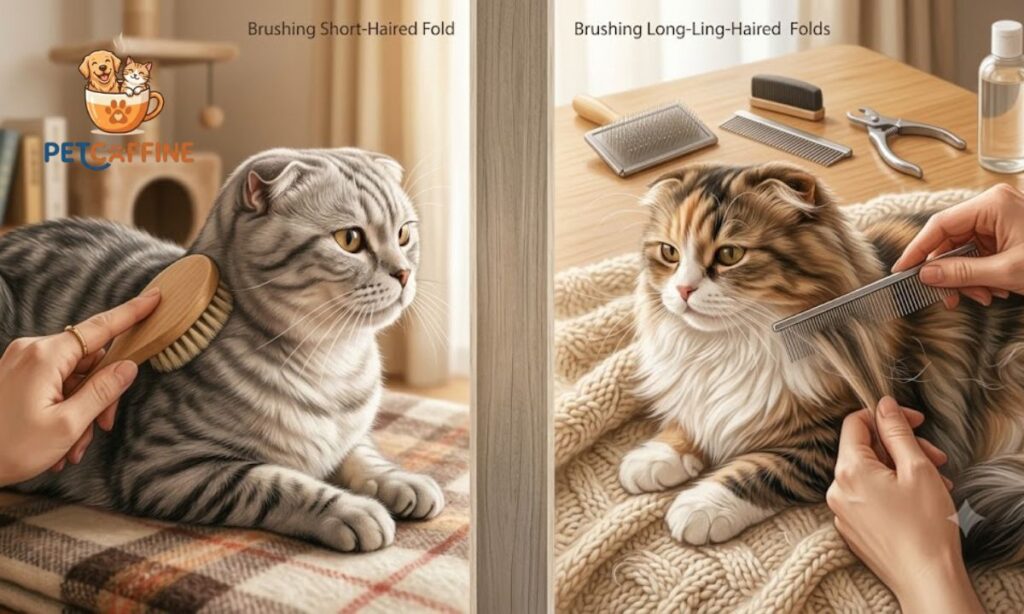
Brushing Short-Haired Folds
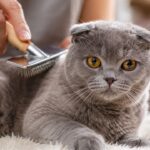
Use a soft bristle brush or a grooming glove. Always brush in the direction of hair growth. You should only have to brush your Fold about two times a week to keep loose fur under control.
Brushing Long-Haired Folds
First, work through your Fold’s hair with a slicker brush to remove any tangles. Then use a wide-tooth comb to make sure you’ve gotten all the knots out. You may have to brush your long-haired Fold more often-especially during shedding season. Some owners brush their long-haired Folds every day.
Bathing: Less Often Than You Might Imagine Essay
Scottish Folds do not need to be washed very often since their coats produce natural oils that are beneficial for their skin. However, it is important to clean them occasionally when their coats become greasy, their bodies smell, or they get dirty beyond the ability of their tongues to remove the debris.
Bathing Tips
Using mild and hypoallergenic shampoos designed for cats.
It is important to use warm (not hot) water since it helps to soothe the skin without damaging it.
Wet hair should also be dried, especially around the ears. However, it is crucial not to let water get into the ears. This is probably one of the most important Scottish Fold cat care guidelines because of their unique and unnatural ear shape, which makes ear infections likely.
After-Bathing Guidelines
First, use a towel to remove moisture from the coat as much as possible. It is crucial to avoid long and tedious drying sessions with a hair dryer since it can lead to overheating. Remember to use the lowest heat setting and direct the airflow constantly to avoid burns. Moreover, long-haired Scottish Folds may need to have their coats brushed when they are wet so that the hair does not tangle as they dry.
During or after the procedure, do not forget to observe how your cat behaves. If it seems frightened during the baths, it may be a good idea to ask your veterinarian about alternative methods, such as waterless shampoo or professional grooming.
Ear Care: The Most Important Habit for This Breed
Folded ears look adorable, but they trap wax, dirt, and moisture more easily than upright ears. This raises the risk of infection if ears go unchecked.
How Often to Check Scottish Fold Ears
Check ears weekly. A quick look tells you a lot before problems start.
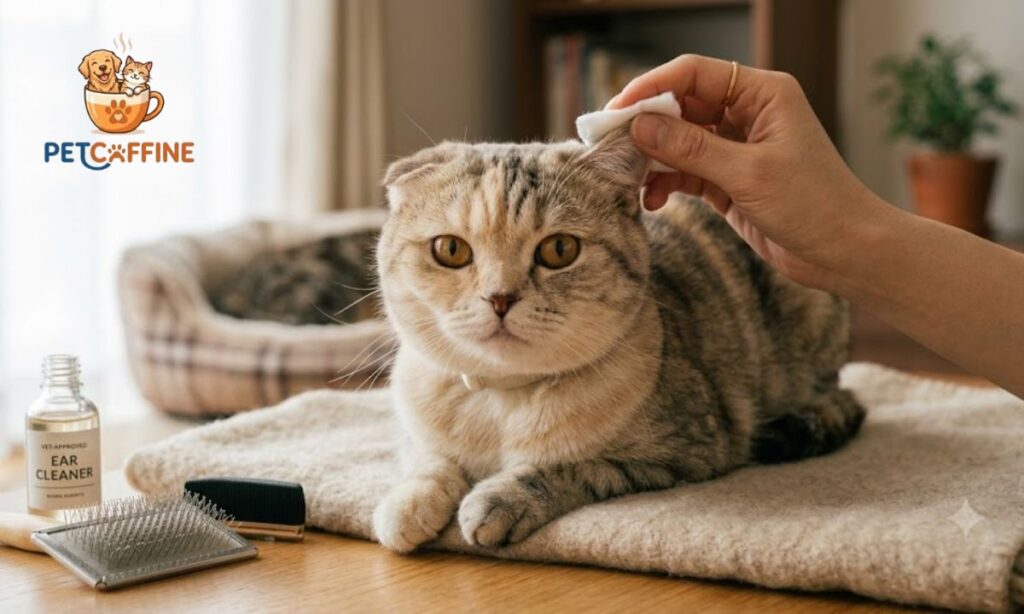
How to Clean Them Safely
Use a vet-approved ear cleaner, not water or soap. Apply a small amount to a soft cotton pad. Wipe the visible folds gently. Never insert anything into the ear canal.
Aim for a full, gentle clean about once a month, with lighter weekly checks in between.
Warning Signs to Watch For
Strong odor coming from the ear
Redness or swelling
Frequent head shaking
Scratching at the ears
Dark discharge or buildup
Any of these signs means it’s time to call your vet, not wait it out.
Nail and Paw Care
Overgrown nails cause more problems than most owners expect. They can catch on fabric, curl into the paw pad, or throw off your cat’s balance.
Trimming Schedule
Trim nails roughly every two to three weeks. Active scratchers may need it less often.
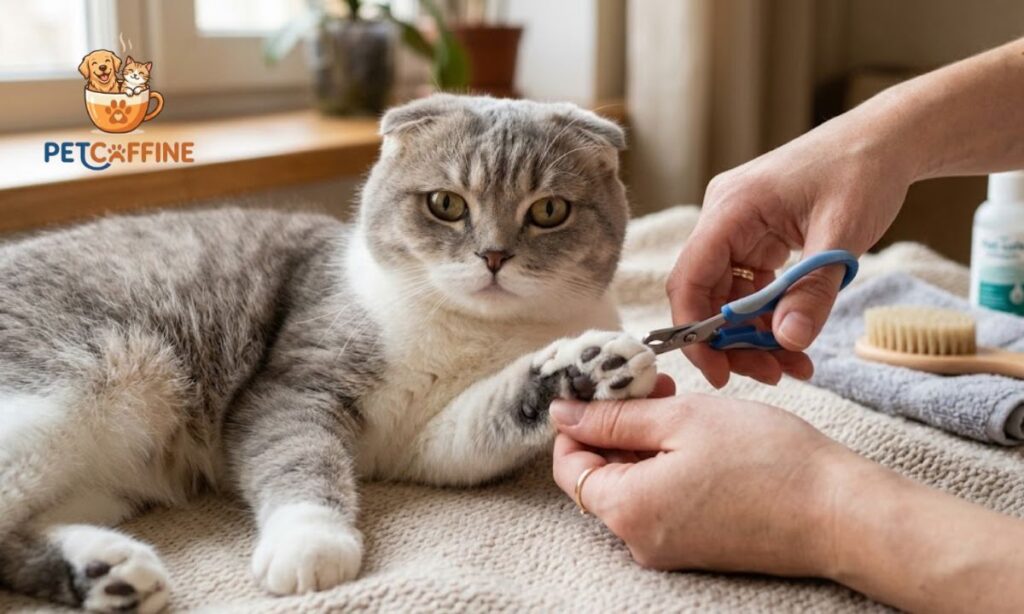
Safe Trimming Steps
Use cat-specific nail clippers, not human ones.
Press gently on the paw to extend the claw.
Trim only the sharp tip, well clear of the pink quick.
Stop and reward your cat after each paw.
Paw Pad Checks
While trimming, check the pads for cracks, debris, or litter buildup. Clean paws also mean a cleaner litter box and home.
Dental Hygiene Shouldn’t Be an Afterthought
Dental disease is common in cats and can be difficult to detect until it becomes painful. To prevent periodontal disease and tooth loss, it’s important to clean your Fold’s teeth a few times per week.
Use a cat toothbrush and toothpaste to clean your cat’s teeth. Avoid using human toothpaste as it may cause an upset stomach in your cat.
In addition to brushing, dental treats and toys can help promote healthy teeth in your cat, but they shouldn’t replace brushing.
I will give my cat dental treats and toys as supplemental care, but I will continue to brush their teeth regularly.
Managing Coat, Skin, and Shedding
Regular brushing does double duty. It reduces loose fur around your home and lowers the risk of hairballs.
Shedding Control Tips
Brush more often during spring and fall shedding peaks.
Use a de-shedding tool for long-haired Folds during heavy shedding.
Vacuum cat bedding weekly to cut down on loose hair buildup.
Skin Checks During Grooming
Each time you brush your pet, examine the skin closely for dryness, flaking, redness, or pimples. By identifying these conditions early, you can often treat them easily.
If you see recurring dandruff or irritation, it could be a sign of a dietary deficiency or a skin problem, so take it to your vet.
Grooming Cats with Joint Pain or Limited Mobility
This is where Scottish Fold care differs most from other breeds. The same mutation that folds the ears can affect cartilage in the spine, tail, and limbs. This condition, called osteochondrodysplasia, can lead to stiffness or arthritis over time.
Why This Affects Grooming
A cat in pain grooms itself less. You may notice mats forming in spots your cat used to keep clean, especially the lower back and hindquarters.
Practical Adjustments
Keep grooming sessions shorter and gentler.
Support the cat’s body instead of holding a limb in place.
Offer a low-sided litter box for easier access.
Use raised food and water bowls to ease neck strain.
Provide soft, supportive bedding for joint comfort.
If your cat seems reluctant to be touched in certain spots, don’t force it. Note the area and bring it up at the next vet visit.
Nutrition’s Role in Coat and Joint Health
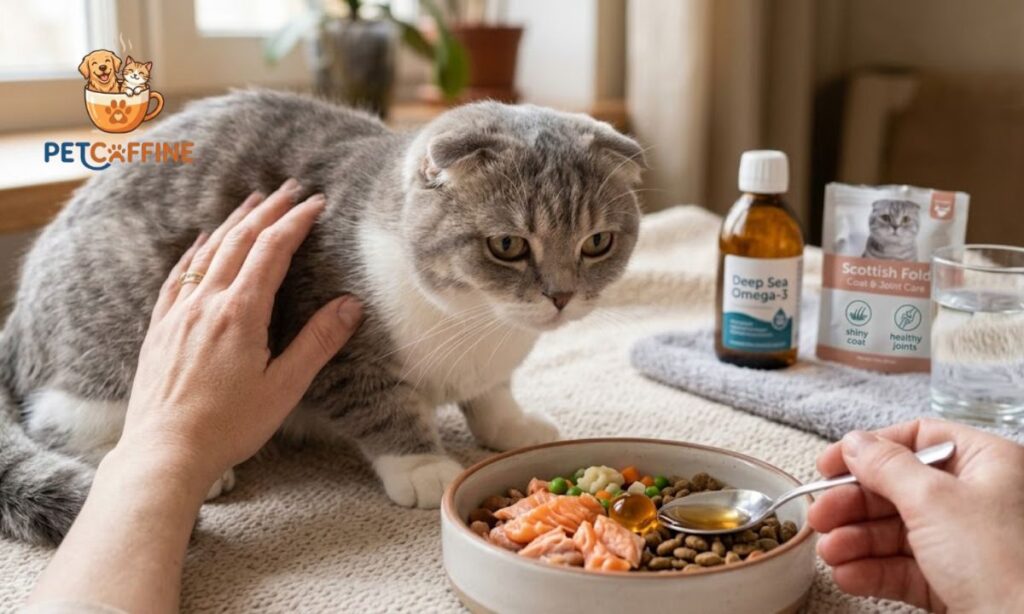
Grooming and the pet’s diet are closely related, which many owners understand too late. A cat that is fed a healthy diet will have less dandruff and a healthier coat, as well as joints that do not hurt, making the grooming process much easier for the pet.
What to Look for in the Food
A complete diet that has been developed for the cat’s current condition or age
The first ingredient listed on the packaging should be a type of meat
The content of omega-3 acids to improve the condition of the skin and fur
Joint Support Components
Glucosamine and chondroitin are two components found in many joint disease treatments and dietary supplements for cats. These ingredients are considered conditioners for pets with diseases such as arthritis and are therefore recommended by veterinarians when considering the Scottish Fold’s peculiarities.
As for hydration, it is also essential to monitor how much water the pet drinks since it directly affects the state of the skin and the hair’s quality.
Feeding Habits That Support Grooming
Wet food is beneficial for cats, as it provides them with moisture in addition to regular water, which is good for their coats, but some owners opt for a mixture of wet and dry food, as dry food can help clean the cat’s teeth due to the chewing process.
It is important to monitor the amount of food the cat eats, as Scottish Folds have delicate joints and extra weight can put undue pressure on them, causing additional stress and discomfort. A cat that is not overweight will be much more active and able to care for itself better.
It is better to consult a veterinarian to find out which type of food is more suitable for the cat, rather than guessing the requirements based on the package, as different cats have different dietary needs. What is suitable for a young and active cat will not be appropriate for an elderly Scottish Fold with delicate joints.
Making Grooming a Stress-Free Bonding Ritual
Grooming works best when your cat sees it as safe, not scary. That starts with slow, positive introductions to every tool you use.
Getting Your Cat Used to Grooming Tools
Let your cat sniff the brush, comb, or clippers before you use them. Pair each new tool with a treat or gentle praise. Keep first sessions under two minutes.
Building the Habit
Groom at the same time each day if possible.
Stop before your cat gets restless or annoyed.
End every session on a calm, positive note.
Over time, most cats start to enjoy the routine. Grooming becomes less about maintenance and more about connection.
Reading Your Cat’s Comfort Level
Remember to pay attention to the subtle signs when you are grooming your cat. A relaxed cat will be loose-limbed, have slightly unfocused eyes, and a calm tail. Ears pulled back, a twitching tail, or a moving away means to stop. Do not fight your cat, and he or she will stop associating grooming time as relaxing and enjoyable.
If your cat gets tense at a particular point in the grooming process, such as trimming or cleaning his or her ears, try focusing your attention on that one task, and leave the other activities alone.
Grooming Needs by Life Stage
The Scottish Fold’s aging process makes it essential to follow specific grooming practices throughout their life. Each owner should consider possible changes that can happen in order to provide the best care for the pet.
Kittens
Spays and neuters are vital procedures for any kitten owner. The sooner the operation is done, the better it is for the animal’s health. Moreover, you should introduce your kitten to grooming procedures to accustom it to regular treatments.
Adults
An adult Scottish Fold requires a standard set of grooming activities. A careful examination of the cat’s weight and the state of its coat can help determine if its diet and exercise need adjustment.
Seniors
Senior Scottish Folds need special help since their bodies start to experience discomfort. It is better to use softer brushes and spend less time on grooming procedures. In addition, arthritis can be a problem for older cats, so it is vital to observe their movements and change the position during the procedure if needed.
Life Stage
Grooming Focus
Session Length
Kitten
Tool habituation, gentle handling
1–2 minutes
Adult
Routine maintenance, weight checks
5–10 minutes
Senior
Joint-friendly handling, closer health checks
3–5 minutes
Seasonal Grooming Adjustments
Grooming needs shift with the seasons, and Scottish Folds respond to these changes more than owners often expect.
Spring and Fall Shedding Peaks
Most cats tend to shed more during the change of seasons as they prepare their coats for the oncoming weather. It is necessary to brush them more during these periods, even if your cat is a short-haired one. It will help prevent their fur from forming knots and hairballs.
Winter
During this time, your cat spends more time indoors where the air can be especially dry. If you notice that they have flaky skin, try using a conditioner for cats to help them through this period. Additionally, you might observe that your cat is not drinking as much water as you are used to seeing. This happens because dry air sucks moisture out of their skin, making it unpleasant for them to drink.
Summer
This season is ideal for cats who have their own yard or patio to relax on. Try to make sure that your feline companion does not have any foreign objects in their fur, especially if they tend to roll in the dirt. Their nails can also be more prone to breaking during the warm season, so schedule more regular grooming sessions, or trim their nails at shorter intervals than you would during the winter.
When to Call the Vet
Some grooming discoveries need more than a home fix. Call your vet if you notice:
Mats that won’t come out with brushing
Skin lesions, scabs, or open sores
Sudden reluctance to be touched or groomed
Persistent foul ear odor
Unexpected aggression during handling
These signs can point to something bigger than a coat problem. Grooming sessions often reveal early clues to dental pain, kidney issues, or heart conditions before other symptoms appear.
Frequently Asked Questions
How often should I groom my Scottish Fold?
Short-haired Folds need brushing once or twice a week, while long-haired Folds need it three to four times a week or more.
Do Scottish Fold cats need special grooming?
Yes, their folded ears need extra attention to prevent wax buildup and infection that upright-eared breeds don’t face as often.
Is a Scottish Fold a high-maintenance cat?
Not overall, but their ear care and joint sensitivity require more consistent attention than many other breeds.
Are Scottish Folds hard to care for?
They’re manageable with a steady routine, though owners should stay alert to joint stiffness and ear health throughout their life.
Can Scottish Fold cats groom themselves?
Yes, but joint pain from their genetic condition can limit self-grooming, so hands-on help becomes more important with age.
Final Thoughts
A Scottish Fold cat is a real pleasure to take care of, so you can provide the best conditions for it at home. It is vital to remember that this breed has unique characteristics and needs your special attention.
Focus primarily on the cat’s ears and joints, and you will prevent most of the problems with ease. Moreover, regular vet check-ups combined with good home care will make your pet healthy and happy.
I’m a passionate pet writer who loves sharing practical tips, trusted advice, and heartwarming stories about cats, dogs, and other beloved companions. Through PetCaffine.com, I help pet lovers better understand their furry friends with easy-to-read articles on pet care, nutrition, behavior, health, and everyday life.







1 thought on “Scottish Fold Cats Care and Grooming: The Complete Guide”