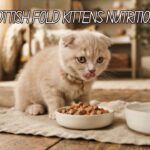
Scottish Fold Cat Diet: The Complete Feeding Guide
Those folded ears are a cartilage mutation. That mutation is not just ears. What you feed your Scottish Fold can help ease or make joint pain worse for life. That is what matters.
Scottish Folds have special nutritional needs because of a genetic condition that affects the cartilage throughout their bodies, not just their folded ears. This condition, known as osteochondrodysplasia, can cause stiff joints, thicker tails, reduced flexibility, and ongoing discomfort as they grow older.
Some cats may show only mild signs, while others develop more noticeable mobility problems over time. Although the right food cannot cure or remove this inherited condition, it can make everyday life more comfortable.
A healthy diet supports strong muscles, helps maintain a proper body weight, and reduces extra pressure on painful joints. Starting good eating habits early gives your cat a better chance of staying active and comfortable for years.
Two key factors make the biggest difference:
Weight control: Scottish Folds are generally easy-going and relaxed, spending much of their time indoors. They are less active than many breeds, so they can put on weight quickly. Even a little bit of extra weight adds stress to their joints, making it harder and more painful to move.
Joint-supporting nutrients: Ingredients such as omega-3 fatty acids, glucosamine, and chondroitin help support healthy cartilage and may ease inflammation. They cannot repair damaged joints, but they can improve comfort and support better mobility over time.
Choosing the right diet from kittenhood is one of the easiest ways to support your Scottish Fold’s long-term health and quality of life.
Reading Cat Food Labels Without the Guesswork
Cat food packaging often makes big promises, but the ingredient list tells the real story. Learning how to read it can help you choose a healthier option for your Scottish Fold.
Check the First Five Ingredients
The first five ingredients make up most of the recipe, so they deserve the closest attention. A quality food should list a named animal protein, such as chicken, turkey, or salmon, within the first two or three ingredients. This shows that meat is the main source of nutrition rather than inexpensive fillers.
Avoid these red flags:
Vague ingredients like “meat meal” or “animal by-product” listed first.
Corn, wheat, or soy appearing as one of the main ingredients.
Long lists of artificial colors, flavors, or preservatives.
Keep Carbohydrates Low
Cats are obligate carnivores, which means they need diets rich in animal protein. They are not designed to eat large amounts of carbohydrates every day. Foods packed with grains or starchy fillers can lead to unwanted weight gain, and extra weight places more strain on a Scottish Fold’s already sensitive joints.
Choose foods where high-quality protein comes first, and unnecessary grain fillers are limited or completely absent. This simple habit can help your cat stay lean, active, and more comfortable throughout its life.
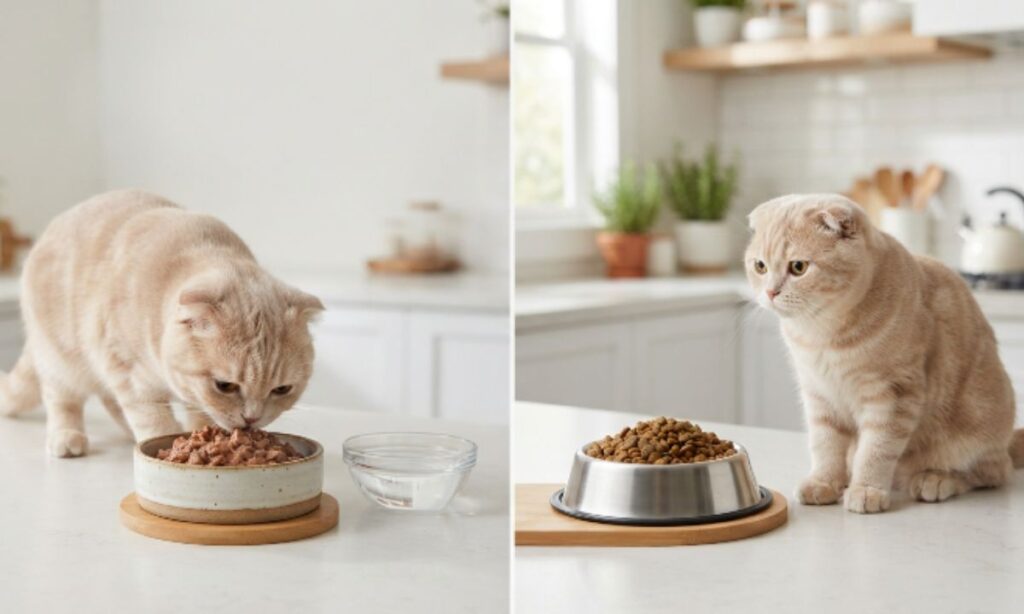
Wet Food vs Dry Food: What Actually Works
This is one of the most common questions Scottish Fold owners ask. Both have a place, but they’re not equal.
Factor
Wet Food
Dry Food
Moisture content
~70-80%
~10%
Protein source
Usually higher animal protein
Often more carb-heavy
Cost
Higher
Lower
Convenience
Needs refrigeration after opening
Easy to store and portion
Dental myth
No teeth-cleaning claim
Often marketed as tooth-cleaning (not well supported)
Cats have a naturally weak thirst drive. That trait traces back to their desert ancestry. Because of this, cats fed only dry food often run low on hydration without anyone noticing, which puts extra strain on the kidneys over time.
Dry food isn’t evil. It’s convenient and shelf-stable. Just don’t rely on it as the sole diet if you can help it. A mix of wet food as the main meal, with dry food as a smaller portion or treat, works well for most Scottish Folds.
Nutrients That Support Joint and Overall Health
Because Scottish Folds are born with a cartilage-related genetic condition, the nutrients in their daily diet can make a real difference in how comfortable they feel as they age. While food cannot fix the condition, the right ingredients can help support healthy joints, bones, digestion, and overall well-being.
Joint-Support Ingredients
Glucosamine and chondroitin help keep cartilage healthy and support the fluid that cushions the joints, making movement smoother.
Green-lipped mussel is a natural ingredient that contains compounds known to help reduce joint irritation and support long-term mobility.
Omega-3 fatty acids (EPA and DHA), usually from fish oil, help ease inflammation while also keeping your cat’s skin healthy and coat soft and shiny.
Vitamins and Minerals
Vitamin D helps the body use calcium properly, which supports strong bones. However, too much vitamin D can be harmful, so never add extra supplements unless your veterinarian recommends them. A moderate amount of fiber from ingredients like pumpkin or beet pulp also supports healthy digestion and helps reduce hairballs.
Calorie Awareness for Indoor Cats
Most Scottish Folds live indoors and are naturally less active, so they burn fewer calories each day. A calorie-controlled diet can help prevent gradual weight gain, keeping extra pressure off their sensitive joints and helping them stay active for longer.
How Much to Feed: Portions and Schedule
Giving your Scottish Fold the right amount of food is just as important as choosing a high-quality diet. Many owners accidentally overfeed because they rely on the food bowl instead of the calorie content.
Even small extra portions each day can lead to steady weight gain, and carrying extra weight puts more stress on a Scottish Fold’s sensitive joints. Using a measuring cup or kitchen scale makes feeding much more accurate and helps your cat stay at a healthy weight.
Daily Calorie Ballpark
Most healthy adult Scottish Folds weighing between 9 and 13 pounds need around 200 to 300 calories per day. The exact amount depends on several factors, including age, activity level, body condition, and metabolism. A playful, active cat may need a little more food, while a quiet indoor cat often needs less.
For example, an 11-pound adult Scottish Fold may eat the following:
Two 3-ounce cans of wet food
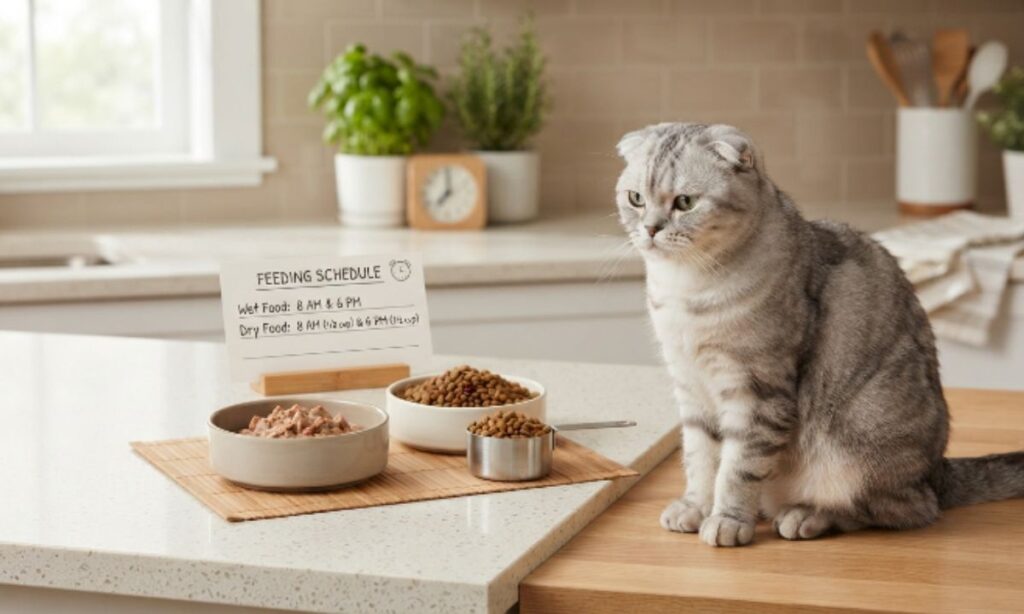
About one-quarter cup of high-quality dry food
Around 280 calories in total
Wet food usually looks like a larger portion because it contains more moisture. Dry kibble is more calorie-dense, so a small serving can contain a surprising number of calories. Always check the feeding guide on the package and adjust based on your cat’s body condition instead of judging by how full the bowl appears.
Meal Frequency
Most adult Scottish Folds do well with two meals a day, served about 12 hours apart. This routine helps maintain steady energy and prevents long periods without food. Some cats prefer three smaller meals, which may reduce begging and help them feel satisfied throughout the day. Whatever schedule you choose, try to keep feeding times consistent.
Checking If Portions Are Right
Your cat’s body condition tells you more than the feeding label. Every few weeks, gently run your hands along your cat’s sides and look at them from above.
You should be able to feel the ribs without pressing hard.
A visible waist should appear when viewed from above.
The belly should have a slight upward tuck from the side.
If you cannot feel the ribs, your cat may be overweight. If the ribs are very easy to see, your cat could be underweight. Weighing your Scottish Fold once a month is a simple way to catch small changes before they become bigger health concerns.
Feeding Through Every Life Stage
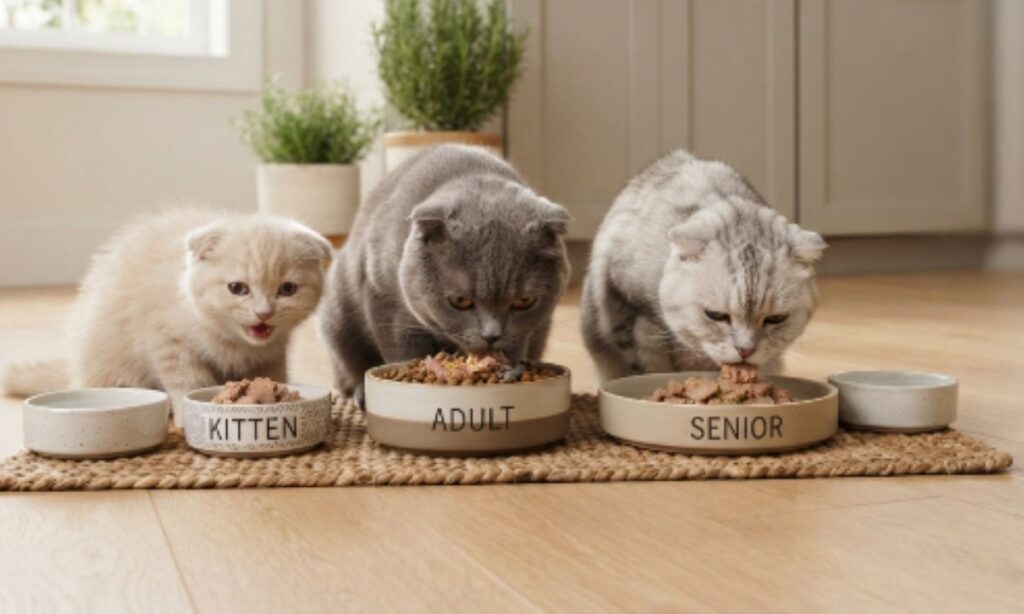
A Scottish Fold’s nutritional needs change throughout life. Feeding the right food at each stage supports healthy growth, maintains muscle, and helps protect joints as your cat gets older.
Kittens
Scottish Fold kittens grow quickly and need much more energy than adults. They generally require about twice as many calories per pound of body weight to support healthy development.
Feed 3 to 4 small meals each day until around six months of age.
Gradually move to 2 meals daily by about one year.
Choose kitten food with balanced calcium and phosphorus for healthy bones.
DHA helps support brain and eye development.
Offering different protein sources, such as chicken, turkey, fish, and beef, while they are young can reduce picky eating later.
Adults
Once your Scottish Fold reaches adulthood, the goal is to maintain a healthy weight and support long-term joint health.
Choose food with high-quality animal protein.
Keep calorie intake under control to prevent gradual weight gain.
Include joint-support ingredients before stiffness becomes noticeable.
Seniors
After about 7 years of age, many Scottish Folds become less active and may need fewer calories. At the same time, they still need high-quality protein to help maintain muscle mass.
Continue feeding foods that support joint health.
Switch to softer food if chewing becomes difficult because of dental problems.
Pay close attention to changes in appetite, thirst, or weight, as these can be early signs that your senior cat needs a veterinary checkup.
Hydration Matters More Than Most Owners Realize
Cats descend from desert-dwelling ancestors. That history left them with a weak thirst drive, meaning they often don’t drink enough water on their own.
Chronic low water intake is linked to kidney problems later in life. A few habits make a real difference:
Set up multiple water stations around the house
Change water daily, since cats often avoid stale water
Try a cat water fountain; many cats prefer moving, filtered water over a still bowl
Keep water bowls away from food and litter boxes
Watch for sudden changes in drinking habits. Drinking a lot more or a lot less than usual can point to kidney disease, diabetes, or dental pain, and it’s worth a vet visit.
Homemade and Raw Diets: Proceed With Caution
Raw or homemade diets appeal to owners who want full control over ingredients. Done wrong, though, they can cause serious harm.
A cat’s whole-prey equivalent diet includes muscle meat, organs, and bone, not muscle meat alone. Feeding only muscle meat leaves out calcium and other nutrients your cat needs.
Key rules if you go this route:
Work with a veterinary nutritionist to build a balanced recipe
Never rely on random recipes found online without professional review
Add taurine supplementation to any cooked homemade diet, since heat destroys natural taurine
Watch for signs of taurine deficiency, including heart problems and vision loss
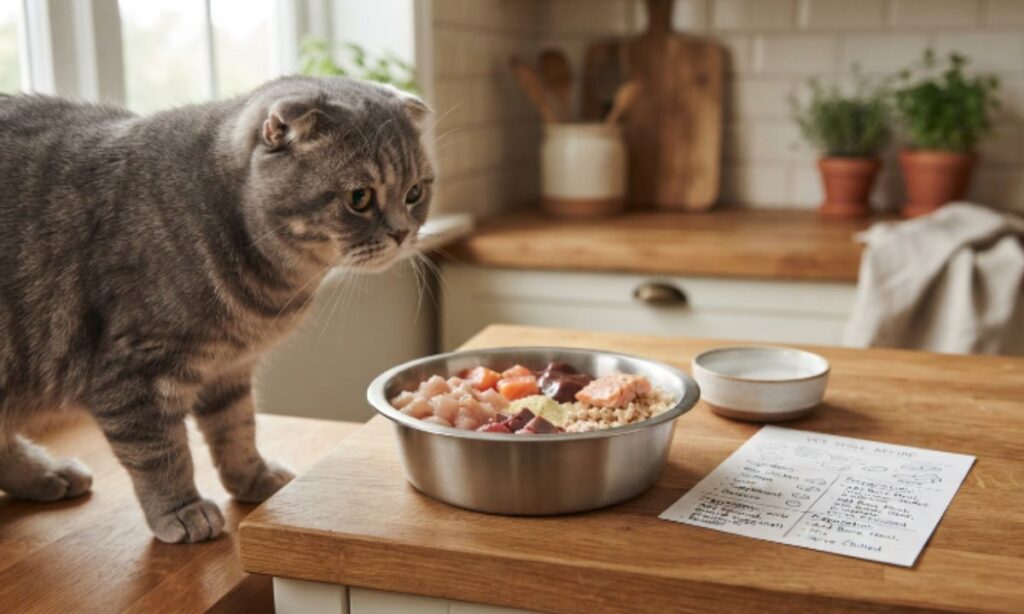
If a fully balanced homemade diet feels like too much to manage safely, a high-quality commercial wet food is a simpler and safer path to the same nutritional goals.
Weight Management for a Joint-Friendly Body
Scottish Folds gain weight easily, and extra weight puts direct pressure on joints already affected by the cartilage mutation.
Practical steps that help:
Skip free-feeding; measure every meal
Use puzzle feeders to slow down eating and add mental stimulation
Schedule daily play sessions with toys, feather wands, or laser pointers
Keep treats under about 10% of total daily calories
Small, consistent habits do more for long-term weight control than any single diet change.
Common Feeding Mistakes to Avoid
Even caring cat owners can make feeding mistakes without realizing it. Most of these habits develop because they seem easier, but over time they can affect your Scottish Fold’s weight, digestion, and joint health. Paying attention to a few simple details can make a big difference.
Common Feeding Mistakes
Free-feeding dry food often encourages overeating and can make cats picky about meals.
Feeding only dry food may leave your cat without enough daily moisture, which is important for urinary and kidney health.
Changing foods too quickly can upset your cat’s stomach and lead to vomiting or diarrhea.
Choosing food based only on marketing claims instead of reading the ingredient list may result in lower-quality nutrition.
Keeping just one water bowl or forgetting to refill it with fresh water can reduce your cat’s water intake.
Giving too many treats is easy to do, especially when your Scottish Fold gives you those adorable eyes. Still, treats should stay under 10% of your cat’s daily calories.
Fixing even a few of these habits can help your cat stay healthier, more active, and more comfortable.
Foods That Are Toxic to Cats
Some everyday human foods can be harmful or even life-threatening for cats. Keep these completely out of your Scottish Fold’s diet:
Onions and garlic
Grapes and raisins
Chocolate, coffee, and other caffeinated products
Alcohol
Raw yeast dough
Xylitol found in many sugar-free products
Raw fish
Raw eggs
Cooked bones that can splinter
Most dairy products, since many adult cats cannot digest lactose properly
Building Consistent, Healthy Feeding Habits
Scottish Folds thrive on routine. Feed your cat at the same times each day in a quiet, comfortable place. If you need to change foods, mix the new food with the old one over 7 to 14 days, slowly increasing the new food. This gradual approach helps prevent stomach upset and gives your cat time to adjust without stress.
Frequently Asked Questions
How often should I feed my adult Scottish Fold?
Two meals a day, spaced about 12 hours apart, works well for most adult Scottish Folds.
Is dry food bad for Scottish Fold cats?
Dry food isn’t harmful in moderation, but it shouldn’t be the only food, since it lacks the moisture cats need for hydration.
How many calories does a Scottish Fold need per day?
Most adult Scottish Folds need roughly 200 to 300 calories a day, depending on weight and activity level.
What supplements help with joint health?
Glucosamine, chondroitin, green-lipped mussel, and omega-3 fatty acids are the most commonly recommended joint-support nutrients.
Is a raw diet safe for Scottish Folds?
Raw diets can be safe if they’re nutritionally complete and include organs, bone, and taurine, but they need veterinary guidance to avoid deficiencies.
Conclusion
Scottish Folds have folded ears that come with a genetic trade-off that affects cartilage throughout the body, and diet is one of the few tools you have to manage it. Emphasize quality protein, controlled portions, real hydration, and joint-support nutrients, and adjust as your cat moves through the kitten, adult, and senior years. None of this needs to be perfect, just consistent, informed choices at mealtime, and your cat’s joints and overall health will benefit for years to come.
I’m a passionate pet writer who loves sharing practical tips, trusted advice, and heartwarming stories about cats, dogs, and other beloved companions. Through PetCaffine.com, I help pet lovers better understand their furry friends with easy-to-read articles on pet care, nutrition, behavior, health, and everyday life.