No feeding manual for that folded ear. Right now, your Scottish Fold kitten is growing quicker than it will at any other time in its life. Whatever you eat for the next year creates your bones, your joints, and your habits for the rest of your life. Master the fundamentals at the beginning, and your concerns down the line will be drastically reduced.
Scottish Folds look like ordinary cats with one obvious exception. That folded ear comes from a gene mutation that affects cartilage all over the body, not just the ears. This is the single biggest reason their nutrition deserves extra attention.
Breed Traits That Affect Feeding Priorities
The cartilaginous mutation responsible for the folded ear may also affect the joints, tails, and limbs in some folds. Not every kitten will be affected. It does mean that slow growth and consistent bone development are more important in this breed than in many others.
Scottish Folds are also generally relaxed and mellow cats. They’re not the kind of people who work off calories running after every damn thing that runs. Cartilage sensitivity, combined with a chill attitude, makes portion control something to be taken seriously right from week one.
Why the First Year Works Differently Than Adulthood
A kitten’s body is under construction. Bones lengthen, muscles build, and the immune system learns to defend itself, all at the same time. That takes more protein, more calories per pound of body weight, and more frequent meals than an adult cat needs.
Feed a kitten like an adult cat, and you risk slowing that growth or creating gaps in nutrients like calcium and taurine. Feed too much of the wrong thing, and you risk extra weight landing on joints that may already carry more strain than average. Balance is the goal, not restriction and not excess.
Scottish Fold Kitten Feeding Stages
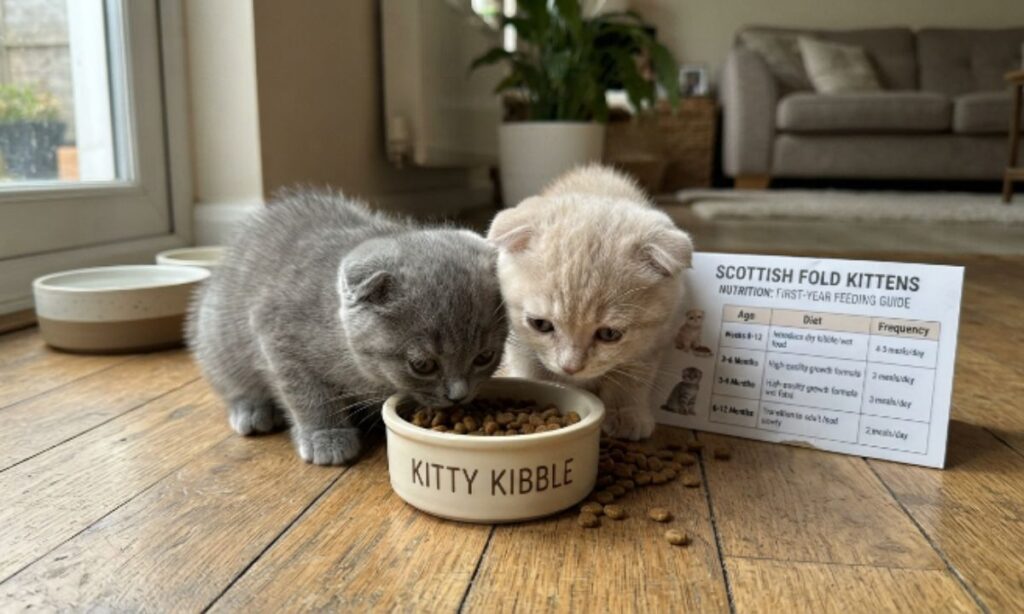
Kitten nutrition isn’t one static plan. It shifts every few weeks as your kitten grows. Here’s how the first year typically breaks down.
0 to 3 Months: The Milk and Weaning Stage
Unless the mother cat is unavailable or unable to nurse, the kittens should nurse from her as often as she will let them. No formula completely mimics the antibodies present in mothers’ milk. If nursing isn’t possible, a veterinarian-recommended kitten milk replacer is the alternative; never give cow’s milk, as most kittens are unable to digest it correctly.
Typically, at three to four weeks old, the weaning process begins. Start with a soupy blend of wet kitten food and warm water or formula, and then as your kitten begins to accept solid foods, slowly increase the thickness of the mixture over the coming weeks.
3 to 6 Months: The Intermediate Phase
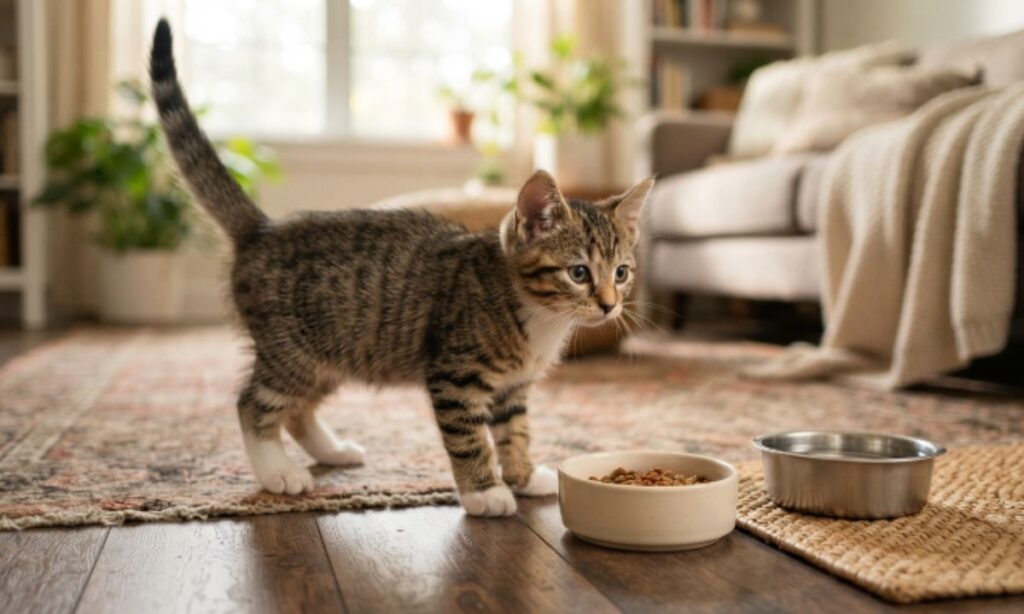
By three months, a majority of kittens have been completely weaned and are consuming solid kitten food. Since they are in the rapid growth phase of their lives, their calorie requirements are high relative to their body size.
Eat often, usually three or four times a day. Since baby cats have tiny stomachs, they can’t eat as much at a time as a full-grown cat can.
6 to 12 Months: The Growth and Maintenance Stage
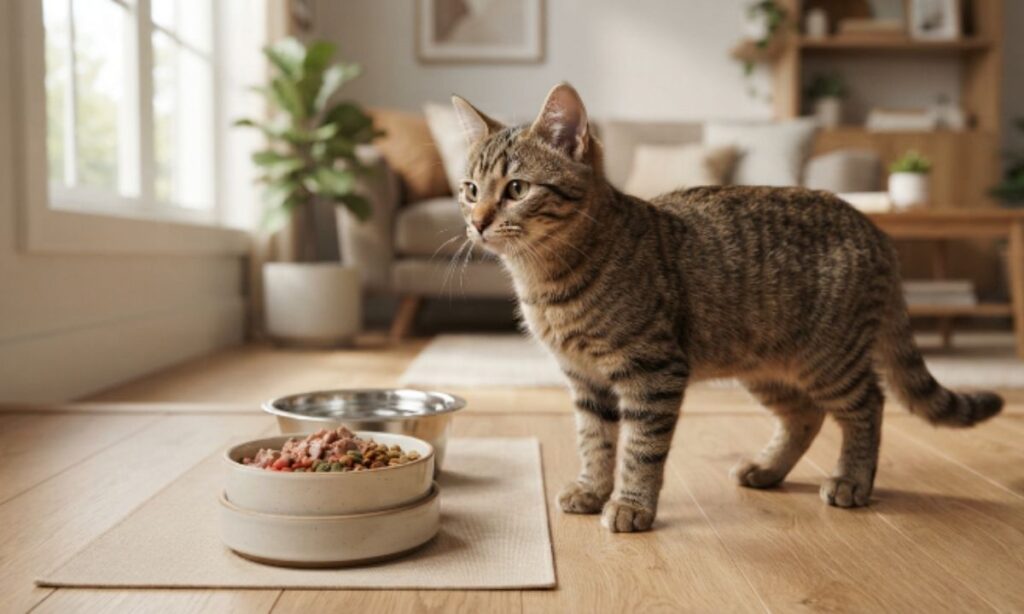
Development retards after the sixth month but does not cease. Osseous tissue continues to ossify, and musculature develops. Your kitten’s stomach will be able to hold more food, and so your kitten’s meal frequency can decrease to 2 or 3 meals a day.
Generally, the majority of Scottish Folds are near the size of an adult by ten to twelve months of age, though a few may take a bit more time to mature. Many owners also start feeding adult food at this stage, preferably with the advice of a vet once again on when to do so.
Best Food Choices for Scottish Fold Kittens
Not all kitten food is created equal. The right choice depends on ingredients, moisture content, and how well it matches your kitten’s life stage.
Wet Food vs Dry Food
Both formats can work. The real question is what each one brings to the table.
Factor
Wet Food
Dry Food
Moisture content
High, supports hydration
Low, needs extra water intake
Calorie density
Lower per gram
Higher per gram
Texture appeal
Often preferred by kittens
Good for dental chewing habits
Shelf life
Short once opened
Long, easy to store
Cost per meal
Generally higher
Generally lower
A lot of owners land on a mixed approach: wet food for hydration and palatability and dry food for convenience and dental benefit. There’s no single right answer, as long as the food is labeled complete and balanced for growth or all life stages.
Protein Sources That Matter
Kittens need more protein than adult cats, and the source matters as much as the amount. Look for real meat listed first on the ingredient panel, not meat by-products or vague “meat meal” as the primary source.
Good options typically include:
Chicken
Turkey
Fish, in moderation due to mercury and fat content
Named animal proteins rather than generic fillers
Plant proteins can appear in kitten food, but they shouldn’t be the main event. Cats are obligate carnivores. Their bodies are built to run on animal-based protein.
Key Nutrients for Growth
Certain nutrients matter more during kittenhood than at any other life stage. Missing them, even briefly, can affect development.
Nutrient
Why It Matters
Common Sources
Protein
Builds muscle, supports every growth process
Chicken, turkey, fish
Taurine
Essential amino acid, supports heart and eye health
Animal-based proteins
Calcium and phosphorus
Builds strong bones in the correct ratio
Kitten-formulated diets
Vitamin D
Helps the body absorb calcium properly
Fortified kitten food
Omega-3 fatty acids (DHA)
Supports brain and eye development
Fish oil, fortified formulas
Taurine deserves a special mention. Cats can’t produce enough of it on their own, and a taurine deficiency can lead to serious heart and vision problems over time. Any food labeled complete and balanced for kittens should already include it, but it’s worth checking the label if you’re feeding anything homemade or unconventional.
Weight Control and Joint Health
This is where Scottish Fold nutrition genuinely differs from generic kitten advice.
Why Excess Weight Is a Bigger Deal Here
Extra weight puts strain on joints in any cat. In a breed where cartilage may already be more vulnerable, that strain matters more. A lean kitten today has an easier path to a comfortable, mobile adulthood.
Watching Body Condition, Not Just the Scale
Weight alone doesn’t tell the full story. Body condition, how the ribs, waist, and belly look and feel, gives a clearer picture.
A kitten at a healthy weight should have:
Ribs you can feel easily without heavy pressure, but not see
A visible waist when viewed from above
A belly that doesn’t sag or hang loosely
If your kitten’s ribs are hard to find under fat, or the waist has disappeared, it’s time to reassess portions with your vet.
Staying Lean Without Underfeeding
Weight control during kittenhood isn’t about restriction. Kittens genuinely need more calories per pound than adult cats. The goal is matching portions to actual growth, not skipping meals or offering diet food meant for adults.
Feeding Schedule and Portion Control
Exact portions vary by food brand, calorie density, and your kitten’s individual size, so always check the feeding chart on the packaging as a starting point. That said, general timing patterns hold steady across most healthy kittens.
Age
Meals Per Day
Notes
0–4 weeks
Nursing on demand
Milk replacer only if not nursing
4–8 weeks
4–6 small meals
Weaning onto solid food
2–4 months
3–4 meals
Rapid growth phase
4–6 months
3 meals
Growth continues steadily
6–12 months
2–3 meals
Approaching adult size
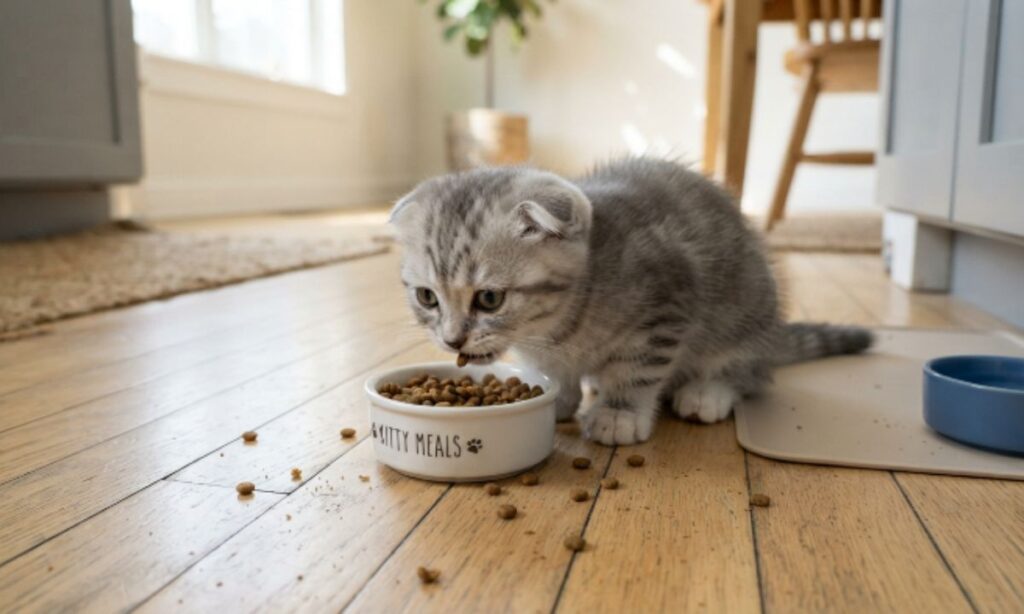
Measure portions with a proper kitchen scale or measuring cup rather than eyeballing it. Free-feeding, leaving food out all day, works for some kittens but makes overfeeding easy to miss in a breed already prone to weight-related joint strain.
Supplements and Special Diets
A healthy Scottish Fold kitten that eats a complete and balanced commercial kitten food usually gets all the nutrients it needs from its daily meals. In most cases, there is no need to add extra vitamins, minerals, or nutritional supplements. Giving unnecessary supplements can sometimes do more harm than good, especially if they upset the balance of important nutrients.
That said, every kitten is different. Some may have specific health concerns, digestive issues, or nutritional needs that require a different feeding approach. Before making any changes to your kitten’s diet, it’s always best to understand why the change is needed instead of following general advice found online.
When Supplements May Help
You may hear other cat owners or breeders recommend supplements such as omega-3 fatty acids, probiotics, or joint-support products containing glucosamine and chondroitin. These products can be useful in certain situations, but they are not something every Scottish Fold kitten needs.
For example:
Omega-3 fatty acids may support healthy skin, coat quality, and brain development.
Probiotics can sometimes help improve digestion after illness or during dietary changes.
Glucosamine and other joint-support ingredients may be recommended for cats with specific joint concerns.
Even though these supplements sound beneficial, they should only be used when there is a genuine reason. Giving the wrong supplement or the wrong amount may not provide any benefit and could even create new health problems. Always speak with your veterinarian before adding anything beyond your kitten’s regular food.
Sensitive Stomachs and Special Diets
Some Scottish Fold kittens have more sensitive digestive systems than others. They may experience loose stools, vomiting, excessive gas, itchy skin, or frequent stomach upset after eating certain foods. These signs may point to a food sensitivity or an ingredient that doesn’t agree with your kitten.
If your veterinarian suspects a dietary issue, they may recommend switching to a sensitive-stomach or limited-ingredient kitten formula. These diets are designed to be easier on digestion while still providing complete nutrition for healthy growth.
Whenever you change your kitten’s food, do it slowly over seven to ten days. Gradually mix the new food with the old one instead of making a sudden switch. This helps reduce digestive upset and gives you a chance to monitor how your kitten responds. Keep an eye on appetite, energy levels, stool quality, and overall comfort during the transition.
Why Veterinary Guidance Matters
No two kittens grow at the same pace. Age, activity level, genetics, and overall health all affect their nutritional needs. What works well for one Scottish Fold kitten may not be the right choice for another.
A veterinarian can monitor your kitten’s growth, evaluate its body condition, and recommend dietary changes only when they are actually needed. If there are concerns about nutrient deficiencies or health problems, your vet may suggest blood tests or other examinations to identify the real cause before symptoms become serious.
Instead of guessing which supplement or special diet might help, rely on professional advice. A quick visit to the veterinarian can save time, prevent unnecessary expenses, and make sure your Scottish Fold kitten receives the right nutrition for a healthy start in life.
Foods to Avoid
Some foods are genuinely dangerous, not just unnecessary. Keep these away from your kitten entirely.
Chocolate, in any form
Onions and garlic, raw, cooked, or powdered
Grapes and raisins
Cooked bones that can splinter
Raw dough containing yeast
Alcohol in any quantity
Excessive dairy, which many kittens can’t digest well
Sudden food changes cause almost as much trouble as bad ingredients. Switching formulas overnight can trigger vomiting or diarrhea. Blend the new food with the old over five to seven days, increasing the new portion gradually each day.
Practical Monitoring
Feeding a kitten well isn’t a one-time decision. It’s an ongoing check-in.
What to Watch
Weekly weight checks during the fastest growth months
Body condition, ribs, waist, and belly shape
Appetite level and enthusiasm at mealtime
Coat condition and energy levels
Signs the Diet Needs Adjusting
A dull coat, low energy, sudden weight loss, or a kitten that seems constantly hungry despite regular meals are all signals worth acting on. So is the opposite problem, a kitten gaining weight faster than expected for its age.
When to Call the Vet
Any vomiting or diarrhea lasting more than a day, a kitten that refuses food for 24 hours, visible limping, or stalled growth compared to littermates all deserves a vet’s visit. Don’t wait it out and hope it resolves on its own.
Frequently Asked Questions
What is the best food for a Scottish Fold kitten?
A complete and balanced kitten food with real animal protein listed first, whether wet, dry, or a mix of both.
How often should Scottish Fold kittens eat?
Young kittens need four to six small meals a day, tapering down to two or three by their first birthday.
Do Scottish Fold kittens need special food?
Not a special formula, but they benefit from calorie control and lean body condition due to breed-related joint sensitivity.
What foods should Scottish Fold kittens avoid?
Chocolate, onions, garlic, grapes, cooked bones, and raw dough are all off-limits.
Do Scottish Fold kittens need supplements?
Most don’t, as long as they’re eating a complete commercial kitten diet, but any supplement should be confirmed with a vet first.
Conclusion
Brought up during its first year, a Scottish Fold kitten is about establishing a few consistent habits: actual protein, a routine, moderate quantities, and physical condition over chasing a number on a scale.
The folded ear might be what makes this breed recognizable, but it’s the cartilage trait underlying it that makes lean, well-balanced nutrition not just a nice-to-have but really necessary. Get these basics correctly, and you’re preparing your kitten for a robust, mobile, comfortable life well past its first birthday.
I’m a passionate pet writer who loves sharing practical tips, trusted advice, and heartwarming stories about cats, dogs, and other beloved companions. Through PetCaffine.com, I help pet lovers better understand their furry friends with easy-to-read articles on pet care, nutrition, behavior, health, and everyday life.