Homemade Food for Scottish Fold Cats: A Complete Guide
Scottish Folds look calm on the outside. Underneath those folded ears, their joints tell a different story. What you feed them either protects those joints or slowly wears them down. This guide shows you how to get it right.
Scottish Folds have unique nutritional needs because of the same genetic mutation that gives them their folded ears. That gene affects cartilage throughout the body, which means their joints deserve extra care throughout life.
While every cat benefits from a balanced diet, keeping a Scottish Fold at a healthy weight is especially important. Even a small amount of extra body weight can place additional stress on joints that may already be more vulnerable, making movement less comfortable as the years go by.
Most Scottish Folds also spend their lives indoors and tend to have a calm, laid-back personality. They enjoy relaxing, sleeping, and observing the world far more than racing around the house all day.
Since they usually burn fewer calories than highly active breeds, it’s easy for them to gain weight if portions are too large or treats become a daily habit. That’s why measuring meals and sticking to a regular feeding routine can make a big difference.
The good news is that they don’t need expensive or unusual food. What they really need is a complete, balanced diet made with quality ingredients, proper hydration, sensible portions, and nutrients that help support healthy joints from an early age.
Is Homemade Food Actually Safe for Scottish Folds?
Homemade meals can work well for Scottish Folds, but only if they’re carefully planned. Many owners assume that serving plain cooked chicken or beef is enough because it looks fresh and healthy. Unfortunately, that isn’t a complete diet for a cat.
Cats have very specific nutritional requirements. If important nutrients are missing, deficiencies can develop slowly over time. Your cat may appear perfectly healthy at first, but the effects can eventually impact the heart, bones, eyesight, or overall health.
The Non-Negotiable Nutrients
Taurine – An essential amino acid that supports healthy vision and heart function. Cats cannot make enough on their own, so it must come from their diet.
Calcium and phosphorus – These minerals need to stay in the proper balance. Muscle meat alone isn’t enough, so a safe calcium source such as bone meal or eggshell powder is usually necessary.
Animal-based protein— Cats are obligate carnivores, meaning meat should always be the foundation of their meals.
Fat-soluble vitamin— Vitamins A, D, and E—are essential for normal body functions, and plain meat doesn’t reliably provide the right amounts.
Omega-3 fatty acids – These healthy fats help support joints, skin, and a soft, shiny coat, making them especially valuable for Scottish Folds.
One of the biggest mistakes people make with homemade feeding is leaving out the necessary supplements. Fresh meat is an excellent ingredient, but by itself it doesn’t provide everything a Scottish Fold needs to stay healthy over the long term.
Building a Balanced Homemade Meal
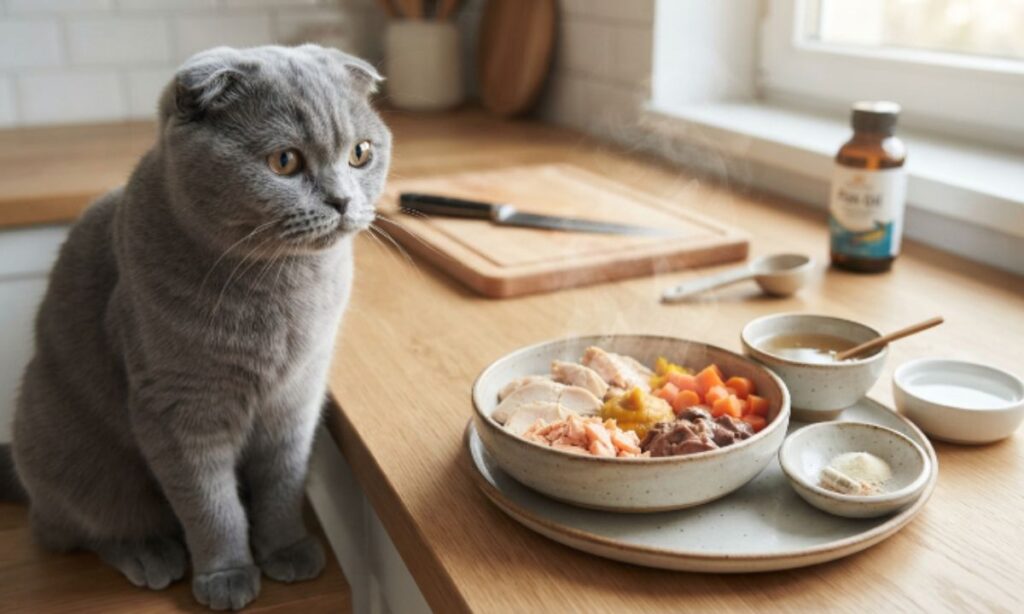
Making homemade food for your Scottish Fold doesn’t have to be complicated. The goal is to build every meal around the nutrients your cat needs instead of focusing on a single ingredient. Whether you choose chicken, turkey, beef, or fish, the overall formula stays much the same. When each part of the meal has a purpose, your cat gets balanced nutrition rather than just a full stomach.
The Core Formula
A primary animal protein, such as chicken, turkey, fish, or beef. This should be the main ingredient because cats depend on animal protein for energy, muscle maintenance, and overall health.
An organ meat, usually liver, is added in a small amount. Organ meats are naturally rich in vitamins and minerals, so only a little is needed.
A calcium source, such as finely ground eggshell powder or a quality bone meal supplement. This helps balance the phosphorus found in meat and supports healthy bones.
A taurine supplement, since heat from cooking can lower the amount of natural taurine available in the food.
A fat source, like fish oil, to provide omega-3 fatty acids that support healthy joints, skin, and a glossy coat.
Water or unsalted broth to keep the food soft, improve hydration, and make meals more appealing.
The way you prepare the food matters as well. Gently cooking the ingredients is a safer option for many households because it reduces the risk of harmful bacteria while preserving most nutrients. Any nutrients reduced during cooking can be replaced with the right supplements, making the meal complete and balanced.
These simple recipes can give you a good starting point. Before feeding them regularly, check portion sizes and supplement amounts with your veterinarian or a veterinary nutritionist.
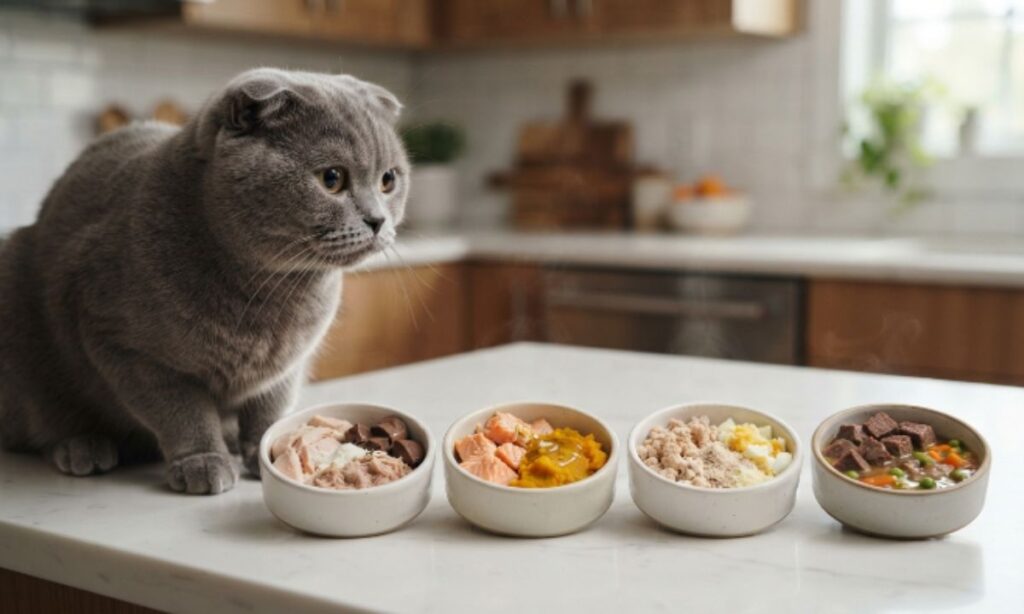
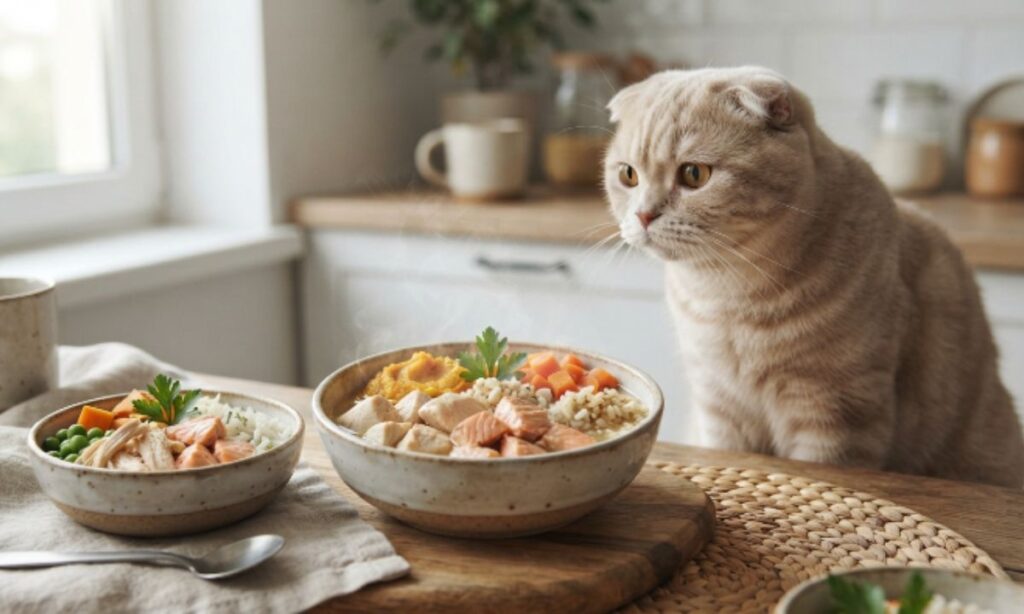
Chicken and Liver Bowl
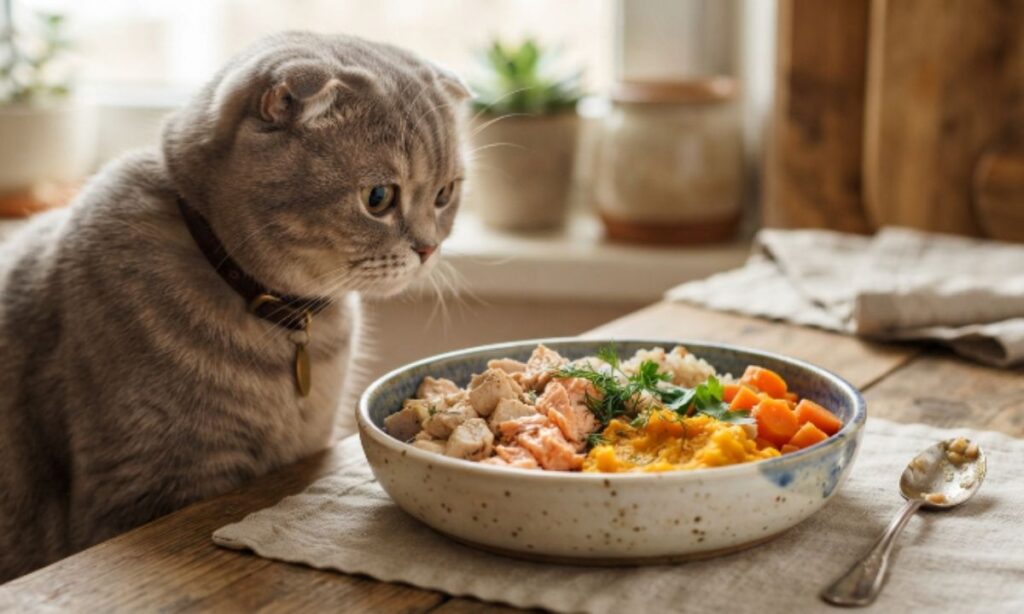
Mix cooked chicken breast with a small piece of cooked chicken liver. Add a calcium supplement, taurine, and a splash of low-sodium broth to create a soft, moist meal.
Salmon and Pumpkin Mix
Combine cooked salmon with a spoonful of plain mashed pumpkin for added fiber. Finish with a fish oil supplement to support healthy joints, skin, and coat.
Turkey and Egg Blend
Mix cooked ground turkey with a small amount of cooked egg. Add finely ground eggshell powder for calcium and include a taurine supplement to round out the meal.
Beef and Organ Stew
Cook lean beef with a small portion of beef liver or kidney. Add your calcium supplement and enough water to create a stew-like texture that helps your cat stay hydrated.
Switch between two or three recipes during the week instead of serving the same meal every day. A little variety keeps mealtime interesting and offers a wider mix of flavors while still following the same balanced nutritional plan.
Foods to Avoid Completely
Some human foods are genuinely dangerous for cats, not just unnecessary. Keep these out of every homemade batch.
Food
Why It’s Dangerous
Onions, garlic, chives, leeks
Damage red blood cells and can cause anemia, even in cooked or powdered form
Chocolate
Contains compounds that can cause vomiting, tremors, or worse
Grapes and raisins
Linked to kidney damage in some animals
Raw dough
Can expand in the stomach and produce alcohol as it ferments
Excess dairy
Most adult cats are lactose intolerant and may develop digestive upset
Alcohol
Toxic even in small amounts
Xylitol-sweetened items
Can cause a dangerous drop in blood sugar
If you’re ever unsure whether an ingredient is safe, leave it out. It’s easier to skip one ingredient than to treat a poisoning emergency.
Feeding Frequency by Life Stage
Scottish Folds need different feeding routines as they grow. A kitten, an adult, and a senior cat all have different nutritional needs, so following the same schedule for every age usually isn’t the best approach. Adjusting meal frequency and portion sizes throughout your cat’s life helps support healthy growth, maintain a healthy weight, and reduce unnecessary strain on the joints.
Kittens
Scottish Fold kittens grow quickly during their first year, so they need plenty of energy and nutrients to support healthy development. Three to four small meals a day usually work well because kittens have tiny stomachs but high energy needs.
Smaller, regular meals provide a steady supply of nutrients without overloading their digestive system. While healthy growth is important, it should happen at a natural pace. Overfeeding can lead to rapid weight gain, which may place extra pressure on developing bones and joints.
Adults
Once your Scottish Fold reaches adulthood, feeding becomes much easier to manage. Most healthy adults do well with two or three measured meals each day. Instead of leaving food available all day, serve set portions at regular times.
This routine makes it easier to prevent overeating, especially since many Scottish Folds are calm indoor cats that don’t burn a lot of calories. Sticking to consistent portions helps maintain a healthy body condition and lowers the risk of gradual weight gain.
Seniors
As Scottish Folds get older, their metabolism often slows down while their muscle mass naturally decreases. Senior cats usually need slightly fewer calories, but they still require high-quality animal protein to help preserve muscle.
At this stage, many owners also choose to include joint-supporting nutrients such as omega-3 fatty acids if recommended by their veterinarian. Regular weight checks become even more important because both weight gain and unexpected weight loss can affect an older cat’s health.
Portion Control and Weight Management
For Scottish Folds, maintaining a healthy weight is about much more than appearance. Extra body weight puts additional pressure on joints that may already be more sensitive because of the breed’s genetic makeup. Even a small increase in weight can make everyday activities like jumping, climbing, or walking less comfortable.
Weigh your cat about once a month to spot small changes before they become bigger problems.
Measure every meal with a measuring cup or kitchen scale instead of estimating portions by eye.
Keep treats to a minimum and count them as part of your cat’s daily calorie intake rather than serving them as extra food.
Watch for signs such as hesitation before jumping, avoiding stairs, or reduced activity, as these may be linked to weight gain or joint discomfort.
Keeping your Scottish Fold lean gives them a better chance of staying active and comfortable throughout their lives.
Signs Your Homemade Diet Needs Adjustment
A homemade diet should be reviewed from time to time because your cat’s nutritional needs can change. Paying attention to small changes often helps you catch problems early.
A dull, dry, or thinning coat may suggest your cat isn’t getting enough healthy fats or certain vitamins.
Weight gain or weight loss over several weeks can mean calorie intake needs adjusting.
Lower energy levels than normal may point to an imbalance in the diet.
Ongoing digestive issues, including loose stools or vomiting, should never be ignored.
A sudden loss of interest in homemade meals may mean the recipe needs improvement or your cat has an underlying health issue.
If you notice any of these signs, schedule a visit with your veterinarian instead of waiting for the problem to improve on its own. Small dietary adjustments made early are usually much easier than correcting long-term deficiencies.
How to Transition to Homemade Food Safely
Changing your Scottish Fold’s food should always be done gradually. A sudden switch can upset the digestive system, even if the new recipe is well balanced.
Start by mixing a small amount of homemade food into your cat’s current meals. Every few days, increase the homemade portion while reducing the old food. Most cats adjust comfortably over one to two weeks, although some may need a little longer.
During the transition, pay close attention to your cat’s appetite, stool quality, and overall behavior. If vomiting, diarrhea, or food refusal develops, slow the transition and speak with your veterinarian if the problem continues. Once your cat has fully switched, it’s a good idea to have the final recipe reviewed by a veterinary professional to confirm it provides complete nutrition.
Which Alternative Fits Your Situation?
Every cat owner has a different routine, so choose a feeding approach that works for your lifestyle while still meeting your Scottish Fold’s nutritional needs.
Busy schedules: Prepare homemade meals in larger batches once or twice a week, divide them into daily portions, and store them safely for quick feeding.
New to homemade feeding: Begin with one well-balanced recipe and the recommended supplements before trying additional proteins or ingredients.
Cats with joint sensitivity: Focus on recipes that include omega-3 fatty acids, maintain strict portion control, and support a healthy body weight.
Multi-cat households: Feed cats separately whenever possible so you can monitor exactly how much each one eats and quickly notice changes in appetite or eating habits.
Frequently Asked Questions
Can Scottish Fold cats eat homemade food every day?
Yes, as long as the recipe is nutritionally complete and supplemented correctly, homemade food can be a daily diet.
Do Scottish Folds need different food than other cat breeds?
Not radically different, but their joint sensitivity and lower activity levels make weight control and joint support more important.
What supplements are essential for homemade cat food?
Taurine, calcium, and a fat-soluble vitamin source are the non-negotiables in any homemade recipe.
How often should Scottish Folds be fed?
Kittens need three to four small meals daily, while most adults do well with two to three measured meals.
Is raw food better than lightly cooked homemade food?
Lightly cooked food generally carries less risk of bacterial contamination while still supporting good nutrition when properly supplemented.
Conclusion
Homemade food can absolutely work for a Scottish Fold, but only when it’s built around real nutritional needs, not just fresh ingredients. Focus on protein, taurine, calcium, hydration, and portion control, and check in with a vet along the way. Get those pieces right, and your Scottish Fold has a real shot at a longer, more comfortable, joint-friendly life.
I’m a passionate pet writer who loves sharing practical tips, trusted advice, and heartwarming stories about cats, dogs, and other beloved companions. Through PetCaffine.com, I help pet lovers better understand their furry friends with easy-to-read articles on pet care, nutrition, behavior, health, and everyday life.