Best Dry Food for Scottish Fold Cats: High-Protein, Low-Carb Picks and Feeding Tips
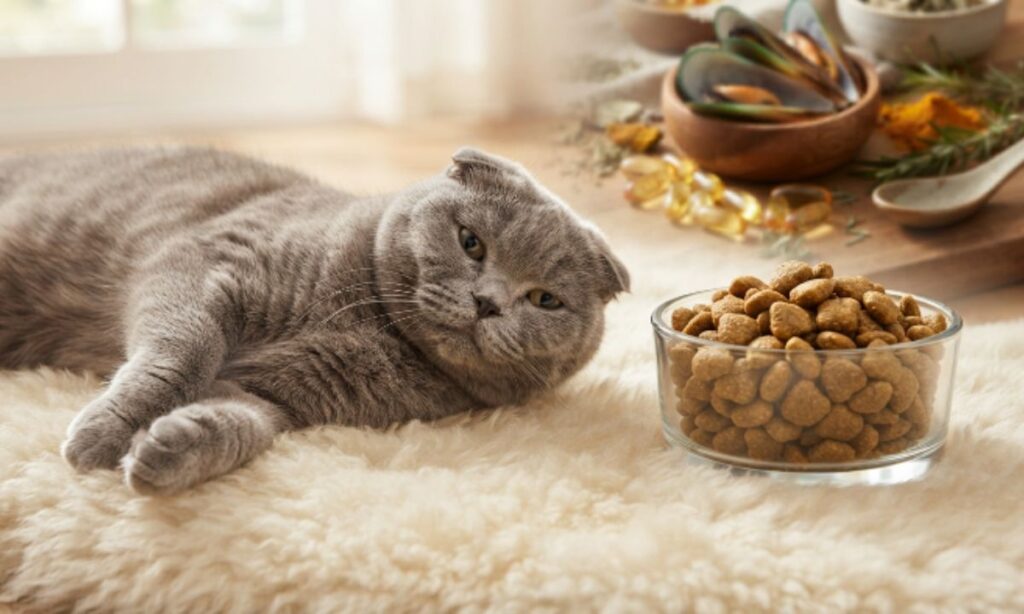
Those lovely folded ears can be deceiving. The same gene that gives cats that endearing look also affects their cartilage, joints, and overall comfort. What you put in their dish ultimately determines whether they experience chronic pain or not. These are the dry foods suitable for Scottish Folds.
Why Scottish Folds Need a Different Approach to Dry Food
Scottish Folds are beautiful cats with unique ears, but this peculiarity is not random. This feature is part of the genetic mutation that affects the entire skeletal system and causes joint problems in the folds. Therefore, it is essential to focus on the proper diet of a Scottish Fold and give priority to joint health.
The first factor that needs to be taken care of in the diet of this breed is the prevention of obesity. Cats need muscle tissue to take some of the load off the joints. However, the Scottish Folds are naturally sedentary and may be predisposed to weight gain. Thus, they have a harder time dealing with extra kilograms that put additional pressure on the joints.
Scottish Folds should be given a diet that allows for the maintenance of muscle tissue. Many owners think about the diet of their pets at a late stage of the disease, when the animal’s movements are already limited. However, by the time the Scottish Fold reaches adulthood, the state of its joints is already set. Therefore, it is crucial to start dietary adjustments on time.
The Cartilage Condition Behind Those Folded Ears
The disease is referred to as osteochondrodysplasia, which is a genetic disorder that causes the Scottish Fold cats’ ears to grow folded instead of sticking out. Their tail, legs, and joints may also be affected. It is essential to note that although the diet cannot cure genetic diseases, the correct nutrients can help prevent inflammation and allow the joints to stay comfortable over time.
This is why breed-specific recommendations are more necessary for Scottish Folds than for any other breed. A maintenance formula designed for a domestic shorthair should be sufficient for most house cats. However, a Scottish Fold requires an additional layer of joint care beyond the basic nutrition.
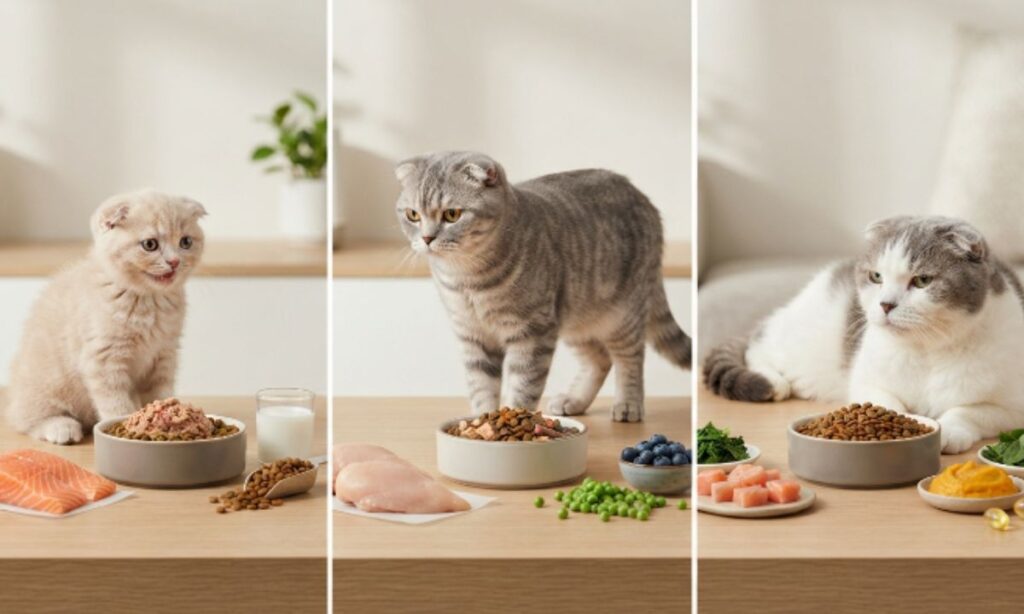
What Scottish Folds Actually Need From Their Diet
Cats are obligate carnivores. This isn’t marketing language; it’s biology. Their bodies are built to run on animal protein, not on corn, rice, or potatoes.
For a Scottish Fold specifically, three things matter most:
Animal-based protein to maintain lean muscle and support joint-adjacent tissue
Moderate, quality fat for energy and coat health without tipping into weight gain
Low carbohydrate content, since cats have limited ability to process carbs efficiently
Get these three right, and most other nutritional pieces fall into place.
The Ideal Nutrient Profile for Scottish Fold Dry Food
Use this as a rough benchmark when comparing bags side by side. No single food needs to hit every number exactly, but you want to consistently land in these ranges.
Nutrient
Target Range
Why It Matters
Protein
35–45%
Builds and maintains lean muscle mass
Fat
15–20%
Supplies energy and supports coat and skin
Carbohydrates
Under 10%
Cats digest carbs poorly; excess turns to fat
Fiber
2–5%
Supports digestion without diluting nutrition
Omega-3 fatty acids
Present, ideally from fish oil
Reduces joint inflammation, supports coat
Moisture
Low in dry food
Needs to be offset with water or wet food
Moisture is the one number dry food can’t fix on its own. Kibble typically sits around 10% moisture, compared to 70–80% in wet food. That gap matters for kidney and urinary health, which we’ll get back to later.
It’s worth keeping a photo of this table on your phone the next time you’re standing in the pet food aisle. Guaranteed analysis panels list these numbers directly on the bag, so comparing two or three options only takes a minute once you know what to look for.
How to Read a Dry Food Label Like a Pro
Marketing claims on the front of the bag mean very little. The ingredient panel on the back tells the real story.
Here’s what to check, in order:
The first ingredient should be a named animal protein. Chicken, salmon, turkey, or duck. Not “meat meal” or “animal by-product,” which don’t tell you what animal or what quality.
Look at the first five ingredients as a group. If two or more are grains, starches, or plant proteins, the food is leaning too far from what a cat needs.
Check for taurine. This amino acid is essential for heart and eye health, and cats can’t produce enough of it on their own.
Look for named fat sources. Chicken fat and salmon oil beat vague terms like “animal fat.”
Scan for fillers and additives. Artificial colors, flavors, and preservatives add nothing nutritionally and can trigger sensitivities in some cats.
A short ingredient list with real, named ingredients almost always beats a long list of extracts and additives.
Features That Separate Good Dry Food From Great Dry Food
Not all high-protein foods are created equal. For a Scottish Fold, look for a combination of these features rather than just one:
High animal protein content, ideally from a single named source
Low to moderate carbohydrate load
Added omega-3s from fish oil or algae oil, specifically for joint and coat support
Easily digestible ingredients that don’t cause bloating or gas
No unnecessary grain fillers, though grain-free isn’t automatically better if it’s replaced with excess legumes
That last point trips a lot of owners up. Grain-free food that swaps wheat for large amounts of peas and lentils isn’t necessarily an upgrade. It’s still a carb-heavy formula, just marketed differently.
Best Dry Food Categories for Scottish Folds
Rather than chasing a single “best” product, it helps to know which categories of food serve different needs. Here are the main ones worth comparing.
Breed-Specific or Joint-Support Formulas
Some brands make formulas designed around joint health, with added glucosamine, chondroitin, and omega-3s. These are worth prioritizing for a breed with known cartilage concerns, especially as your cat ages.
High-Protein Salmon Formulas
Salmon-based dry foods tend to be naturally rich in omega-3 fatty acids, which support both joint comfort and coat quality. They’re also a good option for cats who do better on fish protein than poultry.
Grain-Free Poultry Formulas
Chicken, turkey, or duck-based grain-free formulas work well for most Scottish Folds, as long as the carb source replacing the grain is kept modest. Check the ingredient order, not just the “grain-free” label on the front.
Weight-Management Formulas
For cats already carrying extra weight, a formula with slightly reduced fat and added fiber can help with satiety while protein stays high enough to preserve muscle.
Feeding Scottish Folds by Life Stage
Nutritional needs shift as your cat ages. A one-size-fits-all bag of food rarely serves a cat well from kittenhood through their senior years.
Kittens
To satisfy the increased caloric and protein needs, growing kittens require more calories and protein per pound of body weight than their adult counterparts. It is best to feed them a special kitten formula until they reach their full size to ensure they get all the nutrients they need. It is usually 12 months. When transitioning your fold to a new type of food, do it gradually, over 7 to 10 days. This will give your kitten’s delicate digestive system enough time to adapt to the new diet.
Adults
An adult Scottish Fold should be fed a diet that takes into account their activity level. It is best to measure the food rather than rely on the bag’s recommended portions. The amount depends on how much your cat is exercising. If your Scottish Fold is sedentary, they should be fed fewer portions than those who lead a more active lifestyle.
Seniors
Senior Scottish Folds need a diet that supports their joints, contains fewer calories, and is easier to digest. Their metabolism has slowed down, so they are likely to gain weight if they are not as active as before. As senior cats are often sensitive to changes in their bodies, it is crucial to watch their weight and appetite closely. These changes may indicate potential health issues, so a trip to the veterinarian is necessary if they occur.
Ingredients to Avoid in Scottish Fold Dry Food
Some ingredients do more harm than good, especially for a breed already managing joint sensitivity and a tendency toward weight gain.
Artificial colors and flavors, which offer no nutritional benefit
Chemical preservatives like BHA, BHT, and ethoxyquin
Excessive grain or legume content that displaces animal protein
Unnamed “meat meal” or “animal by-products” with no specified source
Fried or heavily processed fats, which can go rancid faster
Ingredients toxic to cats, including onion, garlic, and excess salt, which occasionally sneak into flavoring blends
If an ingredient list reads more like a chemistry set than a meal, it’s worth putting the bag back on the shelf.
It also helps to be skeptical of vague health claims printed on the front of the bag. Words like “natural” or “premium” aren’t regulated the way ingredient lists are, so they don’t tell you much on their own. The back of the bag is where the real information lives.
Weight Management Tips for a Breed Prone to Weight Gain
Scottish Folds are known for being relaxed, food-loving cats, which is exactly the combination that leads to extra weight. Since excess weight adds pressure to joints already affected by their cartilage condition, weight control isn’t optional here.
A few practical habits help:
Measure every meal. Use a kitchen scale or measuring cup instead of free-pouring.
Stick to a feeding schedule. Two or three set meals work better than food left out all day.
Check body condition monthly. You should be able to feel, but not see, your cat’s ribs.
Limit treats to under 10% of daily calories. Treats add up faster than most owners realize.
Encourage movement. Puzzle feeders and short play sessions help burn calories without stressing joints.
Small, consistent habits do more for long-term weight control than any single “diet” food ever will.
It also helps to involve everyone in the household in the same routine. Weight gain often creeps in when multiple family members each give a small handful of treats without realizing others are doing the same. A shared feeding log, even a simple note on the fridge, keeps everyone on the same page.
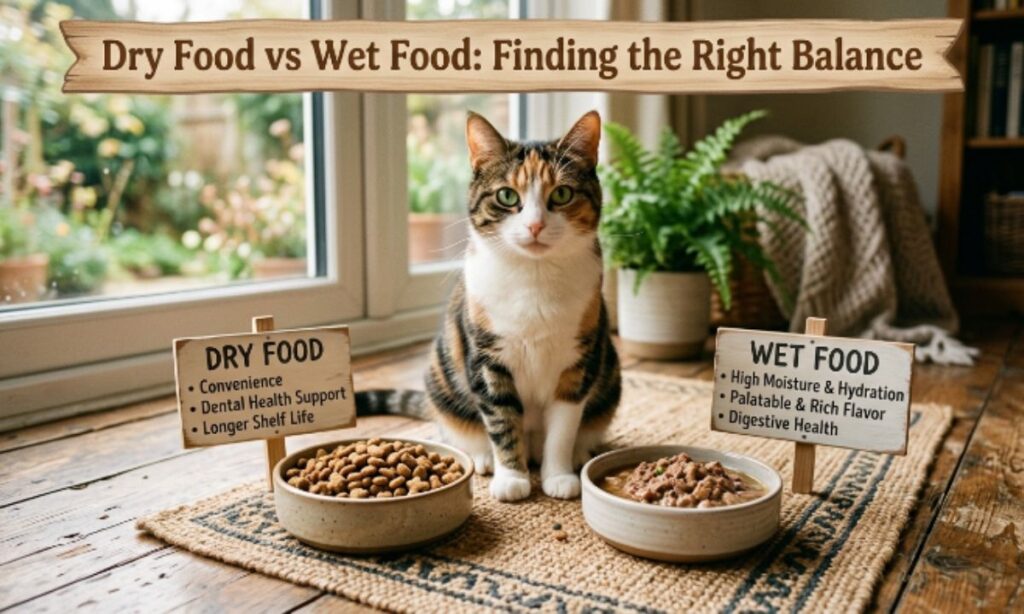
Dry Food vs Wet Food: Finding the Right Balance
Dry food is convenient. It stores well, doesn’t spoil quickly, and helps with dental wear through chewing. But its low moisture content is a real limitation for a breed that also needs to watch kidney and urinary health as it ages.
Wet food fills that gap with 70% or more moisture content, which supports hydration and can ease strain on the kidneys and urinary tract.
Many owners find a mixed feeding approach works best:
Approach
Pros
Watch For
Dry food only
Convenient, supports dental wear, cost-effective
Low moisture, easy to overfeed
Wet food only
High moisture, supports hydration
Spoils faster, higher cost, less dental benefit
Mixed feeding
Balances hydration and convenience
Requires portion math to avoid overfeeding
If you stick with dry food only, make sure fresh water is always available in multiple spots around the house, since cats are notoriously bad at drinking enough on their own.
A pet fountain can also encourage more drinking than a still water bowl, since many cats prefer moving water. It’s a small addition that can meaningfully close the hydration gap left by a dry-food-only diet.
Food Allergies and Sensitivities in Scottish Folds
True food allergies are less common than food sensitivities, but both show up with similar symptoms:
Itchy skin or excessive grooming
Vomiting or loose stool
Ear infections that keep coming back
Dull coat or noticeable shedding
If you think there is something wrong, you should do an elimination diet. That means you feed them a new kind of protein they haven’t had before for a few weeks until you see an improvement. Then you add back old foods one at a time until you figure out which one it is.
Don’t try switching different foods around. It’s better to try an elimination diet, ideally with help from your vet, than to keep buying new bags of food and hope for the best.
Many people think that the problem is always grains, but in reality, animal proteins are more likely to cause an issue for your cat.
When to Call Your Veterinarian
Diet plays a major role in a Scottish Fold’s well-being, but it isn’t a substitute for professional care. Reach out to your vet if you notice:
Sudden weight gain or weight loss
Stiffness, limping, or reluctance to jump
Ongoing vomiting, diarrhea, or constipation
Signs of a food allergy that don’t improve with diet changes
Reduced water intake or changes in litter box habits
Any feeding questions around kittens, pregnancy, or senior health
A vet can also run bloodwork or imaging to check joint and organ health before problems become visible from the outside.
Frequently Asked Questions
What is the best dry food for Scottish Fold cats?
Look for a formula with named animal protein as the first ingredient, low carbs, and added omega-3s for joint support.
Can Scottish Folds eat grain-free dry food?
Yes, as long as the grain isn’t simply replaced with excess peas, lentils, or potato starch near the top of the ingredient list.
Is dry food bad for Scottish Folds?
No, but its low moisture content means it works best paired with wet food or plenty of fresh water.
How much should a Scottish Fold eat per day?
Portions depend on weight and activity level, but most adults do well on measured meals totaling around 200 to 250 calories daily, adjusted with vet guidance.
What ingredients should Scottish Fold owners avoid?
Skip artificial colors, chemical preservatives, unnamed meat meals, and foods heavy in grain or legume fillers.
Conclusion
The Scottish Fold diet primarily contains proteins. In addition to the high content of this nutrient, such a diet should also have carbohydrates, but in a smaller amount. Moreover, it is recommended to include food in the diet that improves the state of joints.
This is especially important for Scottish Folds because of their particular genotype. However, it should be borne in mind that the amount of food should depend on the activity of the cat. To avoid problems, it is best to consult a veterinarian about the choice or change of food.
I’m a passionate pet writer who loves sharing practical tips, trusted advice, and heartwarming stories about cats, dogs, and other beloved companions. Through PetCaffine.com, I help pet lovers better understand their furry friends with easy-to-read articles on pet care, nutrition, behavior, health, and everyday life.