Why Does My Cat Sit on Me? The Real Reasons Explained
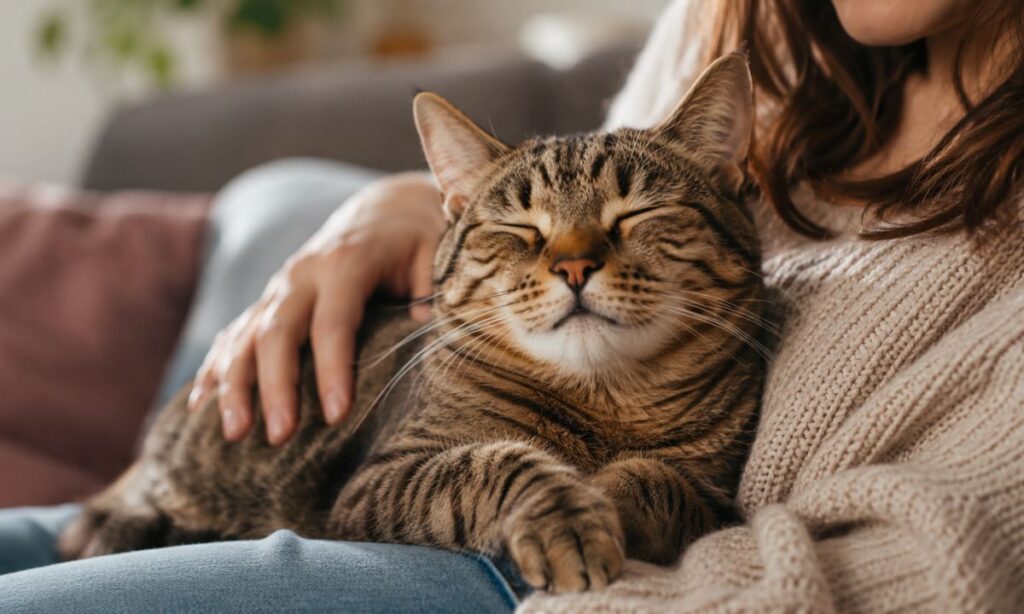
Your cat had the entire house to choose from and picked you anyway. That’s not an accident. Cats are picky about comfort, and landing on you is one of the clearest signals they can send. Here’s what’s actually going on and when it’s worth paying closer attention.
Most of the time, a cat sitting on you comes down to a mix of instinct and attachment. None of these reasons are mutually exclusive. Your cat might be chasing all of them at once.
Warmth: Your body runs cooler than a cat’s, but you’re still a reliable heat source, especially compared to a couch cushion.
Safety: Resting is a vulnerable state for any animal. Choosing you means your cat feels protected enough to let its guard down.
Scent bonding: Cats communicate through smell. Sitting on you mixes your scent with theirs, which reinforces the idea that you belong to the same social group.
Comfort and routine: Your heartbeat, breathing, and voice are familiar and predictable, which cats find soothing.
Simple affection: Sometimes it really is that straightforward. Physical closeness is one of the ways cats show they like you.
None of these point to anything unhealthy. They’re normal expressions of a cat that trusts its environment and the person in it.
Why Warmth Plays Such a Big Role
Cats run warmer than humans, with a normal body temperature sitting around 38.5°C (101.3°F). That doesn’t mean they avoid extra heat. It means they’re efficient at seeking it out when it’s available, especially since maintaining body temperature takes energy.
Certain cats look for warmth more aggressively than others:
Kittens, who haven’t fully developed their temperature regulation yet
Senior cats, especially those dealing with arthritis or reduced mobility
Hairless or thin-coated breeds, like the Sphynx
Underweight or unwell cats
Any cat during colder months or in a chilly home
If your cat suddenly starts seeking you out more in winter or in the evening, warmth is probably a big part of the equation.
Why Your Lap Feels Like a Safe Haven
Sleep and rest leave any animal exposed. Cats know this instinctively, even the ones that have never faced a real predator in their life. Choosing to rest on a person is a strong vote of confidence.
This is especially common with:
Cats that were recently adopted or moved to a new home
Naturally shy or anxious cats
Cats bonded closely to one specific person in the household
A cat that curls up and stays relaxed, rather than staying alert and watching the room, is telling you it feels secure. That’s a meaningful signal, not a small one.
Scent Marking: What It Really Means
Cats have scent glands on their face, paws, and body. When a cat rubs against you or sits directly on you, it’s depositing scent, whether it means to or not.
This gets described online as “marking territory,” which can sound negative, almost possessive. In practice, it’s closer to social bonding than ownership. Your cat isn’t claiming you the way it claims a scratching post. It’s folding you into its sense of what’s familiar and safe.
Multi-cat households sometimes see this more clearly: a cat may sit on you shortly after another cat has been nearby, effectively re-establishing its own scent on shared territory.
Reading Your Cat’s Body Language
The behavior around the sitting matters as much as the sitting itself. A few signs help you tell contentment from stress.
Signs your cat is relaxed and happy:
Slow blinking
Loose, relaxed tail
Kneading with front paws
Purring with steady breathing
Sitting facing away from you (this is trust, not rejection, since it means the cat doesn’t feel it needs to keep watching you)
Signs your cat may be overstimulated or uncomfortable:
Tail flicking or thumping
Ears flattened or turned back
Sudden stiffness after being relaxed
A quick bite or nip after previously seeming calm
If your cat sits on you and seems content and then suddenly nips, that’s usually overstimulation. Give it space rather than continuing to pet the warning signs.
Does This Mean My Cat Loves Me?
In most cases, yes, though it’s worth being careful about mapping human love directly onto cat behavior. Cats show attachment differently than dogs or people do. Some cats express it through constant physical closeness. Others show it by simply staying in the same room, following you around, or greeting you at the door without ever sitting on your lap.
A cat that doesn’t sit on you isn’t necessarily less bonded. It just has a different style of showing it. Plenty of cats become more physically affectionate later in life, especially as they age and slow down.
When Sitting on You Becomes a Health Concern
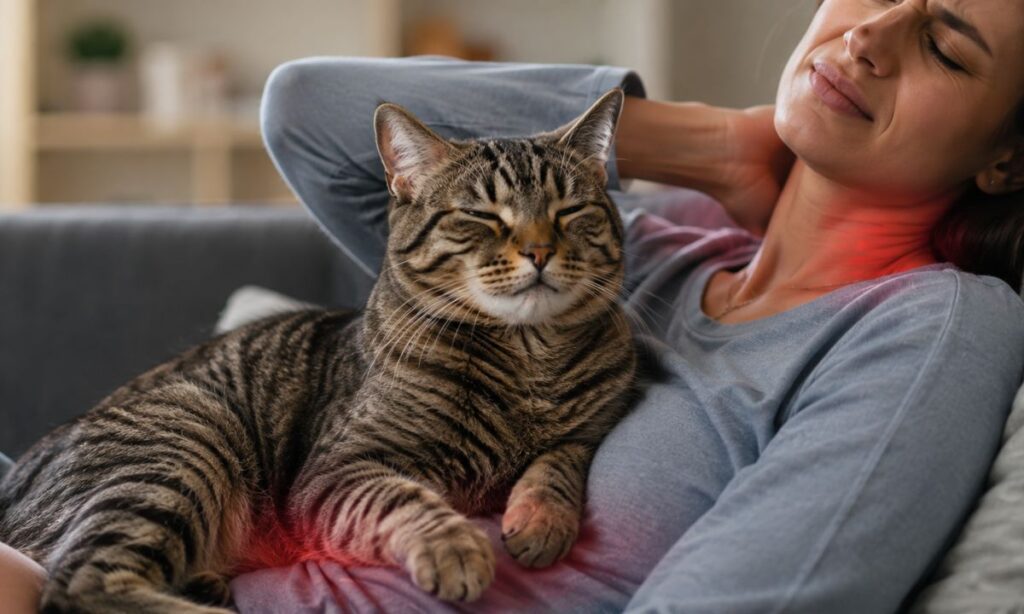
The behavior itself is almost always benign. But a noticeable change in frequency or intensity is worth watching, especially alongside other symptoms.
Use this as a simple triage guide:
Situation
What it likely means
Consistent, steady lap-sitting habits
Normal bonding and comfort
Sudden increase after a cold snap or schedule change
Likely warmth or routine-seeking, not concerning on its own
Increased clinginess plus appetite loss, hiding, or lethargy
Worth a vet visit
Increased clinginess plus signs of pain (limping, reluctance to jump, vocalizing when touched)
Worth a vet visit
A heavy cat consistently sitting on your chest and affecting your breathing
Manageable with gentle redirection, not usually a health issue for the cat
Cats with joint pain or arthritis climbing onto laps less often
May reflect mobility limits rather than reduced affection
If in doubt, a short conversation with your vet costs little and rules out anything serious.
Are Certain Breeds More Likely to Sit on You?
Personality varies cat to cat, but some breeds are more commonly described as lap cats:
Persian
Ragdoll
Siamese
Tonkinese
Breed tendencies are a loose guide, not a guarantee. An independent-minded Ragdoll exists, and so does a Sphynx who never leaves your lap. Individual temperament usually matters more than pedigree.
What to Do If You Don’t Want the Behavior
Some owners love a lap cat. Others need to manage it, whether it’s due to allergies, mobility limits, pregnancy concerns, or simply having a baby or toddler in the house where a cat sitting on someone isn’t appropriate.
A few ways to redirect the habit without damaging trust:
Offer a nearby alternative, like a warm cat bed or blanket placed close to where you sit.
Gently shift the cat off rather than pushing it away abruptly, which can feel like rejection.
Reward alternative resting spots with treats or attention so the new spot becomes appealing on its own.
Keep a consistent routine. Cats respond well to predictability, and a stable schedule reduces anxious clinginess.
Avoid scolding or punishing the behavior. Cats don’t connect punishment to lap-sitting the way you’d hope, and it usually just damages trust instead.
What Not to Assume About This Behavior
A few common explanations get repeated online without much evidence behind them. It’s worth setting these aside.
Dominance. Cats sitting on you isn’t a power move. That framing comes more from outdated pack-animal thinking than actual feline behavior.
Manipulation. A cat isn’t scheming to control you by sitting on your lap. It’s seeking warmth, safety, or closeness.
Jealousy. A cat sitting on you when another pet or person is nearby is more likely about scent and routine than an emotional rivalry.
Sticking to warmth, safety, scent, and bonding gives you a far more accurate picture of what’s happening.
Frequently Asked Questions
Why does my cat sit on my chest specifically?
Your chest offers warmth, a steady heartbeat, and regular breathing, all of which cats find calming.
Why does my cat only sit on me and not other people in the house?
It likely means your scent, routine, or presence feels the most familiar and secure to your cat.
Why does my cat sit on me and then bite?
This is usually overstimulation from too much petting or contact, not aggression.
Is it normal for a cat to suddenly sit on me more than usual?
Yes, especially with cold weather or routine changes, though pair it with a vet check if other symptoms appear.
Does a cat sitting on me while sleeping mean it trusts me?
Yes, sleeping near or on you is one of the clearest signs of feline trust and comfort.
Final Thoughts
A cat sitting on you is rarely something to overthink. It’s warmth-seeking, safety, familiar scent, and simple attachment, all wrapped into one small habit. Pay attention to the behavior around it rather than the sitting itself, and you’ll have a much better read on whether your cat is content, stressed, or just looking for the coziest spot in the house, which, as it turns out, is usually you.
I’m a passionate pet writer who loves sharing practical tips, trusted advice, and heartwarming stories about cats, dogs, and other beloved companions. Through PetCaffine.com, I help pet lovers better understand their furry friends with easy-to-read articles on pet care, nutrition, behavior, health, and everyday life.