Cat-Safe Essential Oils for Diffusers: A Complete Guide
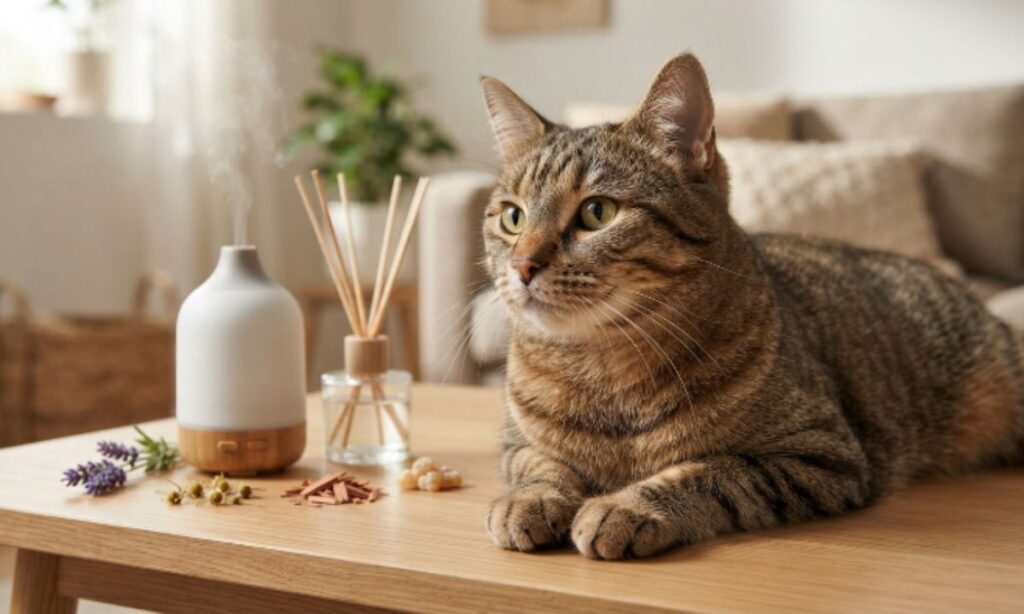
Your cat can smell that lavender diffuser from three rooms away. What settles you down can freak her out—or worse, make her ill. Essential oils are in a weird gray area for cat owners — certain combinations are perfectly OK in a diffuser, others will send a cat to the emergency vet. Here’s how to tell the difference before you hit start.
Why Cats React to Essential Oils Differently Than You Do
Cats aren’t just small dogs, and they definitely aren’t small humans. Their bodies process scent compounds in a way that makes them far more vulnerable to essential oil exposure than most people realize.
The Liver Enzyme Gap
Cats have a limited ability to break down certain plant compounds, especially phenols and some terpenes, because they’re missing enough of a liver enzyme called glucuronyl transferase. Humans and dogs have plenty of it. Cats don’t. That single difference is why oils that seem harmless to us can build up in a cat’s bloodstream instead of clearing out.
A Nose Built for Overload
A cat’s sense of smell is estimated to be many times more sensitive than a human’s. A diffuser that smells pleasant and mild to you can read as intense, even suffocating, to a cat sitting nearby. Add grooming into the mix. Cats lick their fur constantly, so anything that settles on their coat from the air can end up ingested, not just inhaled.
Skin Absorption Adds Another Risk
Even without direct contact, fine oil particles from a diffuser can land on a cat’s fur and skin. Because cats groom so frequently, topical exposure and oral exposure often happen together. That’s part of why vets treat diffused oils with more caution than people expect.
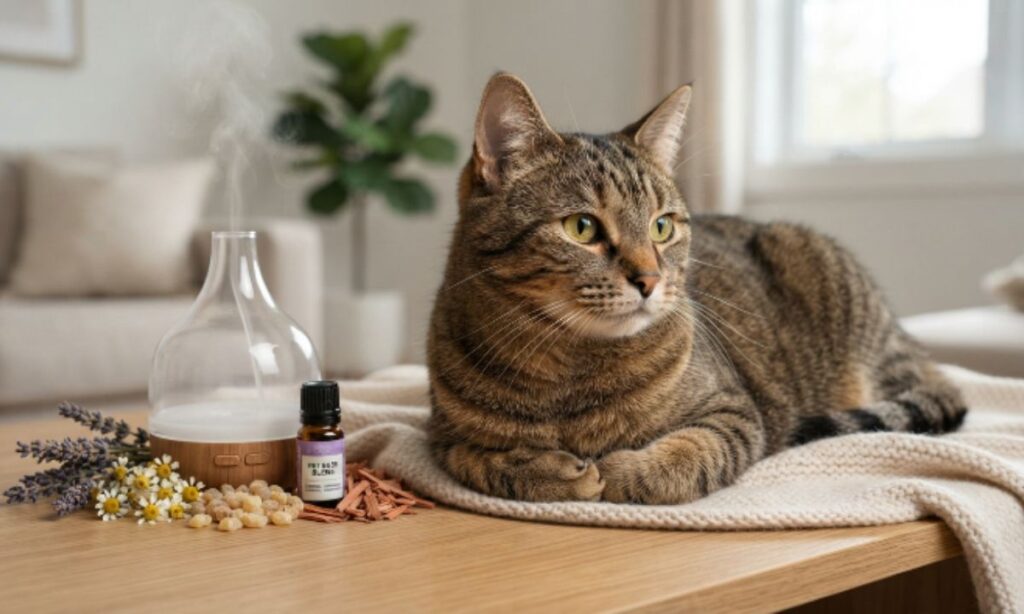
Essential Oils Generally Considered Safer for Cats
No essential oil is 100% risk-free for every cat. But some oils, used sparingly and correctly, are tolerated by most healthy cats in a well-ventilated space.
Oil
Why It’s Usually Better Tolerated
Common Use
Cedarwood (Atlas or Virginian)
Low phenol content, mild scent
Calming, pest deterrent
Frankincense
Gentle profile, low reported reactions
Grounding, subtle background scent
Chamomile (Roman)
Mild, traditionally used for calming
Relaxation, stress reduction
Helichrysum
Low toxicity reports in small amounts
Soothing ambiance
Even “Safer” Oils Need Rules
“Generally tolerated” doesn’t mean unlimited. Every oil on this list should still be:
Heavily diluted before diffusing
Used for short sessions, not all day
Diffused in a room your cat can freely leave
Stopped immediately if your cat seems uneasy
Oils With Mixed Expert Opinions
This is where a lot of pet owners get confused, and honestly, the misunderstanding is reasonable. Oils like lavender, rosemary, lemongrass, and citrus oils are controversial in veterinary literature. Some say they are okay in little, diluted amounts. Others only list them as oils to avoid in cats.
The practical takeaway: when experts differ, think of the oil as higher risk. Lavender may be calming to you but the true margin of safety for cats has not been established as it has for dogs. If you wish to use one of these oils, always check with a veterinarian acquainted with feline aromatherapy first, and never assume that it’s okay because a label on a candle reads “pet friendly.”
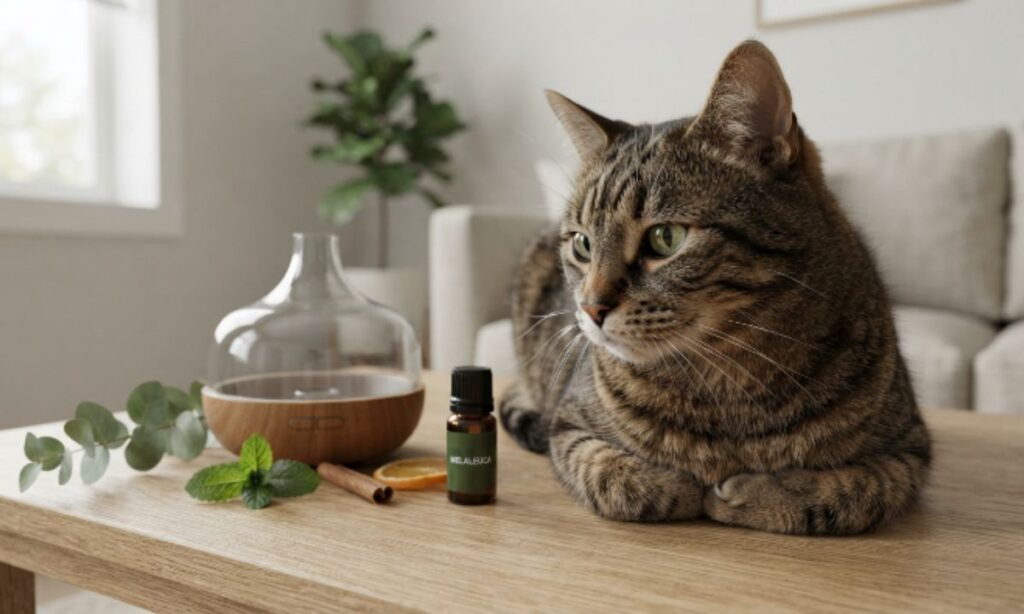
Essential Oils That Are Dangerous for Cats
These oils show up again and again in poisoning reports and veterinary warnings. Keep them out of your diffuser, your cleaning sprays, and your cat’s environment entirely.
Oil
Primary Risk
Tea tree (melaleuca)
Central nervous system depression, tremors, liver strain
Eucalyptus
Respiratory irritation, drooling, vomiting
Peppermint
Liver toxicity risk, gastrointestinal upset
Wintergreen
Contains compounds similar to aspirin, toxic to cats
Cinnamon
Skin and respiratory irritation
Clove
Liver toxicity, mouth and throat irritation
Citrus (lemon, orange, lime, bergamot)
Liver toxicity, vomiting, tremors
Pennyroyal
Severe liver damage, seizures
Ylang ylang
Low blood pressure, lethargy, vomiting
Pine and pine-derived oils
Respiratory and liver irritation
Oregano and thyme
High phenol content, liver stress
If a bottle contains any of these, don’t diffuse it in a home with a cat, even in a room the cat “doesn’t usually enter.” Scent particles travel through open doors and HVAC systems.
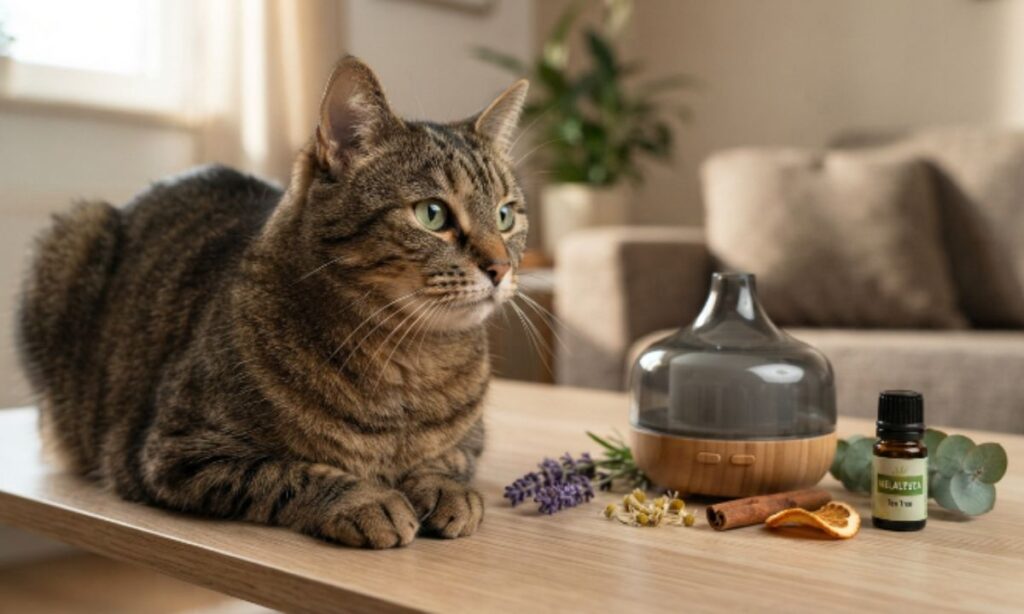
How to Diffuse Essential Oils Safely Around Cats
If you want to use a cat-tolerant oil at home, the setup matters as much as the oil itself.
Pick a Cold-Air or Ultrasonic Diffuser
Heat-based diffusers and burners release oils faster and in higher concentrations. Cold-air or ultrasonic models disperse scent more gradually, which is easier on a cat’s respiratory system.
Keep the Room Ventilated
Crack a window or run the diffuser in a space with airflow. A closed, stuffy room concentrates the scent and gives your cat nowhere to escape it.
Give Your Cat an Exit
Never diffuse in a room where your cat is confined, like a small bathroom or a crate area. Cats should always be able to walk away if the scent bothers them.
Limit Diffusion Time
Run the diffuser for 30 to 60 minutes at most, then let the air clear. Continuous, all-day diffusion increases exposure well beyond what’s considered reasonable for a cat.
Keep Devices and Bottles Out of Reach
Cats knock things over. A tipped bottle of concentrated oil on the floor is a much bigger hazard than anything coming out of the diffuser itself.
Watch Your Cat, Not the Clock
Even a “safe” oil can bother an individual cat. Some cats tolerate scents that others can’t stand. Pay attention to your specific cat’s reaction every time, not just the general safety guidelines.
Signs of Essential Oil Toxicity in Cats
Cats are good at hiding discomfort, so early symptoms are often subtle. Don’t wait for a dramatic reaction before you act.
Drooling or foaming at the mouth
Difficulty breathing or rapid breathing
Pawing at the face or mouth
Vomiting or loss of appetite
Wobbliness or trouble walking
Lethargy or unusual hiding
Low body temperature
Tremors or muscle twitching
Seizures in severe cases
If you notice any of these after diffusing, stop the diffuser and move your cat to fresh air right away.
What to Do If You Suspect Poisoning
Speed matters here more than almost anything else you’ll read in this guide.
Turn off the diffuser immediately.
Move your cat to a well-ventilated area.
Do not bathe your cat with essential oils, soap alternatives, or home remedies unless a vet tells you to.
Do not induce vomiting on your own.
Call your veterinarian, an emergency animal hospital, or a poison control hotline right away.
Keep these numbers saved in your phone before you ever need them:
ASPCA Animal Poison Control Center: 888-426-4435
Pet Poison Helpline: 855-764-7661
Both lines are staffed by professionals who can walk you through next steps based on the specific oil and amount involved.
Essential Oils in Cleaning Products Around Cats
A lot of pet owners don’t realize the diffuser isn’t the only source of exposure. Essential-oil-based cleaning sprays and surface wipes can leave residue on floors, counters, and furniture your cat walks across or lies on.
If you use essential oil cleaners at home:
Dilute well beyond the label’s minimum recommendation.
Rinse surfaces thoroughly, especially floors and countertops.
Never use them in or near the litter box, food bowls, or bedding.
Avoid citrus, tea tree, and pine-based cleaners entirely in a cat household.
When in doubt, a plain vinegar-and-water solution is a safer bet for surfaces your cat regularly touches.
Building a Cat-Friendly, Low-Risk Aromatic Routine
If you enjoy a scented home and want to keep your cat comfortable, structure beats improvisation.
Choose one tolerant oil at a time instead of rotating blends daily.
Test a new scent for a short session first and watch your cat’s behavior closely.
Keep a consistent schedule, such as short evening sessions, rather than diffusing sporadically throughout the day.
Store all oils in a cabinet your cat can’t access, not on an open shelf.
A calm, predictable routine is easier on your cat’s nose than an ever-changing rotation of new scents.
Common Myths About Essential Oils and Cats
A lot of bad advice circulates online, and some of it can genuinely put a cat at risk. Clearing up a few myths goes a long way.
“Natural Means Harmless”
Essential oils are concentrated plant extracts, not gentle herbal teas. A single drop of an undiluted oil can contain a stronger dose of active compounds than a cat would ever encounter by sniffing the actual plant. Natural origin has nothing to do with how a cat’s liver handles the compound.
“If It’s Safe for Dogs, It’s Safe for Cats”
Dogs have a much easier time metabolizing many of these compounds. An oil that’s perfectly fine in a multi-pet household diffuser for dogs can still be dangerous for the cat sharing that same air.
“A Little Won’t Hurt”
Toxicity in cats is often about accumulation, not just one big exposure. Small amounts diffused repeatedly, day after day, can build up in the body over time, especially with oils high in phenols.
“My Cat Can Just Leave If She Doesn’t Like It”
This only works if the room actually has an open door or window your cat can use. A closed bedroom or bathroom doesn’t give a cat a real escape route, even if the door is technically unlocked.
Special Considerations for Kittens, Seniors, and Cats With Health Conditions
Not every cat has the same tolerance, and age or health status changes the risk equation.
Kittens
A kitten’s liver and other organs are still developing, which makes them more vulnerable to toxic buildup than a healthy adult cat. It’s best to avoid essential oil diffusion around kittens altogether until they’re fully grown.
Senior Cats
Older cats are more likely to have reduced liver or kidney function, even without a diagnosed condition. What a younger cat tolerates without issue might hit a senior cat much harder.
Cats With Asthma or Respiratory Issues
Any airborne scent, even a mild one, can trigger coughing or wheezing in a cat with feline asthma or chronic respiratory sensitivity. Diffusers are generally not recommended in these households at all.
Cats With Liver or Kidney Disease
Since much of the toxicity risk comes down to how the liver processes these compounds, a cat with existing liver or kidney disease has far less capacity to handle any essential oil exposure, even from oils considered lower risk for healthy cats.
If your cat falls into any of these categories, skip the diffuser and ask your vet about scent-free alternatives instead.
Choosing the Right Diffuser for a Cat Household
Not all diffusers behave the same way, and the type you pick affects how much oil actually ends up in the air your cat breathes.
Diffuser Type
How It Works
Cat Household Suitability
Ultrasonic
Uses water and vibration to create a fine mist
Generally the gentlest option when used briefly
Cold-air nebulizing
Disperses concentrated oil without water or heat
Stronger output, use for shorter sessions
Heat diffuser
Warms oil to release scent
Higher concentration release is best avoided
Reed diffuser
Passive evaporation through reeds
Lower airborne exposure, but oil is accessible if knocked over
Candle diffuser
Combines heat and open flame
Not recommended around cats due to both scent concentration and fire risk
An ultrasonic diffuser run for short, supervised sessions is usually the most manageable option if you want to introduce scent into a home with a cat.
Building a Simple Blend Routine
If you’ve picked a tolerant oil and want to keep things simple, a few gentle, low-concentration combinations tend to work well for cat households:
Cedarwood with a touch of frankincense for an earthy, grounding scent
Chamomile alone for a soft, calming background aroma
Frankincense with a small amount of helichrysum for a subtle, warm scent
Keep any blend heavily diluted, and introduce only one new combination at a time so you can tell which scent, if any, your cat reacts to.
Frequently Asked Questions
Is it safe to diffuse essential oils in a room with my cat?
Only with a tolerant oil, proper dilution, good ventilation, and a clear way for your cat to leave the room.
Which essential oil is considered the least risky for cats?
Cedarwood is one of the more consistently tolerated options when heavily diluted and used briefly.
Is lavender oil actually safe for cats?
Experts disagree, so it’s best treated as a higher-risk oil unless your vet says otherwise for your specific cat.
What should I do first if my cat reacts badly to a diffuser?
Turn off the diffuser, move your cat to fresh air, and call your vet or a poison control hotline immediately.
Can essential oil cleaning sprays harm cats too?
Yes, residue on floors and furniture can be licked off during grooming, so dilution and rinsing matter just as much as diffuser use.
Final Thoughts
Cats and essential oils can co-exist, but you have to consider each oil a potential risk unless you know better. Use heavily diluted, well-accepted oils such as cedarwood, frankincense, or chamomile; keep sessions short; ventilate the room; and always give your cat the opportunity to escape. If you’re ever unsure, a quick call to your vet is better than guessing—because with cats, the line between “relaxing scent” and “emergency room visit” is thinner than you may think.
I’m a passionate pet writer who loves sharing practical tips, trusted advice, and heartwarming stories about cats, dogs, and other beloved companions. Through PetCaffine.com, I help pet lovers better understand their furry friends with easy-to-read articles on pet care, nutrition, behavior, health, and everyday life.