Is Baking Soda Safe for Cats? A Clear Safety Guide
You are about to reach for that box of baking soda to give your cat’s litter box a much-needed cleaning. You pause when you notice your cat investigating the countertop right next to the litter box. Is that safe, or is it something you should avoid entirely?
The hesitation is well founded. Baking soda is not a lethal toxin, but it is not an innocent ingredient either. The truth is that it comes down to how much exposure your cat has and how that exposure occurs.
In small doses and in limited exposure, baking soda is generally safe for cats. It is often used as an ingredient in various pet care products. Ingesting or coming into contact with large amounts of baking soda, however, can be dangerous.
The truth is that it depends on the situation. Baking soda is generally safe in small amounts but can be dangerous in large amounts.
What Baking Soda Actually Does Around Your Home
The main advantage of using baking soda or sodium bicarbonate is that it eliminates odors rather than masking them, so it is often used in various ways to deodorize the house. The product is affordable and available, and it is generally safe for pets if used in limited quantities. These factors have made it a popular choice for odor elimination among pet owners. The issue is not in the substance itself, but in the doses and exposure methods.
When Baking Soda Becomes Dangerous for Cats
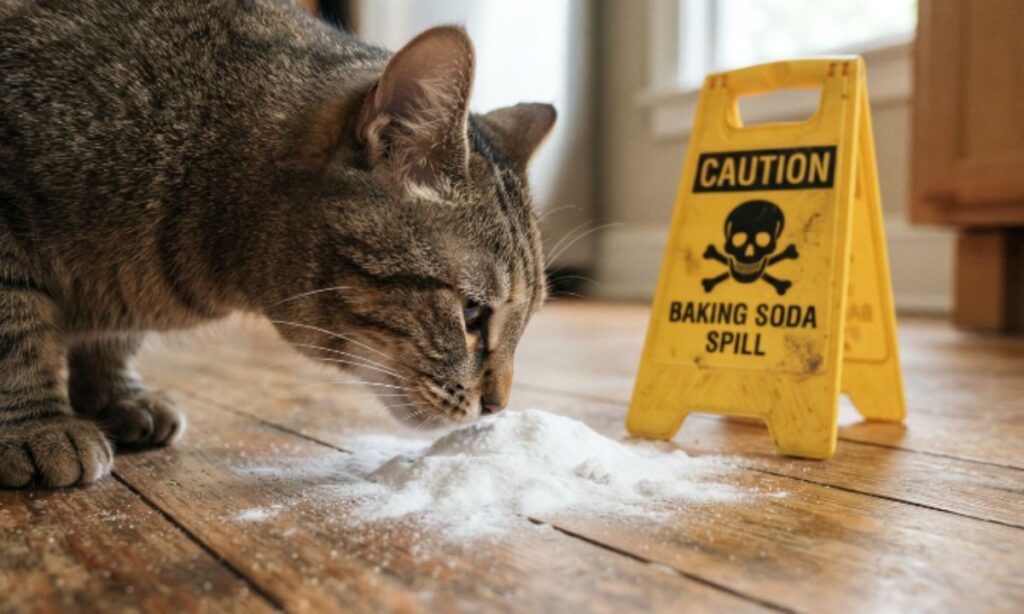
Baking soda crosses from harmless to harmful in two main ways: through ingestion and through inhalation.
Ingestion Risk
Cats occasionally lick or eat things they shouldn’t, especially while grooming. If baking soda gets on their paws or fur, they may swallow small amounts without any issue.
Large amounts are a different story. Eating a significant quantity can disrupt your cat’s normal body chemistry and lead to serious symptoms.
Inhalation and Dust Risk
Baking soda is a fine powder. When it’s sprinkled heavily, especially in an enclosed litter box, it can create dust that lingers in the air.
Cats with sensitive airways can react to that dust. Sneezing, coughing, and general respiratory irritation are the most common signs.
Symptoms of Baking Soda Ingestion in Cats
If your cat eats a notable amount of baking soda, watch for these signs:
Vomiting
Diarrhea
Lethargy or unusual tiredness
Drooling
Muscle tremors
Seizures, in severe cases
Excessive thirst
Labored or rapid breathing
Most of these symptoms point to an internal chemical imbalance. They should never be brushed off as “just an upset stomach.”
Can You Put Baking Soda in Cat Litter?
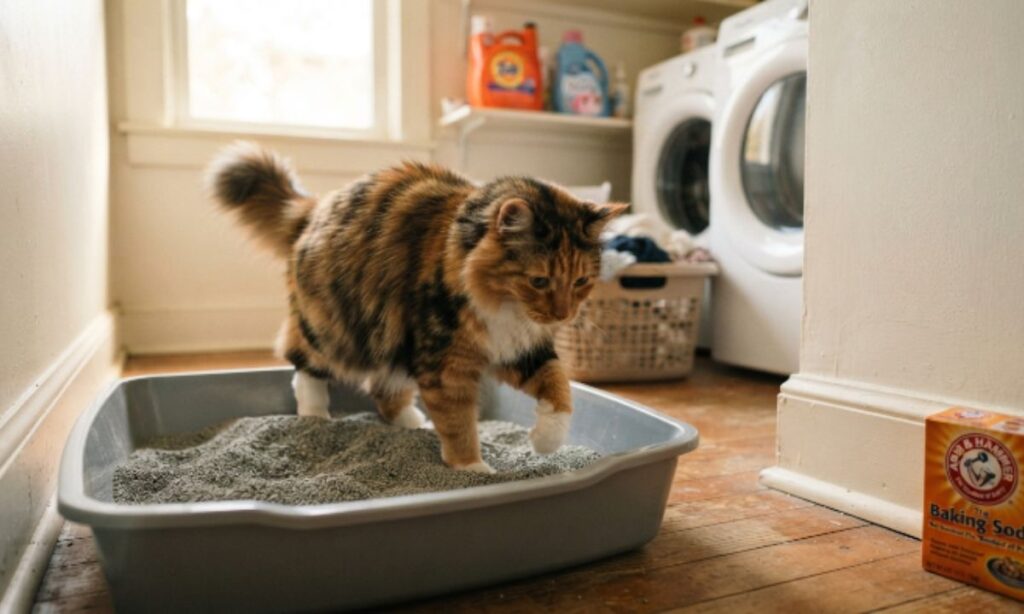
Many cat owners use baking soda for their cat’s litter. In moderation, this is acceptable, even healthy.
The problem occurs when too much is used, because the excess baking soda turns into dust, which gets tracked onto the cat’s paws, fur, and breathed into the lungs.
Cats Who Should Avoid It
Some cats handle this better than others. Be extra cautious with:
Kittens, since their bodies are more sensitive to irritants
Cats with asthma or known respiratory issues
Cats that show a habit of eating litter or non-food items
Multi-cat households, where litter boxes see heavier daily use
If your cat fits any of these categories, it’s worth skipping baking soda in the litter box entirely and choosing a purpose-made, cat-safe deodorizer instead.
Is Baking Soda Safe on Cat Fur or Skin?
Most of the time, an occasional light brushing of your cat’s fur isn’t going to be a big deal. It’s not so much the fur rubbing that concerns me, as much as the aftermath. See, cats groom constantly.
You brush something off their fur, and it’s only a matter of time and place before they decide to swallow something that shouldn’t go down their throat. A little bit of baking soda here and there is fine, but coating them in the stuff is most definitely not the way to go.
Don’t apply baking soda to your cat’s coat or skin as an abrasive cleaning agent. It hasn’t undergone proper testing for topical treatment.
How Much Baking Soda Is Too Much?
There’s no single universal number that applies to every cat, since size, age, and health all play a role. But a few general patterns hold true across most situations.
Exposure Type
Typical Risk Level
Notes
Light dusting in litter, used occasionally
Low
Common practice for many owners
Heavy, frequent dusting in litter
Moderate to high
Increases dust inhalation and paw-to-mouth exposure
Small accidental lick off paws or fur
Low
Rarely causes noticeable symptoms
Direct ingestion of a spoonful or more
High
Can cause vomiting, diarrhea, or worse
Baking soda left openly accessible to a curious cat
Variable
Depends entirely on how much the cat actually eats
The safest approach is simple: use it sparingly, keep containers out of reach, and never let it become a large, accessible pile your cat can dig into.
What To Do If Your Cat Eats Baking Soda
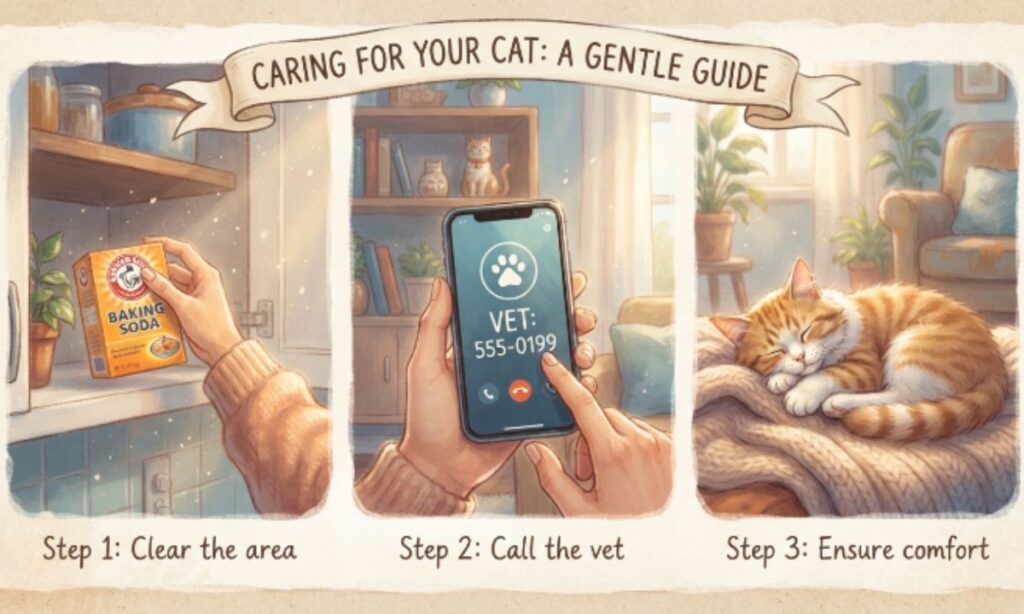
If you catch your cat eating a meaningful amount of baking soda, don’t wait to see what happens.
Remove any remaining product from your cat’s reach immediately.
Note roughly how much you think your cat consumed, if possible.
Watch closely for vomiting, diarrhea, tremors, or unusual behavior.
Call your veterinarian or an emergency animal clinic right away, especially if any symptoms appear or the amount eaten seems significant.
Don’t try to induce vomiting or treat this at home without professional guidance. A vet can tell you quickly whether the amount is a real concern or not.
Safer Alternatives for Odor Control
If you’re nervous about baking soda, there are gentler ways to manage litter box smell.
Scoop the litter box at least once a day.
Choose a low-dust, unscented litter formula.
Try activated charcoal filters designed for litter areas.
Use enzyme-based cleaners for accidents outside the box.
Look for commercial, pet-safe odor eliminators made specifically for cat households.
These options reduce odor without introducing the same dust and ingestion concerns tied to loose baking soda.
Vet-Reviewed Safety Tips for Cat Parents
A few simple habits go a long way toward keeping baking soda use low-risk in a cat household.
Store baking soda in a sealed container, not an open box within reach.
Use only a light sprinkle in litter, never a thick layer.
Watch new litter mixes closely for the first few uses.
Keep an eye on kittens and senior cats more closely than adult cats in good health.
When in doubt, ask your veterinarian before introducing any new household product into your cat’s daily environment.
None of these steps take much effort, but together they lower the odds of a bad outcome significantly.
Frequently Asked Questions
Can cats lick baking soda safely?
A small, accidental lick usually isn’t harmful, but it shouldn’t become a regular habit.
Can baking soda kill cats?
In very large quantities, yes, it can cause serious poisoning, though this is rare with normal household use.
How much baking soda is toxic to cats?
There’s no exact universal amount, but eating more than a small, incidental taste warrants a call to your vet.
Is baking soda safe in cat litter?
Yes, in small amounts, though heavy or frequent use raises the risk of dust irritation and ingestion.
What should I do if my cat ate baking soda?
Remove access immediately, monitor for symptoms, and contact your veterinarian if you’re at all concerned.
Conclusion
Baking soda is not a substance that pet owners should fear, but it is also not an entirely benign substance. Used in moderation and kept out of a pet’s reach, baking soda is relatively harmless. Used excessively, left in a pet’s reach, or ingested in large quantities, however, it can be a serious health hazard. If in doubt, err on the side of caution and consult your veterinarian in case of serious concern.
I’m a passionate pet writer who loves sharing practical tips, trusted advice, and heartwarming stories about cats, dogs, and other beloved companions. Through PetCaffine.com, I help pet lovers better understand their furry friends with easy-to-read articles on pet care, nutrition, behavior, health, and everyday life.