Can Cats Eat Grapes? Everything Cat Owners Need to Know Before Sharing Fruit
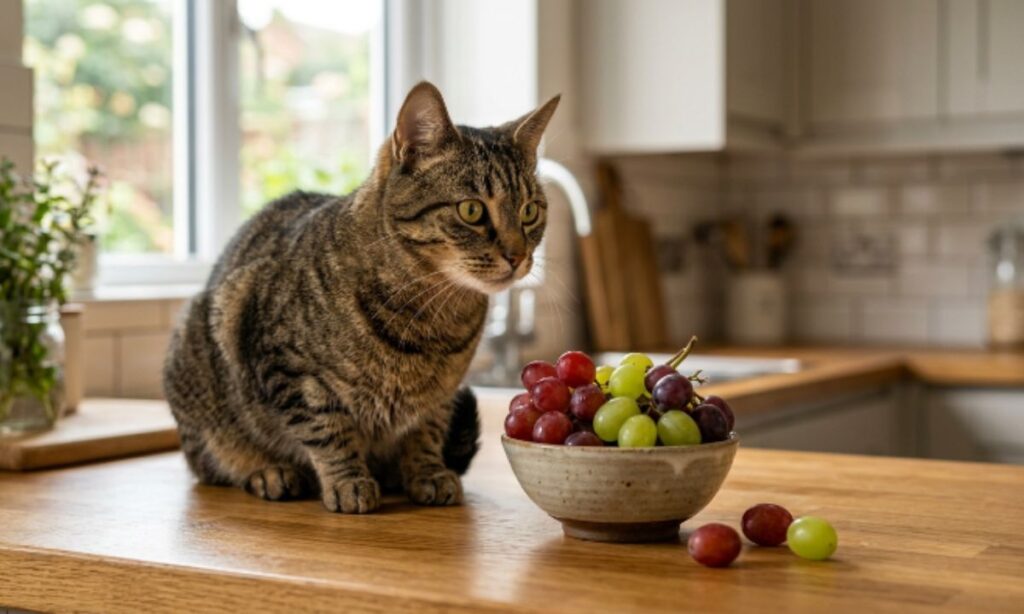
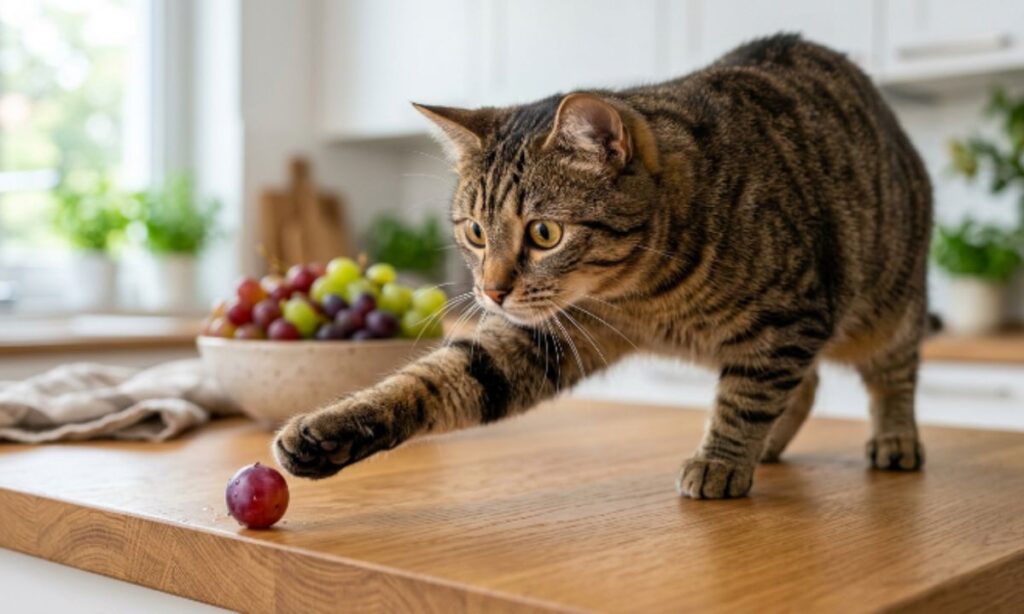
Your cat just snagged a grape off the counter. You’re not sure if you should panic or shrug it off. The answer isn’t as simple as “safe” or “dangerous,”and getting it wrong could cost your cat its kidneys. Here’s exactly what you need to know before your next move.
No, cats should never eat grapes. Veterinarians classify grapes as toxic to cats, with the potential to cause acute kidney failure even in small amounts.
Grapes belong to the Vitis genus, a plant family that also includes raisins, currants, and sultanas. All of them carry the same warning, regardless of color, seedless variety, or organic label. Green grapes, red grapes, and seedless grapes all pose the same risk, since the toxin doesn’t appear to be tied to seeds, skin color, or growing method.
There’s no known “safe” quantity. Some cats eat a grape and show no symptoms at all. Others get seriously ill from a single piece. That unpredictability is exactly why vets recommend keeping grapes off the menu entirely, no exceptions.
Raisins carry the same risk, and often a more concentrated one, since they’re just dehydrated grapes.
Why Are Grapes Toxic to Cats?
The Unknown Toxin
Researchers still haven’t pinpointed the exact compound in grapes that causes toxicity in pets. Tartaric acid is currently the leading suspect, though the science isn’t fully settled.
What’s clear is the outcome: grapes can trigger acute kidney injury in cats and dogs alike. The kidneys lose their ability to filter waste, and toxins build up in the bloodstream fast.
Why Cats Are Especially Vulnerable
Cats are obligate carnivores. Their bodies are built to process meat, not plant sugars or fruit compounds. Unlike humans and dogs, cats also lack the taste receptors for sweetness, so fruit isn’t something they’re biologically wired to seek out.
That biological mismatch may be part of why grape toxicity affects cats unpredictably. Their metabolism simply isn’t designed to handle whatever compound in grapes causes the damage.
Can One Grape Hurt a Cat?
Yes, one grape can hurt a cat, though it’s not guaranteed to. This inconsistency is what makes grapes so risky.
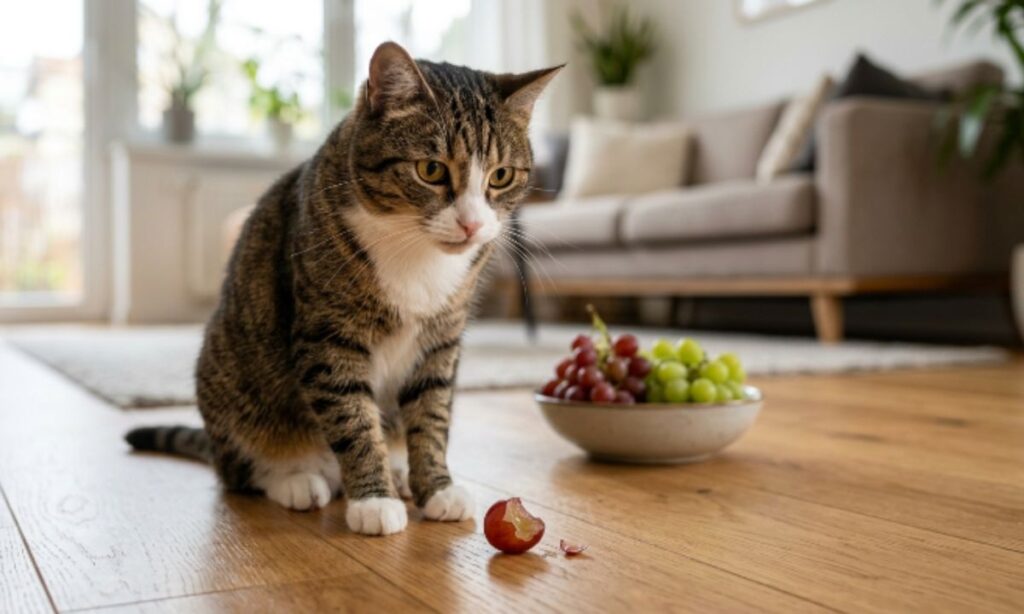
Some cats eat a single grape with no visible reaction. Others develop vomiting, lethargy, or worse from that same small amount. Because there’s no way to predict which cat will react, vets treat every grape ingestion as a potential emergency, regardless of quantity.
Why There’s No “Safe Dose”
Toxicity researchers have identified rough thresholds where symptoms become more likely, but these numbers come from limited data and vary by body weight, health status, and individual sensitivity.
A general size comparison for perspective:
Ingestion Amount
Risk Level for an Average Cat
One grape
Low but not zero risk; still warrants a vet call
A handful of grapes
Higher risk; treat as an emergency
A few raisins
Higher risk than an equal weight of grapes, since raisins are more concentrated
A large amount of raisins
Serious risk of acute kidney injury
Even the “low risk” scenario in that table isn’t a green light. Vets consistently recommend calling for guidance any time a cat eats a grape or raisin, no matter how small the amount seems.
Body Weight Matters
Smaller cats face higher risk per gram of grape eaten. A 6-pound kitten that eats two grapes is taking in proportionally more toxin than a 14-pound adult cat eating the same amount.
This is one more reason age and size deserve consideration any time grape exposure happens.
What Happens When Cats Eat Grapes?
Grape toxicity typically unfolds in two phases: early digestive symptoms, followed by potential kidney complications if the toxin isn’t addressed quickly.
Phase One: Early Symptoms (First 12 to 24 Hours)
Watch for these signs in the hours right after ingestion:
Vomiting
Diarrhea, sometimes with blood in severe cases
Lethargy or noticeable fatigue
Reduced appetite
Abdominal discomfort or a hunched posture
These early symptoms are the body’s attempt to expel the toxin. They’re uncomfortable, but they’re also your window to get treatment before kidney damage sets in.
Phase Two: Kidney Involvement (24 to 72 Hours)
If the toxin isn’t cleared in time, symptoms can progress to signs of kidney distress:
Increased thirst
Increased urination, followed by decreased or absent urination as kidneys fail
Strong-smelling breath
Worsening nausea and vomiting
Weakness or collapse
Tremors or seizures in severe cases
Kidney damage from grape toxicity is often difficult to reverse once it sets in. That’s why the first 12 hours after ingestion matter so much for treatment success.
A drop in urine output is one of the most serious warning signs. When kidneys begin failing, they first produce excess urine trying to flush the toxin, then production drops sharply as function declines. A cat that stops urinating after grape exposure needs emergency care immediately.
What to Do If Your Cat Eats a Grape
Move fast. Grape toxicity is time-sensitive, and early treatment dramatically improves outcomes.
Remove any remaining grapes so your cat can’t eat more.
Note the amount eaten, or your best estimate, along with the time it happened.
Call your vet or an emergency animal clinic immediately, even if your cat seems fine.
Do not induce vomiting at home unless a vet specifically instructs you to.
Bring your cat in for evaluation, ideally within the first few hours of ingestion.
Acting within the first 12 hours gives your cat the best chance of avoiding kidney damage altogether.
When to Treat It as a True Emergency
Call for emergency care immediately if any of the following apply:
Your cat ate more than one grape or any amount of raisins
Your cat is a kitten or senior or has existing kidney issues
You notice vomiting, lethargy, or reduced appetite within hours of ingestion
You’re unsure exactly how much your cat ate
When in doubt, treat it as serious. The cost of an unnecessary vet visit is far lower than the cost of untreated kidney failure.
What to Expect Cost-Wise
Emergency treatment for grape toxicity can range widely depending on severity, location, and whether hospitalization is required. A same-day exam and induced vomiting typically costs less than a multi-day hospital stay with IV fluids and repeated bloodwork.
Pet insurance policies that cover accidental poisoning can help offset these costs, so it’s worth checking your policy details before an emergency happens, not during one.
How Vets Diagnose and Treat Grape Toxicity
A vet visit after grape ingestion typically follows a consistent pattern.
Diagnostic Steps
Physical exam checking for dehydration, pain, and lethargy
Detailed history of what was eaten, how much, and when
Bloodwork to assess kidney function
Urinalysis to check how well the kidneys are concentrating urine
Imaging in some cases, to rule out other causes of symptoms
Treatment Approach
Inducing vomiting, most effective within the first one to two hours after ingestion
Activated charcoal to bind remaining toxin in the digestive tract
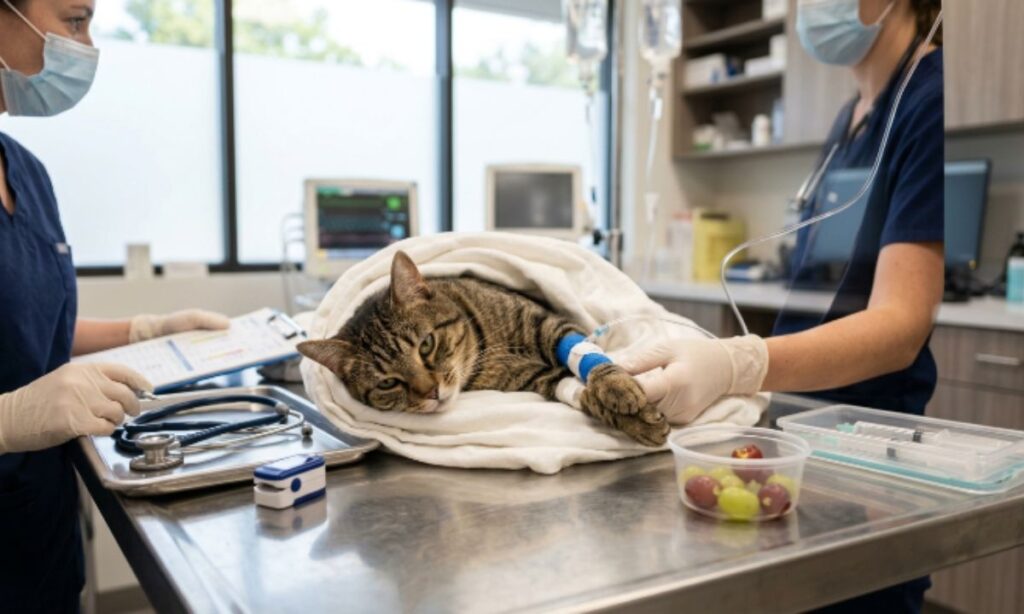
IV fluids to flush the kidneys and maintain urine output
Anti-nausea and pain medication as needed
Hospitalization, often 24 to 72 hours, with repeated bloodwork to monitor kidney values
Most cats that receive treatment within the first 12 hours recover fully. Cats that already show kidney damage by the time they’re treated face a longer and less certain recovery.
What Happens After Treatment
Recovery doesn’t always end when your cat leaves the clinic. If bloodwork shows no kidney damage after 48 to 72 hours of monitoring, most cats go home and return to normal life with no lasting effects.
If kidney values were affected, your vet may recommend a longer recovery plan, which can include the following:
A prescription kidney-support diet
Follow-up bloodwork over the following weeks
Ongoing medication to manage blood pressure or kidney function
Regular urine checks to monitor concentration ability
Cats with a history of grape-related kidney injury sometimes face a higher lifetime risk of chronic kidney disease. Regular veterinary checkups become even more important going forward.
Does a Cat’s Age or Health Change the Risk?
Age and pre-existing health conditions both influence how a cat responds to grape ingestion.
Kittens
Kittens weigh less and have less developed organ systems, so the same small amount of grape that barely affects an adult cat can hit a kitten much harder. Treat any grape exposure in a kitten as a high priority.
Senior Cats
Older cats are more likely to already have some degree of reduced kidney function, even without obvious symptoms. That reduced baseline capacity leaves less room for the kidneys to absorb additional stress from a toxin.
Cats With Existing Kidney Disease
A cat already managing chronic kidney disease faces amplified risk from any additional kidney stressor. Grape ingestion in these cats should always be treated as an emergency, regardless of quantity.
Why Symptom Timing Varies So Much
One confusing part of grape toxicity is how differently it can present from one cat to the next. A few factors explain the variation:
Individual sensitivity. Just like some people react strongly to foods that don’t bother others, cats show a wide range of sensitivity to whatever compound in grapes causes harm.
Grape type and ripeness. Toxin concentration may vary between grape varieties and stages of ripeness, though this hasn’t been studied extensively in cats.
Amount and speed of ingestion. A cat that eats several grapes quickly may absorb more toxin at once than one that nibbles a single grape slowly.
Stomach contents. A cat that ate on a full stomach may absorb the toxin more slowly than one that ate on an empty stomach.
Because of this variability, waiting to “see if symptoms show up” isn’t a reliable strategy. Early veterinary contact removes the guesswork.
Can Cats Eat Raisins?
No. Raisins pose the same risk as grapes, and often a greater one, since the dehydration process concentrates whatever compound causes toxicity.
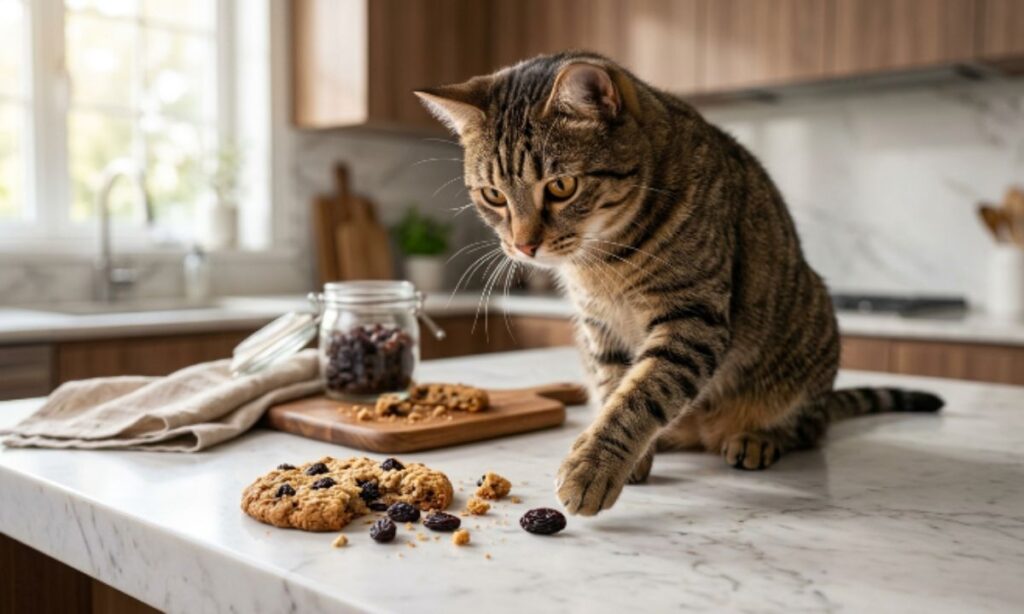
A cat that eats even a small handful of raisins should be treated with the same urgency as one that ate a large quantity of fresh grapes. Watch for raisins hiding in everyday foods like:
Trail mix
Oatmeal cookies
Granola bars
Holiday baking, including fruitcake and stuffing
Cereal blends
Keep these items stored well out of reach, especially during holidays when baked goods sit out on counters.
Does Cooking Reduce the Risk?
No. Baking, cooking, or drying grapes into raisins does not remove the toxic compound. If anything, the dehydration process that turns grapes into raisins concentrates it further.
That means grape jelly, grape juice, wine-soaked dishes, and raisin-studded baked goods all carry the same underlying risk as fresh grapes. Heat and processing change the texture and flavor, not the toxicity.
Cat-Safe Fruit Alternatives to Grapes
If your cat enjoys the occasional fruity treat, plenty of safer options exist. Always introduce new foods slowly and in small amounts.
Fruit
Preparation Notes
Apples
Remove seeds and core first; seeds contain trace cyanide compounds
Blueberries
Wash thoroughly; serve plain, no added sugar
Bananas
Cut into small pieces; offer sparingly due to natural sugar content
Watermelon
Remove seeds and rind; serve in small chunks
Pumpkin
Serve plain and cooked, without spices or sweeteners
Strawberries
Remove the stem; cut into small pieces
These fruits won’t offer much nutritional value to an obligate carnivore, but they make a safe occasional treat without the toxicity risk grapes carry.
How to Prevent Grape Poisoning at Home
Prevention is far easier than treatment. A few habits go a long way:
Store grapes and raisins in the refrigerator or a closed cabinet, never left out on counters.
Keep grocery bags off the floor and out of reach until unpacked.
Avoid feeding table scraps, especially around holidays when raisin-containing dishes are common.
Double-check ingredient labels on baked goods and snacks before leaving them accessible.
Teach household members and guests not to share food with your cat, even “just one bite.”
A consistent household routine around food storage prevents most accidental exposures before they happen.
Frequently Asked Questions
How many grapes are toxic to a cat?
There’s no confirmed safe number, so even one grape should prompt a call to your vet.
Can cats eat grape jelly or grape juice?
No, both contain concentrated grape compounds and should be kept away from cats entirely.
How long after eating a grape do symptoms appear in cats?
Early symptoms often show up within 6 to 24 hours, with kidney effects developing over the following 1 to 3 days.
Is it an emergency if my cat only licked a grape?
Licking alone carries lower risk than ingestion, but call your vet if you’re unsure how much contact occurred.
Can grape toxicity in cats be cured?
Yes, most cats recover fully with prompt treatment, though outcomes worsen significantly once kidney damage has already occurred.
Final Thoughts
Grapes might seem harmless sitting in a fruit bowl, but for cats, they carry a real and unpredictable risk of kidney failure that no amount seems fully safe. The smartest approach is treating every grape or raisin exposure as urgent, calling your vet right away, and keeping these foods stored well out of paw’s reach. With a few consistent habits and a handful of genuinely safe fruit alternatives, you can keep your cat both happy and protected.
I’m a passionate pet writer who loves sharing practical tips, trusted advice, and heartwarming stories about cats, dogs, and other beloved companions. Through PetCaffine.com, I help pet lovers better understand their furry friends with easy-to-read articles on pet care, nutrition, behavior, health, and everyday life.