Is Vinegar Bad for Cats? What Every Owner Should Know
You spray vinegar on the kitchen counter, and within seconds your cat walks straight through the area. It’s natural to wonder whether the smell or fumes could cause any harm. You may have even seen online posts suggesting vinegar as a home remedy for cats.
Before believing those claims or using vinegar around your pet, it’s worth knowing what veterinarians actually recommend. Understanding how cats react to vinegar can help you clean your home safely while keeping your curious feline comfortable and protected.
Vinegar is not categorized as toxic or poisonous to cats. That’s the good news. The problem is that vinegar is acidic, and most people don’t realize that cats are sensitive to acid.
Undiluted vinegar can irritate the cat’s mouth, throat, and stomach lining. It won’t poison your cat in the way antifreeze or lily pollen would, but it can still cause real discomfort if your cat licks it, drinks it, or gets a strong dose of the fumes in a closed room.
So the honest answer sits in the middle: vinegar is generally safe when it’s diluted and used sensibly, and it’s a poor choice when it’s undiluted, ingested in any real quantity, or used carelessly around a cat with an existing health condition.
Why Vinegar Bothers Cats More Than It Bothers You
Their Nose Works Overtime
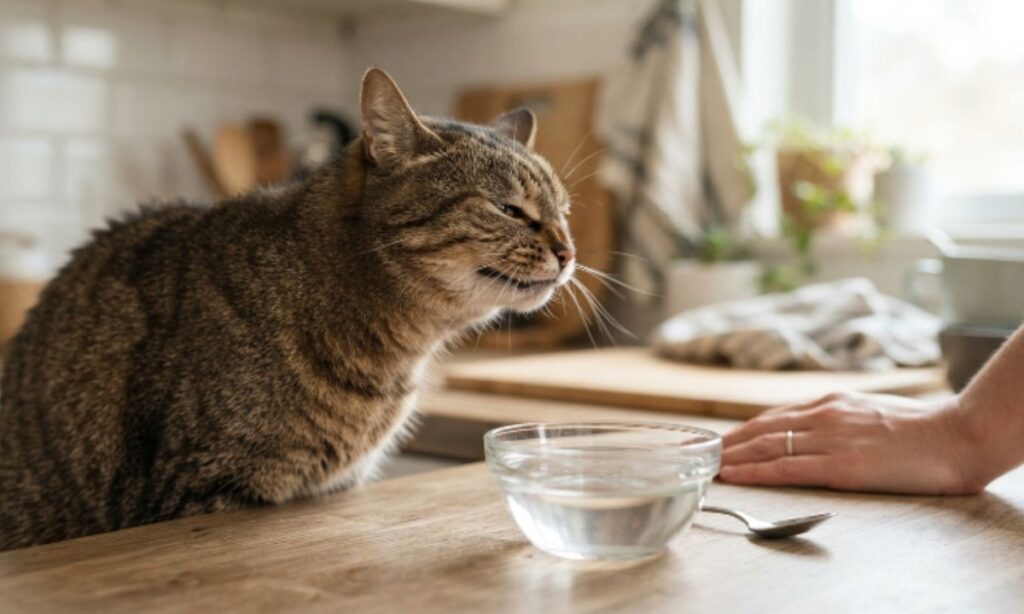
A cat’s sense of smell is far more powerful than yours, which is why vinegar can seem much stronger to them than it does to you. What feels like a faint, sour scent in your kitchen can be overwhelming for your cat.
If your cat suddenly walks away or hides while you’re cleaning with vinegar, they’re simply reacting to an odor that feels too intense. It’s a normal response, not stubborn or unusual behavior.
The strong smell comes from acetic acid, the natural compound that gives vinegar its sharp scent. Cats are very sensitive to this smell, and many instinctively avoid it. Even after you’ve finished cleaning, your cat may stay away from the area until the odor has faded.
Their Stomachs Are Already Acidic
Cats are obligate carnivores, which means their bodies are built to digest meat. Their stomachs already contain strong natural acids that help break down animal protein.
Because of that, adding vinegar to their food doesn’t provide any proven health benefit and may upset their digestive system instead. This is one reason veterinarians generally don’t recommend giving vinegar to cats, even if online articles claim it can help with different health problems.
A small amount may not always cause harm, but regular use or concentrated vinegar can lead to stomach irritation or digestive discomfort. When it comes to your cat’s diet, it’s always safest to follow veterinary advice instead of relying on internet myths.
What Happens If a Cat Licks or Drinks Vinegar
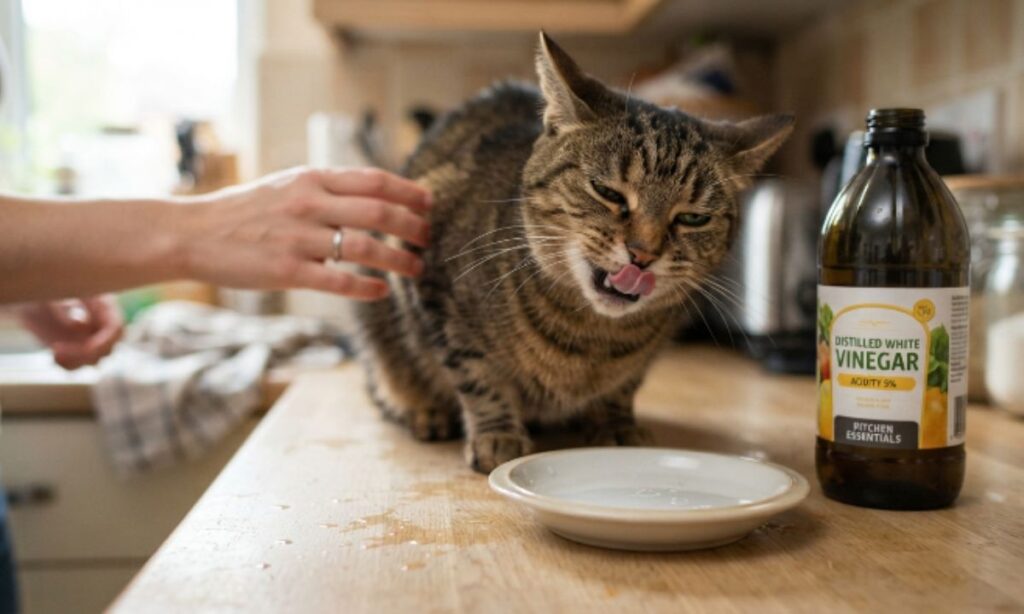
Most accidental exposure is minor. A cat that licks a drop off the floor usually reacts fast and stops on its own, because the taste is unpleasant to nearly every cat.
Here’s a general breakdown of what to expect based on exposure level:
Exposure Level
Likely Signs
What It Means
Small accidental lick
Drooling, lip-smacking, head shaking
Mild, usually resolves on its own within minutes
Larger amount or repeated licking
Vomiting, reduced appetite, mild lethargy
Worth monitoring closely; call your vet if it continues
Undiluted vinegar swallowed
Vomiting, drooling, visible discomfort, possible mouth irritation
Contact your vet or the ASPCA Animal Poison Control Center
Vinegar in the eyes
Redness, squinting, watering
Rinse gently with water and call your vet
If your cat only had a brief, small taste and seems otherwise normal within an hour, you likely don’t need to panic. If vomiting continues, your cat stops eating, or you know they swallowed a meaningful amount, treat it as a call-your-vet situation rather than a wait-and-see one.
Is Vinegar Safe for Cleaning Around Cats?
Yes, with a few sensible habits attached. Diluted vinegar is actually one of the gentler cleaning options compared to bleach or ammonia-based products, both of which are far riskier around pets.
How to Use It Safely
Dilute it. A common ratio is about one part vinegar to three or four parts water for general surface cleaning.
Keep your cat out of the room while you clean and for a short while after.
Rinse surfaces, bowls, and litter boxes with plain water once you’re done.
Let everything dry fully before your cat has access again.
Open a window or run a fan to clear the smell faster.
Where People Commonly Use It
Cat owners often reach for diluted vinegar to freshen litter boxes, cut through dried urine odor on fabric or hard floors, and clean food and water bowls without leaving behind a chemical residue. It works because vinegar is acidic and dried urine forms alkaline salts, so the two react and neutralize each other.
Just don’t skip the rinse step. A bowl or floor that still smells strongly of vinegar can put your cat off using it, and lingering residue is what causes irritation if they lick a paw or a surface afterward.
Does Vinegar Actually Keep Cats Away?
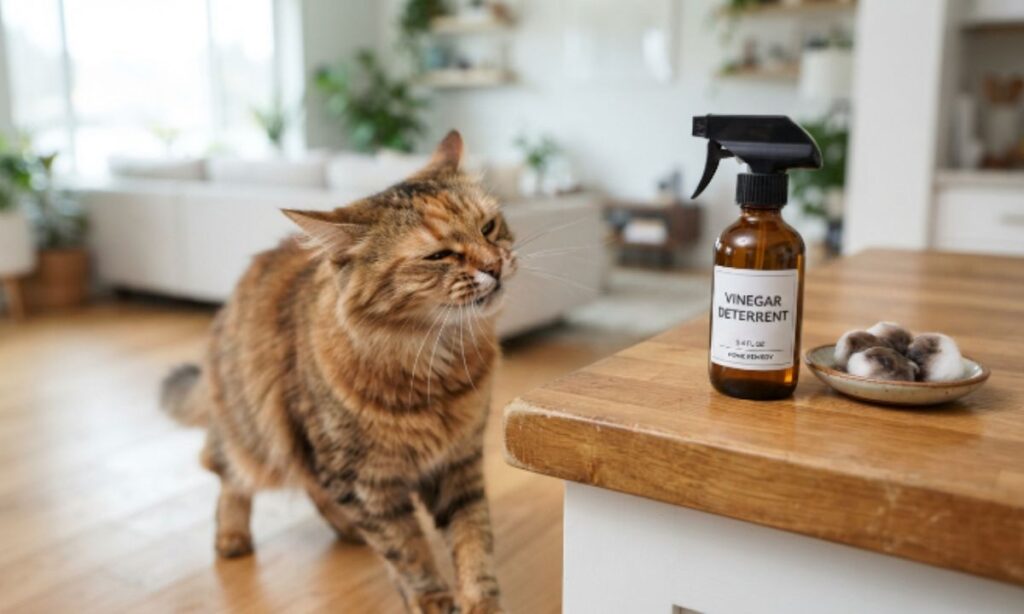
Yes, but only for a while. Most cats dislike the sharp smell of vinegar enough to avoid areas where it has been sprayed. That’s why many pet owners use it as a homemade deterrent on furniture, countertops, garden beds, or other places they want their cat to stay away from.
The problem is that the smell doesn’t last forever. As the vinegar dries and the odor fades, many cats slowly return to the same spot. That means you’ll have to keep reapplying it if you want the effect to continue.
For most homes, that quickly becomes inconvenient. Even worse, filling your house with the smell of vinegar can make some cats uncomfortable, especially if they spend most of their time indoors or the room has poor airflow.
If you’re trying to stop a behavior for good, vinegar isn’t a long-term solution. It’s much more effective to give your cat a better option instead. For example, if your cat scratches the couch, place a sturdy scratching post nearby and reward them for using it.
If they keep jumping onto the kitchen counter, provide a tall cat tree or another elevated resting spot. Cats naturally prefer places that meet their needs, so changing the environment usually works much better than relying on an unpleasant smell alone.
Apple Cider Vinegar for Cats: Fact vs. Marketing
Apple cider vinegar is often promoted online as a simple fix for almost every cat health problem. You may see claims that it helps with fleas, digestion, itchy skin, ear infections, or even general wellness. While these stories are popular, scientific evidence simply doesn’t support most of them.
For fleas, apple cider vinegar is not an effective treatment. It does not kill fleas living on your cat, and any smell that may discourage them is weak and disappears quickly. If your cat has fleas, a veterinarian-approved flea treatment is far more reliable and actually solves the problem.
Some people also suggest mixing apple cider vinegar into a cat’s food or water to improve digestion. At this time, there is no strong research showing that it benefits a healthy cat’s digestive system. In fact, some cats may refuse food because they dislike the smell or taste, while others may experience stomach irritation.
Claims about healthier skin or a shinier coat are also unsupported. Applying vinegar directly to irritated skin can cause stinging, dryness, or make existing inflammation worse. The same goes for ear care. Putting vinegar into a cat’s ears without professional advice may cause pain, especially if there’s an infection, scratches, or damaged skin inside the ear canal.
When your cat has fleas, digestive problems, itchy skin, or ear issues, it’s always better to identify the real cause instead of relying on internet trends. A proper diagnosis and vet-approved treatments are much safer and far more effective.
Cats Who Need Extra Caution
While vinegar isn’t considered highly toxic to cats, some cats are much more sensitive than others. For these pets, it’s best to avoid vinegar whenever possible or use it very carefully around them.
Cats with kidney disease: Their bodies already work harder to remove waste, so adding unnecessary irritation or acidity is not a good idea.
Kittens: Young cats are smaller, more delicate, and can react more strongly to powerful smells or irritating substances.
Cats with breathing problems: Strong vinegar fumes may trigger coughing, sneezing, watery eyes, or breathing discomfort in cats with respiratory sensitivities.
Cats with skin problems or open wounds: Vinegar can sting damaged skin and may slow the healing process by causing additional irritation.
And Cats with sensitive stomachs: Even a small amount of vinegar may lead to vomiting, drooling, nausea, or loose stools in cats that already have digestive issues.
If your cat belongs to any of these groups, it’s best to skip homemade vinegar remedies altogether. Products recommended by your veterinarian are designed with your cat’s safety in mind and are usually a much better choice.
What to Do If Your Cat Is Exposed to Vinegar
If your cat accidentally comes into contact with vinegar, don’t panic. Most cases are mild and improve quickly with simple care at home. The first step is to remove your cat from the area so they aren’t breathing in the strong smell any longer.
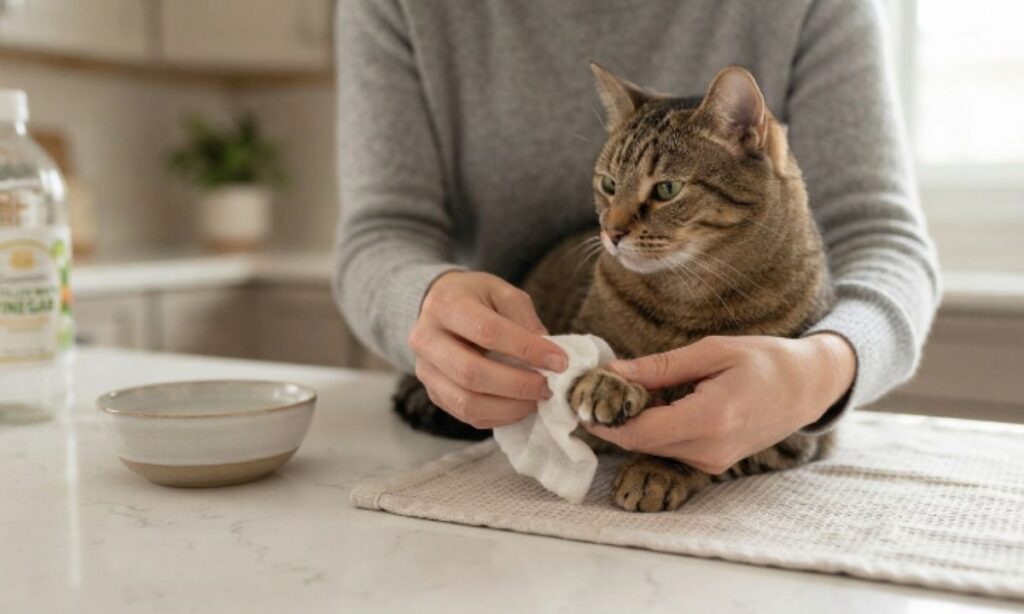
If vinegar gets on the fur, paws, or skin, rinse the affected area with lukewarm water until the smell is mostly gone. Avoid using harsh soaps unless your veterinarian tells you to do so. If vinegar splashes into your cat’s eyes, gently flush them with clean water for several minutes and stop your cat from rubbing their face.
Keep an eye on your cat over the next few hours. Occasional lip licking after tasting vinegar isn’t unusual, but repeated vomiting, excessive drooling, loss of appetite, unusual tiredness, or signs of pain should never be ignored.
If your cat drank a large amount of vinegar or continues showing symptoms, contact your veterinarian right away or call the ASPCA Animal Poison Control Center at (888) 426-4435. Having the vinegar bottle nearby, or knowing exactly what type of vinegar your cat was exposed to, can help the veterinary team give faster and more accurate advice.
Safer Alternatives for Cleaning and Deterring Cats
If you would rather avoid vinegar completely, there are plenty of pet-friendly options that work well without filling your home with a strong odor. Unscented cleaning sprays labeled as safe for cats are made for households with pets and are often a better everyday choice.
For small cleaning jobs, warm water mixed with a little mild dish soap is usually enough to remove dirt and everyday messes. If you’re dealing with cat urine, an enzyme-based cleaner is much more effective because it breaks down the odor at its source instead of simply covering it up.
When you need to keep your cat away from furniture or other off-limits areas, physical deterrents usually work better than strong smells. Double-sided tape, furniture protectors, and motion-activated deterrent devices can discourage unwanted behavior without causing stress.
These methods are easy to use, safe for most cats, and often provide much longer-lasting results than vinegar ever could.
Frequently Asked Questions
Is vinegar poisonous to cats?
No, vinegar isn’t classified as poisonous, but undiluted vinegar can still irritate a cat’s mouth, stomach, and skin.
Can I put vinegar in my cat’s water?
No, there’s no proven benefit to this, and it risks upsetting a cat’s naturally acidic stomach for no real gain.
Does the smell of vinegar hurt cats?
The smell itself isn’t harmful, but it’s intense for a cat’s sensitive nose and can cause stress in a small, closed room.
Is white vinegar or apple cider vinegar safer for cats?
Both carry similar risks when undiluted; neither is proven safer, and both should be diluted and rinsed thoroughly if used near cats.
Can vinegar be used to clean a litter box?
Yes, a diluted vinegar solution works well for litter box odor, as long as you rinse it fully and let it dry before your cat uses it again.
The Bottom Line
Vinegar is not a lurking threat under your sink, but it is also not an innocent panacea. It’s a good, inexpensive cleaning tool when diluted, rinsed, and kept away from the mouth of a curious cat.
If you use it undiluted and pour it into food or water, or if you apply it to a cat’s skin or ears without guidance, it can really irritate a cat (who has a more sensitive system than you do). Keep it diluted, keep it out of reach when using at full strength, and save the health claims for products your vet has actually approved.
I’m a passionate pet writer who loves sharing practical tips, trusted advice, and heartwarming stories about cats, dogs, and other beloved companions. Through PetCaffine.com, I help pet lovers better understand their furry friends with easy-to-read articles on pet care, nutrition, behavior, health, and everyday life.