Is the Bleach Smell Harmful for Cats? What Every Owner Should Know
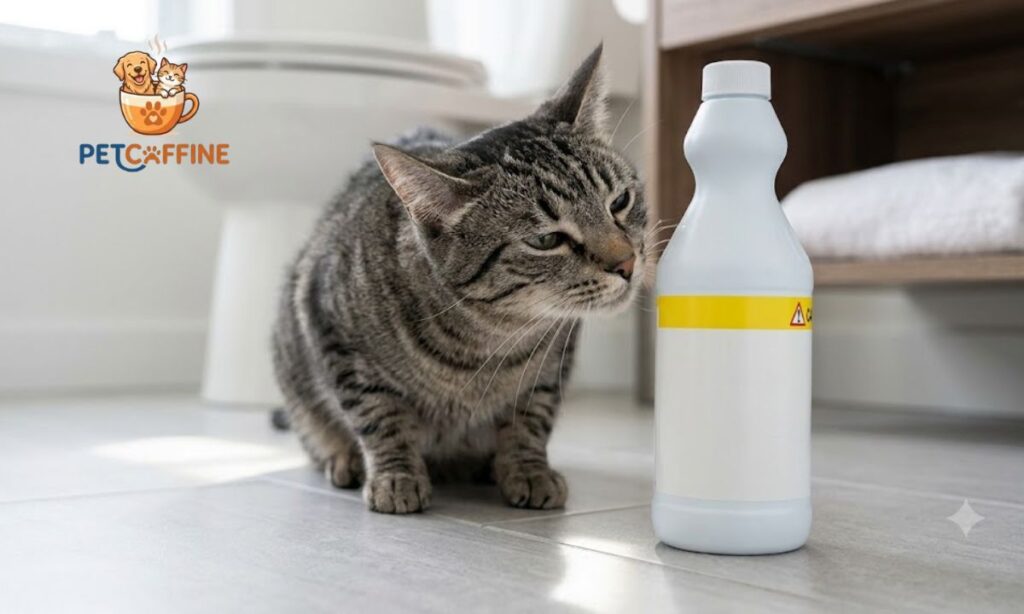
Your cat is rubbing her face on the freshly mopped floor. She’s rolling around near the bucket. You’re wondering if it’s a good sign or a bad one. The answer isn’t as simple as you’d like.
The bleach smell can be harmful to cats, especially in enclosed areas or with high exposure. The fumes can irritate a cat’s eyes, nose, throat, and lungs.
A quick whiff in a well-ventilated room is nothing to worry about, but it can add up over time and become dangerous, especially if the bleach is undiluted or not ventilated properly.
Why the Smell Alone Can Cause Problems
The sense of smell in cats is far stronger than in humans. Any given odor concentration seems to affect them several times more strongly than us. Moreover, their nasal passages and mucous membranes are much more sensitive and therefore more prone to irritation.
This is why veterinary doctors take inhalation as a symptom seriously and address it accordingly. It may be harmful and even dangerous for your cat if exposed to vapor or fumes, and that’s without even touching the substance itself.
When Smell Alone Is Usually Low Risk
Not every encounter with bleach odor spells trouble. Context matters a lot here.
Undiluted bleach, closed bathroom, cat present during cleaning
High
The cat briefly walks past a bleached floor after it’s dry
Low
A cat lingers, rolls, or rubs on a damp bleached surface
Moderate to High
Bleach mixed with ammonia or another cleaner
Severe (toxic gas risk)
Why Are Cats So Drawn to Bleach in the First Place?
This is the section that puzzles most pet owners. If bleach has such a disgusting odor for your cats, then why do they act so crazy trying to roll over it?
Scientists have a possible explanation for this odd behavior. Since chlorine and ammonia are chemicals similar to some of the messes and pheromones produced by cats, this could explain why they’re so fascinated with your cleaning products. They might be reacting to it like it’s a member of the opposite sex trying to get their attention!
Think of it similarly to catnip. This isn’t some fancy perfume to a cat. It’s like a crazy drug that gets them all worked up. The two are very similar, with the exception of catnip being much more potent. While most felines will react negatively to bleach, it’s the same reaction that one would have if a cat were to see another cat with a scent that got their attention.
Common Behaviors Around Bleach
Rolling on the floor near the cleaned area
Rubbing cheeks or body against damp surfaces
Purring or vocalizing more than usual
Returning repeatedly to the same spot
Licking the floor or their own paws afterward
Attraction Does Not Mean It’s Safe
This is the key point owners tend to miss. A cat being drawn to bleach doesn’t mean its body handles bleach well. It actually works against the cat, because attraction increases contact time, and contact time increases exposure.
A cat that keeps returning to a bleached spot is more likely to inhale stronger fumes, walk through residue, and later ingest trace amounts while grooming.
Bleach doesn’t just smell strong. It’s chemically active, and that activity is what makes it both a good disinfectant and a potential hazard.
The Three Exposure Pathways
Inhalation. Fumes irritate the mucous membranes of the nasal cavity, pharynx, and lungs, causing choking, coughing, and shortness of breath.
Skin and Paw Contact. The cat walks and scratches on the cleaned floor where bleach has been applied. The cats’ paws may get exposed to the chemical and become inflamed, dry, and irritated. Moreover, their paws can absorb some of the substances.
Ingestion. This pathway is the most dangerous one since cats are notorious for licking their paws and fur. Any foreign substance can get into their system that way and irritate or damage delicate tissues.
Why Bleach Is Corrosive to Living Tissue
Bleach works as a disinfectant by breaking down proteins in bacteria and viruses. That same protein-breaking action doesn’t stop at germs. It can also affect the proteins in a cat’s skin, airway lining, and gut tissue, which is why concentrated exposure carries a real risk of chemical burns.
Symptoms of Bleach Exposure in Cats
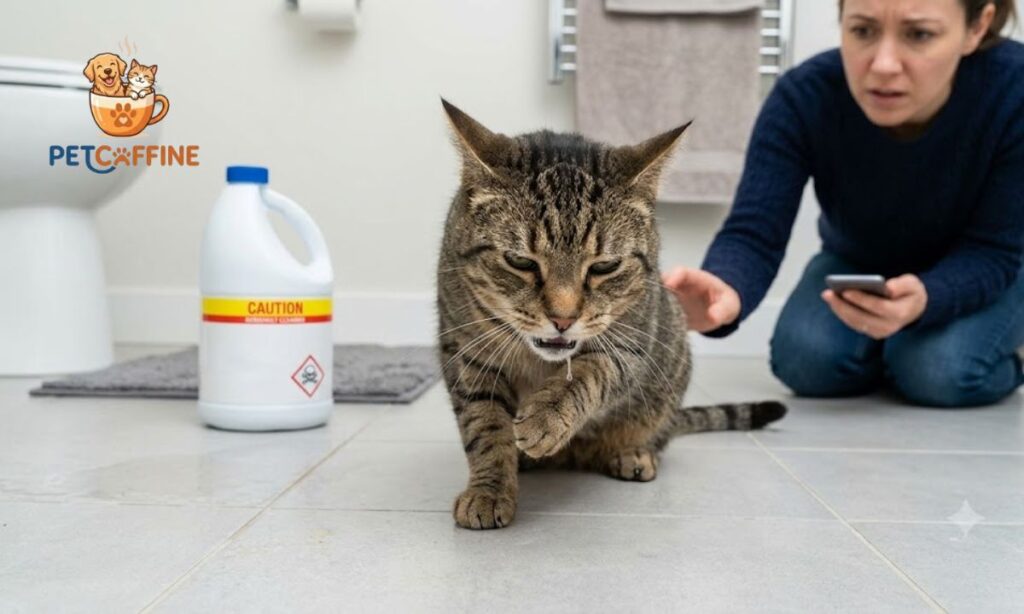
Knowing what to watch for can make the difference between a minor scare and a medical emergency. Symptoms can appear within minutes of exposure or develop over a few hours.
Mild to Moderate Signs
Sneezing or coughing
Watery or red eyes
Excess drooling
Pawing at the mouth or face
Mild lethargy
Severe Signs That Need Immediate Vet Care
Difficulty breathing or open-mouth breathing
Vomiting or diarrhea
Refusal to eat or drink
Visible burns or sores on the mouth, tongue, or paws
Abdominal pain or extreme lethargy
If you see any severe sign, treat it as an emergency. Chemical burns from concentrated bleach can worsen quickly without treatment.
Is Diluted Bleach Safer for Cats?
Diluted bleach is safer for your cat than stronger solutions, but keep in mind that “safer” does not mean “infallible.” A diluted solution will have a lower concentration of chlorine, thus reducing the risk of causing serious harm.
Common Dilution Ratio for Bleach and Water for Cats
The common dilution ratio for households with cats is 1:32. In other words, you need to add 1 part of bleach to 32 parts of water. This solution will be strong enough to eliminate most bacteria without damaging the sensitive skin of your feline friend. Remember that you will need to use unscented liquid bleach with approximately 5 or 6% sodium hypochlorite.
Higher concentrations of bleach are sometimes used to decontaminate the house from highly contagious diseases. However, in such cases, it is necessary to exclude cats from the room until the treated surfaces are completely rinsed and dried.
Best Practices When Using Diluted Bleach
Keep the cat in another room while cleaning and for a while after
Rinse treated surfaces with plain water once cleaning is done
Let surfaces air dry completely before letting your cat back in
Use cold water rather than hot, since heat increases fume release
Never combine bleach with ammonia or other cleaning products
Safe Cleaning Habits for Cat Owners
A few adjustments to your cleaning routine go a long way toward keeping curious cats safe, without requiring you to give up bleach entirely.
Around the Home
Store all bleach containers in a closed cabinet, never left open
Never leave a mop bucket unattended if your cat has room access
Close the toilet lid after cleaning it with bleach
Ventilate the room with an open window or fan during and after use
Litter Boxes and Bathrooms
Litter boxes and toilets are two spots where cats spend real time, so residue there matters more than most surfaces. Rinse these areas thoroughly after using bleach, and let them dry before your cat has access again.
Consider Pet-Safe Alternatives
For everyday cleaning where disinfection isn’t strictly required, pet-safe cleaners can reduce risk while still keeping your home clean. Save bleach for situations where its disinfecting strength is genuinely needed.
What to Do If Your Cat Was Exposed to Bleach
Quick, calm action helps more than panic. Here’s a simple sequence to follow.
Move your cat away from the area immediately.
Check their fur, paws, and mouth for residue or visible irritation.
Rinse any affected area with plain, cool water.
Offer fresh water, but don’t force your cat to drink.
Do not try to induce vomiting on your own.
Call your vet or an animal poison helpline, even if symptoms seem mild.
When to Call a Vet Right Away
Your cat was in a closed space with strong bleach fumes
You suspect they licked or swallowed any bleach
You notice any of the severe symptoms listed earlier
You’re simply unsure how much exposure occurred
It’s always better to make the call and be told it’s fine than to wait and regret it.
Smells Cats Hate vs. Smells That Actually Harm Them
Not every smell your cat avoids is dangerous, and not every smell your cat loves is safe. It helps to separate the two categories clearly.
Smell
Cat’s Reaction
Actual Danger Level
Bleach
Often attracted
High if concentrated or ingested
Citrus (orange, lemon)
Usually avoids
Low, generally safe as a deterrent
Vinegar
Usually avoids
Low, mildly irritating in large amounts
Ammonia-based cleaners
Mixed reaction
High, especially if mixed with bleach
Bitter apple spray
Avoids
Low, made for pet training
Bleach is the outlier here. It sits in both categories at once, since cats are drawn to it, yet it carries real toxicity risk. That combination is exactly why it deserves extra caution in cat households.
Practical Tips for Bleach-Loving Cats
Some cats are simply more fascinated by bleach than others. If yours is one of them, a bit of extra vigilance keeps things safe.
Clean when your cat can be shut out of the room entirely
Double-check that surfaces are dry before letting them back in
Watch for any lingering interest in a cleaned spot and redirect with a toy or treat
Keep an eye on grooming behavior right after cleaning sessions
Talk to your vet if your cat shows an unusually strong or repeated pull toward bleach smells
A brief, occasional whiff in a dry, ventilated space is unlikely to cause lasting harm. The real risk comes from repeated exposure, strong concentrations, or direct contact through licking. Prevention costs nothing and avoids a stressful trip to the vet.
Frequently Asked Questions
Can bleach smell alone make a cat sick?
Yes, strong or prolonged fume exposure can irritate a cat’s airways even without direct contact.
Why does my cat roll around after I clean with bleach?
The chlorine scent can resemble compounds in cat urine or pheromones, which triggers an instinctive rolling response.
Is it safe to clean my cat’s litter box with bleach?
Yes, if you use a proper dilution, rinse thoroughly, and let it fully dry before your cat returns to it.
What should I do if my cat licked a bleached floor?
Rinse their mouth and paws with water, avoid inducing vomiting, and call your vet or a poison helpline right away.
Are there safer alternatives to bleach for homes with cats?
Yes, pet-safe cleaning products work well for routine cleaning and reduce the need for bleach in most everyday situations.
Conclusion
The smell of bleach is not something to write off as trivial; on the other hand, it’s not a catastrophe either. Your cat is attracted to it because of the chemical composition, not the benefit it brings, so make sure you are not putting them in danger because of their attraction.
Luckily for you, a few simple solutions like diluting the product, using it in well-ventilated areas, proper rinsing, and not allowing your cat to be present while cleaning can counter most risks. Being aware of your cat’s condition and knowing when to seek professional help can keep both you and your cat safe and clean.
I’m a passionate pet writer who loves sharing practical tips, trusted advice, and heartwarming stories about cats, dogs, and other beloved companions. Through PetCaffine.com, I help pet lovers better understand their furry friends with easy-to-read articles on pet care, nutrition, behavior, health, and everyday life.