Non-Toxic Flowers for Cats: The Complete Safe List
Your cat knocked a petal off the coffee table and sniffed it. Should you start preparing for a trip to the vet? After all, not all flowers are safe around cats. Some pose a serious threat that can land them in the veterinary hospital. This article will show you what flowers are safe and which should be avoided so that your cat’s curiosity doesn’t get them into trouble.
Flowers are common in most cat owners’ homes, be it in the form of presents or growing in the garden. Most often, cat owners only realize that their cat has gotten into the plant when they see it nibbling at the stems. Knowing which flowers are safe for cats and which ones are not can save you a stressful and expensive trip to the emergency vet.
“Non-toxic” does not mean “safe.” It means that the flower was not found to have any poisonous chemicals for cats. Your cat could still throw up or drool after eating a non-toxic flower. You may see some diarrhea, too, if they tried to nibble a bloom that looked safe for them.
In other words, non-toxic flowers mean that the plant won’t poison your cat, but it doesn’t mean it’s a snack they can eat without worry. You still have to watch them to know their reactions to the flower. A lot of us think it’s okay for our cats to play with what’s in the vase because the label says it’s safe, but it’s not totally true. We need to be aware of that even if the flower is non-toxic to our cats.
Why do vets keep saying non-toxic? The term itself is non-toxic, and it’s good to learn the meaning of it. We may assume that non-toxic flowers will keep our cats from getting sick, but it doesn’t mean the plant will never make them vomit or have diarrhea.
If your cat eats any part of the bloom, you should take them to a vet right away. The best way to keep your cat safe is to buy flowers that were found not to have any poisonous chemicals and to make sure they don’t eat any part of the plant. The info on the label is important, but it’s not everything.
How Cats Usually Come Into Contact With Flowers
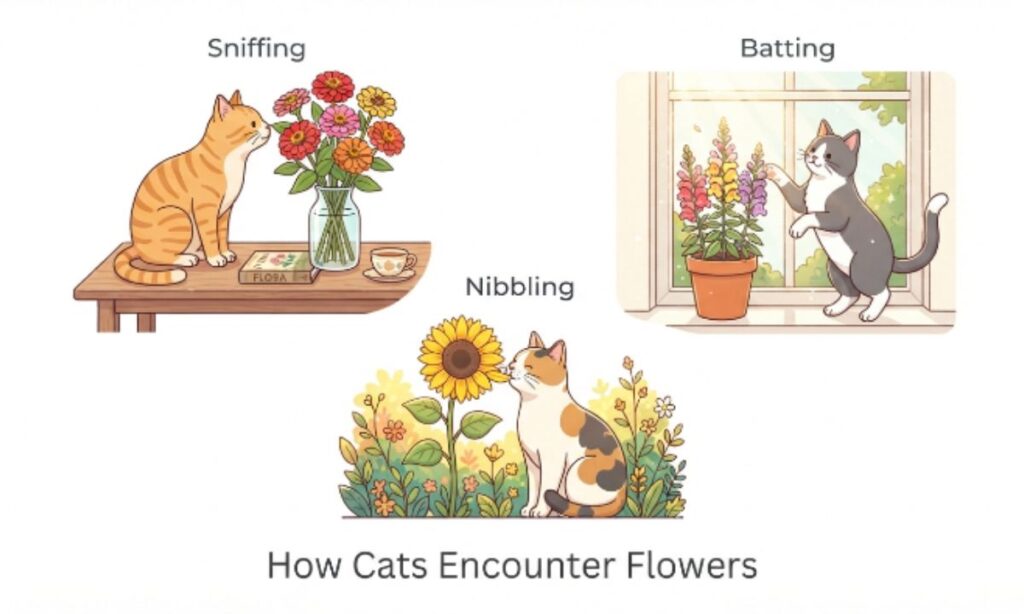
Cats explore with their mouths and noses first. That habit is exactly why flower safety matters so much in cat households.
Here are the most common ways cats interact with flowers at home:
Sniffing a bouquet on the table
Licking pollen off their fur or paws
Chewing on petals or leaves out of curiosity
Drinking water straight from the vase
Batting fallen petals around the floor and mouthing them
Smelling a flower is usually harmless. The real risk starts when a cat chews, swallows, or drinks from the vase.
Cats are naturally curious, and flowers offer everything they find interesting: movement when a breeze hits the petals, an unfamiliar scent, and texture that invites a paw swat. Younger cats and kittens tend to be the most persistent chewers, since they explore the world mouth-first far more than adult cats do.
Even a well-behaved, older cat can surprise you. A bored cat left alone with a fresh bouquet for a few hours may decide to investigate it in ways it never would with you watching.
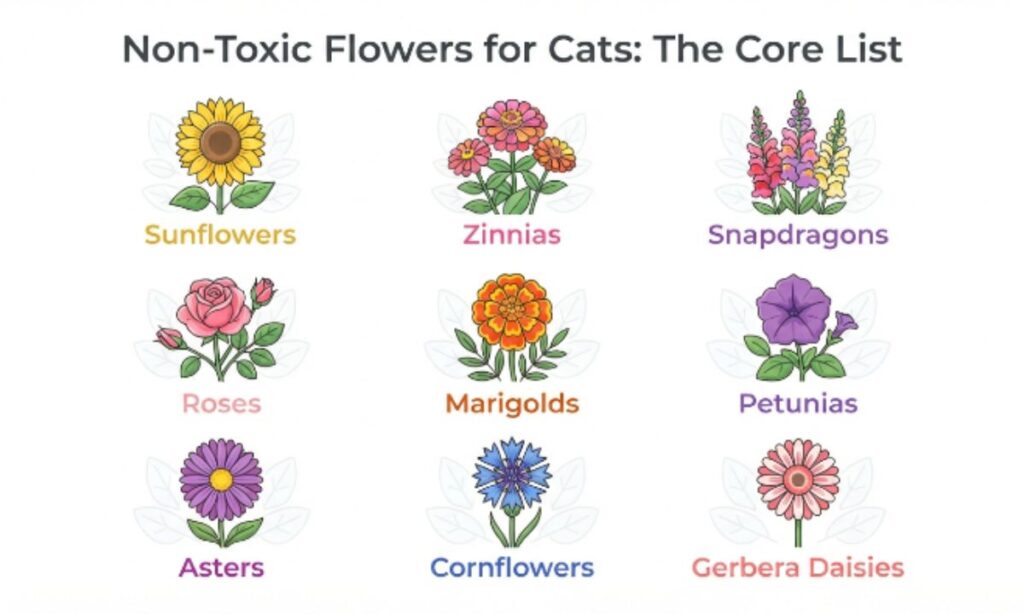
Non-Toxic Flowers for Cats: The Core List
These flowers are widely recognized by veterinary and pet safety sources as non-toxic to cats. That said, always confirm with your vet or the ASPCA plant database before bringing home something new, since look-alike species can trip up even careful shoppers.
The list below covers the most commonly available options at florists, nurseries, and grocery stores, so you can shop with confidence rather than guessing at the register.
Flower
Best Used For
Roses
Bouquets, cut arrangements
Spray roses
Smaller bouquets, table centerpieces
Sunflowers
Bouquets, garden beds
Orchids (Phalaenopsis)
Potted indoor plants
African violets
Potted indoor plants
Snapdragons
Bouquets, garden borders
Lisianthus
Bouquets, floral arrangements
Asters
Bouquets, garden beds
Stock (Matthiola)
Bouquets, fragrant arrangements
Statice
Dried or fresh arrangements
Alstroemeria (Peruvian lily)
Bouquets
Zinnias
Garden beds, cut flowers
Marigolds
Garden beds, borders
Petunias
Hanging baskets, garden beds
Calendula (pot marigold)
Garden beds, edible gardens
Best Non-Toxic Flowers for Bouquets
If you want to enjoy fresh flowers at home and have cats, the safest option is bouquets made of bloom-friendly flowers. Some examples of them are roses, spray roses, sunflowers, lisianthus, asters, and alstroemeria. They are all good in a vase arrangement and unlikely to be harmed by curious cats.
Remember that most of the time, florists design their bouquets using more than one type of flower. That means you need to research each botanical species present in the bouquet before buying. One poisoned cat can ruin your day, so it is better to ensure that no toxic plants are in a bouquet.
Best Non-Toxic Flowers for Gardens
For outdoors, marigolds, petunias, calendula, and zinnias are safe and fairly hardy, adding color to the garden while being able to withstand the occasional cat attack.
Outdoor cats or cats who are allowed to roam outside and explore are likely to find themselves nose-to-plant with something, whether you’re there or not, so planting something along a route they’re apt to take or a window they might be able to reach may give them an appropriate place to investigate rather than at someone else’s property.
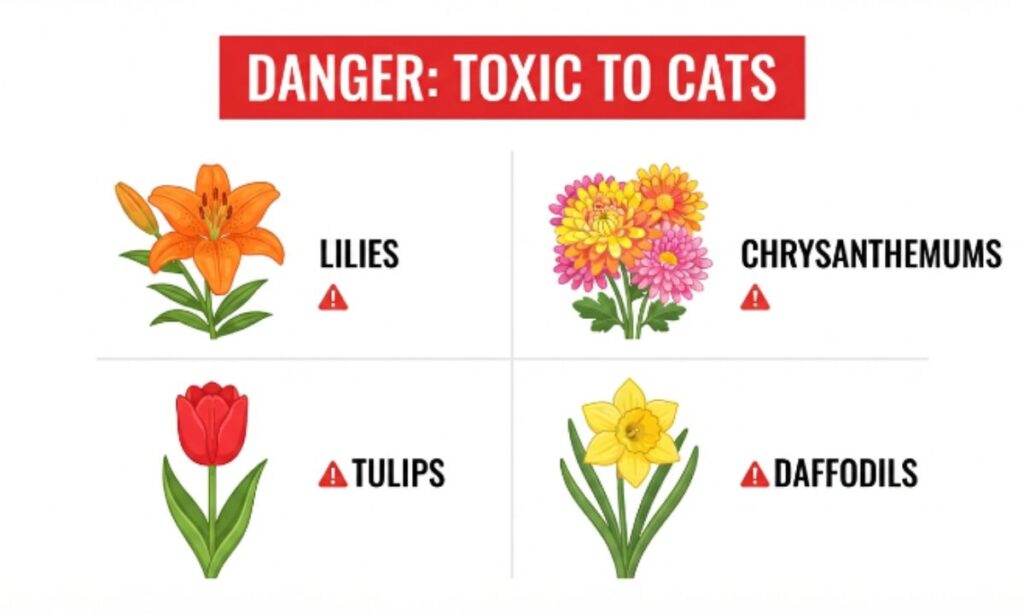
Toxic Flowers You Should Never Bring Home
Some flowers look harmless but carry serious risk. A few can be fatal, even in small amounts. Knowing this list matters just as much as knowing the safe one. Many of these flowers are common gift shop staples, which is exactly why accidental exposure happens so often.
Flower
Risk Level
Main Concern
True lilies and daylilies
Severe
Acute kidney failure, even from pollen or vase water
Tulips
Moderate to severe
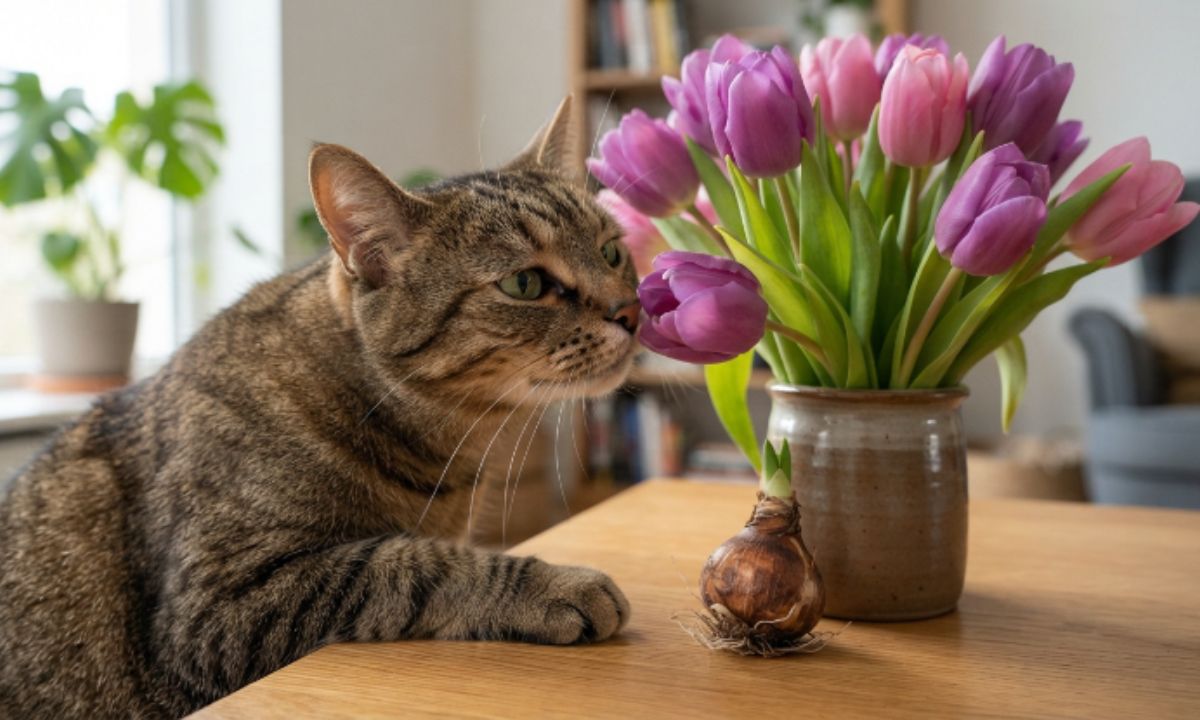
Vomiting, drooling, heart and breathing issues in large amounts
Daffodils
Moderate to severe
Vomiting, diarrhea, drop in blood pressure
Azaleas
Severe
Vomiting, weakness, cardiac issues
Hyacinths
Moderate
Intense vomiting, drooling
Hydrangeas
Mild to moderate
Vomiting, diarrhea, lethargy
Kalanchoe
Moderate
Vomiting, diarrhea, potential heart effects
Carnations
Mild
Mild vomiting or skin irritation
Daisies (common)
Mild to moderate
Vomiting, drooling, skin irritation
Lilies deserve special attention here. Every part of the plant is dangerous, including the pollen and the water in the vase. Even a small amount can trigger kidney failure in cats within days.
This is especially important around holidays. Easter lilies, in particular, send more cats to emergency clinics each spring than almost any other plant. If you receive a holiday bouquet as a gift, check it carefully before it enters a home with cats.
Dangerous Look-Alikes and Common Mix-Ups
Plant names can be misleading, and that’s where a lot of cat owners get tripped up.
Regular daisies are toxic, but gerbera daisies are a different species and considered non-toxic.
Alstroemeria is often called “Peruvian lily,” but it isn’t a true lily and is generally safe.
True lilies (Lilium species) and daylilies (Hemerocallis) are both extremely dangerous, despite looking different from each other.
Always check the scientific name on the tag, not just the common name. A florist or nursery label can save you a stressful vet visit later.
Holiday and Seasonal Flower Safety Tips
Certain times of year are more likely to prompt flower-related accidents than others. This is because bouquets tend to come home with us more often. The most dangerous times are Mother’s Day, Easter, Valentine’s Day, and the winter holidays.
Before ordering a bouquet, check the stems for lilies, tulips, or daffodils, which are often present in pre-made bouquets. When shopping online or at your local florist, you can even ask for the flower to be replaced with cat-friendly stems if they are available.
Most florists are willing to accommodate substitutions when called ahead of time.
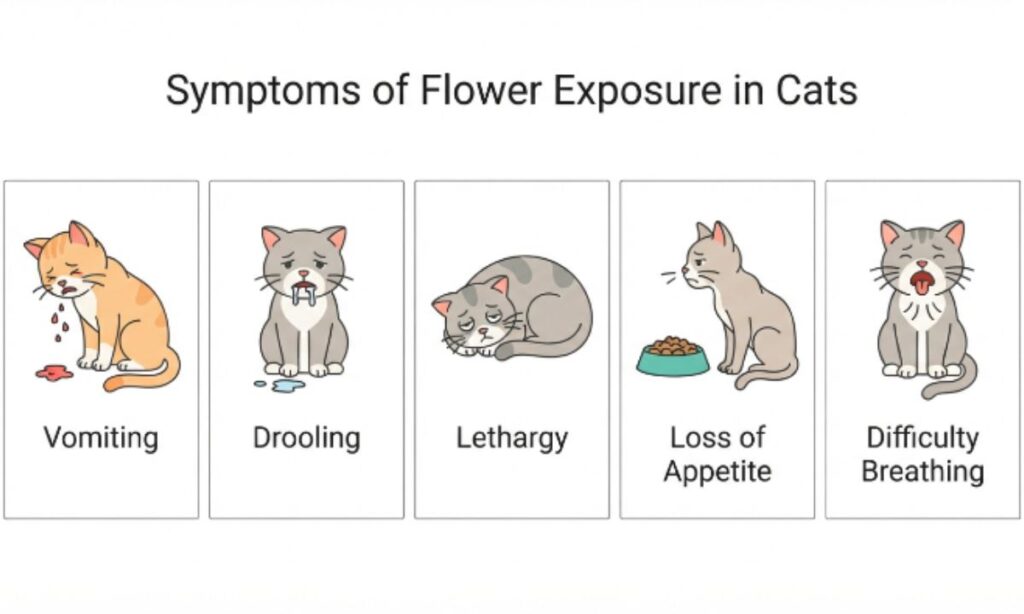
Symptoms to Watch for After Flower Exposure
Not every reaction looks the same. The severity depends on which flower your cat got into and how much they ate.
Mild Symptoms From Non-Toxic Flowers
Vomiting
Diarrhea
Drooling
Temporary loss of appetite
These symptoms usually pass on their own within a day. Keep an eye on your cat and make sure they’re still drinking water normally.
If mild symptoms last longer than 24 hours, or your cat stops eating entirely, it’s worth a call to your vet even if the flower in question is considered non-toxic. Cats react differently based on size, age, and overall health, so what causes no issue in one cat might bother another.
Serious Symptoms From Toxic Flowers
Repeated vomiting
Lethargy or weakness
Difficulty walking or standing
Seizures
Labored breathing
If you see any of these signs, especially after exposure to lilies, tulips, azaleas, or daffodils, call your vet immediately. Don’t wait to see if it passes.
Bring a sample of the flower or the packaging with you to the clinic if possible. Knowing the exact plant species helps your vet choose the right treatment much faster, especially in time-sensitive cases like lily poisoning.
How to Keep Flowers Safe Around Your Cat
A few small habits go a long way toward preventing flower-related emergencies.
Remove thorns from roses before placing them in a vase.
Skip the flower food packets that come with bouquets, since they aren’t formulated with pets in mind.
Sweep up fallen petals and leaves right away.
Choose potted plants over cut flowers if your cat is a known chewer.
Elevate arrangements on high shelves or use hanging baskets out of jumping range.
Check the ASPCA plant database before buying anything unfamiliar.
Watch your cat’s behavior around new plants for the first few days.
None of these steps take much effort, but together they cut your risk significantly. Building these habits into your routine means you can enjoy fresh flowers without constantly worrying about your cat’s next move.
How to Introduce New Flowers to a Cat-Friendly Home
Bringing home a new plant or bouquet doesn’t have to be stressful. A short trial period helps you spot problems before they escalate.
Start by placing the new flowers somewhere your cat can see but not easily reach for the first day or two. Watch how they react from a distance. If your cat shows unusual interest, such as repeated sniffing, pawing, or attempts to jump toward the arrangement, move it to a more secure spot right away.
Once you’re confident the flowers are non-toxic and your cat isn’t overly fixated on them, you can relax the placement a little. Even then, periodic check-ins are worth the small effort, especially with young or highly food-motivated cats.
Vase Water: The Hidden Risk Even Safe Flowers Carry
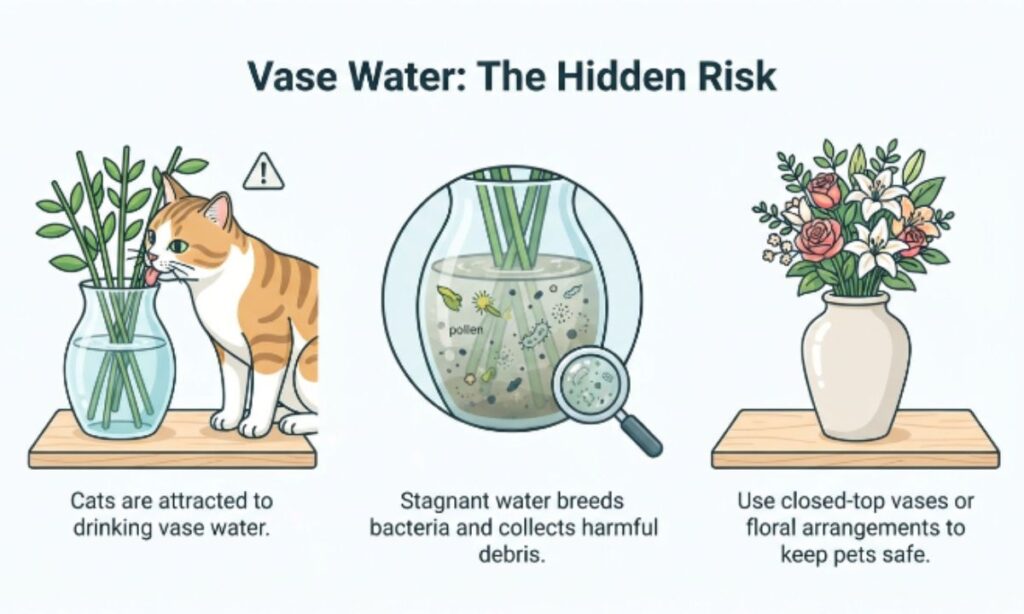
Vase water is never just water. Bacteria can thrive in it, and rotting stems can give off chemicals that are harmful to your cat.
Commercial flower food packets can contain various sugars and preservatives that are unhealthy for your cat to ingest, so if your cat is a fan of drinking from your fresh flowers, you may want to consider changing the water in the vase every day and ditching the flower food packets altogether.
To prevent any future issues that could arise from your cat’s curious and adorable nature, it’s best to invest in potted flowering plants such as orchids and African violets. There’s nothing to worry about with the water, and your plant will last much longer than a cut bouquet would.
The reason your cat is drinking from the vase in the first place is that it’s probably fresher and more appealing to them than whatever water you’ve given them to drink from.
If you see your cat trying to lap at the water in a vase, you should consider investing in a pet water fountain. The moving, filtered water would be much more appealing to them than the still water in the vase, and it would take care of any future issues of your cat trying to drink from dangerous water sources.
Safer Alternatives to Fresh-Cut Flowers
If you want greenery without the guesswork, a few low-risk options work well in cat-friendly homes.
Cat grass gives your cat something safe to chew on purpose.
Enclosed terrariums let you display plants your cat can’t reach.
Artificial floral arrangements offer the look of fresh flowers with zero ingestion risk.
Catnip planters double as enrichment and a distraction from other houseplants.
Combining a few safe blooms with cat grass or catnip creates a home that feels lively without constant worry.
Many pet owners find that a mix works best: one or two cat-safe flowering plants for color, a patch of cat grass for chewing, and artificial stems in any spot the cat can easily reach. This layered approach satisfies both your design goals and your cat’s curiosity, without leaving room for guesswork.
Frequently Asked Questions
Are non-toxic flowers completely safe for cats?
No, non-toxic just means they won’t poison your cat, though chewing large amounts can still cause mild stomach upset like vomiting or diarrhea.
Can cats safely smell flowers?
Yes, smelling is generally safe for cats; the real risk comes from chewing petals, swallowing pollen, or drinking vase water.
Are gerbera daisies safe for cats?
Yes, gerbera daisies are non-toxic, unlike common daisies, which contain compounds that can cause vomiting and skin irritation.
What should I do if my cat eats a toxic flower like a lily?
Call your vet or an emergency animal hospital immediately, since lily exposure can cause irreversible kidney failure within just a few days.
Can I keep roses in a home with cats?
Yes, roses are non-toxic to cats, but you should remove the thorns first to prevent cuts or mouth injuries during play.
Conclusion
Choosing the cat-safe flowers does not mean the end of the beautiful house. Make sure you choose the right flowers, avoid poisonous flowers, and watch what your cat would do with them. The necessary amount of research before buying can allow you to enjoy the fresh flowers and have a healthy cat.
Such a helpful and simple guide as this one would definitely be useful for you and your cat. You can even take care of your cat by removing thorns from the flowers, changing the water in the vase more often, and keeping the arrangement out of its reach. If you are not sure whether the plant is dangerous or not, you can always do some research or call your local vet to do it for you within a few seconds.
I’m a passionate pet writer who loves sharing practical tips, trusted advice, and heartwarming stories about cats, dogs, and other beloved companions. Through PetCaffine.com, I help pet lovers better understand their furry friends with easy-to-read articles on pet care, nutrition, behavior, health, and everyday life.