Are Tulips Toxic to Cats? Symptoms, Risks, and What to Do
Tulips may look harmless, but they can make cats sick if they chew or eat them. Every part of a tulip contains compounds that can cause problems for cats. The bulb carries the highest concentration of these toxic compounds. Small bites often cause drooling, vomiting, or diarrhea. Larger exposures, especially bulb ingestion, can cause more serious signs. If your cat eats a tulip, prompt veterinary advice can help you choose the safest next step.
Yes, tulips are toxic to cats. The ASPCA lists Tulipa species as toxic to cats, dogs, and horses. It identifies tulipalin A and tulipalin B as the toxic principles and lists vomiting, depression, diarrhea, and excessive drooling among the clinical signs. The ASPCA also states that the highest concentration of toxin occurs in the bulb.
This means you should not treat tulip petals as completely safe just because the bulb presents the greatest concern. Leaves, stems, flowers, and bulbs all contain potentially harmful substances. A small bite may cause mainly mouth or stomach irritation, while a larger exposure can produce more serious illness.
The risk depends on several factors. These include the part of the plant consumed, the amount eaten, the cat’s size, and the cat’s individual health. Your veterinarian or an animal poison service can assess those details more accurately than a general toxicity chart.
The basic rule is simple: do not let cats chew or eat tulips.
Why Are Tulips Toxic to Cats?
Tulips contain naturally occurring toxic compounds known as tulipalin A and tulipalin B. These compounds occur throughout the plant, although the bulb contains the highest concentration. Veterinary poison-control information also describes tulip toxins as plant compounds that can irritate tissues in the mouth and digestive tract.
You may also encounter related terms such as tuliposides, glycosides, and allergenic lactones when researching tulip poisoning. These technical terms can make the subject sound complicated, but cat owners mainly need to remember one point: tulip plant material can cause toxic and irritating effects when a cat eats it.
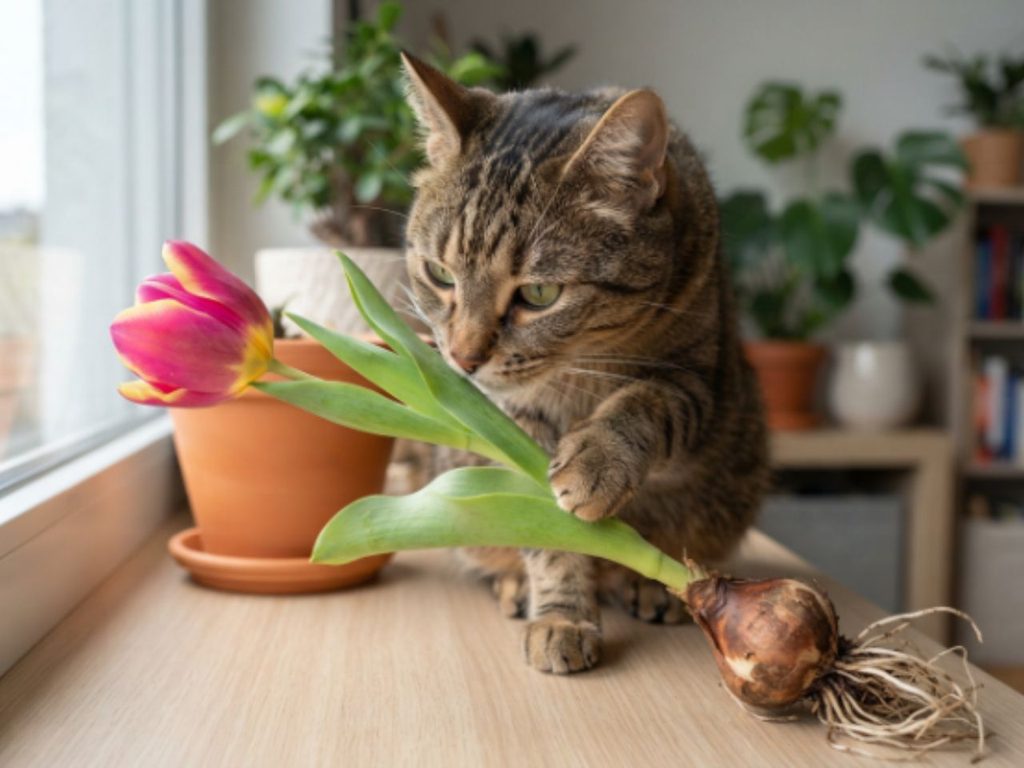
Tulip toxicity does not depend on the flower looking damaged or fresh. A cut tulip remains a tulip. A potted tulip remains a potential hazard. An unplanted bulb can pose an even greater concern because the bulb concentrates the toxic compounds.
That makes spring gardening and indoor flower arrangements important situations to consider.
Which Parts of a Tulip Are Toxic to Cats?
All major parts of a tulip should be treated as toxic to cats. The bulb presents the greatest concern because it contains the highest concentration of toxic compounds.
Tulip part
Risk to cats
Main concern
Bulb
Highest concern
More concentrated toxins and potentially more serious illness
Leaves
Toxic
Mouth irritation, drooling, vomiting, diarrhea
Stem
Toxic
Gastrointestinal irritation
Petals/flower
Toxic
Mouth and digestive irritation
Fallen plant material
Potentially toxic
Cats may chew or lick discarded pieces
Potted tulip
Potentially toxic
Leaves, flowers, soil, and accessible bulb
Unplanted bulb
High concern
Concentrated source that a cat may chew
Are Tulip Bulbs Toxic to Cats?
Yes. Tulip bulbs are the most concerning part of the plant for cats.
ASPCA and Pet Poison Helpline information both identify the bulb as the part with the highest toxin concentration. Pet Poison Helpline notes that bulb consumption can cause more significant gastrointestinal distress, including vomiting, diarrhea, drooling, and loss of appetite.
Bulbs create a particular risk because cats may encounter them in places owners do not expect. A cat can dig in a garden, knock over a container, investigate a bag of bulbs, or chew a bulb that someone has left near a planting area.
Store unplanted bulbs in a secure location that your cat cannot access.
Are Tulip Petals and Flowers Toxic to Cats?
Yes. Tulip petals and flowers contain toxic compounds too.
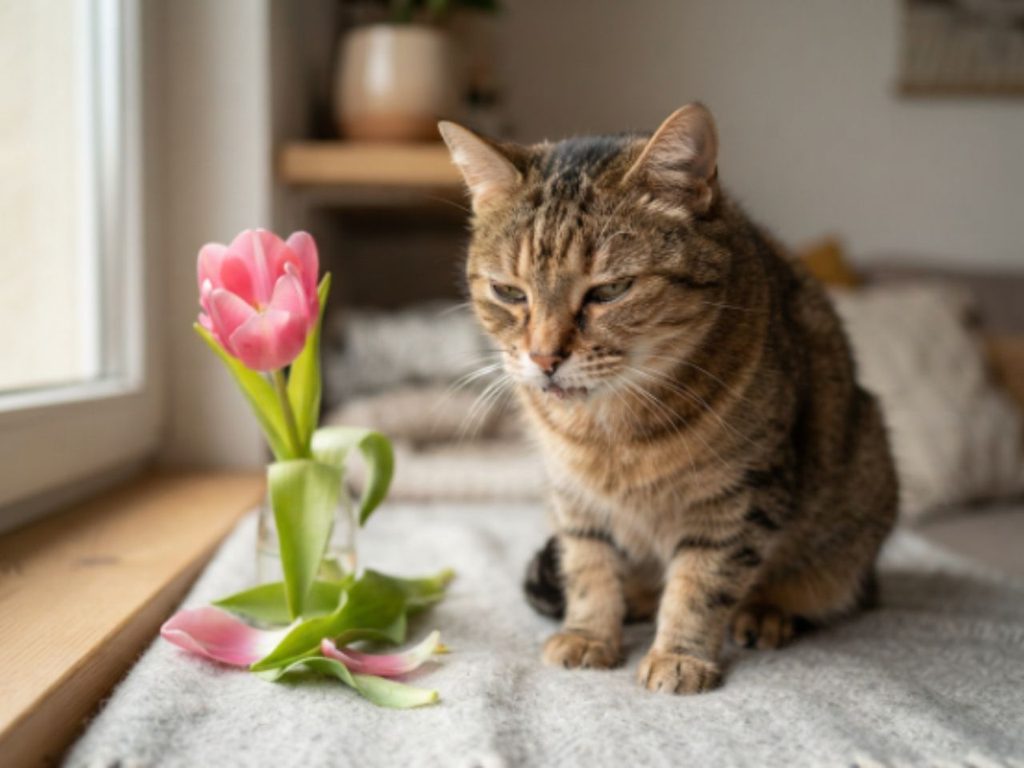
A small bite may cause less severe effects than eating a bulb, but that does not make the flower safe to eat. A cat that chews a petal can develop drooling, vomiting, diarrhea, or mouth irritation.
Remove fallen petals from the floor instead of assuming your cat will ignore them.
Are Tulip Leaves and Stems Toxic to Cats?
Yes. Leaves and stems also contain toxic substances.
Pet Poison Helpline reports that small amounts of tulip leaves, stems, or flowers can cause mild nausea and vomiting, while larger bulb exposures carry greater concern.
If your cat regularly chews plants, keep tulips completely out of reach rather than relying on the cat to stop after one bite.
What Happens If a Cat Eats a Tulip?
The effects can range from mild gastrointestinal upset to more serious symptoms. The amount eaten and the plant part involved matter.
A cat that takes a small bite from a leaf or petal may develop:
Drooling
Mouth irritation
Vomiting
Diarrhea
Reduced appetite
Lethargy
Depression or unusual withdrawal
A cat that eats a larger quantity or chews a bulb can face a higher risk of:
Persistent vomiting or diarrhea
Abdominal discomfort
Weakness
Tremors
Increased heart rate
Abnormal heart rhythm
Changes in breathing
Poor coordination
Seizures
Collapse
Pet Poison Helpline specifically notes that large bulb ingestions can produce increased heart rate and respiratory changes.
Not every exposed cat develops severe symptoms. However, you should not use the absence of symptoms as proof that an exposure is harmless.
Symptoms of Tulip Poisoning in Cats
Tulip poisoning symptoms often involve the mouth and digestive system first. The ASPCA lists vomiting, diarrhea, depression, and hypersalivation among the recognized clinical signs.
Early Signs
Watch for changes such as:
Excessive drooling
Pawing at the mouth
Lip or mouth irritation
Vomiting
Diarrhea
Refusing food
Lethargy
Unusual quietness
These signs can occur after plant ingestion, but they do not prove that a tulip caused them. Cats can develop similar symptoms from many other illnesses and toxins.
More Serious Signs
More concerning signs can include:
Repeated vomiting
Marked weakness
Tremors
Difficulty walking
Fast heartbeat
Irregular heartbeat
Rapid or difficult breathing
Seizures
Collapse
Unresponsiveness
Seek emergency veterinary care if your cat develops breathing difficulty, seizures, collapse, severe weakness, or other serious symptoms.
How Quickly Can Tulip Poisoning Symptoms Appear?
The timing can vary. Veterinary sources report that signs may develop relatively quickly, while some cases may take longer to become obvious. The supplied research notes that VCA describes a possible onset ranging from minutes to 24 hours.
Do not wait for symptoms before contacting a professional if your cat has eaten a tulip bulb, a large amount, or an unknown amount.
Cats can hide illness. A cat may also appear normal shortly after ingestion and become sick later.
The safest approach is to tell the veterinarian what happened and follow the instructions you receive.
What to Do If Your Cat Ate a Tulip
Act calmly and collect useful information.
1. Remove Access to the Plant
Move your cat away from the tulip. Remove the remaining plant, bulbs, petals, and leaves from the area.
Prevent additional chewing while you assess the situation.
2. Identify What Your Cat Ate
Try to determine whether your cat ate:
A petal
A leaf
A stem
Several plant pieces
Part or all of a bulb
An unknown amount
The difference matters because the bulb contains the highest concentration of toxic compounds.
3. Estimate the Amount
You may not know the exact amount. That is okay.
Look at the plant and determine what appears to be missing. Tell the veterinarian whether the cat took one small bite or whether a substantial portion disappeared.
4. Save the Plant or Take a Photograph
Keep the remaining plant available for identification. A clear photograph can also help.
If the tulip came from a florist or garden center, keep the label or packaging if you have it.
5. Check for Other Possible Exposures
Consider everything your cat could have accessed.
A bouquet may contain several plant species. A garden may contain fertilizers or pesticides. A vase may contain flower food or preservatives.
These details can change the advice you receive.
6. Contact Your Veterinarian
Call your veterinarian promptly after suspected ingestion.
For an unknown amount, bulb ingestion, or concerning symptoms, seek urgent veterinary guidance.
In the United States, the ASPCA Animal Poison Control Center lists 888-426-4435, while Pet Poison Helpline lists 855-764-7661 for animal poisoning assistance.
What Not to Do After Tulip Ingestion
Do not try to treat tulip poisoning with household remedies.
Do not induce vomiting at home. VCA specifically warns that owners should not attempt to make cats vomit at home. Products such as salt or hydrogen peroxide can cause additional injury or poisoning.
Avoid giving your cat:
Hydrogen peroxide
Salt
Milk as a supposed antidote
Oil
Human medication
Activated charcoal unless a veterinarian specifically directs its use
Any other home treatment without professional instructions
Do not assume that vomiting once means the danger has passed.
Do not wait for symptoms after a known bulb ingestion or significant exposure.
Pet Poison Helpline likewise advises owners not to give home antidotes or induce vomiting without veterinary or poison-control guidance.
When Is Tulip Exposure an Emergency?
Some exposures deserve immediate veterinary attention.
Contact an emergency veterinarian if:
Your cat ate or chewed a tulip bulb.
You cannot determine how much your cat ate.
Your cat has repeated vomiting.
Your cat drools heavily or appears to have significant mouth irritation.
Your cat becomes weak or unusually lethargic.
Your cat develops tremors.
Your cat has trouble walking.
Your cat has breathing difficulty.
Your cat has a seizure.
Your cat collapses or becomes unresponsive.
A serious exposure deserves professional assessment even if the cat initially looks normal.
Can Tulips Cause Kidney Failure in Cats?
Tulips should not be confused with true lilies or daylilies.
True lilies in the Lilium genus and daylilies in the Hemerocallis genus can cause severe kidney failure in cats after exposure to even small amounts of plant material or pollen.
Tulips belong to the broader lily family, but they do not have the same characteristic kidney-toxicity profile as true lilies.
That distinction matters.
You should not call tulips harmless because they are different from true lilies. Tulips remain toxic to cats.
At the same time, you should not claim that every tiny tulip bite causes the kidney failure associated with true lilies. The evidence reviewed here instead emphasizes gastrointestinal irritation and, with larger or bulb exposures, potentially more serious systemic effects.
Tulips in Mixed Bouquets Can Create Extra Risk
A bouquet labeled as a tulip arrangement may contain other flowers and greenery.
Always identify the plants individually if your cat can access the bouquet.
This matters because a mixed bouquet could contain true lilies or daylilies, which create a different and much more serious risk for cats. ASPCA specifically warns that Lilium and Hemerocallis lilies can cause kidney failure in cats.
Other spring plants can also cause poisoning. Daffodils, hyacinths, and other bulbs have their own toxicity profiles.
Never assume that every flower in a mixed arrangement shares the same risk.
Are Tulip Bouquets Safe in a House With Cats?
A cut tulip remains toxic even after you place it in a vase.
The safest choice for a cat that likes to chew plants is to keep tulips out of areas the cat can access.
Do not rely on a high shelf alone. Cats can jump, climb, knock over vases, and investigate fallen plant material.
Also prevent access to:
Fallen petals
Fallen leaves
Stems
Tulip pollen or plant residue
Vase water
Flower-food packets
Floral preservatives
Decorative sprays or glitter
Vase water deserves special attention because it may contain plant residue or added flower-care products. If your cat drinks from a vase, tell your veterinarian what was in the water and whether the florist supplied a flower-food packet.
Yes. Potted tulips can expose cats to several hazards.
A cat may chew the leaves or flowers. A curious cat may also dig into the soil and expose the bulb.
Keep potted tulips in an area your cat cannot enter. A closed room provides stronger protection than simply placing the plant on a shelf.
If your cat digs in plant pots, take extra care. The accessible bulb creates a more concerning exposure than a brief sniff of the plant.
Can Cats Be Around Tulips in the Garden?
Outdoor tulips can create a hidden risk because cats may dig around bulbs.
Keep cats away from areas where you plant tulip bulbs. Store unused bulbs in a secure container before planting.
After flowering, remove fallen plant pieces from areas your cat visits.
Garden chemicals create another potential hazard. Fertilizers, insecticides, herbicides, and fungicides can cause their own problems. ASPCA recommends keeping pets away from areas where potentially hazardous gardening products are being used.
Do not assume that a fenced flower bed automatically solves the problem. Curious cats can squeeze through small spaces and dig in loose soil.
How Can You Prevent Tulip Poisoning in Cats?
Prevention works better than trying to manage an exposure later.
Follow these practical steps:
Keep tulips out of cat-accessible rooms.
Store unplanted bulbs in sealed, secure containers.
Do not leave bulbs in open bags.
Keep cats away from tulip beds.
Remove fallen petals and leaves.
Dispose of bulbs and plant waste securely.
Keep compost containing tulip material inaccessible.
Prevent cats from drinking flower-vase water.
Keep flower-food packets away from pets.
Check every flower in a mixed bouquet.
Ask the florist about the plants included in an arrangement.
Use verified cat-safe flowers when possible.
Provide safe alternatives such as appropriate cat grass if your cat likes chewing plants.
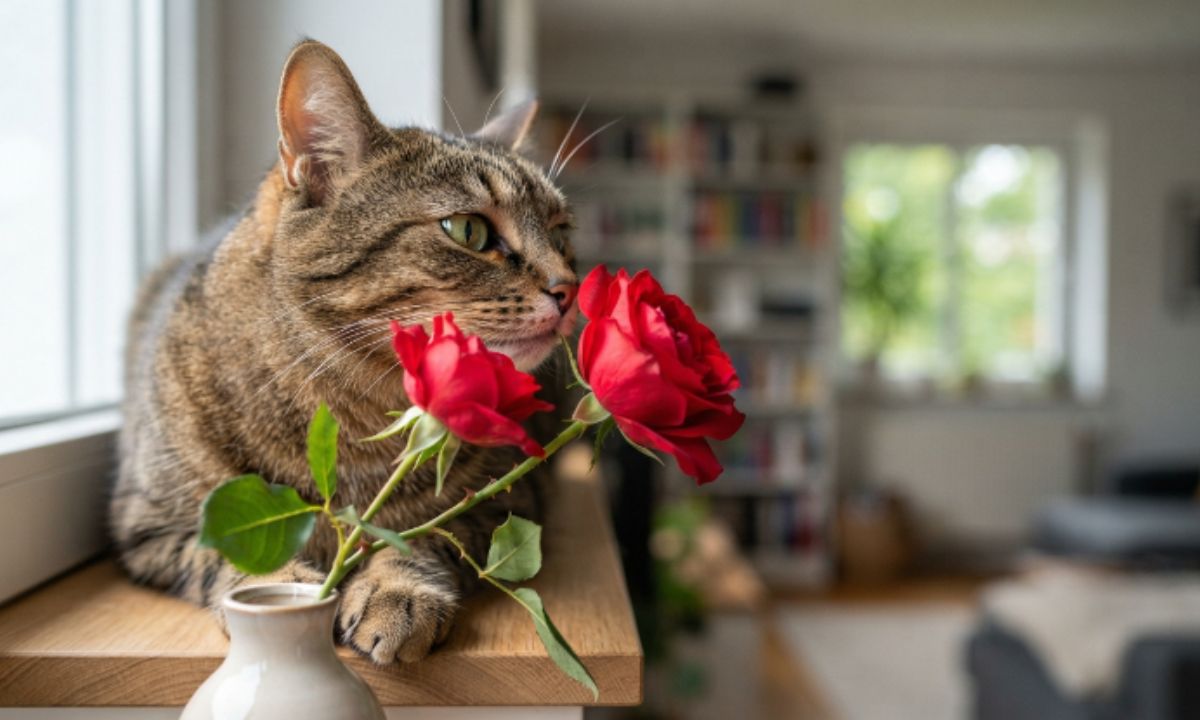
The supplied research also highlights cat-safe bouquet planning and alternatives such as orchids, gerbera daisies, sunflowers, snapdragons, zinnias, and roses, but every plant should still be checked by its scientific name before you bring it into a cat’s environment.
What Flowers Are Safer for Cats?
If you want flowers in a cat household, choose species that reputable veterinary or animal-poison resources classify as non-toxic.
Common examples often used as safer flower options include:
Orchids
Gerbera daisies
Sunflowers
Snapdragons
Zinnias
Roses
However, “safe” does not mean a cat should eat the plant freely. Any plant material can cause stomach upset in some animals. ASPCA also notes that its plant database is not all-inclusive, so identifying the exact plant remains important.
Avoid choosing flowers based only on a common name. Similar-looking plants can have very different toxicity profiles.
Conclusion
Tulips are toxic to cats, and the bulb deserves the most attention because it contains the highest concentration of toxic compounds. Leaves, stems, and flowers can also cause illness, especially when a cat chews or eats them.
If your cat eats a tulip, remove access, identify the plant part and estimated amount, save a sample or photograph, and contact your veterinarian or an animal poison service for guidance. Keep tulips, loose bulbs, fallen plant material, and bouquets away from curious cats, and remember that a mixed bouquet may contain true lilies that create a separate kidney-failure emergency.
I’m a passionate pet writer who loves sharing practical tips, trusted advice, and heartwarming stories about cats, dogs, and other beloved companions. Through PetCaffine.com, I help pet lovers better understand their furry friends with easy-to-read articles on pet care, nutrition, behavior, health, and everyday life.







1 thought on “Are Tulips Toxic to Cats? Symptoms, Risks, and What to Do”