You light a candle to relax. Your cat sees a flickering flame and a strange new smell. One of you is enjoying the moment. The other might be at risk, and it helps to know why.
Not every candle is a threat, but not every candle is safe either. Risk comes down to three things: the wax, the scent, and the flame.
Paraffin candles release more soot and airborne compounds than natural wax options.
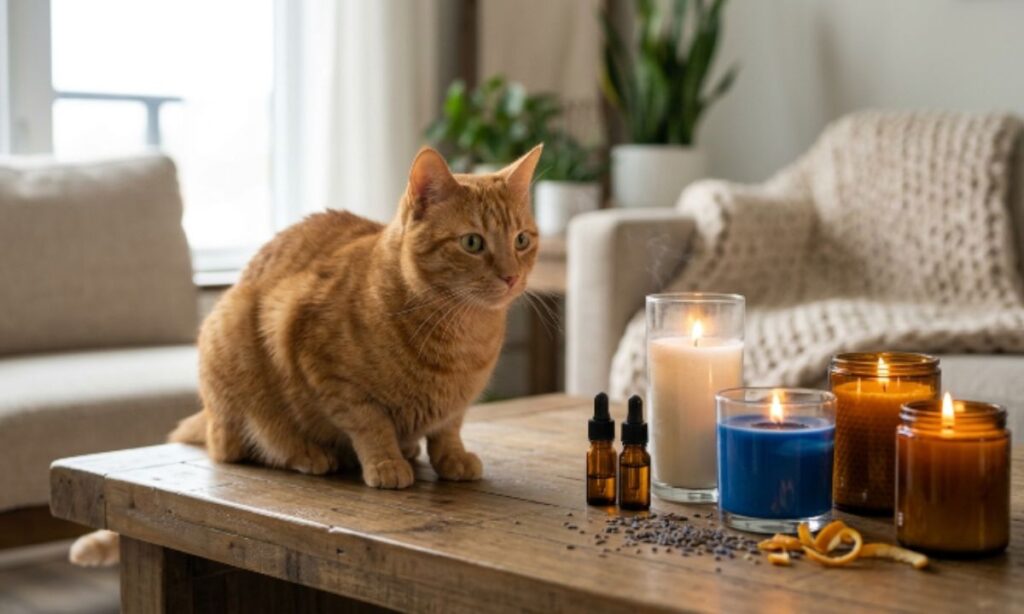
Essential oils and synthetic fragrances can irritate a cat’s lungs, skin, or stomach.
An open flame is always a burn or fire risk around a curious cat.
Cats with asthma or bronchitis face a higher risk from any smoke or strong scent.
Used carefully, most candles pose low risk. Used carelessly, they can cause real harm.
Common Types of Candles (By Shape and Style)
Candle shape does not usually change its toxicity on its own, but it can affect how easily a cat can reach, knock over, or get burned by the candle. For cat owners, the main concerns are open flames, hot wax, heated containers, and accidental ingestion.
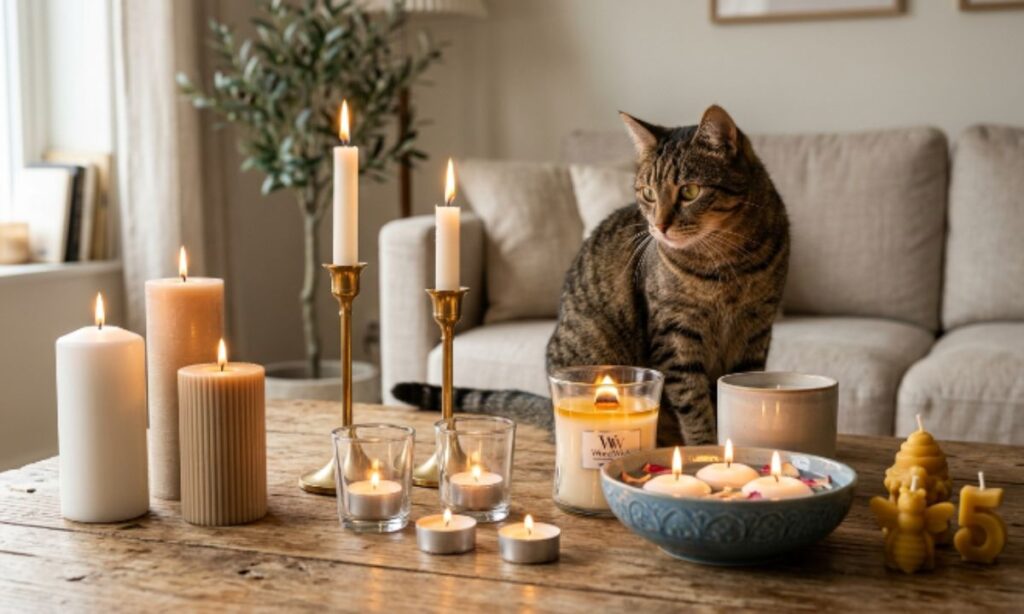
Pillar candles – Thick, tall, free-standing cylinders. They are fairly stable on a flat surface, but a curious cat can still knock one over by jumping nearby or brushing against it. For cats: Keep pillar candles on a heavy, stable surface that your cat cannot access. Never leave one burning unattended, especially around cats that like to climb or explore.
Taper candles – Long, thin, traditional dinner candles. Their narrow design makes them easier for a cat to knock over with a paw, tail, or quick movement. For cats: Taper candles are a higher fire risk in homes with active cats. A knocked-over taper can ignite nearby curtains, paper, furniture, or other flammable items.
Votive candles – Small, short candles designed to burn inside a glass cup. The container helps contain the flame, but the glass can become very hot.
For cats:A cat may not realize that the glass is hot and could burn its nose or paw while investigating it. Keep votives somewhere your cat cannot reach.
Tealight candles – Very small, shallow candles placed in thin metal or plastic cups. Their small size makes them lightweight and relatively easy to tip or move. For cats: Tealights can be especially tempting to curious cats because they are low to the ground and easy to investigate. Keep them well away from areas where your cat walks, jumps, or plays.
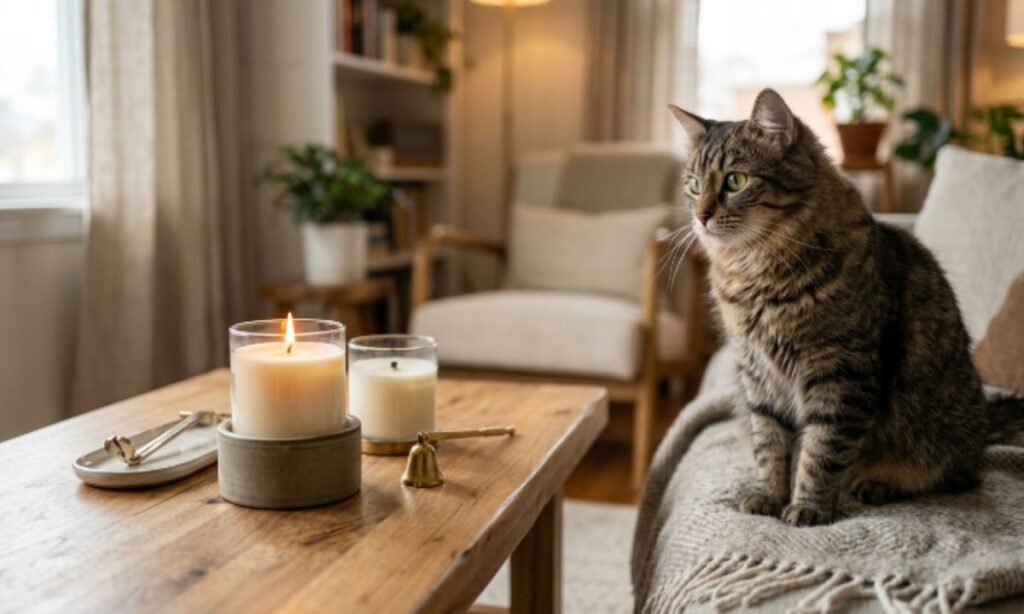
Jar or container candles – Wax is poured into a glass, metal, or ceramic container. These are generally more contained because the flame sits below the rim.
For cats: The container can reduce the chance of direct contact with the flame, but it does not eliminate the risk. The jar itself can become extremely hot, so place it where your cat cannot touch or knock it over.
Floating candles – Wide, flat candles designed to float in water. They have a relatively low tipping risk when properly placed in a suitable container of water, but they still have an exposed flame. For cats: A cat may be attracted to the water and investigate the candle with a paw. Use a deep, stable container and keep it somewhere your cat cannot reach.
Birthday or novelty candles – These include shaped figures, numbers, decorative candles, and sparkler-style candles. They are often small, lightweight, and not designed with pet safety in mind. For cats: Keep these candles away from cats before, during, and after use. Small pieces of wax or decorative material may also become a choking or ingestion hazard if a cat chews on them.
Wood-wick candles – Pillar or jar candles that use a wooden wick instead of a traditional cotton wick. The wick can make a crackling sound while burning.
For cats: The unfamiliar crackling may startle some cats or make others curious. More importantly, the candle still produces an open flame and hot wax, so it should be treated like any other burning candle around pets.
Common Types of Candle Wax (Material)
Wax type matters more than shape when it comes to air quality and toxicity.
Highest soot output; least recommended around cats
Soy wax
Soybean oil
Burns cleaner, lower soot
Beeswax
Natural bee product
Burns cleanest; often considered the safest option
Coconut wax
Coconut oil
Clean-burning and holds scent well
Palm wax
Palm oil
Burns moderately clean; sourcing varies by brand
Gel wax
Mineral oil and resin
Similar concerns to paraffin due to petroleum content
If you share your home with a cat, beeswax, soy, and coconut wax are the more forgiving choices.
Harmful Ingredients and Scents to Avoid
The wax is only half the story. What’s added to a candle often matters more than what it’s made from.
Ingredients That Raise Red Flags
Paraffin or petroleum-based wax
Lead-core or metal-core wicks
Synthetic fragrance oils
Undiluted essential oils
Heavy dye loads
Scents and Oils Linked to Cat Toxicity
Scent or Oil
Why It’s a Concern
Tea tree/melaleuca
Known to be toxic to cats even in small amounts
Cinnamon
Can irritate skin and airways
Citrus
Often disliked and potentially irritating
Wintergreen
Linked to toxicity in cats
Ylang-ylang
Can cause adverse reactions
Eucalyptus
Strong respiratory irritant for many cats
Peppermint and menthol
Frequently avoided by cats; can irritate airways
Cats process compounds differently than humans and dogs. Their livers lack certain enzymes needed to break down many essential oils, so oils that seem harmless to people can build up in a cat’s system.
Safe Candle-Burning Practices for Cat Owners
A few consistent habits lower the risk without giving up candles entirely.
Choose the Right Wax
Stick to beeswax, soy, or coconut wax with minimal added fragrance. Skip paraffin when you can.
Skip Essential Oils Where Possible
Look for candles scented with natural botanicals rather than concentrated essential oils, especially the ones listed above.
Ventilate the Room
Crack a window or run an air purifier while the candle burns. This keeps fragrance and smoke from concentrating in one space.
Never Leave a Lit Candle Unattended
Cats jump, swat, and explore. A candle left alone with a cat in the room is a fire risk waiting to happen.
Add a Physical Barrier
A glass hurricane cover, lantern, or heavy-weighted base makes a candle harder to knock over or paw at.
Keep Candles Off Low, Reachable Surfaces
Shelves and countertops aren’t off-limits to most cats. Place candles somewhere your cat can’t easily jump.
Signs of Respiratory Distress or Toxicity in Cats
Watch for these signs after burning a scented or essential-oil candle around your cat.
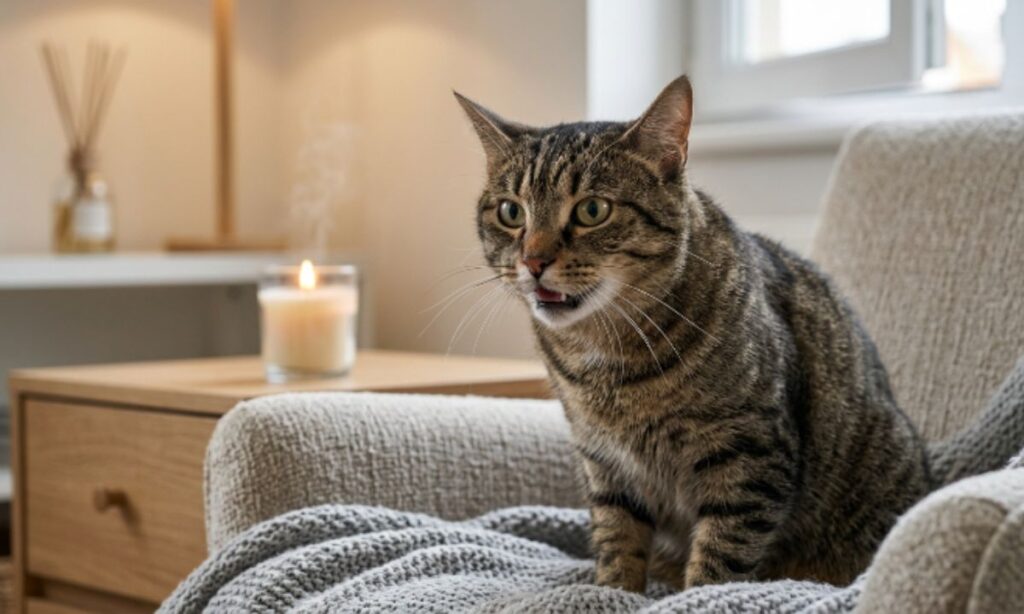
Mild reactions:
Sneezing
Watery eyes
Runny nose
Mild coughing
More serious reactions:
Wheezing or labored breathing
Persistent coughing
Drooling
Vomiting or diarrhea
Wobbly walking or loss of balance
Lethargy or weakness
Skin redness after direct wax or oil contact
If you notice the more serious signs, remove your cat from the room, ventilate the space, and contact your veterinarian. Cats with asthma or bronchitis can react faster and more severely than healthy cats, so treat any breathing changes as urgent.
Best Candle Alternatives for Cat Households
If you’d rather avoid the guesswork entirely, these options give you ambiance without the risk.
Flameless LED candles – No flame, no soot, no fragrance concerns.
Unscented natural-wax candles – Lower risk than scented versions since there’s no added fragrance load.
Battery-operated fairy lights – A flicker-free way to add warm lighting.
Pet-tested “safe for pets” candle lines – Formulated with pet exposure in mind, though it’s still smart to ventilate.
Wax melts and plug-in diffusers carry similar fragrance concerns to candles, so the same caution applies to those products too.
Frequently Asked Questions
Are scented candles bad for cats?
Naturally scented, ventilated candles are generally lower risk, but strong or essential-oil-based scents can irritate a cat’s airways.
What candle scents should I avoid around cats?
Avoid tea tree, cinnamon, citrus, wintergreen, ylang-ylang, eucalyptus, and peppermint, since these are commonly linked to cat sensitivity or toxicity.
Is paraffin wax safe to burn around cats?
Paraffin produces more soot and airborne byproducts than natural waxes, so beeswax, soy, or coconut wax are better choices for pet households.
Can candle smoke trigger asthma in cats?
Yes. Cats with asthma or bronchitis are especially sensitive to smoke and fragrance, and exposure can trigger coughing, wheezing, or breathing difficulty.
What should I do if my cat reacts to a candle?
Move your cat to fresh air, extinguish the candle, and call your veterinarian if symptoms like breathing trouble, vomiting, or wobbliness appear.
Final Thoughts
Candles and cats can share a home, but only with some care behind it. Choose natural wax, skip the riskiest essential oils, keep the room ventilated, and never leave a flame unattended around a curious cat. Do that, and you can enjoy a lit candle without turning your living room into a hazard zone.
I’m a passionate pet writer who loves sharing practical tips, trusted advice, and heartwarming stories about cats, dogs, and other beloved companions. Through PetCaffine.com, I help pet lovers better understand their furry friends with easy-to-read articles on pet care, nutrition, behavior, health, and everyday life.