Is Lavender Safe for Cats? What Every Owner Should Know
Your cat just brushed past a lavender plant on the windowsill. Now you’re wondering if that was a problem. Lavender smells calming to us, but cats process the world differently. Here’s what actually happens when cats meet lavender and how to keep them safe.
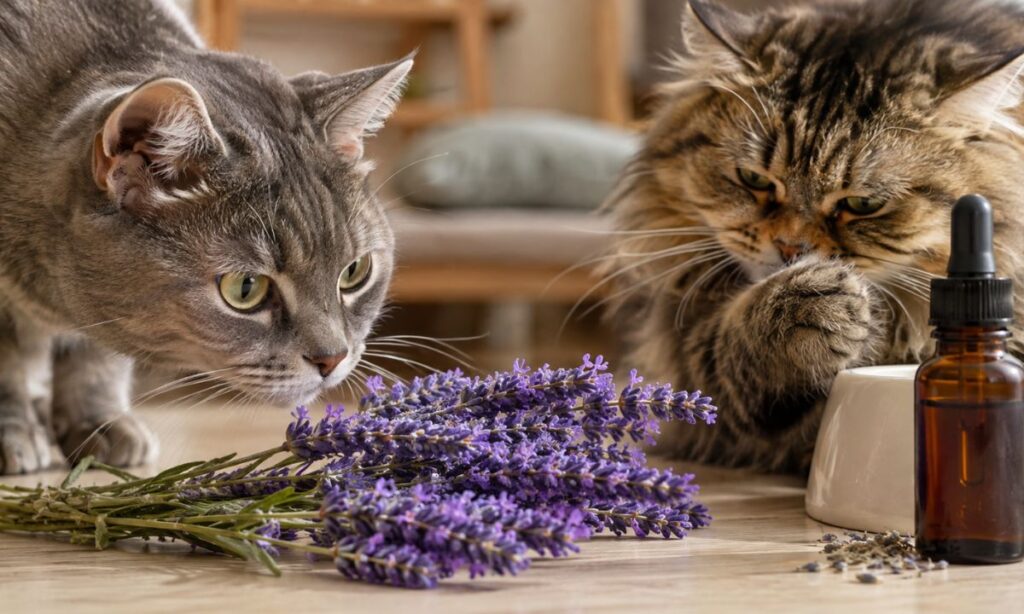
Yes. Lavender is considered toxic to cats. The ASPCA lists it as a plant that can harm cats if they eat it, breathe it in, or absorb it through the skin.
The risk comes from two compounds in the plant: linalool and linalyl acetate. Cats don’t have the liver enzymes needed to break these compounds down efficiently. That means the compounds can build up in their system instead of clearing out the way they would in a human or even a dog.
Not every form of lavender carries the same risk. Essential oil is the most concentrated and the most dangerous. Fresh and dried lavender contain smaller amounts of the same compounds, but they’re still not risk-free.
Why Cats React Differently to Lavender
Their Liver Works Differently
Cats process certain plant compounds much more slowly than humans do. Linalool and linalyl acetate are two of those compounds. Without the right enzymes, a cat’s body struggles to clear them out, so exposure can add up over time.
Their Sense of Smell Is Much Stronger
Cats can detect scents far more intensely than people can. A lavender candle or diffuser that smells pleasant to you might be overwhelming for a cat in the same room, especially in a small or closed space.
Their Size Works Against Them
Cats are small. A dose of essential oil that seems minor to a person can represent a much larger relative exposure for a cat’s body weight.
Which Forms of Lavender Are Riskiest?
Not all lavender exposure is equal. Here’s how the common forms compare.
Form
Risk Level
Why
Essential oil
Highest
Extremely concentrated; absorbed through skin, lungs, and mouth
Diffusers and sprays
High
Releases oil particles into the air a cat breathes constantly
Candles
Moderate to high
Burning releases compounds, smoke, and soot into the air
Dried lavender (sachets, potpourri)
Moderate
Less concentrated than oil, but still contains the same compounds
Fresh plants or flowers
Lower, but not zero
Chewing or eating a large amount can still cause symptoms
Lotions and topical products
Moderate
Risk increases if a cat licks the product off skin or fur
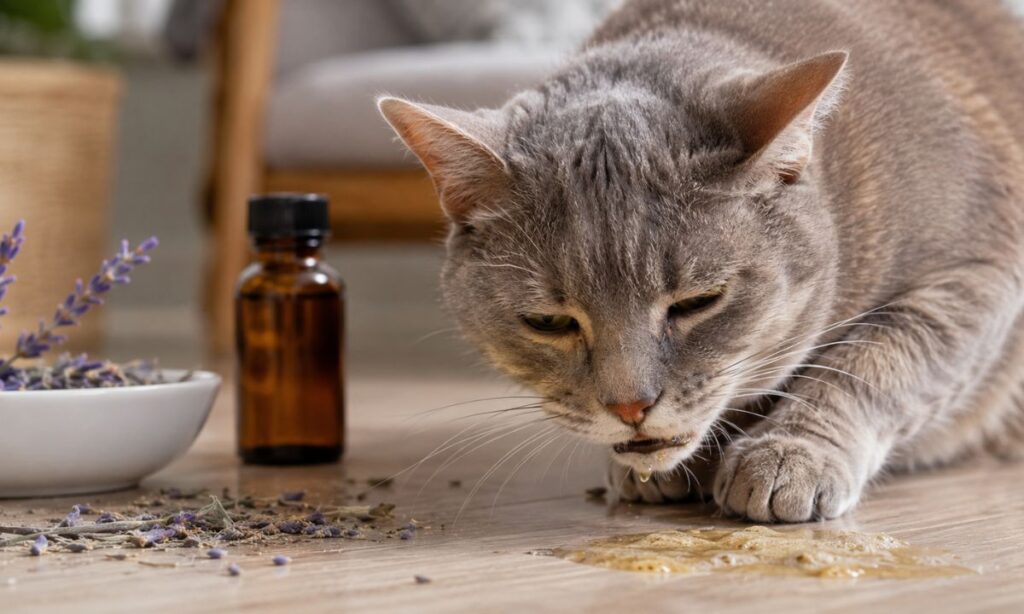
Symptoms of Lavender Poisoning in Cats
Watch for these signs after any lavender exposure, whether from a plant, oil, or scented product.
Digestive symptoms:
Vomiting
Diarrhea
Loss of appetite
Drooling
Neurological and behavioral symptoms:
Lethargy
Disorientation or confusion
Uncoordinated movement
Hiding or unusual stress
Physical and respiratory symptoms:
Difficulty breathing
Skin or mouth irritation
Redness or burns around the mouth
Slowed or irregular heart rate in severe cases
If your cat shows several of these signs after any lavender exposure, contact a veterinarian right away. Don’t wait to see if symptoms pass on their own.
Is Lavender Essential Oil Safe for Cats?
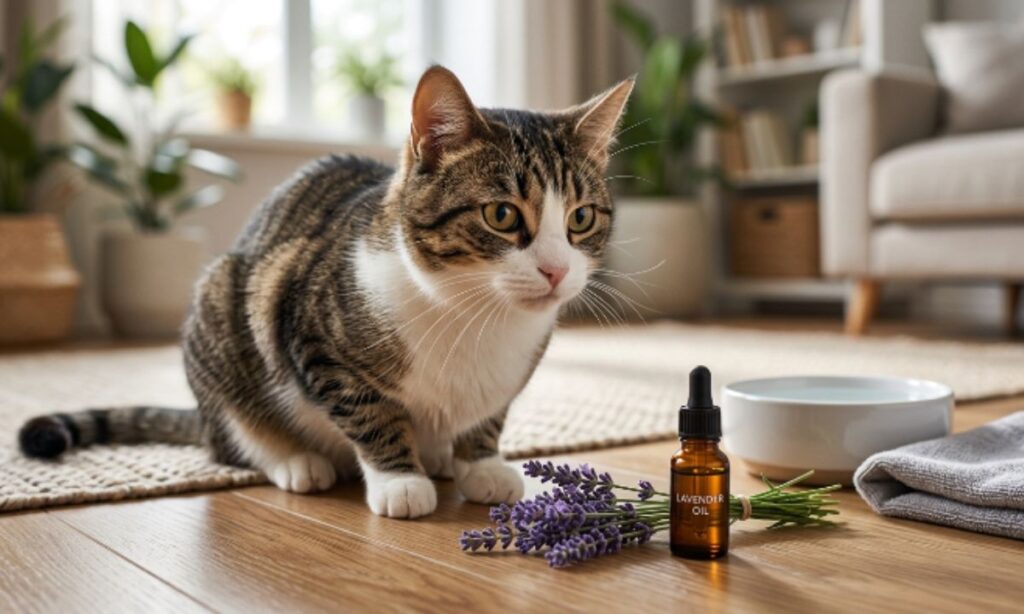
No. Essential oil is the form experts warn about most. It’s highly concentrated, which means even a small amount carries a real risk.
A cat can be exposed to essential oil in several ways:
Direct skin contact, such as oil applied to fur or bedding
Inhaling oil particles from a diffuser
Licking oil off their paws or fur while grooming
Swallowing oil directly, which is treated as a medical emergency
Never apply lavender essential oil to a cat’s skin, fur, collar, or bedding. Even indirect contact, like petting a cat after using lavender lotion on your hands, carries some risk. Washing your hands first is a simple way to reduce that risk.
Are Lavender Diffusers and Candles Safe Around Cats?
Diffusers
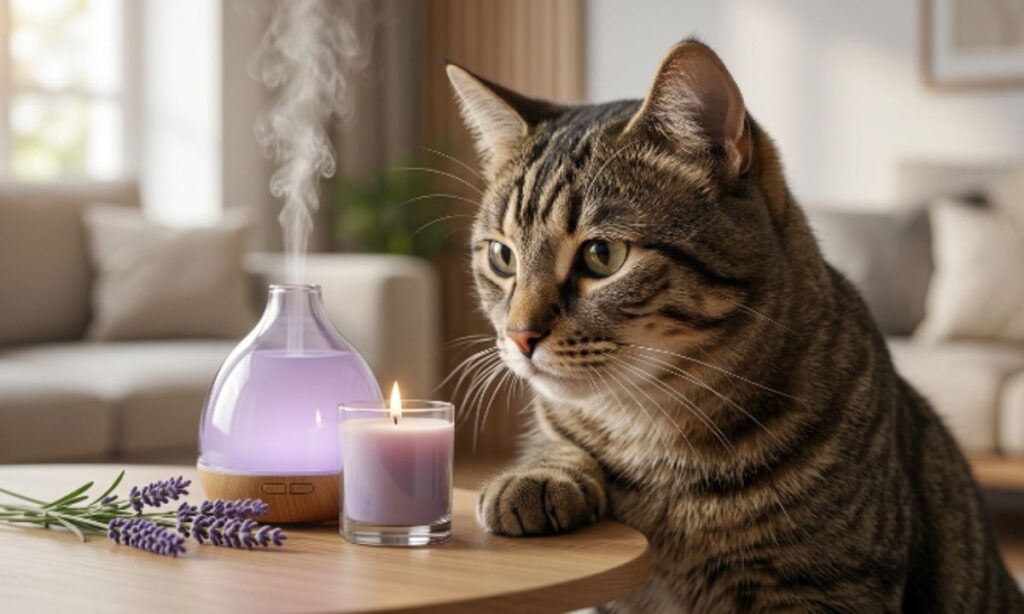
No, lavender diffusers aren’t considered safe around cats. Diffusers release tiny oil particles into the air, and a cat breathing that air over time is inhaling the same compounds found in the concentrated oil.
There are two general types:
Active diffusers (ultrasonic or heat-based) release more particles into the air and pose a higher risk.
Passive diffusers (reed or car diffusers) release smaller amounts more slowly, but the risk still exists in small or closed rooms.
If you use a diffuser at all, keep it in a separate room the cat can’t access, and ventilate that space well.
Candles
Burning a lavender candle isn’t risk-free either. Burning releases lavender compounds along with smoke and soot into the air. Those particles can settle on furniture and floors, where a cat may later pick them up through grooming.
Unscented beeswax or soy candles, used in a ventilated space away from the cat, are considered a safer option.
Can Cats Eat Fresh or Dried Lavender?
Fresh lavender contains lower concentrations of linalool and linalyl acetate compared to essential oil, but it isn’t harmless.
A cat that nibbles a leaf or two may show mild stomach upset.
A cat that eats a larger amount may show more noticeable symptoms, like vomiting or drooling.
Dried lavender, including sachets, wreaths, and potpourri, still contains the same compounds. It should be stored somewhere sealed or completely out of reach.
What to Do If Your Cat Is Exposed to Lavender
Your next step depends on how the exposure happened.
If your cat touched or licked the plant:
Wipe their paws and fur with a damp cloth.
Offer fresh water.
Watch closely for symptoms over the next few hours.
And If your cat inhaled diffuser mist:
Turn off the diffuser immediately.
Move your cat to a well-ventilated room.
Watch for breathing changes or unusual behavior.
If your cat swallowed essential oil directly:
Treat this as an emergency.
Do not try to induce vomiting at home.
Call your veterinarian or an animal poison control line right away.
The ASPCA Animal Poison Control Center can be reached at 888-426-4435. When you call, be ready to describe what your cat was exposed to and roughly how much.
Cat-Safe Alternatives to Lavender
If you enjoy having plants or a pleasant scent at home, there are safer options.
Plants:
Spider plant
Boston fern
Haworthia
Cat grass
Candles and scent:
Unscented beeswax or soy candles
Open windows for fresh air
An air purifier instead of a diffuser
Before adding any new plant to your home, it’s worth checking a trusted toxic plant list first.
Is It Safe If My Cat Just Smells Lavender?
Light, occasional exposure to lavender scent in a large, well-ventilated room is generally considered lower risk than direct contact or ingestion. Still, some cats react to concentrated scents with sneezing, watery eyes, or head shaking.
If your cat leaves the room, sneezes, or seems bothered by a lavender scent, that’s a sign to remove the source and let the space air out.
Frequently Asked Questions
Is lavender essential oil safe for cats?
No, lavender essential oil is considered toxic and should never touch a cat’s skin, fur, or bedding.
Can cats die from lavender poisoning?
Severe or repeated exposure, especially to essential oil, can lead to serious complications, so prompt veterinary care matters.
Is it okay to burn a lavender candle around my cat?
It’s safer to avoid lavender candles and use an unscented option in a ventilated room instead.
What should I do if my cat eats lavender?
Contact your veterinarian right away and describe what was eaten and how much.
Are there cat-safe plants that look similar to lavender?
Yes, plants like Boston ferns and spider plants offer greenery without the same toxicity risk.
Final Thoughts
Lavender might be relaxing for people, but it’s not a safe choice around cats. Essential oil poses the biggest risk, followed by diffusers, candles, and dried arrangements, while the fresh plant carries a smaller but still real danger. The safest approach is simple: keep lavender products out of your cat’s reach, choose pet-safe alternatives when you want a nice scent at home, and call your veterinarian right away if your cat shows any symptoms after exposure.
I’m a passionate pet writer who loves sharing practical tips, trusted advice, and heartwarming stories about cats, dogs, and other beloved companions. Through PetCaffine.com, I help pet lovers better understand their furry friends with easy-to-read articles on pet care, nutrition, behavior, health, and everyday life.






1 thought on “Is Lavender Safe for Cats? What Every Owner Should Know”