Are Jade Plants Toxic to Cats? What Every Owner Should Know
You just caught your cat sniffing around your jade plant, and now you’re wondering if you need to panic. Maybe a leaf is missing and you’re not sure who ate it. Jade plants sit on windowsills in millions of homes, and most owners have no idea whether they’re dangerous. Here’s what actually matters if you share your home with both.
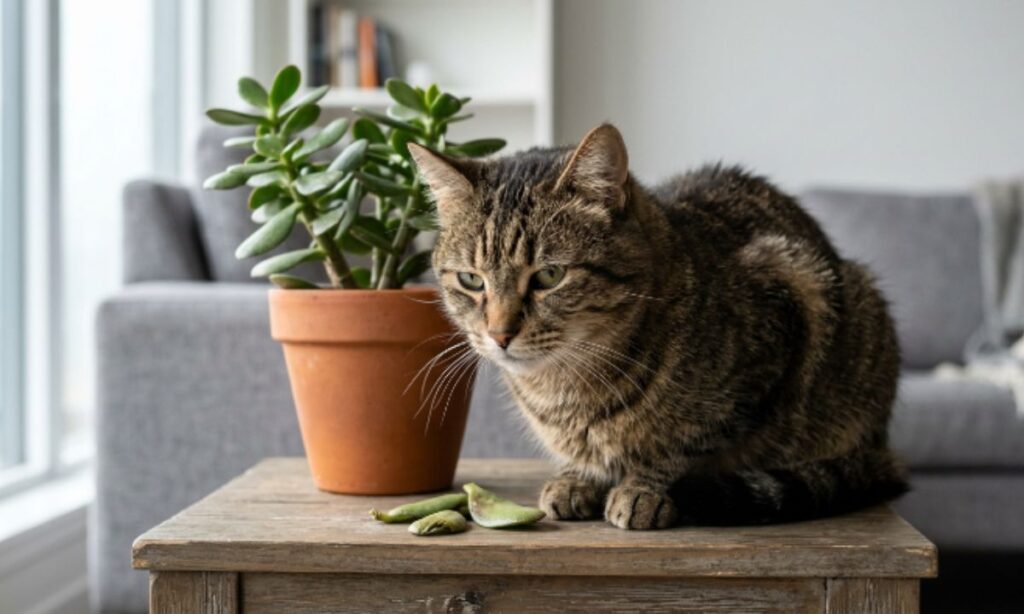
Yes. Jade plants are toxic to cats. The good news is that poisoning is usually mild, and most cats recover without lasting harm. The bad news is that “mild” doesn’t mean “harmless,” and you shouldn’t treat a nibble as no big deal.
What Makes Jade Plants a Concern for Cats?
Jade plants contain compounds that irritate a cat’s digestive system and, in some cases, affect coordination. Researchers haven’t pinned down the exact toxic substance yet, which is part of why vets treat every ingestion cautiously rather than shrugging it off. Nobody has established a safe amount either, so a single bite from a curious cat is enough to warrant attention.
Which Parts of a Jade Plant Are Toxic?
The whole plant is considered toxic, from stem to root. That said, the leaves are usually singled out as the most concerning part, likely because they contain the highest concentration of the irritating compounds and because they’re what cats tend to chew on first.
What Is a Jade Plant?
Jade Plant: Scientific Name and Common Names
Jade plants belong to the genus Crassula, with the most commonly grown species being Crassula ovata. You’ll also see it sold under a long list of nicknames: baby jade, dwarf rubber plant, jade tree, Chinese rubber plant, Japanese rubber plant, lucky plant, money plant, money tree, and friendship tree. If a nursery tag uses any of these names, assume it’s the same plant and keep it away from your cat.
How to Identify a Jade Plant
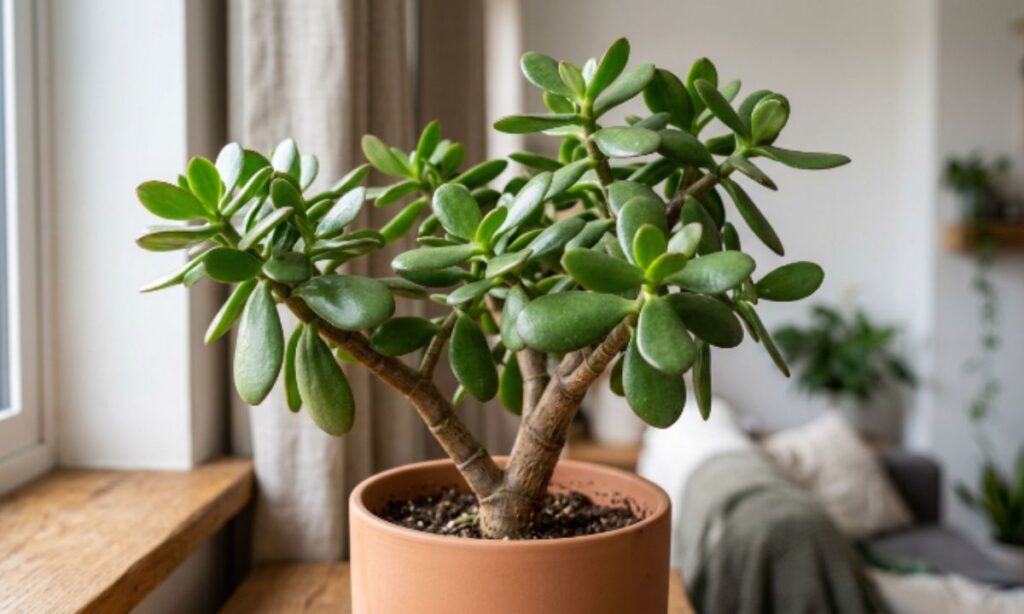
Jade plants have thick, glossy, rounded leaves that grow in opposite pairs along woody stems. The leaves store water, which is why the plant survives weeks of neglect.
Mature plants can develop a small, tree-like trunk, and older specimens sometimes produce clusters of small white or pale pink star-shaped flowers in late winter. If your succulent has fat, oval, jade-green leaves and a sturdy little trunk, there’s a good chance that’s what you’re looking at.
Why Jade Plants Are Popular Houseplants
They’re nearly indestructible. Jade plants tolerate low light, irregular watering, and general neglect better than most houseplants, which is exactly why they end up in so many homes with pets. Their easygoing nature is a selling point for busy plant owners, but it also means they’re everywhere, including homes where nobody thought to check if they were cat-safe.
What Happens If a Cat Eats a Jade Plant?
How Jade Plant Ingestion Can Affect Cats
Most cats that chew on jade end up with an upset stomach. Vomiting and diarrhea are the most common reactions. Some cats also become quieter than usual or lose interest in food. In less common cases, cats develop wobbliness or trouble coordinating their movements, which can be unsettling to watch even though it usually passes.
Does the Amount Eaten Matter?
Almost certainly, yes, though there’s no published threshold that tells you exactly how many leaves cause symptoms. Common sense applies here: a cat that swallows a whole leaf is more likely to show symptoms than one that licked a stem out of curiosity. Either way, don’t assume a small amount is automatically safe.
Are Jade Plant Leaves More Concerning Than Other Parts?
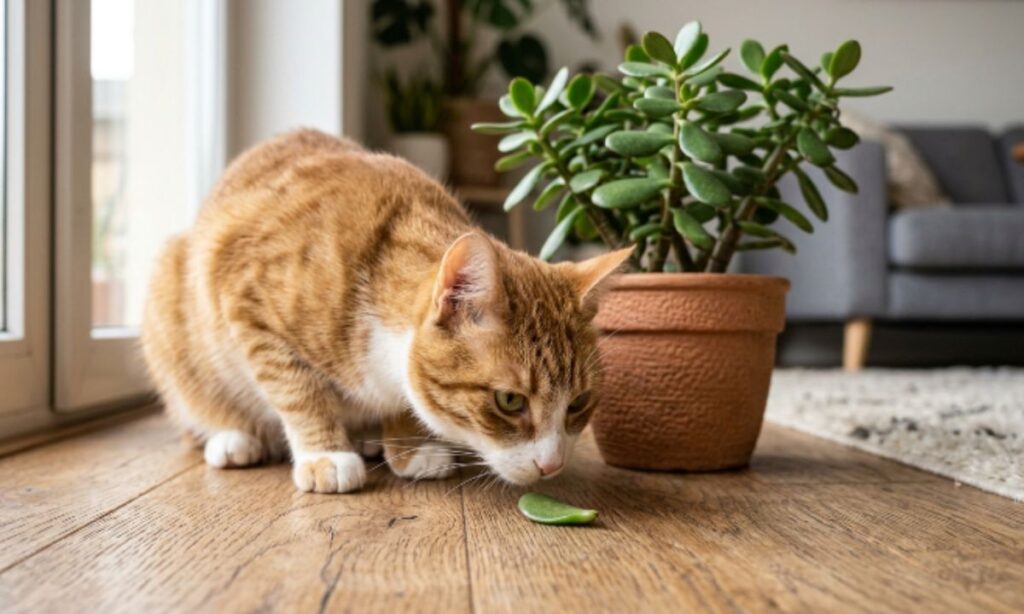
Yes. Since the leaves make up most of the plant’s mass and appear to hold the bulk of the toxic compounds, they’re the part most likely to cause a reaction. Stems and roots are still considered toxic, but leaves are the main risk in practice, especially since they’re what falls off and ends up on the floor.
Symptoms of Jade Plant Poisoning in Cats
Watch for the following after any suspected ingestion:
Vomiting — often the first and most obvious sign
Diarrhea — may appear alongside or shortly after vomiting
Loss of appetite — a cat that skips meals after chewing a plant is worth watching closely
Lethargy and depression — unusual quietness or low energy
Ataxia and wobbly walking — an unsteady gait, as if the cat is slightly drunk
Incoordination — trouble judging distances, jumping, or landing normally
Contact dermatitis — skin irritation where the plant’s sap touched fur or skin
When Symptoms Need Urgent Veterinary Attention
Call your vet immediately if your cat can’t stand, seems disoriented, has repeated vomiting or diarrhea, stops drinking water, or shows any signs of breathing trouble. Mild GI upset that clears up within a day is one thing. A cat that gets worse instead of better, or that shows neurological symptoms like severe wobbliness, needs to see a vet right away rather than waiting it out at home.
What to Do If Your Cat Ate a Jade Plant
Contact Your Veterinarian
Call your vet or an animal poison control line as soon as you suspect ingestion, even if your cat seems fine. Symptoms don’t always show up right away, and getting ahead of the problem gives your vet more options.
What Information to Give the Vet
Be ready to answer:
How much of the plant your cat may have eaten
When the ingestion likely happened
What symptoms you’ve noticed, if any
How long those symptoms have been going on
The more specific you can be, the faster your vet can figure out next steps.
Bring a Sample or Photo of the Plant
If you’re not 100% sure it’s a jade plant, bring a clipping or a clear photo to your vet visit. Misidentifying a plant can lead to the wrong treatment, so this small step actually matters.
Why You Should Not Ignore Mild Symptoms
It’s tempting to wait and see when your cat seems mostly okay. But “mild” toxicity can still progress, and a cat that’s quietly uncomfortable won’t always show it in obvious ways. A quick check-in with your vet costs you little and rules out the possibility that things are about to get worse.
How Is Jade Plant Poisoning Treated?
Is There an Antidote?
No. There’s no specific antidote for jade plant toxicity, so treatment focuses entirely on managing symptoms and keeping your cat comfortable while their body clears the irritants.
Supportive Treatment
This is standard veterinary care aimed at controlling symptoms rather than reversing a specific poison. It might include monitoring, medication, or fluids, depending on how your cat is doing.
Managing Vomiting
Vets often give anti-nausea medication to stop repeated vomiting, since prolonged vomiting can lead to dehydration and further discomfort.
Treating Dehydration
If your cat has lost fluids from vomiting or diarrhea, your vet may recommend intravenous fluids to restore hydration and correct any electrolyte imbalances.
What Affects the Treatment Plan?
Your vet will factor in how much plant material your cat likely ate, how quickly you got them care, their current symptoms, and their overall health. A young, healthy cat with mild symptoms will usually need less intervention than an older cat with existing health issues.
Can You Keep a Jade Plant in a Home With Cats?
Keep the Plant Completely Out of Reach
Many owners successfully keep jade plants and cats under the same roof by controlling access. The key is making sure “out of reach” actually means out of reach, since cats are excellent climbers and jumpers.
Use Hanging Planters
Hanging your jade plant well above where your cat can jump is one of the simplest fixes. Just make sure nearby furniture doesn’t give your cat a launching pad.
Keep Jade in a Cat-Free Room
If you have a room your cat doesn’t have access to, like a home office with a door that stays shut, that’s a straightforward way to keep the plant and the cat apart entirely.
Remove Fallen Leaves and Stems
This is the detail people forget. Jade plants shed leaves, and those leaves are just as toxic on the floor as they are on the plant. Sweep up debris promptly, especially after repotting or pruning.
When Removing the Plant Is the Safer Choice
If your cat has already shown interest in the plant, has been poisoned before, or keeps finding ways around your barriers, it’s probably time to rehome the plant rather than keep testing your luck.
How to Stop Cats From Chewing Houseplants
Provide Cat Grass
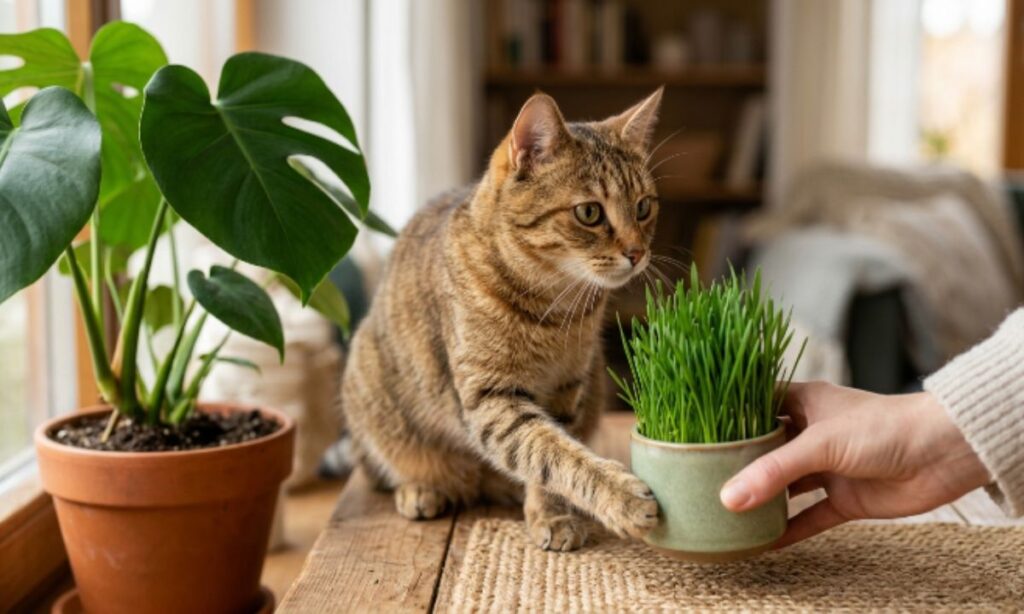
Many cats chew plants simply because they want to chew something green. Cat grass gives them a safe outlet for that instinct.
Offer Catnip
Catnip serves a similar purpose and comes with the bonus of being genuinely enjoyable for most cats.
Redirect Plant-Chewing Behavior
If your cat gravitates toward greenery, placing a pot of cat grass near their favorite window can pull their attention away from your other plants.
Make Toxic Plants Inaccessible
Redirection works best alongside physical barriers. Giving your cat a safe plant to chew doesn’t guarantee they’ll leave your jade plant alone, so combine both strategies.
Cat-Safe Succulents and Plant Alternatives
If you love the look of succulents, several options won’t put your cat at risk:
Plant
Why It Works
Echeveria
Rosette shape, similar aesthetic to jade, non-toxic
Haworthia (zebra plant)
Compact, striped leaves, easy care
Sedum (donkey’s tail)
Trailing succulent, good for hanging baskets
Sempervivum (hens and chicks)
Cold-hardy, low-maintenance rosettes
Christmas cactus
Colorful blooms, non-toxic to cats
Other Cat-Friendly Options
Opuntia (prickly pear) is another non-toxic choice, though its spines make it a poor pick for homes with playful cats.
Jade Plant vs. Cat-Safe Plants
The appeal of jade is its low-maintenance nature and sculptural look, and most of the alternatives above share those same qualities. Swapping jade for echeveria or haworthia gives you a nearly identical aesthetic without the risk.
Why “Non-Toxic” Does Not Mean “Safe to Eat”
Even cat-safe plants can cause stomach upset if a cat eats a large amount. “Non-toxic” means it won’t poison your cat, not that unlimited chewing is a good idea. Keep an eye on any plant your cat treats like a snack.
Choosing Plants for a Cat-Friendly Home
When shopping for houseplants, cross-reference the plant’s name with an ASPCA or veterinary toxic plant list before you buy. It takes thirty seconds and saves you a stressful vet visit later.
Frequently Asked Questions
Are jade plants toxic to cats?
Yes, jade plants are toxic to cats, though poisoning is usually mild.
Is jade plant poisoning serious?
It’s rarely life-threatening, but symptoms can worsen without treatment, so it should always be taken seriously.
What are the first signs of jade plant poisoning?
Vomiting and diarrhea are typically the earliest and most common symptoms.
What should I do if my cat ate jade?
Contact your veterinarian right away and monitor your cat closely for symptoms.
Can cats live safely with a jade plant?
Yes, as long as the plant is kept completely out of reach and fallen leaves are cleaned up promptly.
Final Takeaway
Jade plants and cats can coexist, but only if you take access seriously. The plant itself isn’t going anywhere, and neither is your cat’s curiosity, so the safest approach is keeping jade out of paws’ reach, cleaning up fallen leaves right away, and watching for symptoms if you ever suspect a nibble happened.
When in doubt, a quick call to your vet is always the right move, and if your cat just won’t leave houseplants alone, swapping jade for a cat-safe succulent means you get to keep the look without the worry.
I’m a passionate pet writer who loves sharing practical tips, trusted advice, and heartwarming stories about cats, dogs, and other beloved companions. Through PetCaffine.com, I help pet lovers better understand their furry friends with easy-to-read articles on pet care, nutrition, behavior, health, and everyday life.






2 thoughts on “Are Jade Plants Toxic to Cats? What Every Owner Should Know”