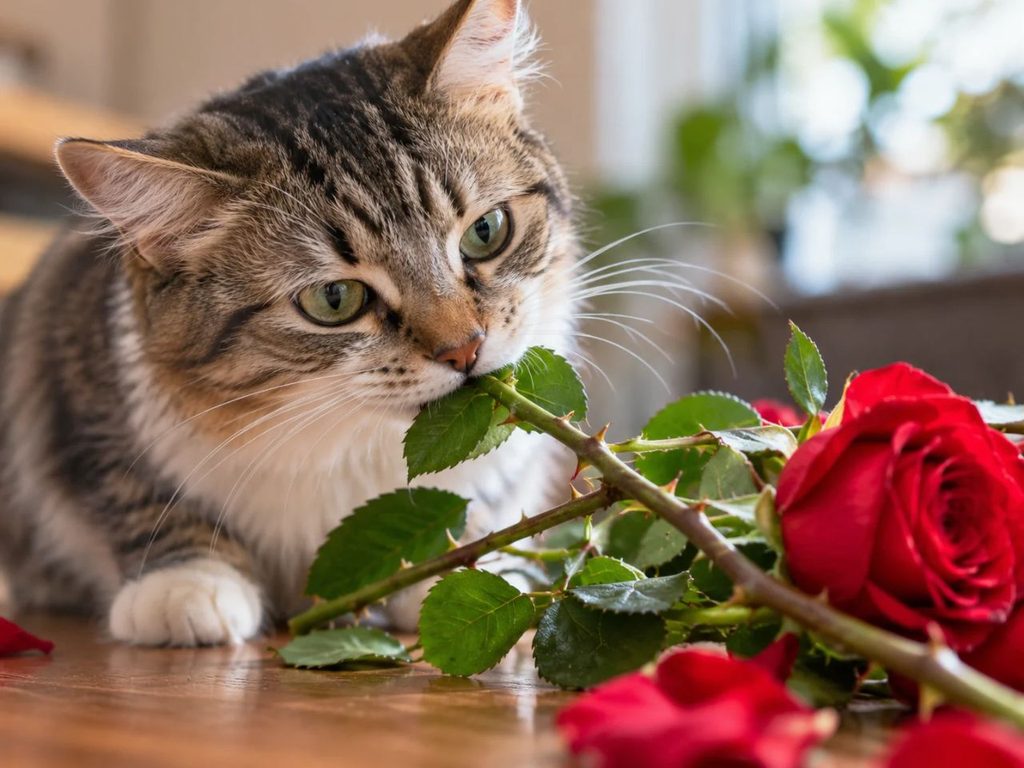
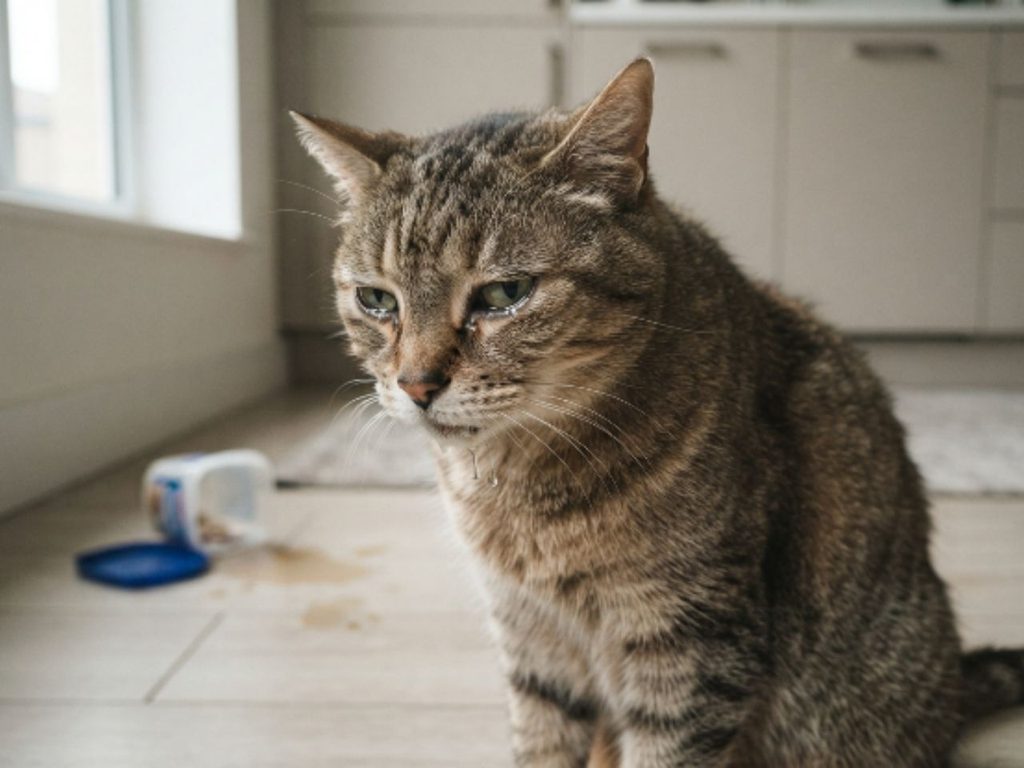
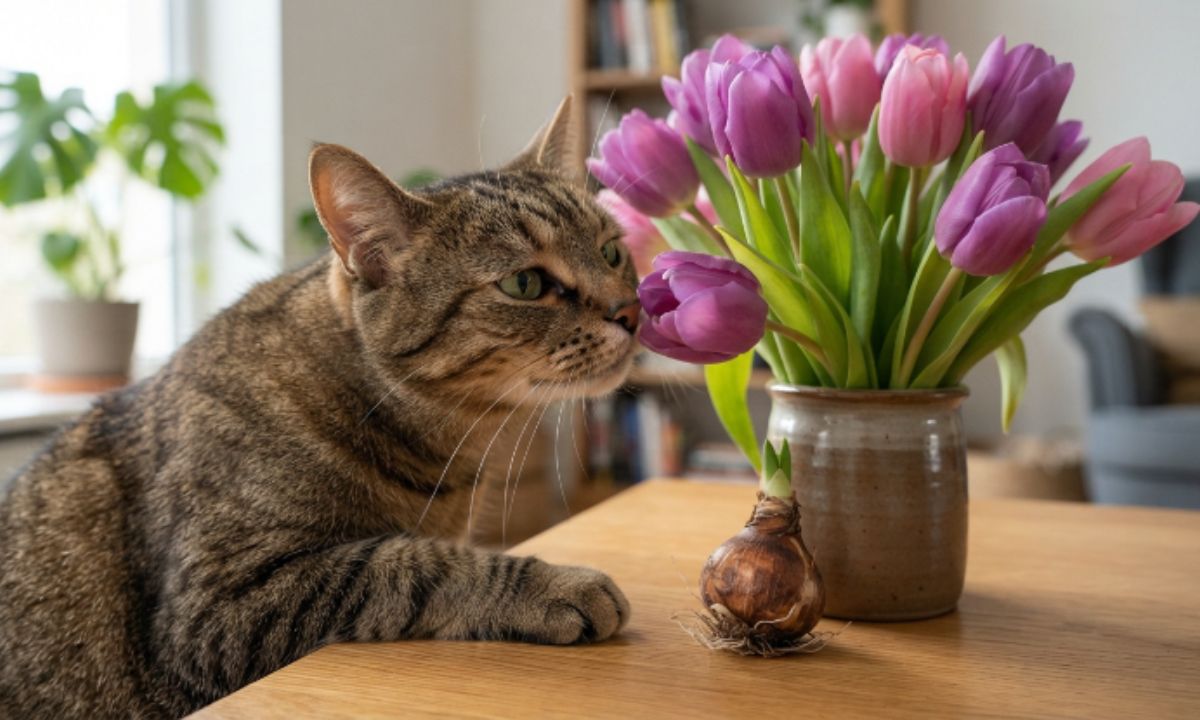
Roses are beautiful, but cats often investigate flowers with their mouths and paws. The good news is that true roses are not toxic to cats. The bigger concerns are thorns, chemicals, flower food, and plant identification.
A cat that eats a small amount of an untreated rose usually does not face plant poisoning. However, some plants with “rose” in their names are toxic to cats. Knowing the difference can help you protect your cat and act quickly when something goes wrong.
The ASPCA lists roses (Rosaspecies) as non-toxic to cats, dogs, and horses. True roses belong to the Rosaceae family.
That gives us the basic answer to the question, “Are roses toxic to cats?”
True roses are not considered poisonous to cats.
This applies to ordinary roses in the Rosa genus. That includes many common garden and cultivated varieties. PetMD also reports that there are about 150 naturally occurring rose species, along with many cultivated varieties.
Still, “non-toxic” does not mean that every situation involving a rose is harmless.
A cat can encounter several hazards around a rose:
Sharp thorns or prickles
Pesticide residue
Herbicides
Fungicides
Fertilizers
Floral preservatives
Flower-food packets
Treated vase water
Large amounts of plant material
A different plant incorrectly identified as a rose
The important distinction is simple:
The true rose itself is non-toxic, but the rose and its surroundings can still create health risks.
Are Rose Petals Safe for Cats?
Yes. Rose petals from a true, untreated rose are not considered toxic to cats. PetMD states that rose petals do not contain a toxin that would normally poison a cat.
If your cat eats one or two petals from an untreated rose, poisoning is not the expected concern.
However, cats should not treat roses as food.
Cats have different digestive needs from humans. Eating plant material can cause temporary stomach irritation even when the plant is non-toxic. Possible signs include:
Vomiting
Diarrhea
Reduced appetite
Mild stomach discomfort
These symptoms do not automatically mean that the cat has been poisoned.
The situation changes if the rose had pesticide residue, floral chemicals, or other treatments on it.
That is why the source of the rose matters as much as the flower itself.
Can Cats Eat Rose Leaves and Stems?
Rose leaves and stems are also not considered toxic simply because they come from a true Rosa plant. PetMD notes that the petals, stems, and leaves do not contain a toxin that would normally cause poisoning.
But stems create an important physical danger.
A rose stem can contain sharp thorns. A cat may bite, paw, or rub against the stem and suffer a puncture wound.
Even thornless or reduced-thorn varieties deserve caution because the absence of obvious thorns does not eliminate chemical exposure or the risk of stomach upset from eating plant material.
Do not encourage your cat to chew rose stems.
If your cat repeatedly eats plants, keep roses and other decorative flowers outside its reach. PetMD recommends preventing access to plants even when they are classified as non-toxic because plant material can still cause stomach problems.
Are Rose Thorns Dangerous for Cats?
Yes. Rose thorns can injure cats even though the rose itself is non-toxic.
This is one of the most important safety differences to understand.
A thorn can puncture or scratch a cat’s:
Paw
Lip
Tongue
Mouth
Face
Skin
Eye
Throat
Digestive tract
Cats also use their paws to investigate objects. They may rub their faces against plants. That behavior can increase the chance of a thorn injury.
A small puncture can be hard to find, especially under thick fur.
Watch for signs such as:
Limping
Repeated licking of one paw
Swelling
Tenderness
Bleeding
Pawing at the mouth
Excessive drooling
Difficulty eating
Facial swelling
Squinting or holding an eye closed
A wound can also become infected later. PetMD notes that untreated thorn wounds can develop into abscesses or infections.
What if a Cat Swallows a Rose Thorn?
A swallowed thorn deserves more caution than a simple surface prick.
A sharp thorn can injure the mouth, throat, esophagus, stomach, or intestines. PetMD recommends veterinary attention when a cat has chewed or swallowed thorns because internal injuries may not be obvious at first.
Do not try to force food down to “push the thorn through.”
Do not pull out a deeply embedded thorn yourself.
If your cat swallowed a thorn, contact your veterinarian for advice.
If the thorn entered the eye, caused significant bleeding, or the cat has trouble breathing or swallowing, seek emergency veterinary care.
Are Store-Bought Roses Safe for Cats?
The answer depends on how the roses were grown, treated, and prepared.
A florist bouquet may contain true roses, but the flowers can still carry chemical residues or come with products that are unsafe for cats.
PetMD identifies pesticides and flower food as major concerns associated with roses.
Store-bought roses may have been exposed to:
Insecticides
Fungicides
Herbicides
Fertilizers
Floral preservatives
Flower-food products
This creates an important distinction:
A non-toxic rose is not automatically the same thing as a completely risk-free bouquet.
If you receive roses and have a cat, ask the florist whether the flowers were treated and whether any flower food was added.
Remove flower-food packets from the cat’s reach.
Keep the bouquet somewhere your cat cannot access.
Can Cats Drink Rose Vase Water?
It is best to prevent cats from drinking vase water.
Some bouquets come with flower food or preservatives. Those substances can enter the water. A cat that drinks from the vase can therefore be exposed to something that was never part of the rose itself.
PetMD specifically advises keeping cats away from flower-vase water when it may contain flower food or chemical residue.
Do not assume that clear water is safe simply because you cannot see anything in it.
A practical approach is simple:
Keep the vase away from your cat.
Do not leave flower-food packets where your cat can reach them.
Clean up spilled vase water.
Replace contaminated water safely.
Consider a cat-free room for bouquets.
Are Pesticide-Treated Roses Toxic to Cats?
They can be.
The important issue is not the natural toxicity of Rosa. The concern is the chemical applied to the plant.
Garden roses may be treated with insecticides, herbicides, fungicides, or other products. Some florist flowers may also have chemical residues.
The exact risk depends on the substance, concentration, amount involved, and route of exposure. That means there is no universal “safe amount” for a pesticide-treated rose.
Do not assume that washing a flower makes every chemical harmless. Some treatments may not be removed simply by rinsing.
If your cat chewed a rose that had recently been treated with an unknown product, contact a veterinarian or animal poison-control service rather than waiting for symptoms.
What Are the Symptoms of Chemical Poisoning in Cats?
Chemical exposure can produce symptoms that are much more serious than ordinary stomach upset.
Possible signs include:
Drooling
Vomiting
Diarrhea
Loss of appetite
Lethargy
Weakness
Tremors
Poor coordination
Difficulty walking
Breathing problems
Seizures
Collapse
Coma
PetMD lists vomiting, diarrhea, appetite loss, lethargy, tremors, seizures, breathing difficulty, drooling, and poor coordination among possible signs of pesticide poisoning. Severe cases can be life-threatening.
If you know your cat swallowed a pesticide-treated flower, do not wait for severe symptoms.
Contact your veterinarian promptly.
Seizures, breathing difficulty, collapse, severe weakness, or major neurological changes require emergency veterinary care.
What to Do If Your Cat Ate a Rose
If your cat ate a rose, stay calm and identify what actually happened.
Use this simple sequence.
1. Remove the rose. Prevent your cat from eating more plant material.
2. Identify the plant. Confirm that it is a true Rosa species. Do not rely only on the word “rose” in the common name.
3. Check the source. Was it from your garden, a florist, a bouquet, or an unknown location?
4. Check for chemicals. Find out whether the plant had pesticide, fertilizer, preservative, or flower food exposure.
5. Look for thorns. Check the paws and visible areas around the mouth and face without forcing your cat to cooperate.
6. Save useful information. Keep the plant label, chemical container, florist information, or a clear photograph if available.
7. Contact a veterinarian when exposure is uncertain. Give the veterinarian as much information as possible.
8. Do not induce vomiting unless a veterinary professional specifically tells you to.
PetMD lists the Pet Poison Helpline at 855-764-7661 for suspected toxic exposure. The ASPCA Animal Poison Control Center can be reached at 888-426-4435.
When Is a Rose Exposure an Emergency?
Situation
What to do
One small amount of untreated rose
Remove access and monitor
Large amount of rose material eaten
Contact your veterinarian for advice
Unknown pesticide exposure
Contact a veterinarian or poison-control service promptly
The word rose in a common plant name does not prove that the plant belongs to the Rosa genus.
For example, the ASPCA lists Desert Rose (Adenium obesum) as toxic to cats. Its toxic principles include cardiac glycosides, and reported signs include vomiting, diarrhea, appetite loss, depression, irregular heartbeat, and death.
The ASPCA also lists Easter Rose (Helleborus niger), also called Christmas Rose and Lenten Rose, as toxic to cats. Reported clinical signs include drooling, abdominal pain, diarrhea, colic, and depression.
Common name
Scientific name
Cat safety
True rose
Rosa species
Non-toxic
Desert rose
Adenium obesum
Toxic
Easter rose
Helleborus niger
Toxic
Christmas rose
Helleborus niger
Toxic
Lenten rose
Helleborus niger
Toxic
The safest habit is to check the scientific name, not just the common name.
If you cannot identify a plant, do not assume it is safe because “rose” appears on its label.
Are Different Rose Varieties Safe for Cats?
Common cultivated roses belong to the Rosa genus. The supplied research identifies varieties such as:
Hybrid tea roses
Floribunda roses
Grandiflora roses
Miniature roses
Climbing roses
Wild roses
Spray roses
The variety does not change the basic Rosa classification. ASPCA lists Rosa species as non-toxic to cats.
However, variety does not eliminate the other hazards.
A miniature rose can still have thorns.
A garden rose can still have pesticide residue.
A florist rose can still be placed in treated vase water.
So the better question is not only, “What variety is this?”
Ask:
Is it actually aRosaspecies, and has it been treated with anything that could harm my cat?
Are Rose-Scented Products the Same as Roses?
No.
A fresh rose and a concentrated fragrance product are different exposures.
Rose-scented products may include:
Essential oils
Synthetic fragrances
Candles
Wax melts
Room sprays
Reed diffusers
Ultrasonic diffusers
Perfumes
Scented household products
Do not assume that because a real rose is non-toxic, every product containing “rose” fragrance is safe for cats.
Concentrated fragrance products can contain substances that are very different from the natural flower.
If your cat is exposed to an essential oil, concentrated fragrance, or household scent product, identify the exact product and contact your veterinarian for advice.
How to Keep Cats Safe Around Roses
You do not necessarily have to remove every rose from your home or garden.
Instead, reduce access to the main hazards.
For indoor bouquets
Keep bouquets out of reach.
Use a cat-free room when necessary.
Remove flower-food packets.
Prevent access to vase water.
Ask the florist about treatments.
Avoid bouquets with unidentified greenery.
Remove fallen petals from accessible surfaces.
For outdoor rose gardens
Keep cats away from recently treated areas.
Ask landscapers which products they use.
Follow pesticide label instructions.
Keep chemicals stored securely.
Prevent access to contaminated puddles.
Remove fallen treated plant material when appropriate.
Use physical barriers where practical.
If your cat loves chewing plants, provide a safer alternative such as cat grass. PetMD identifies cat grass as a particularly suitable plant option for cats.
Why Do Cats Chew Roses?
Cats may investigate plants for several reasons.
Curiosity is one possibility.
A new bouquet can attract attention because of its smell, movement, texture, or location.
Other possible reasons include:
Boredom
Exploration
Interest in the plant’s scent
Attraction to moving petals
Lack of safe plant enrichment
Not every cat that chews a rose has a nutritional problem.
Still, repeated plant chewing deserves attention. Give your cat safe enrichment and keep potentially dangerous plants and chemicals out of reach.
What Flowers Are Safe for Cats?
Roses are among the flowers classified as non-toxic to cats. The ASPCA and PetMD also identify several other flowers as non-toxic options.
Examples include:
Orchids
Sunflowers
Gerbera daisies
Snapdragons
Zinnias
Asters
Statice
Freesia
Even these plants should not become a regular food source. PetMD notes that non-toxic plants can still cause vomiting, diarrhea, poor appetite, or other problems when cats eat plant material.
Always verify the exact species when buying flowers.
Common names can be confusing.
Frequently Asked Questions
Are roses poisonous to cats?
No. True roses in the Rosa genus are classified as non-toxic to cats, although thorns and chemical treatments can cause harm.
Can cats eat rose petals?
A small amount of untreated rose petals is not considered poisonous, but eating plant material can still cause temporary digestive upset.
Can rose thorns hurt a cat?
Yes. Thorns can puncture paws, skin, eyes, mouths, and the digestive tract if chewed or swallowed.
Are florist roses safe for cats?
The rose itself may be non-toxic, but pesticides, preservatives, flower food, and treated vase water can create additional risks.
What should I do if my cat swallowed a rose thorn?
Contact your veterinarian for advice because a swallowed thorn can injure the digestive tract, even when the rose itself is non-toxic.
Conclusion
True roses are not toxic to cats, but that does not make every rose-related situation completely safe. The biggest concerns are thorns, pesticides, fertilizers, flower food, treated vase water, and plants that only have “rose” in their common name.
If your cat eats a small amount of an untreated Rosa rose, serious poisoning is not expected, but watch for digestive upset. If your cat swallowed a thorn, encountered a treated flower, or develops drooling, tremors, seizures, breathing problems, repeated vomiting, or collapse, contact a veterinarian promptly. The safest approach is simple: identify the plant, control access, avoid unknown chemicals, and treat any serious symptoms as a veterinary concern.
I’m a passionate pet writer who loves sharing practical tips, trusted advice, and heartwarming stories about cats, dogs, and other beloved companions. Through PetCaffine.com, I help pet lovers better understand their furry friends with easy-to-read articles on pet care, nutrition, behavior, health, and everyday life.