Scottish Cat Breeds: The Complete Guide to Folds and Straights
A barn in Perthshire. A white cat with strange, folded ears. One farmer’s curiosity. That single moment in 1961 created two of the world’s most recognizable cat breeds. Today, millions of owners adore their round faces and gentle nature. But there’s more to these cats than cute ears—and some of it matters a lot before you bring one home.
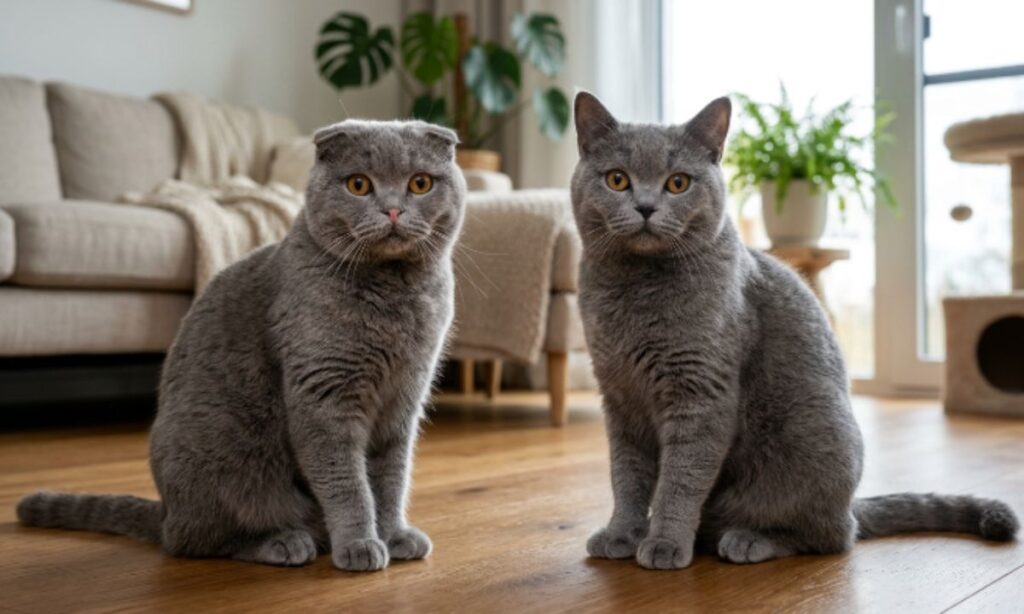
“Scottish cat breeds” refers to a small family of cats that share one bloodline but two distinct looks.
Scottish Fold — known for ears that bend forward and down
Scottish Straight — genetically related, but with normal upright ears
Both breeds come in shorthair and longhair varieties, giving you four coat-and-ear combinations from a single gene pool. Kittens from the same litter can even be born with different ear types, since the fold trait isn’t guaranteed to pass on.
Where Scottish Fold Cats Came From
Every Scottish cat breed traces back to one farm cat.
In 1961, a shepherd named William Ross noticed a white barn cat near Coupar Angus, Scotland, with ears that folded forward rather than standing upright. Her name was Susie. When Susie had kittens, some inherited her unusual ears—proof that the trait was genetic, not an injury or illness.
Ross began a breeding program with geneticist Pat Turner to understand the trait. They confirmed it came from a single dominant gene, meaning only one parent needs to carry it for kittens to inherit folded ears. The breed was originally called “Lop” after lop-eared rabbits before settling on its current name.
By the late 1970s, the breed had spread to North America and gained recognition from major cat associations there—even as some UK and European registries raised concerns about the breed’s health.
Scottish Fold vs. Scottish Straight: Key Differences
The two breeds are nearly identical except for one visible trait and one important health distinction.
Feature
Scottish Fold
Scottish Straight
Ear shape
Folded forward
Upright, normal
Body type
Round, compact
Round, compact
Coat length
Short or long
Short or long
Cartilage gene
Carries fold gene
Does not carry it
Joint disease risk
Higher
Lower
Average lifespan
11–15 years
10–15 years
Weight range
5–13 lbs
6–13 lbs
Because Straights don’t carry the ear-folding gene, they avoid the cartilage problems linked to the breed. Many vets consider the Scottish Straight a healthier alternative for owners who love the look but worry about joint disease.
Scottish Cat Physical Characteristics
Body and Build
Scottish cats are built round, from head to tail. Expect a compact, well-padded frame with short-to-medium legs and a broad chest. Adults typically weigh between 5 and 13 pounds, depending on sex and lineage.
Coat and Colors
Both shorthair and longhair varieties exist, and coats come in nearly every color and pattern recognized in cats, including the following:
Solid white, black, blue, and cream
Silver and golden shades
Tabby (classic, mackerel, spotted, ticked)
Tortoiseshell and calico
Bi-color combinations
Pointed patterns, like those on Siamese cats, are the main exception.
Ears
Scottish Fold kittens are always born with straight ears. The fold—if the kitten inherits the gene—appears gradually; breeders won’t know for certain which kittens carry folded ears until this window passes.
Personality and Temperament
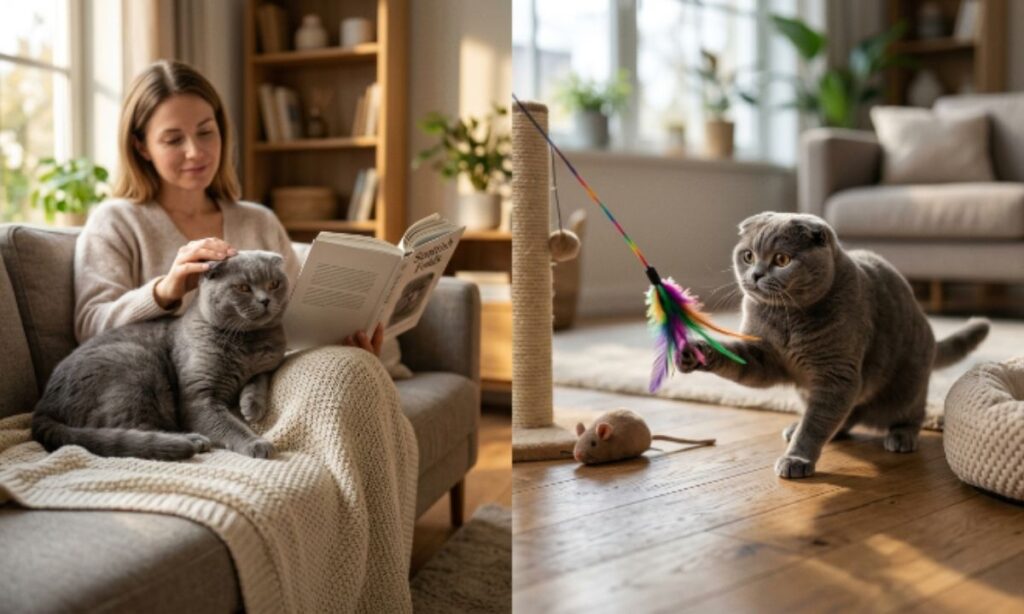
Scottish cats are famous for their easygoing nature, and most owners describe similar traits:
Calm and affectionate, without being clingy
Playful in short bursts, not hyperactive
Comfortable around children and other pets
Soft-spoken, with quiet chirps rather than loud meows
Loyal — they tend to follow their favorite person from room to room
One quirky trait often shows up: many Scottish Folds sit upright on their hind legs, arms tucked in, almost human-like. Owners nicknamed this the “Buddha pose,” and it’s become one of the breed’s most photographed habits.
They also adapt well to apartment living and don’t demand constant attention, making them a solid pick for first-time cat owners or households that are out for a few hours at a time.
Health Concerns You Should Know
This is the part every potential owner needs to read carefully before choosing a Scottish Fold.
Osteochondrodysplasia
The same gene that folds the ears also affects cartilage throughout the body. In some cats, this leads to osteochondrodysplasia—a degenerative joint condition that can stiffen the tail, ankles, and knees over time. Severity varies widely:
Cats with one copy of the gene often have mild, manageable symptoms
Cats with two copies (both parents carrying the gene) tend to develop severe, painful joint disease
This is why responsible breeders never pair two Folds together. The accepted standard is always Fold × Straight, which significantly lowers the risk of severe disease in kittens.
Polycystic Kidney Disease (PKD)
Scottish cats, along with several other purebred lines, can carry a genetic risk for PKD. Genetic testing is widely available and can identify carriers before breeding.
Heart Disease
Hypertrophic cardiomyopathy, a thickening of the heart muscle, appears in the breed at higher-than-average rates. Regular veterinary checkups, including periodic heart screenings, help catch it early.
Ear and Dental Health
Folded ears create a deeper ear canal shape, which can trap moisture and debris. Weekly ear checks help prevent infections. Dental disease is also worth watching, particularly in cats with shorter noses.
Is It Ethical to Own a Scottish Fold?
This question comes up often, and it’s a fair one to ask.
Some major cat registries in Europe, including the UK’s governing cat council, don’t recognize the Scottish Fold because of the joint disease risk tied to the ear gene. Veterinary groups in several countries have voiced similar concerns.
That said, responsible breeding practices—always crossing Fold with Straight, never Fold with Fold—dramatically reduce the odds of severe disease. If you’re set on a Fold, ask breeders directly about the following:
Genetic testing results for both parents
Whether kittens come from Fold × Straight pairings only
Documented joint health history in the lineage
If the ethics still concern you, a Scottish Straight offers the same personality and appearance, minus the cartilage risk entirely.
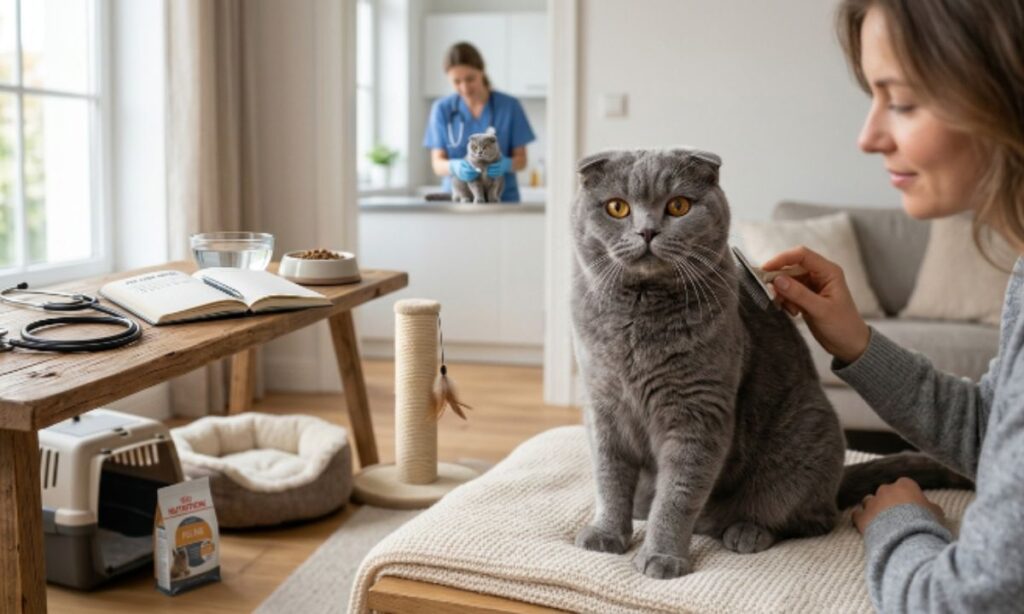
Grooming and Daily Care
Shorthair Care
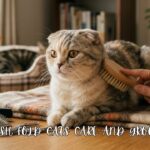
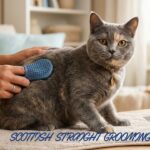
Shorthaired Scottish cats need brushing about once a week. Their dense coat sheds moderately year-round, with heavier shedding in spring and fall.
Longhair Care
Longhaired cats need brushing two to three times a week to prevent mats, especially around the legs and belly.
General Maintenance
Trim nails every few weeks
Check ears weekly for wax buildup or odor
Brush teeth several times a week if possible
Provide scratching posts to manage claw health
Feeding and Nutrition
Scottish cats are obligate carnivores, meaning their diet should center on high-quality animal protein rather than plant-based fillers. Look for food that lists real meat as the first ingredient and avoid heavy reliance on pea or soy protein, which offers less nutritional value for cats.
Feeding tips worth following:
Split daily food into two or three smaller meals
Keep treats under 10% of daily calorie intake
Offer fresh water away from the food bowl, since some cats avoid drinking near their food
Consider a joint-support supplement if your vet recommends one, especially for cats carrying the fold gene
Cost and Where to Adopt
Pricing varies widely depending on region, lineage, and breeder reputation. Kittens from breeders who test for genetic health issues and follow ethical pairing practices typically cost more upfront — but that investment often means fewer health surprises later.
Before buying, always ask to see:
Health clearances for both parents
Proof of Fold × Straight breeding (if choosing a Fold)
A written health guarantee
Adoption through breed-specific rescues is another option and tends to be significantly less expensive than buying from a breeder.
Living With a Scottish Fold: Tips for New Owners
A few practical habits go a long way toward keeping your cat happy and healthy:
Schedule annual vet visits that include joint and heart checks
Watch for signs of stiffness, limping, or reluctance to jump
Keep your cat at a healthy weight to reduce joint stress
Provide low-step furniture or ramps if joint issues develop later in life
Give them a window perch—Scottish cats love watching the world go by
Frequently Asked Questions
Are Scottish Fold cats healthy?
Many live full, happy lives, but they carry a higher risk of joint and kidney disease compared to non-fold breeds.
Do all Scottish Fold kittens have folded ears?
No — every kitten is born with straight ears, and only some develop the fold around 18 to 24 days old.
What’s the difference between a Scottish Fold and a Scottish Straight?
They’re in the same breed family, but straights have upright ears and don’t carry the cartilage-related health risks.
How much grooming does a Scottish cat need?
Shorthairs need weekly brushing, while longhairs need brushing two to three times a week.
Are Scottish Folds good with children and other pets?
Yes—they’re widely known for being gentle, adaptable, and easygoing around kids and other animals.
Final Thoughts
Scottish cat breeds are popular for a unique combination of good looks and truly sweet disposition, but there’s some serious responsibility that goes with that appeal, as the gene responsible for those famous folded ears can also impact joint health. Potential owners should seek out breeders who test for genetic conditions, adhere to ethical Fold-to-Straight pairing, and ask the right questions before committing to a purchase.
Commit to regular veterinary care throughout the cat’s life—because whether you get a Fold or a Straight, a little extra research up front means many more years of that quiet purr curled up beside you.
I’m a passionate pet writer who loves sharing practical tips, trusted advice, and heartwarming stories about cats, dogs, and other beloved companions. Through PetCaffine.com, I help pet lovers better understand their furry friends with easy-to-read articles on pet care, nutrition, behavior, health, and everyday life.