Scottish Fold Diet and Nutrition: The Complete Feeding Guide
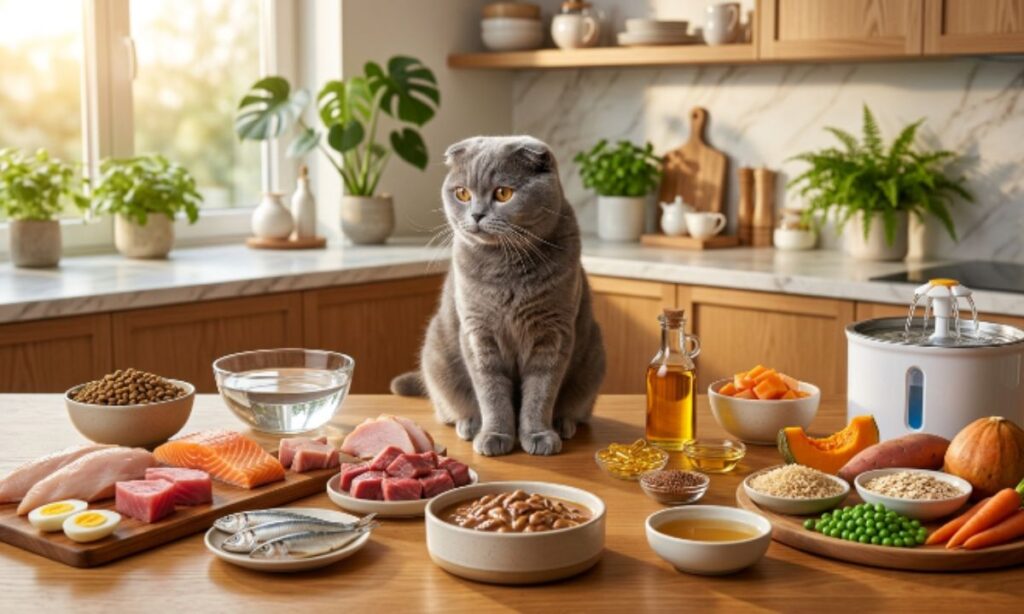
Those folded ears hide a genetic quirk that reaches far beyond the head. The same mutation that bends cartilage in the ears can affect joints all over the body. What you put in the food bowl either helps manage that risk or makes it worse. Here’s exactly what a Scottish Fold needs to eat to stay lean, comfortable, and mobile for years.
Scottish Folds carry a dominant gene that shapes cartilage throughout the entire skeleton, not just the ears. In cats with two copies of the gene, this often leads to a joint condition called osteochondrodysplasia. Even cats with one copy can show mild cartilage changes.
Keep body weight low enough to protect vulnerable joints
Support a healthy heart, since the breed also faces elevated cardiomyopathy risk
Combine that with a naturally calm, low-energy temperament, and you get a breed that gains weight easily — which makes portion control just as important as ingredient quality.
Scottish Folds: Core Nutritional Needs
Protein
Cats are obligate carnivores, and Scottish Folds are no exception. Their bodies are built to run on animal protein, not grain or plant filler.
Look for:
A named animal protein first on the label (chicken, turkey, salmon, beef)
At least 30–40% protein on a dry matter basis
Avoidance of vague terms like “meat meal” or “animal by-product”
Fat
Fat supplies concentrated energy and supports skin, coat, and joint comfort through essential fatty acids. Aim for roughly 15–20% fat on a dry matter basis for most adults, lower for cats prone to weight gain.
Carbohydrates
Cats have little use for carbohydrates and no digestive enzymes built for processing large amounts of grain. Keep total carbs under 10%, and be wary of foods that list corn, wheat, or peas among the first few ingredients.
Moisture
Wet food carries roughly 75–80% moisture, compared to about 10% in dry kibble. Since cats descend from desert animals with a naturally weak thirst drive, that extra moisture matters for kidney and urinary health.
Daily Calorie and Feeding Guidelines
Most adult Scottish Folds weigh between 6 and 13 pounds and need a modest calorie intake to match their laid-back energy level.
Life Stage
Daily Calories
Meals Per Day
Kitten (under 6 months)
200–300
3–4
Kitten (6–12 months)
200–300
2–3
Adult (1–7 years)
200–300
2
Senior (7+ years)
160–250
2
A simple rule of thumb: multiply body weight in pounds by 20–30 calories per pound for a rough daily target, then adjust based on activity and body condition.
Feeding Method Tips
Measure every meal with a kitchen scale or measuring cup
Skip free-feeding—it’s the single biggest cause of feline obesity
Split food into two or three scheduled meals, spaced evenly
Keep treats under 10% of total daily calories
Scottish Folds Joint-Support Nutrition
Since joint health is the defining concern for this breed, certain nutrients deserve special attention.
Key Nutrients for Cartilage and Joints
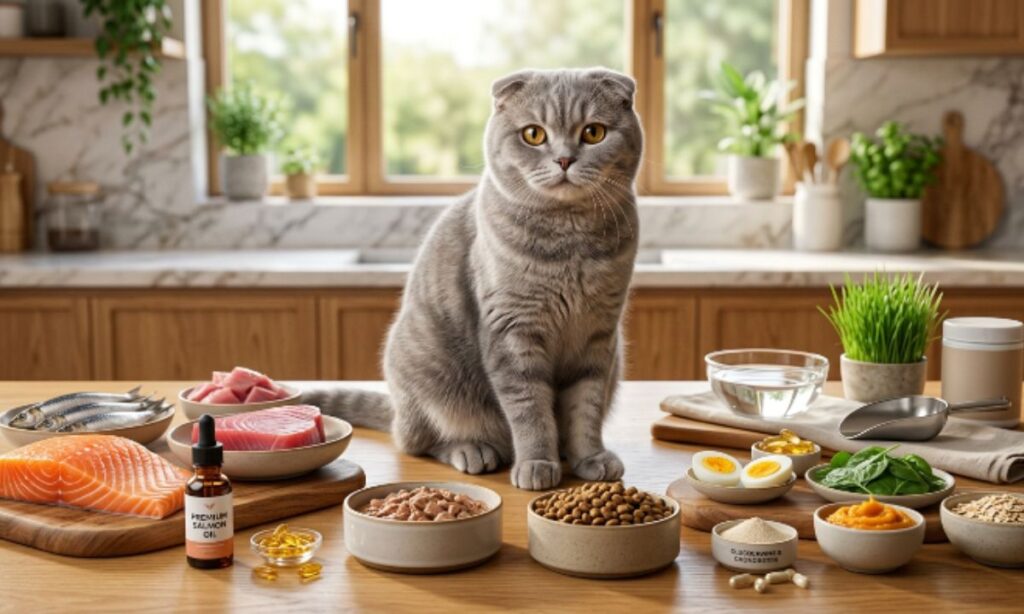
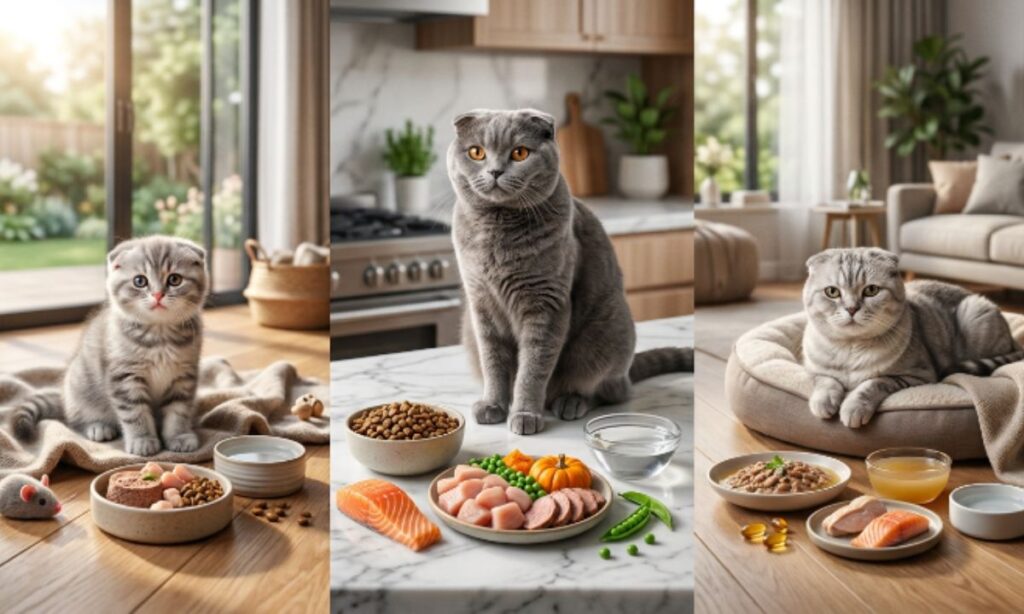
Omega-3 fatty acids (EPA and DHA) — reduce inflammation; found in fish oil and salmon oil
Glucosamine and chondroitin — support cartilage structure; often included in joint-formula foods
Vitamin E — an antioxidant that protects joint tissue from oxidative stress
Manganese — a trace mineral involved in cartilage formation
None of these nutrients cure the underlying genetic condition. But consistent inclusion in the diet, alongside a lean body weight, gives a Fold’s joints the best possible support over a lifetime.
Weight and Joint Stress
Every extra pound adds direct pressure to compromised joints. A Fold carrying even a small amount of excess weight is likely to develop mobility problems sooner and more severely than a lean one.
Use these quick checks at home:
Rib test — you should feel the ribs with light pressure, without a thick fat layer over them
Waist test — a visible waist should appear when viewed from above
Wet Food vs. Dry Food Which Best For Scottish Folds
Neither format is inherently wrong, but each serves a different purpose.
Factor
Wet Food
Dry Food
Moisture content
~75–80%
~10%
Hydration support
Strong
Weak
Dental benefit
Minimal
Some (not a substitute for brushing)
Convenience
Lower
Higher
Typical protein-to-carb ratio
Higher
Lower
Many owners combine both—wet food for hydration and a small amount of quality dry food for convenience and texture variety. If choosing one primary format, wet food generally supports long-term kidney and urinary health better.
Homemade and Raw Diets: What to Know
Some owners prefer complete control over ingredients, but this path carries real risk if done incorrectly.
The Core Problem
Cats need very specific nutrient ratios, including taurine, calcium, and trace minerals, in exact amounts. Missing even one nutrient over time can lead to serious, sometimes irreversible health problems, including heart disease and vision loss.
If You Choose Homemade
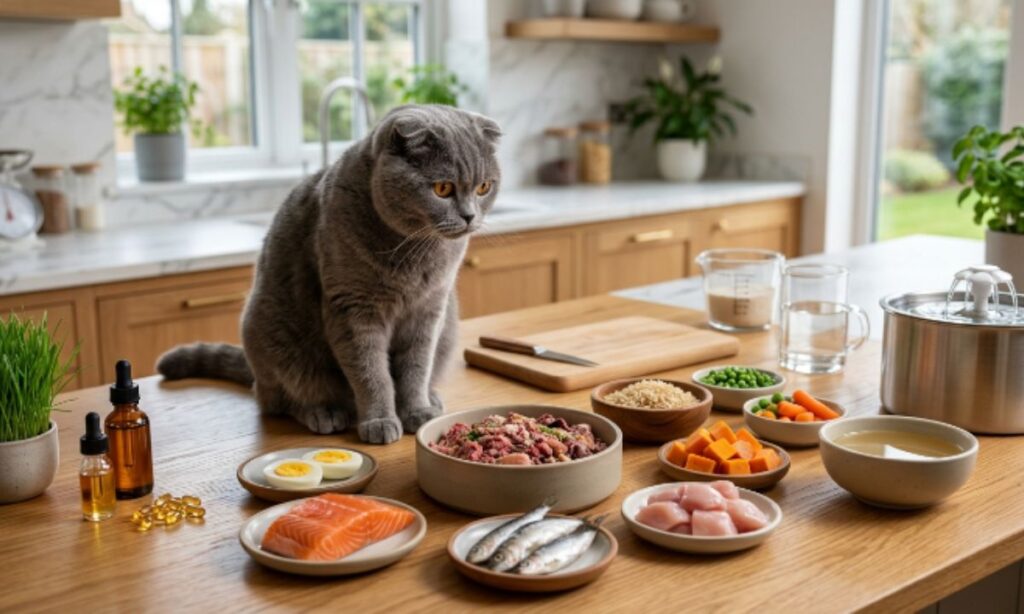
Work with a board-certified veterinary nutritionist, not a random online recipe
Include muscle meat plus organ meat (liver, kidney) for a fuller nutrient profile
Add a taurine supplement, since cooking destroys the taurine naturally present in meat
Balance the recipe against AAFCO or FEDIAF nutrient standards
Raw Diet Caution
Veterinary and public health organizations generally advise against raw diets due to bacterial contamination risk for both the cat and the household. If you choose raw feeding anyway, strict hygiene practices and veterinary guidance are non-negotiable.
Hydration: A Bigger Deal Than It Seems
Scottish Folds, like most cats, don’t naturally drink much water. That instinct traces back to their desert-dwelling ancestors, and it puts them at higher risk for dehydration, kidney strain, and urinary crystals.
Ways to encourage better water intake:
Feed wet food as a significant part of the diet
Provide multiple water sources around the house
Try a pet water fountain — many cats prefer moving water over a still bowl
Keep water bowls away from food and litter areas
A general hydration goal is roughly 3.5–4.5 ounces of water per 5 pounds of body weight per day, factoring in whatever moisture comes from food.
Scottish Folds Life-Stage Nutrition
Kittens
Growing Folds need more protein and more calories per pound than adults. Feed a kitten-specific formula until around 12 months, and introduce a few different protein sources early to reduce picky eating later.
Adults
Once growth stops, the priority shifts to weight maintenance and joint support. Two measured meals a day on a consistent schedule works well for most adult Folds.
Seniors
Older cats often need slightly fewer calories but just as much — or more — high-quality protein to preserve muscle mass. Joint-support nutrients become even more valuable at this stage, since cartilage issues tend to progress with age.
Foods to Avoid Completely
Certain human foods are genuinely dangerous for cats, regardless of breed.
Onions and garlic
Chocolate, coffee, and caffeine
Grapes and raisins
Alcohol and raw dough
Xylitol (found in some sugar-free products)
Raw fish (destroys thiamine over time)
Milk and dairy (most adult cats are lactose intolerant)
If your cat eats something on this list, contact a veterinarian or a pet poison hotline right away.
Common Feeding Mistakes to Avoid
Eyeballing portions instead of measuring them precisely
Free-feeding dry food all day, which quickly leads to weight gain
Switching foods abruptly, which can cause digestive upset—transition over 7–10 days instead
Overusing treats because those folded ears are hard to resist
Ignoring water intake, which raises the risk of kidney and urinary issues later in life
Frequently Asked Questions
How many calories does a Scottish Fold need per day?
Most adults need roughly 200–300 calories daily, adjusted for weight and activity level.
Is wet food or dry food better for a Scottish Fold?
Wet food generally supports hydration and joint-friendly weight control better than dry food alone.
Can diet fix a Scottish Fold’s joint problems?
No, a diet can’t reverse the genetic cartilage condition, but it can slow progression and ease discomfort.
How often should a Scottish Fold be fed?
Two to three measured meals a day works best; free-feeding increases the risk of obesity.
Do Scottish Folds need joint supplements?
Many benefit from added omega-3s, glucosamine, or chondroitin, though a vet should confirm the right dose.
Final Thoughts
Feeding a Scottish Fold well comes down to a few consistent habits. Choose a high-protein, low-carb diet built on real animal protein. Prioritize moisture-rich food for hydration and kidney health.
Keep portions measured, not guessed, and lean on joint-supporting nutrients like omega-3s and glucosamine to guard cartilage already working against a genetic disadvantage. Do these things consistently, and most Scottish Folds go on to live long, comfortable and playful lives well into their senior years.
I’m a passionate pet writer who loves sharing practical tips, trusted advice, and heartwarming stories about cats, dogs, and other beloved companions. Through PetCaffine.com, I help pet lovers better understand their furry friends with easy-to-read articles on pet care, nutrition, behavior, health, and everyday life.