How Long Until 2:30 PM? Quick Answer and Time Guide
You want to know how much time is left before 2:30 PM. The answer depends on the time it is right now. Subtract your current time from 2:30 PM, or 14:30 on a 24-hour clock. If 2:30 PM has already passed, count toward tomorrow instead. This guide shows you the fast way, the manual way, and a few tricks that save you from common mistakes.
Here are the key facts about this time in one place.
Detail
Value
Time in words
Two thirty in the afternoon
12-hour format
2:30 PM
24-hour format
14:30
Military format
1430 hours
Hours since midnight
14.5 hours
Minutes since midnight
870 minutes
Seconds since midnight
52,200 seconds
Time after midday
2 hours 30 minutes
Time before midnight
9 hours 30 minutes
Part of the day
Early afternoon
Keep this table handy. You will use these numbers in every calculation below.
How Long Until 2:30 PM Right Now?
The formula is simple. Take 14:30 and subtract the current time on a 24-hour clock. The result is the time you have left.
Suppose it is 11:45 AM. That is 11:45 on a 24-hour clock. Subtract it from 14:30. You get 2 hours and 45 minutes.
You can do the same thing in your head with the 12-hour clock. Count the minutes to the next full hour first. Then count the full hours. Then add the final 30 minutes.
This works for any starting time. It takes about ten seconds once you practice a few times.
What If 2:30 PM Has Already Passed Today?
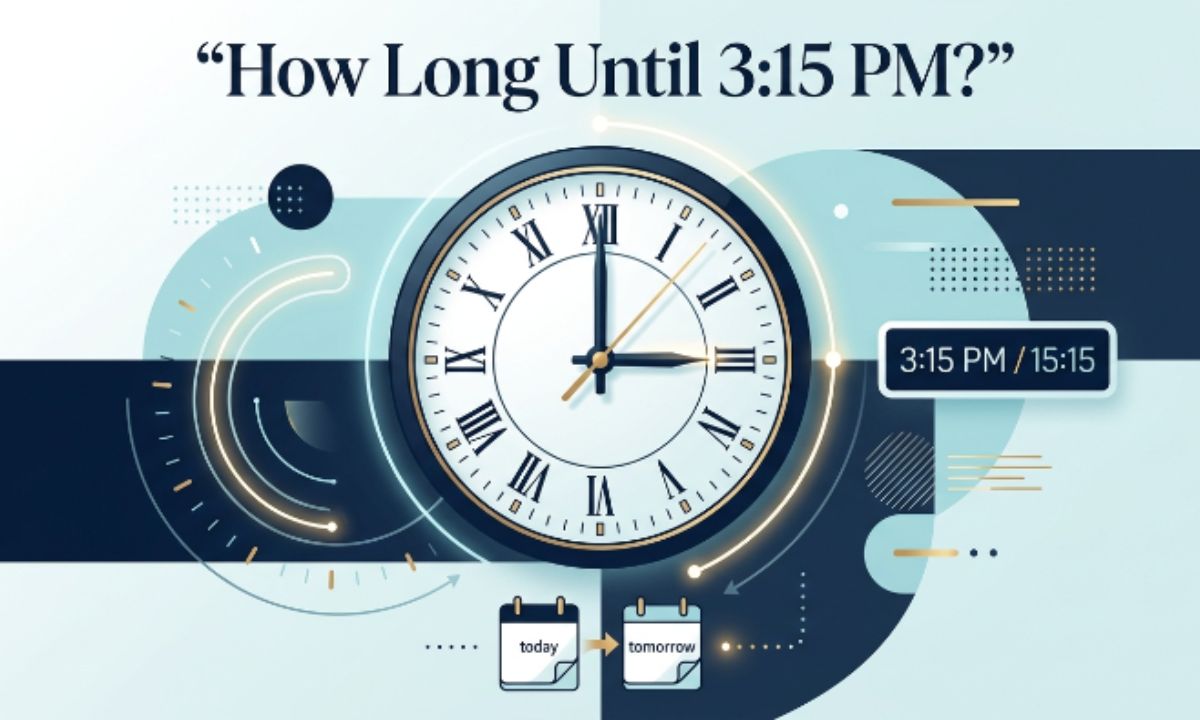
If the clock already shows a time after 2:30 PM, the next 2:30 PM is tomorrow. Add 24 hours to your target before you subtract.
Say it is 4:00 PM. Tomorrow’s 2:30 PM is at 38:30 on a running clock. Subtract 16:00 from 38:30. You get 22 hours and 30 minutes.
Here is a faster way. Find how long ago 2:30 PM passed. Then subtract that from 24 hours. At 4:00 PM, 2:30 PM passed 1 hour and 30 minutes ago. So 24 hours minus 1 hour 30 minutes leaves 22 hours 30 minutes.
This is the most common point of confusion. People forget that the day rolls over. Always check whether 2:30 PM is still ahead of you today.
Quick Reference: Time Left Until 2:30 PM
Use this table when you do not want to calculate anything. Find your current time and read the answer.
Current time
Time left until 2:30 PM
Total minutes
8:30 AM
6 hours
360
9:00 AM
5 hours 30 minutes
330
10:00 AM
4 hours 30 minutes
270
11:00 AM
3 hours 30 minutes
210
12:00 PM
2 hours 30 minutes
150
12:30 PM
2 hours
120
1:00 PM
1 hour 30 minutes
90
1:30 PM
1 hour
60
2:00 PM
30 minutes
30
2:15 PM
15 minutes
15
2:29 PM
1 minute
1
Notice the pattern. Every half hour you move closer, the gap drops by 30 minutes. Once you spot this, you can estimate the answer at a glance.
How Many Hours Until 2:30 PM? Two Manual Methods
You can calculate this without a phone or a timer. Pick the method that feels natural.
The 12-Hour Clock Method
Start at your current time. Move forward to the next full hour and note the minutes. Then count the hours until 2:00 PM. Finish by adding 30 minutes.
Example: it is 9:20 AM. Move to 10:00 AM, which is 40 minutes. From 10:00 AM to 2:00 PM is 4 hours. Add the final 30 minutes. The total is 5 hours and 10 minutes.
This method suits people who prefer to think in clock faces. It also works well for mental math during a busy day.
The 24-Hour Clock Method
Convert your current time to 24-hour format. Subtract it from 14:30. If you need to borrow, take 60 minutes from the hour column.
Example: it is 9:20 AM, or 09:20. Subtract 09:20 from 14:30. You cannot take 20 from 30 without trouble? Yes, you can. 30 minus 20 is 10 minutes. And 14 minus 9 is 5 hours. The answer is again 5 hours and 10 minutes.
Now try a borrowing case. It is 10:45 AM. Subtract 10:45 from 14:30. You cannot take 45 from 30. Borrow one hour, which gives 90 minutes. Now 90 minus 45 is 45 minutes. The hour column becomes 13 minus 10, which is 3. The answer is 3 hours and 45 minutes.
2:30 PM is 14:30 in 24-hour time. In military style, people say “fourteen thirty hours” and write it as 1430.
The rule is easy. For any PM time after 12:59 PM, add 12 to the hour. So 2 PM becomes 14. The minutes stay the same.
Going the other way is just as easy. Subtract 12 from any hour above 12. The hour 14 becomes 2, and you add PM.
A quick tip: noon is 12:00 and stays 12 in both systems. Only the hours after it change.
Minutes and Seconds Until 2:30 PM
Sometimes hours are not precise enough. You may need minutes or seconds for a short task, a break, or a timed activity.
To get total minutes, multiply the hours by 60. Then add the extra minutes. If you have 2 hours and 15 minutes left, that is 120 plus 15. The total is 135 minutes.
To get seconds, multiply the total minutes by 60. So 135 minutes equals 8,100 seconds.
These numbers help when you want to schedule short blocks. For example, 135 minutes fits three 45-minute work sessions with no spare time.
Converting Minutes to Decimal Hours
Decimal hours are common in timesheets, billing, and planning tools. To convert, divide the minutes by 60.
Thirty minutes is 30 divided by 60. That equals 0.5 hours. So 2 hours 30 minutes is 2.5 hours.
Here are the values you will use most often.
Minutes
Decimal hours
10
0.17
15
0.25
20
0.33
30
0.50
40
0.67
45
0.75
50
0.83
A common mistake is to write 2 hours 30 minutes as 2.30 hours. That is wrong. The correct figure is 2.5 hours. Always divide the minutes by 60 first.
2:30 PM Across Time Zones
The countdown depends on your local clock. When you plan a call with people in other regions, 2:30 PM means different things to each person.
The table below uses 2:30 PM in Coordinated Universal Time as the starting point. It uses standard time, not daylight saving time.
Region
Offset
Local time
Coordinated Universal Time
+0:00
2:30 PM
London (winter)
+0:00
2:30 PM
New York (standard)
−5:00
9:30 AM
Los Angeles (standard)
−8:00
6:30 AM
Dubai
+4:00
6:30 PM
Pakistan
+5:00
7:30 PM
India
+5:30
8:00 PM
Tokyo
+9:00
11:30 PM
Daylight saving changes these gaps for part of the year. Check the offset on the date of your meeting. When you invite others, always write the time zone next to the time. This one habit prevents most scheduling mix-ups.
How to Set an Alarm or Reminder for 2:30 PM
A countdown tells you how long is left. An alarm makes sure you do not miss the moment. Use both for important tasks.
Here is the simplest way to set one on a phone or computer:
Open your clock or reminder app.
Choose 2:30 PM as the alarm time.
Add a clear label, such as “Team call” or “School pickup”.
Pick a sound you will actually notice.
Save the alarm and check that it is switched on.
For events with other people, add a calendar entry instead. Set a notification 10 to 15 minutes before 2:30 PM. That buffer gives you time to wrap up, grab notes, and join on time.
If the alarm is for one day only, set it as a single event. If you need it daily, set it to repeat. Many missed alarms come from a wrong repeat setting.
Managing Your Schedule Before 2:30 PM
Knowing the time left is useful. Using it well is better. The gap before 2:30 PM can be a focused work block, a rest period, or a prep window.
Time-Blocking Your Afternoon
Split the time left into clear blocks. Give each block one job. Do not mix tasks.
If you have three hours, try this: 90 minutes of deep work, a 15-minute break, 45 minutes of smaller tasks, and 30 minutes of prep for whatever happens at 2:30 PM.
Write the plan down. A written plan is easier to follow than a mental one.
Quick Productivity Sprints
If you have less than an hour, use short sprints. A 25-minute focus session followed by a 5-minute break is a popular rhythm.
With 90 minutes left, you can fit three sprints. With 60 minutes left, you can fit two sprints and a short buffer.
Stop new work about 10 minutes before 2:30 PM. Use that time to review, tidy up, and get ready. You will arrive calmer and more prepared.
Common Mistakes When Counting Down
A few errors come up again and again. Watch for these.
Mixing up AM and PM. 2:30 AM and 2:30 PM are twelve hours apart.
Forgetting the day rollover. After 2:30 PM, the next target is tomorrow.
Writing minutes as decimals directly. 2 hours 30 minutes is 2.5 hours, not 2.3.
Ignoring time zones. Your device clock sets your countdown.
Skipping the buffer. Plan to be ready earlier than the exact minute.
One more tip for long gaps. Round to the nearest half hour first. Then refine the answer with exact minutes. This keeps your mental math fast and accurate.
Frequently Asked Questions
How many hours until 2:30 PM today?
Subtract your current time from 2:30 PM; if it is 12:30 PM, you have exactly 2 hours left.
How many minutes until 2:30 PM?
Convert the time left to minutes by multiplying hours by 60 and adding the leftover minutes.
What is 2:30 PM in military time?
2:30 PM is 14:30 in 24-hour time and is written as 1430 in military style.
What happens if 2:30 PM has already passed today?
The countdown moves to tomorrow, so you add 24 hours to the target before you subtract.
How do I convert 30 minutes into decimal hours?
Divide 30 by 60 to get 0.5 hours.
Conclusion
Counting the time until 2:30 PM is easy once you know the steps: convert to 24-hour time, subtract your current time, and add 24 hours if 2:30 PM has already passed. The tables above give you quick answers, and the manual methods let you work it out anywhere. Remember to check your time zone, label your alarms clearly, and leave a short buffer before the big moment. Use the time you have wisely, and you will reach 2:30 PM calm, ready, and on time.
I’m a passionate pet writer who loves sharing practical tips, trusted advice, and heartwarming stories about cats, dogs, and other beloved companions. Through PetCaffine.com, I help pet lovers better understand their furry friends with easy-to-read articles on pet care, nutrition, behavior, health, and everyday life.