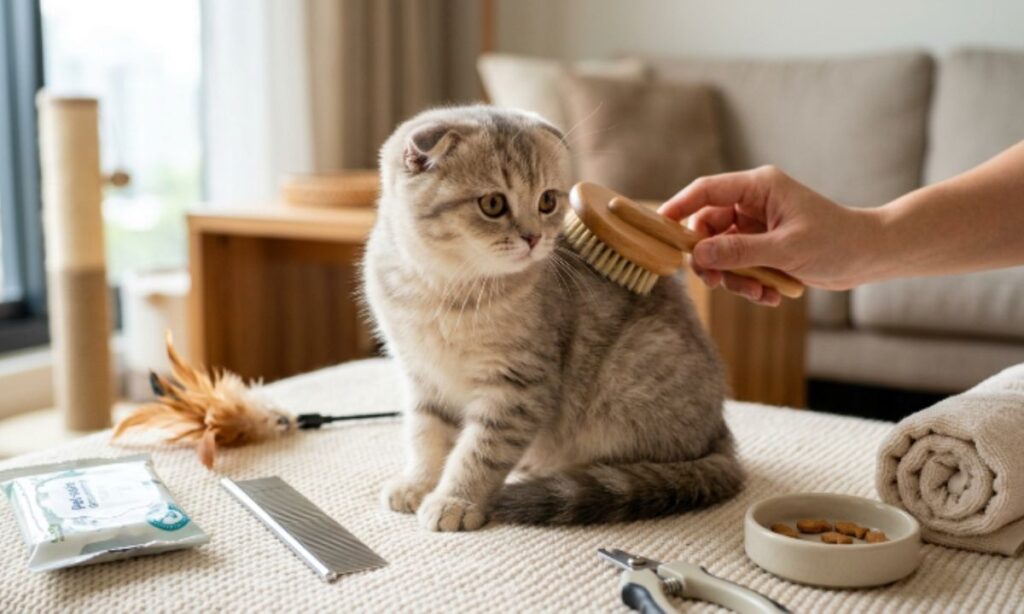
Your new Scottish Fold kitten gazes at you with those big owl eyes. You think, ‘What’s going on behind them? The good news is that most people think this breed is easier to train than they think.
This guide will take you through all you need to know to raise a confident, well-adjusted cat, including temperament, day-to-day routines, common behavioral problems, and health warning signals.
Scottish Folds are known for being calm, affectionate, and deeply attached to their people. They aren’t hyper or demanding, but they do want to be near you.
Key personality traits include the following:
Gentle and easygoing, even around noise or change
Curious but not destructive when properly stimulated
Quiet vocally, often communicating through body language instead of meowing
Loyal to their household, including children and other pets
Intelligent enough to learn commands and simple tricks
Folded ears are purely cosmetic. They have nothing to do with how smart, playful, or trainable your kitten turns out to be.
Scottish Fold Kitten Behavior Stages by Age
Scottish Folds go through distinct behavioral phases. Knowing what to expect at each stage helps you respond correctly instead of reacting to normal development as if it were a problem.
0 to 3 Months: The Foundation Stage
This is the most important window for shaping lifelong behavior. Kittens are absorbing everything about their environment right now.
Introduce new people, sounds, and rooms slowly
Handle paws, ears, and belly gently and often
Keep first experiences short and positive
Avoid overwhelming the kitten with too much at once
3 to 6 Months: The Testing Stage
Confidence grows fast during this stage, and so does curiosity about boundaries.
Expect more exploring, climbing, and occasional mischief
Teething may lead to increased chewing or nibbling
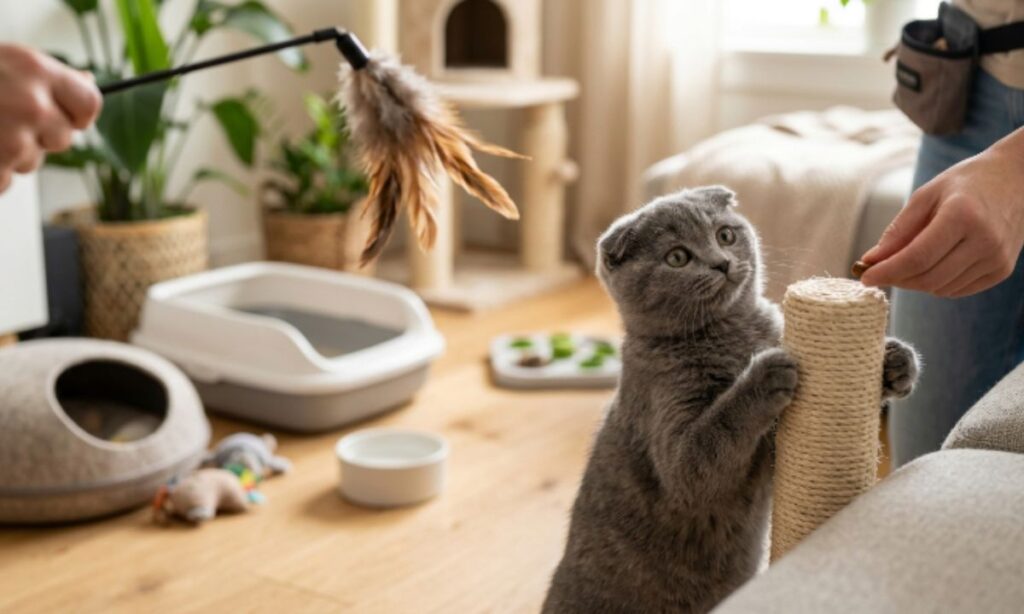
This is the ideal window to reinforce scratching post use
Consistent routines matter more than ever right now
6 to 12 Months: The Settling Stage
Energy levels start to even out, and personality traits become more fixed.
Play sessions may shorten slightly as adult habits form
Litter box habits, feeding schedule, and social behavior stabilize
This is a good time to introduce more advanced tricks
Watch for early signs of joint stiffness, since this can appear even in young cats
Daily Routine and Schedule for a Scottish Fold Kitten
Structure helps kittens feel secure. A predictable day also makes training far more effective.
Time of Day
Activity
Morning
Feeding, short play session, litter box check
Midday
Quiet rest, sunny spot for napping
Afternoon
Interactive play, puzzle toy or treat game
Early Evening
Training session (5 to 10 minutes)
Before Bed
Active play to burn energy, then final feeding
Overnight
Quiet, low-stimulation environment for sleep
Sticking close to this pattern every day builds trust and reduces anxious or unpredictable behavior.
Scottish Fold kitten Litter Training Step by Step
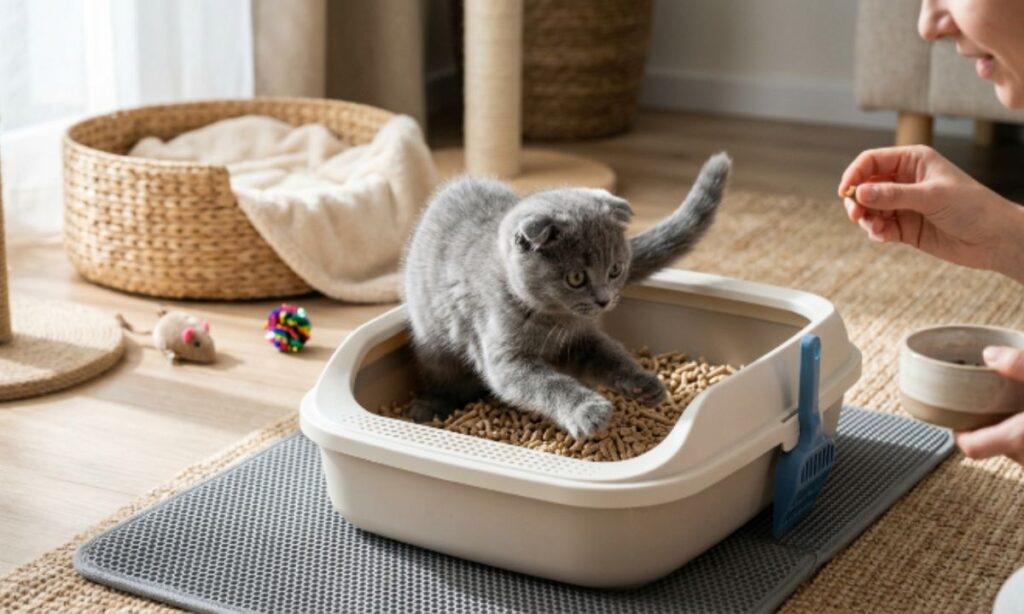
Litter training a Scottish Fold kitten is usually straightforward, as long as the setup is right from day one.
Choose a quiet, low-traffic location for the box
Use unscented, clumping litter for natural digging comfort
Place the kitten in the box after meals and naps
Praise calmly when the kitten uses the box correctly
Never scold accidents; clean them and simply redirect next time
If accidents continue past the first few weeks, rule out a health issue before assuming it’s a behavior problem.
Teaching Basic Commands and Tricks
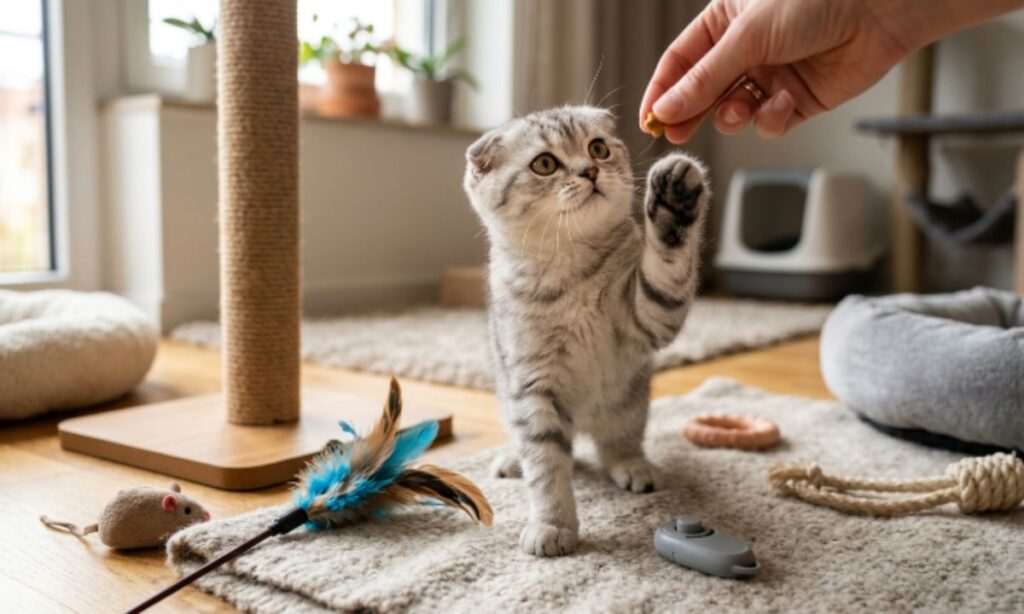
Scottish Folds respond well to short, reward-based sessions. Long or repetitive training tends to backfire.
Start with these basics, in order:
Name recognition, paired with feeding and play
“Come,” using a treat to encourage movement toward you
“Stay,” starting with just a few seconds at a time
Simple tricks like “sit” or “paw,” once the basics are solid
Keep every session under 10 minutes. Short and consistent beats long and occasional every time.
Play, Enrichment, and Toys
Scottish Folds have moderate energy levels. They don’t need marathon play sessions, but they do need regular mental stimulation.
Toy Type
Purpose
Feather wands
Satisfies hunting instinct through movement
Puzzle feeders
Builds problem-solving skills, slows fast eating
Treat-dispensing balls
Combines play with food motivation
Cat trees and shelves
Encourages climbing and safe vertical space
Scratching posts
Protects furniture, supports natural scratching
Rotate toys every week or two. A “new” toy is often just an old one your kitten hasn’t seen in a while.
Managing Common Behavior Problems
Most behavior issues in Scottish Folds come from unmet needs, not stubbornness. Once the root cause is addressed, the behavior usually improves.
Scratching Furniture
Place a scratching post near the furniture being targeted. Reward every use with a treat or praise, then gradually move the post to your preferred spot.
Night-Time Zoomies
A short, active play session right before bed helps burn off leftover energy. Follow it with a final small meal to encourage a natural wind-down.
Separation Anxiety
Scottish Folds bond closely with their owners, which can lead to stress when left alone. Start with very short absences and slowly build up the time, rewarding calm behavior when you return.
Sudden Aggression or Irritability
If a normally gentle kitten suddenly hisses, bites, or avoids touch, this is often a pain signal rather than a mood change. A vet check should come before any behavior correction.
Positive Reinforcement Training Techniques
Punishment doesn’t work with this breed. It damages trust and often makes behavior worse. Positive reinforcement builds cooperation instead of fear.
Reward timing: Give the treat or praise within seconds of the desired action
Clicker training: Pair a clicker sound with a reward to mark the exact right moment
Target training: Teach the kitten to touch a stick or your hand, which is useful for guiding movement
Lure training: Use a treat to guide posture, such as luring into a sit position
Scottish Folds carry a genetic risk tied to their signature ear fold, and this can show up as behavior changes long before it looks like a medical issue.
Osteochondrodysplasia: Watch for stiffness, limping, reluctance to jump, or a stiff tail. This is a cartilage and bone condition linked to the fold gene.
Ear infections: Watch for head shaking, scratching at ears, or odor. Folded ears trap moisture more easily than straight ears.
Hypertrophic cardiomyopathy (HCM): Watch for unusual lethargy, fast breathing, or reduced activity. This heart condition can develop silently.
A behavior change that appears suddenly, without an obvious cause, deserves a vet visit before any training plan.
Apartment and City Safety Tips
Many Scottish Fold owners live in apartments or dense urban homes, where the environment shapes behavior just as much as training does.
Secure window screens tightly, since falls are a real risk for curious climbers
Block balcony access unless it’s fully enclosed
Keep cords, blinds strings, and small objects out of reach
Offer vertical space like shelves to satisfy climbing instincts safely indoors
Create a quiet retreat spot away from street noise and foot traffic
A safe environment prevents many behavior problems before they start.
Travel and Carrier Training
Getting comfortable with a carrier early makes vet visits and travel far less stressful for everyone involved.
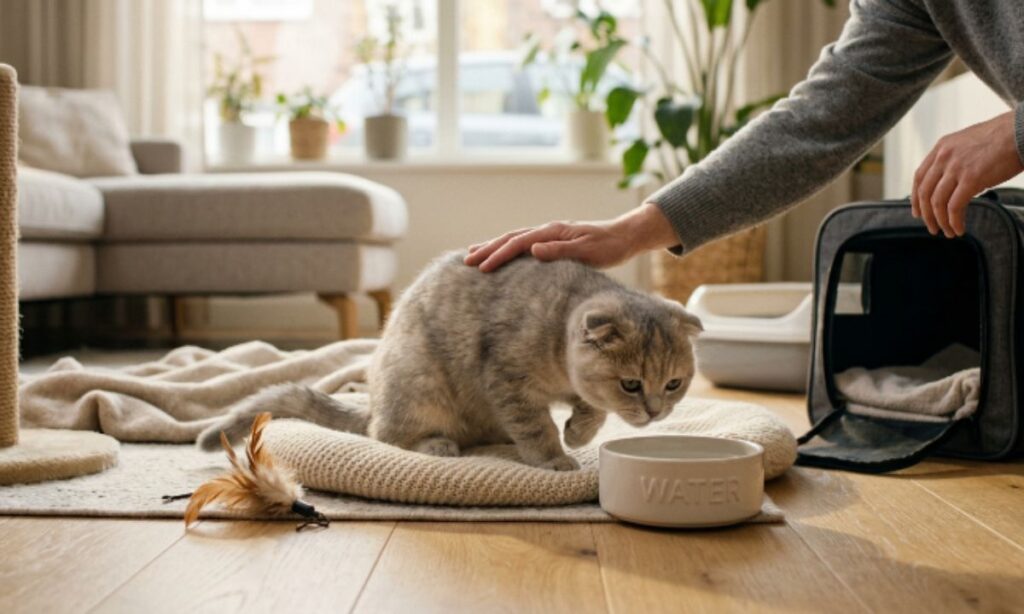
Leave the carrier out in a familiar room, not just before trips
Add a soft blanket and a few treats inside to build positive association
Practice short car rides before any long trip
Keep the crate covered partially during travel to reduce visual stress
Reward calm behavior at the end of every carrier session
Cats that only see the carrier before vet visits tend to associate it with stress. Regular, low-pressure exposure changes that pattern.
Grooming Habits That Support Good Behavior
Grooming isn’t just about appearance. Cats that tolerate handling well tend to be calmer overall, since they’re used to being touched without fear.
Brush short coats weekly and longer coats two to three times a week
Check folded ears weekly for redness, odor, or buildup
Trim nails every two to three weeks, pairing it with treats
Introduce toothbrushing gradually, a few seconds at a time
Keep grooming sessions short so they stay positive, not stressful
A Note on Breeding and Ethics
Responsible ownership includes understanding where the breed’s health risks come from. Breeding two folded-ear cats together significantly raises the risk of severe skeletal problems in kittens.
Ethical breeders pair folded-ear cats with straight-eared cats and screen for joint and heart conditions. If you’re considering breeding or buying from a breeder, ask directly about these practices.
Frequently Asked Questions
Are Scottish Fold kittens hard to train?
No, they respond well to positive reinforcement and typically learn basic commands within a few weeks.
At what age do Scottish Fold ears fold?
Ears usually start folding around three to four weeks of age, though the exact timing varies by kitten.
Do Scottish Folds get along with other pets?
Yes, their calm and social nature usually makes them easy to introduce to other cats and dogs.
Why is my Scottish Fold suddenly acting aggressive?
Sudden aggression often signals joint pain or discomfort, so a vet check should come before behavior training.
How much playtime does a Scottish Fold kitten need daily?
Two to three short play sessions a day, totaling around 20 to 30 minutes, usually meets their needs.
Conclusion
Raising a well-behaved Scottish Fold kitten comes down to a few simple habits: consistent routines, positive reinforcement, early socialization, and close attention to their unique health risks. Follow these steps, and you’ll end up with a calm, confident, deeply bonded companion who trusts you completely.
I’m a passionate pet writer who loves sharing practical tips, trusted advice, and heartwarming stories about cats, dogs, and other beloved companions. Through PetCaffine.com, I help pet lovers better understand their furry friends with easy-to-read articles on pet care, nutrition, behavior, health, and everyday life.