Tea Slang Meaning: What It Really Means and Where It Came From
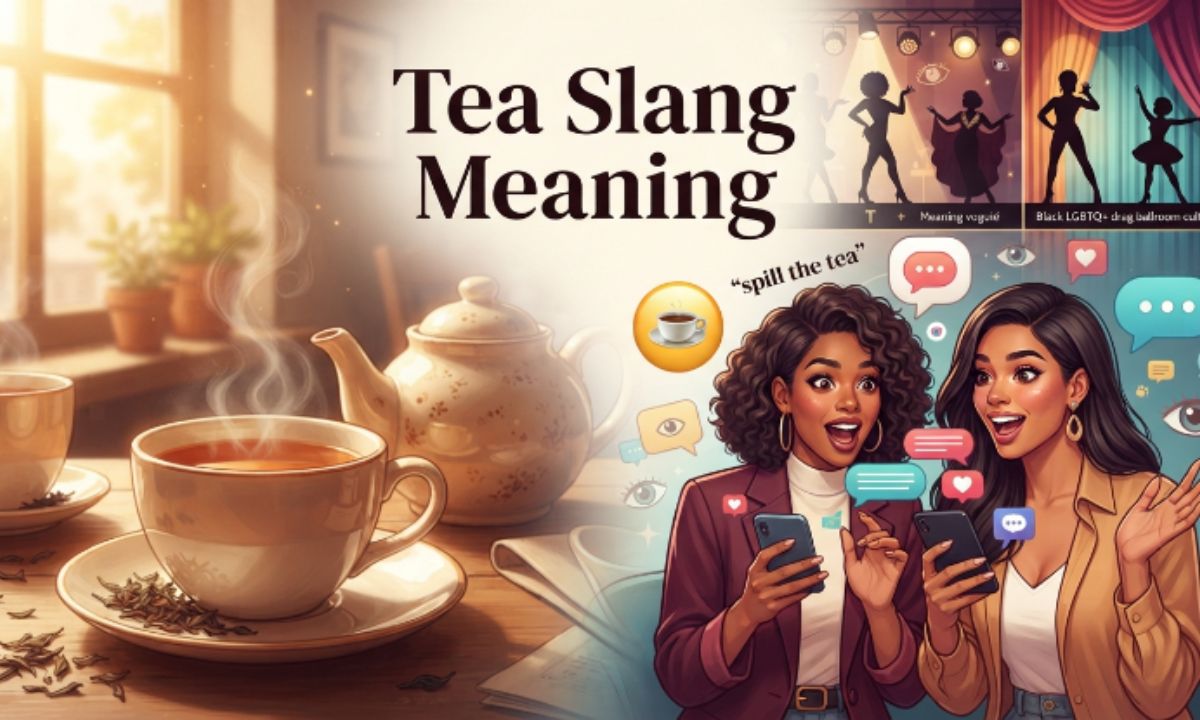
“Tea” is one of the most popular slang words online. It has nothing to do with the drink. It means gossip, drama, or the truth about a situation. People say “spill the tea” when they want someone to share the juicy details. The term has a real history, rooted in Black LGBTQ+ culture. Here’s a full breakdown of what it means, where it started, and how people use it today.
In slang, “tea” means gossip, news, or the truth about someone or something. It can also work as a verb, though that’s less common. If someone says, “What’s the tea,” they’re asking what’s going on or what you know.
A few quick examples:
“The tea” = the actual gossip or the real story.
“That’s the tea” means that’s the truth, plain and simple.
“Got any tea?” = Do you have any gossip to share?
The word carries a sense of authenticity. It’s not just chatter. It usually points to something real, something people actually want to know.
What Does “Spill the Tea” Mean?
“Spill the tea” means to reveal gossip or share information that others don’t already know. It’s the action version of the noun “tea.” When someone spills the tea, they’re opening up about a situation, often one with some drama attached.
You’ll hear it phrased a few different ways:
“Spill the tea” – tell me everything.
“Time to spill some tea” – I’m about to share something interesting.
“She spilled all the tea on her ex” – she revealed everything about her ex.
It works in speech, texting, and social media captions equally well.
Where Did the Slang Term “Tea” Come From?
This is where a lot of people get it wrong. “Tea” isn’t British slang, and it has nothing to do with tea time. Its roots go back to Black and Latino LGBTQ+ drag and ballroom communities in the United States, mainly from the 1980s and 1990s.
The “T” for Truth Origin
In ballroom culture, “T” was shorthand for “truth,” or sometimes for someone’s personal business. People would say “spill the T,” meaning share your personal truth or your business. Over time, “T” became “tea” because it sounds the same and fits naturally with drink-related phrases like “spill” and “sip.”
From Ballroom Culture to the Mainstream
Author John Berendt used the phrase in his 1994 book about Savannah’s drag scene, which gives us one of the earliest printed examples. But the word stayed mostly within queer and Black communities for years before it broke into wider pop culture.
“RuPaul’s Drag Race,” which premiered in 2009, played a huge role in introducing this vocabulary to a mainstream audience. Words like “tea,” “shade,” “reading,” and “werk” all rode that same wave into everyday conversation. Twitter and Tumblr picked it up around 2015 to 2018, and TikTok pushed it even further starting in 2019.
Not British Tea Culture
A common myth is that “tea” slang comes from British tea-drinking traditions. It doesn’t. The pun works because tea (the drink) and T (the letter) sound alike in English, but the origin is American drag and ballroom culture, not afternoon tea in London.
How to Use “Tea” in a Sentence
Here are some natural, everyday examples:
“Okay, spill the tea. What happened at the party?”
“She posted some hot tea about her breakup on her story.”
“I don’t want any tea today; I’m staying out of it.”
“The tea is that they’ve been secretly dating for months.”
“Girl, send me that tea in my DMs right now.”
“That’s tea.” (Agreeing that something is true, even if it’s uncomfortable.)
Notice how flexible it is. It works as a noun on its own or paired with verbs like “spill,” “sip,” and “drop.”
Common Tea Slang Variations and What They Mean
The word “tea” has grown into a small vocabulary of its own. Here’s a quick reference table.
Phrase
Meaning
Hot tea
Fresh, exciting, or shocking gossip
Lukewarm tea
Old or boring gossip everyone already knows
Scalding tea
Extremely shocking or damaging information
Sip tea
Watching drama unfold without getting involved
Weak tea
A gossip story that isn’t very convincing
No tea, no shade
Sharing an honest opinion without meaning offense
All tea, all truth
Confirming that what’s being said is completely accurate
Clock that tea
Acknowledging a bold or blunt truth
These phrases show up constantly in comment sections, TikTok captions, and group chats.
“Tea” often gets mixed up with a few other words from the same cultural family. They’re related, but they don’t mean the same thing.
Term
What It Means
How It Differs From Tea
Shade
A subtle insult or dig
Shade is an insult; tea is information
Receipts
Proof, like screenshots or messages
Receipts back up the tea; they aren’t the tea itself
T
Short for tea or truth
Same meaning, just the older, shorter form
Reading
Publicly pointing out someone’s flaws
More direct and confrontational than tea
Knowing the difference helps you use these words correctly instead of lumping them all together.
How “Tea” Is Used on Social Media Today
Each platform has its own flavor of tea culture.
TikTok: Storytime videos, duets, and stitches built entirely around “spilling the tea” on a personal or celebrity situation. The teacup emoji shows up constantly in captions.
Twitter/X: Real-time gossip threads, often tagged with phrases like “spilling tea on main” when someone shares something publicly instead of privately.
Instagram: Story posts and Close Friends lists are common places for lower-stakes tea, shared with a smaller audience.
Group chats and DMs: A simple “any tea?” text is enough to signal you’re looking for the latest update on a friend group situation.
The emoji combo 🍵👀💅 has basically become shorthand for “gossip incoming.”
Is “Tea” Offensive or Inappropriate to Use?
On its own, the word “tea” isn’t offensive. It’s casual slang, so it doesn’t belong in formal writing, professional emails, or academic work. Save it for texting, social media, or relaxed conversations with friends.
There’s a cultural point worth remembering, though. This word comes from Black and queer communities who built an entire vocabulary that mainstream culture later adopted. Using the word is fine. It’s worth knowing where it came from and giving credit where it’s due, rather than treating it as if it appeared out of nowhere on TikTok.
Tea Etiquette: When to Share and When to Hold Back
Not all gossip is harmless fun. Some situations call for more restraint, even if you technically “have the tea.”
Think twice before sharing information about:
Someone’s mental health struggles or therapy
Financial problems or debt
Family trauma, including abuse or addiction
Private medical conditions
Ongoing legal issues
Anything involving minors
A simple gut check helps: would this hurt the person if they knew you shared it? If the answer is yes, it’s probably better left unsaid. Healthy tea-sharing usually involves consent, accuracy, and a small, trusted audience. Toxic tea-sharing spreads unverified claims to a wide audience without thinking about the fallout.
Regional and Global Use of Tea Slang
While the word started in the U.S., it has spread well beyond it.
In the UK, younger audiences use “tea” the same way Americans do, largely thanks to social media rather than any local origin.
In Australia, it shows up in similar internet-driven contexts, especially among Gen Z.
Across parts of Africa, including Nigeria and South Africa, online communities use “tea” in memes and Twitter threads, often blended with local slang.
In Southeast Asia, including the Philippines, the word appears frequently in fandom and celebrity gossip spaces online.
In most of these regions, the word traveled through TikTok and Twitter rather than developing independently, which shows just how far internet slang can spread in a short amount of time.
Frequently Asked Questions
What does “tea” mean in slang?
It means gossip, news, or the truth about a situation.
Where did the term “tea” come from?
It originated in Black and Latino LGBTQ+ drag and ballroom culture, from “T” meaning truth.
Is “spill the tea” offensive?
No, but it’s casual slang, so it’s best kept out of formal or professional writing.
What does “no tea, no shade” mean?
It means sharing an honest opinion or criticism without intending any disrespect.
Is “tea” still used in 2026?
Yes, it remains common slang across texting, social media, and everyday conversation.
Conclusion
“Tea” has come a long way from its roots in ballroom culture, growing from a simple stand-in for “truth” into one of the most recognizable slang terms on the internet today.
Whether you’re texting a friend, scrolling TikTok, or just trying to keep up with how people talk online, knowing what “tea,” “spill the tea,” and their many variations actually mean helps you use them naturally and respectfully. It’s a small piece of vocabulary with a real cultural history behind it, and that’s worth remembering every time you ask, “So, what’s the tea?”
I’m a passionate pet writer who loves sharing practical tips, trusted advice, and heartwarming stories about cats, dogs, and other beloved companions. Through PetCaffine.com, I help pet lovers better understand their furry friends with easy-to-read articles on pet care, nutrition, behavior, health, and everyday life.







2 thoughts on “Tea Slang Meaning: What It Really Means and Where It Came From”