Why Do Cats Lick Plastic Bags? Causes, Risks, and Fixes
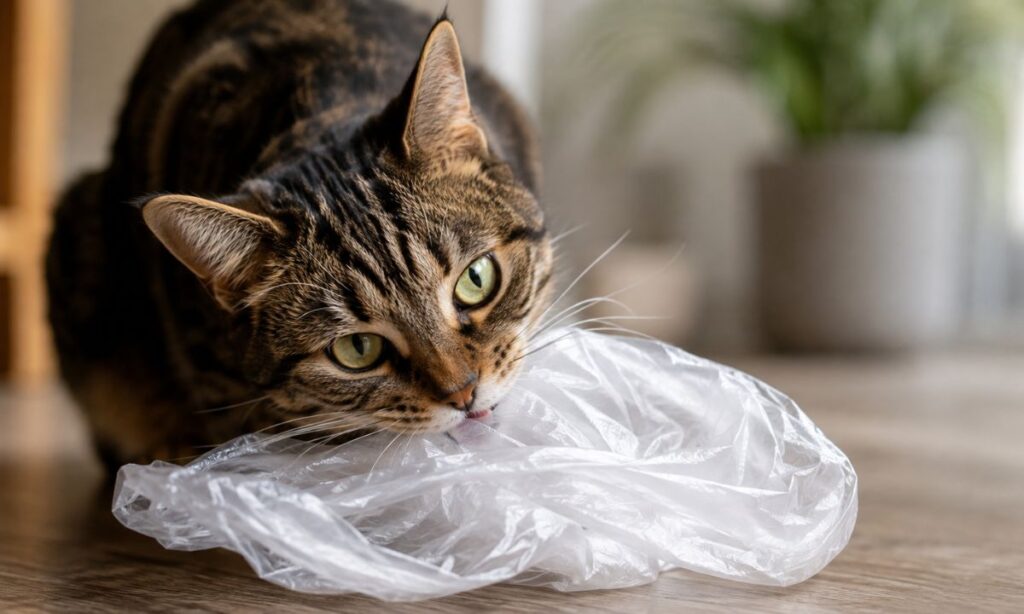
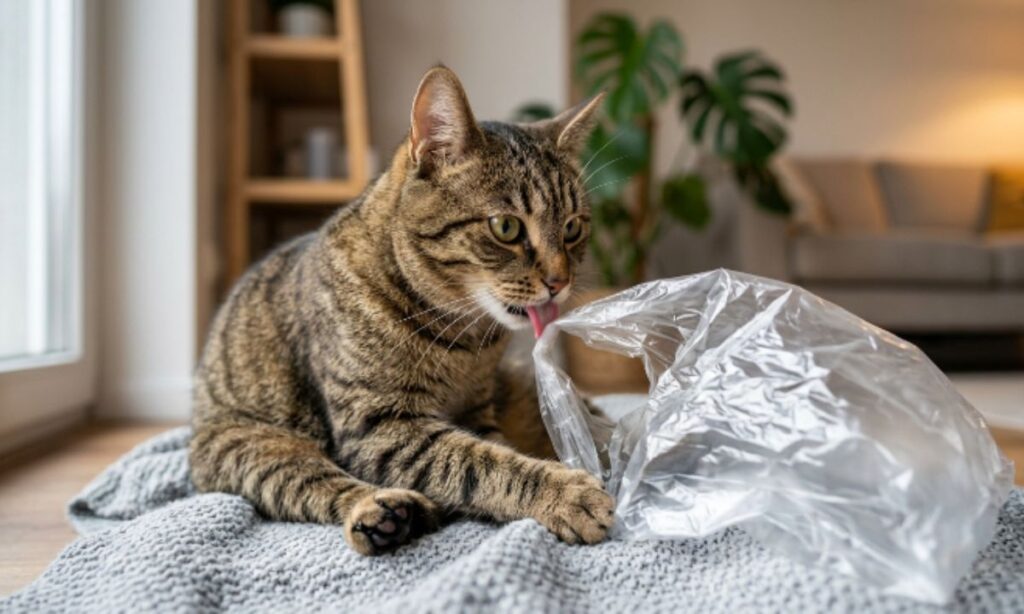
Your cat trots past every toy in the house, then plants itself on a crinkly grocery bag and licks it like it’s the last meal on earth. It’s a strange habit to watch. It’s also more common than most owners realize, and it usually has a real explanation behind it.
Occasional licking is common and not automatically a red flag. Cats explore the world with their mouths and noses, and plastic gives them a lot to investigate at once: a scent, a texture, and a sound, all in one object.
The behavior becomes worth watching when it moves past a quick sniff-and-lick. Chewing, tearing, or actually swallowing pieces of plastic is a different situation entirely, and it’s one that can turn into a medical emergency. The line between “odd habit” and “problem” comes down to frequency, intensity, and whether anything is being eaten.
Why Are Cats Attracted to Plastic Bags?
There isn’t one single cause. Vets and behaviorists generally point to a mix of sensory pull, personality, and sometimes an underlying health or emotional issue.
Food Smells, Animal Fats, and Plastic Additives
Plastic manufacturing sometimes uses stearates and other compounds derived from animal fat, including tallow. To a cat’s nose, which is many times more sensitive than a human’s, that can smell faintly like food even when the bag never held anything edible.
On top of that, most bags have carried something at some point. Meat juices, fish odors, and other food residue soak into the plastic and linger long after you’ve forgotten what was inside. A cat picking up a “food” smell on an empty bag isn’t being weird. It’s reading the evidence correctly.
Smooth Texture and Crinkling Sounds
Plastic feels cool and slick against a cat’s tongue, which some cats seem to find soothing or just interesting. The crinkling sound adds another layer. That rustling noise can resemble the sound of small prey moving through leaves or grass, which may tap into a cat’s natural hunting instincts even in a fully domesticated house cat.
Curiosity and Hunting Instincts
Cats are wired to investigate anything that moves, rustles, or smells unfamiliar. A plastic bag left on the floor checks several of those boxes at once. For a naturally curious cat, that’s basically an invitation.
Boredom and Lack of Enrichment
A cat without enough to do will find something to do. Licking or chewing plastic can become a default activity for cats that don’t get much playtime, don’t have access to windows or perches, or spend long stretches of the day alone. It’s not destructive on purpose. It’s entertainment, filling a gap that toys or interaction should be filling instead.
Stress, Anxiety, and Self-Soothing
Some cats turn to repetitive licking as a coping mechanism, the same way a person might bite their nails under stress. Changes at home, like a new pet, a move, or a shift in routine, can trigger this kind of behavior. For these cats, the plastic isn’t really the point. The repetitive motion is what’s calming them down.
Can Plastic Licking Be a Sign of Pica?
Sometimes, yes. It’s worth understanding what that word actually means before assuming the worst.
What Is Pica in Cats?
Pica is the persistent urge to chew or eat things that aren’t food, plastic, fabric, rubber bands, string, and similar items. Occasional curious licking is not pica. Pica is a recurring pattern where a cat actively seeks out and consumes non-food objects, often repeatedly targeting the same type of material.
Medical, Nutritional, and Behavioral Causes
Pica can stem from several different sources, and they’re not mutually exclusive:
Nutritional gaps, including low fiber, missing minerals, or inadequate protein
Underlying health issues such as dental pain, gastrointestinal disease, or anemia
Early weaning from the mother
Genuine boredom or under-stimulation
Stress, anxiety, or a compulsive tendency
Breed-linked genetic predisposition
Because the causes overlap so much, pica itself isn’t really a diagnosis. It’s a symptom. A vet visit is the only reliable way to figure out which factor, or combination of factors, is driving it in your specific cat.
The Connection Between Wool Sucking and Plastic Licking
Wool sucking is a related habit where cats knead and suck on soft fabric, like sweaters or blankets, often because they were separated from their mother too early. Some cats substitute plastic for fabric because it offers a similar stretchy, flexible feel. If your cat was adopted very young, or you don’t know much about its early history, this pattern is worth keeping in mind.
Cat Breeds That May Be More Prone to Pica
Some breeds show up more often in pica cases, likely due to genetics:
Siamese
Oriental Shorthair
Birman
Burmese
Persian
Bengal
Breed tendency isn’t destiny. Plenty of cats outside these breeds develop the habit, and plenty within them never do.
Is It Dangerous if a Cat Licks or Eats Plastic?
This depends heavily on where the behavior falls on the spectrum. It helps to think of it in three distinct stages, since each one carries a different level of concern.
Behavior
Risk Level
What to Do
Occasional licking, no chewing
Low
Monitor and remove access when possible
Regular chewing, small pieces torn off
Moderate
Redirect, increase enrichment, watch for swallowing
Swallowing plastic pieces
High, emergency
Contact a vet immediately
Choking and Mouth-Injury Risks
Torn plastic edges can be sharp enough to cut a cat’s gums, tongue, or throat. Smaller pieces can lodge in the airway, creating a choking hazard that comes on fast and without much warning.
Intestinal Blockage and Digestive-Tract Damage
Swallowed plastic doesn’t break down in the stomach. It can bunch up, especially if it tangles with string, thread, or other material, and create a blockage in the intestines. This is a genuine emergency. Left untreated, it can be fatal, though outcomes are generally much better when caught early.
Beyond blockage, plastic bags used to carry raw meat or fish can also harbor bacteria, adding a contamination risk on top of the physical danger.
Signs Your Cat May Need Urgent Veterinary Care
Call a vet right away if you notice:
Vomiting, especially repeated episodes
Loss of appetite
Lethargy or unusual quietness
Straining to defecate, or no bowel movement at all
Visible pain when the abdomen is touched
Plastic fragments in vomit or stool
What Handles and Bag Loops Add to the Risk
Bags with handles carry an extra danger that’s easy to overlook. A cat can get a paw, head, or neck caught in a handle loop while playing, leading to entanglement or, in worse cases, strangulation. This risk exists even for cats that never actually swallow anything. Cutting handle loops before recycling or storing bags removes this hazard entirely.
What to Do If Your Cat Just Swallowed Plastic
This moment tends to catch owners off guard, so it helps to know the steps ahead of time.
Stay calm and don’t try to induce vomiting or pull plastic from the throat yourself. Both can cause more damage.
Check your cat’s mouth and throat only if you can do so safely, without forcing anything.
Call your vet or an emergency animal clinic immediately, even if your cat seems fine at first. Symptoms can take hours to appear.
Save the remaining bag or wrapper so the vet knows exactly what material is involved.
Watch closely over the next 24 to 48 hours for any of the warning signs listed above.
How to Stop a Cat From Licking Plastic Bags
Most cases respond well to a few practical changes.
Remove and Safely Store Plastic Bags
Keep bags in a closed cabinet or drawer, not on the counter or floor. Switching to reusable cloth bags for groceries cuts down on the sheer volume of plastic sitting around the house.
Provide Safe Chewing and Sensory Alternatives
Give your cat something better to redirect toward:
Cat grass or catnip toys
Silicone or rubber chew toys made for cats
Puzzle feeders that reward investigation with food
Crinkly cat toys designed to be safe if chewed
How to Choose Safe Enrichment Toys
Not every “cat toy” on the shelf is actually safe to chew. Look for toys made from durable, non-toxic materials, avoid anything with small parts that can detach, and inspect toys regularly for tears or cracks. Replace anything that’s starting to break down before it becomes a swallowing risk.
Add Interactive Play and Daily Enrichment
Two short sessions a day with a wand toy or laser pointer can meaningfully cut down on boredom-driven behavior. Window perches, cat trees, and rotating toys so nothing gets stale all help keep a cat’s mind occupied on things other than the recycling.
Track Triggers and Avoid Punishment
Keep a rough note of when the licking happens. Is it after meals, during certain times of day, or around specific stressors like a loud household or a new pet? Patterns like this make it much easier to pinpoint the cause.
Avoid scolding or punishing your cat for the behavior. Punishment tends to increase anxiety, which can make compulsive licking or chewing worse rather than better. Redirecting to an appropriate toy works far better than correction.
When to Call a Veterinarian
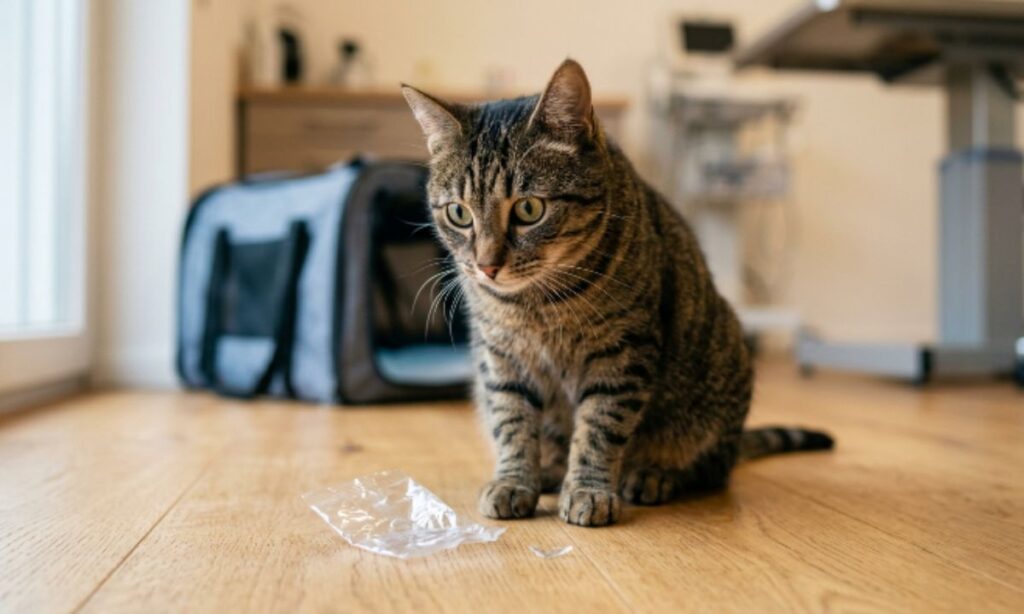
Book a visit if the behavior is frequent, if your cat is actually eating plastic rather than just licking it, or if you notice any of the warning signs mentioned earlier. It’s also worth going in if the habit seems tied to stress, since a vet can help rule out medical causes and, if needed, refer you to a behaviorist.
What to Bring to the Vet Visit
A little preparation goes a long way:
A short video of the behavior, if you can get one
Details on what type of plastic is involved and how often it happens
Your cat’s diet and any recent food changes
A list of symptoms, if any have appeared
Rough timing of when the behavior started
Frequently Asked Questions
Why is my cat obsessed with licking plastic bags?
It’s usually a mix of scent, texture, sound, and curiosity, though frequent obsession can point to boredom, stress, or pica.
Is it safe for cats to lick plastic bags?
Occasional licking is generally low-risk, but chewing or swallowing pieces is not and should be prevented.
What is pica in cats?
Pica is a persistent urge to eat non-food items, often linked to nutritional, medical, or behavioral causes.
What should I do if my cat swallows plastic?
Contact a vet immediately, save the remaining material, and watch closely for vomiting, lethargy, or straining.
Which cat breeds are more prone to pica?
Siamese, Oriental Shorthair, Birman, Burmese, Persian, and Bengal cats are reported more often, though any cat can develop it.
Conclusion
Cats lick plastic bags for reasons that make sense once you look past the surface: an appealing smell, an interesting texture, a satisfying crinkle, or simply too much free time. In most cases, it’s a harmless quirk.
But when licking turns into chewing or swallowing, the stakes change fast, and the right response is prevention first and a vet call second. Keep bags out of reach, give your cat better things to do with its mouth, and pay attention to patterns. That combination handles the vast majority of cases before they ever become an emergency.
I’m a passionate pet writer who loves sharing practical tips, trusted advice, and heartwarming stories about cats, dogs, and other beloved companions. Through PetCaffine.com, I help pet lovers better understand their furry friends with easy-to-read articles on pet care, nutrition, behavior, health, and everyday life.








2 thoughts on “Why Do Cats Lick Plastic Bags? Causes, Risks, and Fixes”