Are Snake Plants Safe for Cats? What Every Owner Should Know
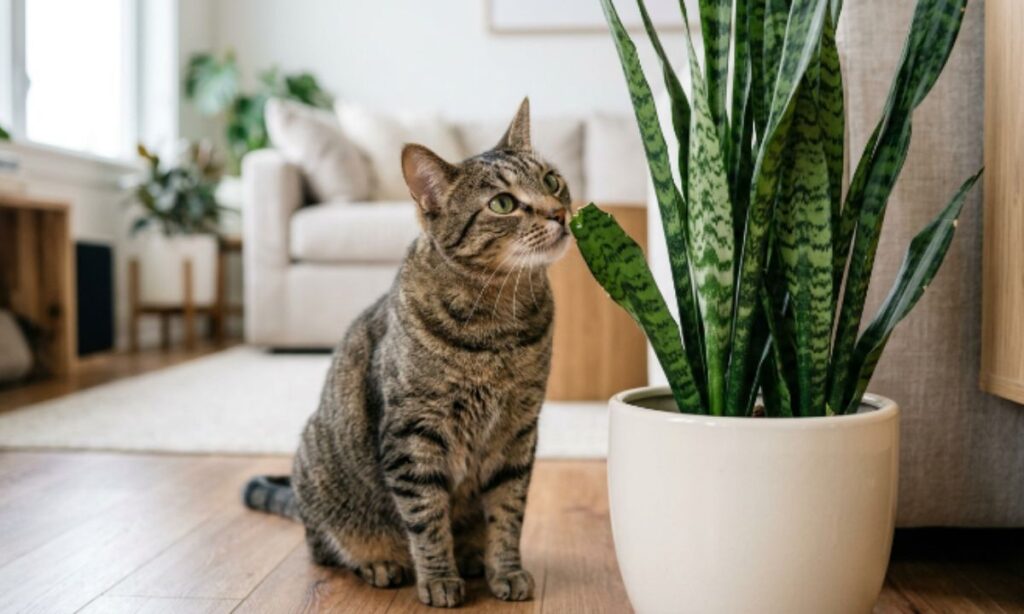
Your cat bit off a chunk of your snake plant. Your stomach flips. You take your phone and begin to type in the same query thousands of cat owners ask every day. Here’s what really happens next, and why the response is more nuanced than a simple yes or no.
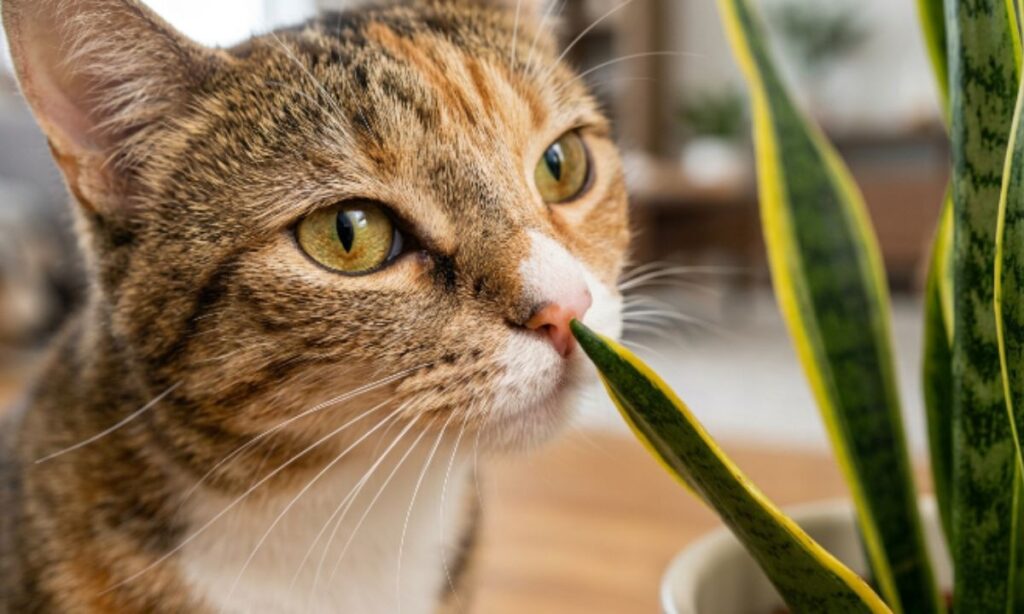
Yes, snake plants are toxic to cats. The ASPCA lists snake plants (Sansevieria trifasciata, also called Dracaena trifasciata) as toxic to both cats and dogs.
The good news: toxicity here means mild to moderate, not deadly. Most cats that nibble a leaf end up with an upset stomach, not a medical emergency. Severe reactions are rare, but they do happen, especially with larger ingestions.
Every part of the plant carries the toxin, including the leaves, stems, and roots. The leaves pose the biggest risk simply because they’re what a curious cat can reach.
How Much Snake Plant Is Dangerous?
There’s no official weight-based dosage chart for cats, since every cat reacts a little differently. But a few patterns hold up across most cases.
A single bite or a few chewed leaf tips rarely causes more than mild drooling and a queasy stomach. The bitter taste of saponins usually stops cats before they eat enough to cause real harm.
Larger or repeated ingestions raise the risk. A cat that eats several leaves in one sitting, or one that returns to the plant again and again, is far more likely to develop vomiting, diarrhea, or the rarer red-blood-cell effects linked to heavy saponin exposure.
Body size matters too. A small or underweight cat needs far less plant material to feel the effects than a large, healthy adult.
What Makes Snake Plants Toxic to Cats
Snake plants have earned a spot in millions of living rooms for good reason. They tolerate neglect, survive low light, and add a sculptural, upright shape that few other houseplants match. None of that changes the fact that they carry a real, documented risk for households with cats.
The Role of Saponins
Snake plants produce compounds called saponins. Plants use saponins as a natural defense, warding off insects, fungi, and grazing animals.
When a cat chews on the leaves, saponins irritate the mouth, throat, and digestive tract. In larger amounts, they can also affect red blood cells, which is why prolonged or heavy ingestion has been linked to anemia in rare cases.
Saponins taste bitter. That bitterness works in your favor, since most cats stop after one bite and don’t come back for seconds.
Why Cats Chew Plants in the First Place
Cats rarely chew houseplants out of hunger. More often, it’s curiosity, boredom, teething in kittens, or a texture they find satisfying to bite.
Some cats also chew plants to supplement fiber in their diet, which is part of why cat grass exists as a safer outlet.
Understanding the “why” helps you address the behavior instead of merely removing the plant and hoping the habit vanishes. A bored cat needs more than a moving plant to be enriched. If your cat is devouring everything no matter what you feed instead, it may be a sign of a nutritional gap worth discussing with your vet.
A second ignored factor is stress. Sometimes worry is redirected into chewing activity when cats are adjusting to a new house, new pet, or change in habit. If the plant-eating started around the time of a household change, that’s worth noting.
Are Kittens More at Risk?
Yes. Kittens weigh less, have smaller digestive systems, and haven’t yet learned which plants to avoid. The same amount of leaf material that barely bothers an adult cat can hit a kitten much harder.
Kittens are also more likely to treat a new plant as a toy, batting at leaves and chewing out of pure curiosity rather than caution. If you’re bringing a kitten into a home with houseplants, assume it will investigate everything at least once.
Symptoms of Snake Plant Poisoning in Cats
Watch for these signs after your cat has had access to a snake plant:
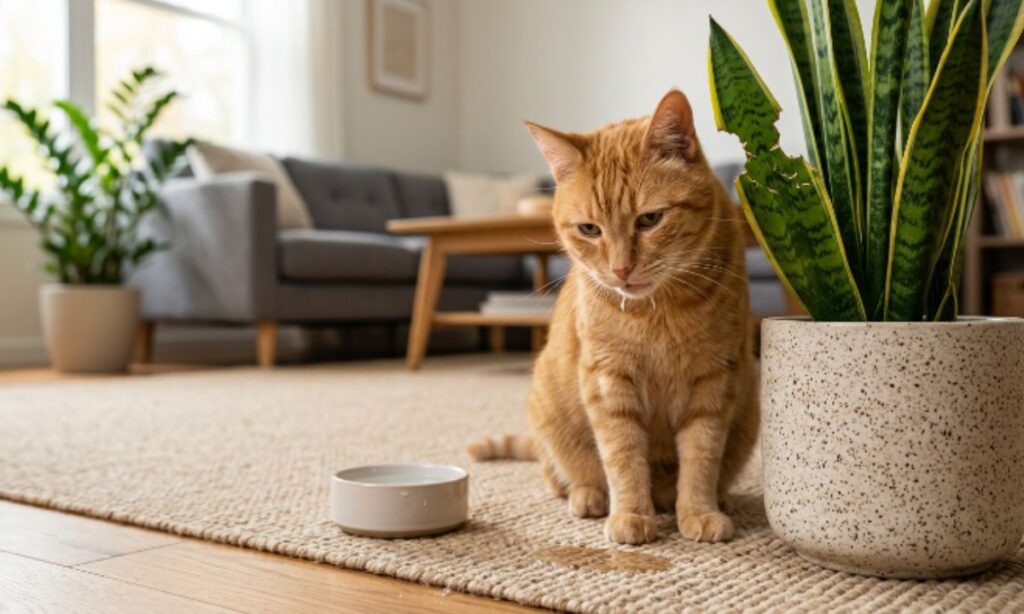
Drooling or pawing at the mouth
Vomiting
Diarrhea
Loss of appetite
Lethargy or low energy
Dilated pupils
Pale gums (a sign of possible anemia in severe cases)
Symptoms typically show up within a few hours of ingestion. Mild cases often resolve within 24 hours without treatment.
What to Do If Your Cat Eats a Snake Plant
Stay calm. Most cases are mild. Here’s a simple step-by-step approach:
Remove your cat from the plant so it can’t eat more.
Check the plant and your cat’s mouth for chewed leaf pieces to estimate how much was eaten.
Watch for symptoms over the next few hours.
Offer fresh water, since mild drooling and nausea can lead to dehydration.
Call your vet or animal poison control if symptoms are severe or if your cat ate a large amount.
Do not try to induce vomiting at home without veterinary guidance. Some home remedies do more harm than good, and inducing vomiting incorrectly can cause additional throat and esophageal irritation on top of the original problem.
It also helps to photograph the plant and, if possible, save a chewed leaf. If your cat’s symptoms are unclear or overlap with another issue, having the exact plant on hand speeds up your vet’s diagnosis considerably.
When to Call the Vet Immediately
Contact your veterinarian or an animal poison control hotline right away if you notice:
Repeated vomiting or diarrhea that doesn’t stop
Signs of weakness or collapse
Pale or white gums
Difficulty breathing
A large portion of the plant is missing and your cat is a kitten or a smaller-bodied cat
The ASPCA Animal Poison Control Center can be reached at 888-426-4435. A consultation fee may apply, but it’s worth the call if you’re unsure. Your regular vet or a 24-hour emergency clinic can also guide you through next steps, especially outside of normal business hours.
When you call, have a rough idea of how much plant material is missing, how long ago it happened, and your cat’s current symptoms. That information lets the vet or poison control specialist give you faster, more accurate advice.
How Vets Diagnose and Treat Snake Plant Poisoning
Vomiting and diarrhea aren’t unique to plant poisoning, so tell your vet exactly what your cat had access to. That detail speeds up diagnosis significantly.
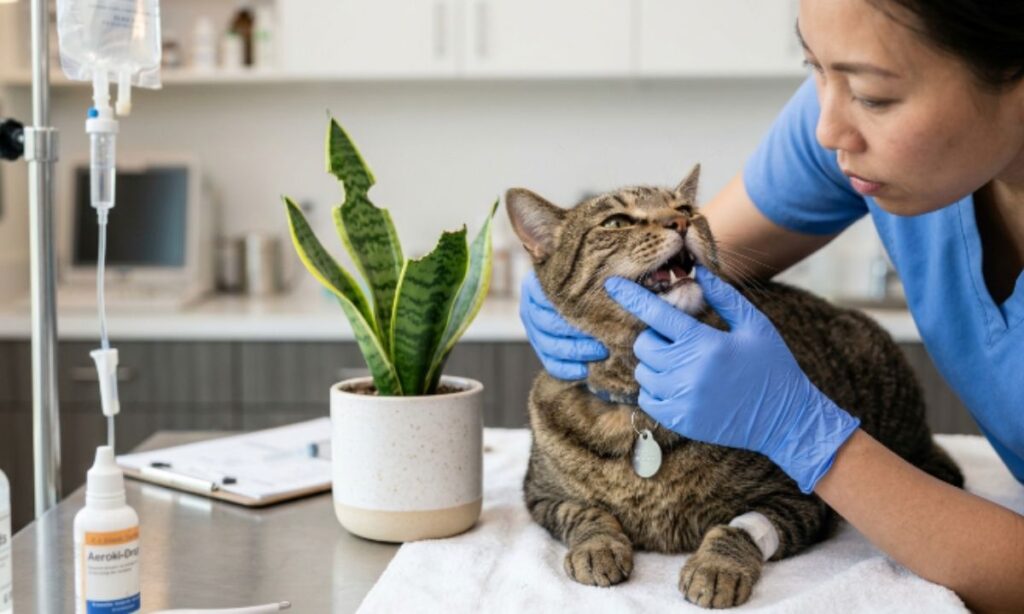
If you catch the ingestion early, a vet may induce vomiting or give activated charcoal to limit absorption. For cats already showing symptoms, treatment usually focuses on managing the discomfort directly:
IV fluids for dehydration
Anti-nausea medication
Anti-diarrheal medication
Bloodwork if anemia is suspected
Hospitalization in severe or prolonged cases
Most cats recover fully within a day or two with supportive care.
Recovery and Aftercare at Home
Once symptoms ease, keep your cat on a bland diet for a day or two. Plain boiled chicken and rice, given in small portions, is gentle on an irritated stomach.
Keep fresh water available at all times, since vomiting and diarrhea both drain fluids quickly. Check your cat’s energy level and appetite over the next 24 to 48 hours. A cat that isn’t eating normally after two days should go back to the vet.
Most importantly, remove the plant or block access before your cat has the chance for round two. Cats that got sick once won’t necessarily avoid the plant on their own.
How to Keep Cats Away from Snake Plants
Prevention beats treatment every time. A few practical options:
Move the Plant Out of Reach
Cats are excellent climbers, so “out of reach” means higher than you’d think. Try wall-mounted shelves, hanging planters, or a room your cat doesn’t have access to.
Make the Plant Less Appealing
Place double-sided tape around the pot’s rim.
Try a citrus-scented deterrent spray (cats generally dislike citrus).
Add decorative rocks on top of the soil to discourage digging and chewing.
Give Your Cat a Better Option
Cat grass, catnip, or cat-safe alternatives satisfy the same chewing instinct without the risk. A bored cat with nothing to nibble will often find the nearest houseplant instead.
Watch for Behavioral Signals
If your cat suddenly starts chewing plants more than usual, it can signal boredom, stress, or even a dietary gap. A sudden change in chewing behavior is worth mentioning at your next vet visit.
Best Placement Ideas for Snake Plants in a Cat Home
If you’re not ready to give up your snake plant, placement is your best defense. A few reliable spots:
High shelves that a cat can’t easily jump to, especially in homes without cat trees nearby.
Bathrooms with closed doors, as long as your cat doesn’t have regular access.
Enclosed terrariums or plant stands with covers, which physically block chewing while still showing off the plant.
Rooms reserved for guests or offices that stay closed most of the day.
Avoid low side tables, windowsills, and floor corners. These spots are prime cat territory and the most common places accidental ingestion happens.
Cat-Safe Alternatives to Snake Plants
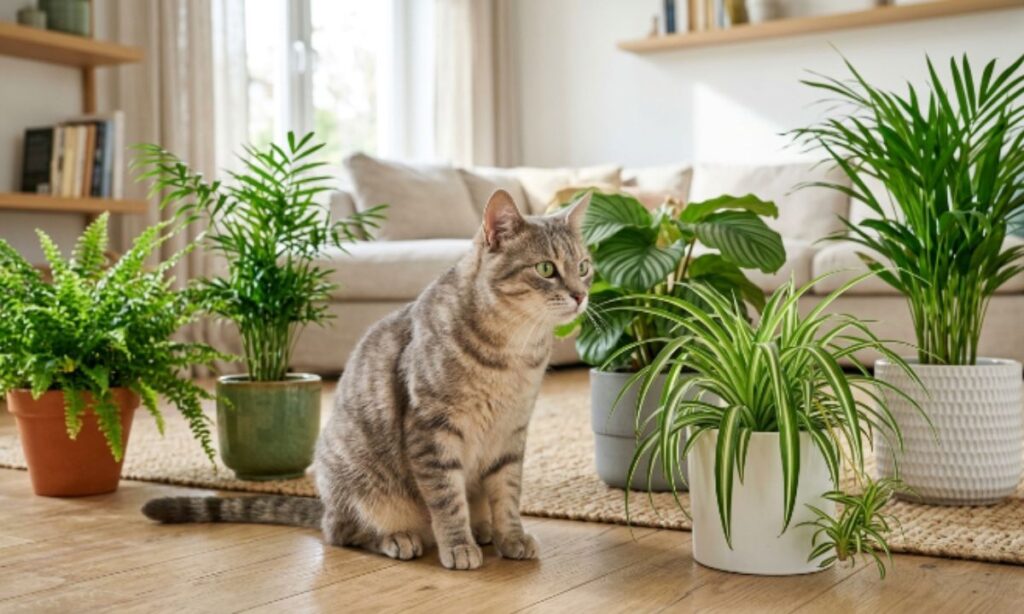
If you love the look of a snake plant but want zero risk, these options offer a similar aesthetic without the toxicity:
Plant Name
Why It Works as an Alternative
Rattlesnake Plant
Similar lush, upright leaves with striking patterns
All of these plants pair well with typical indoor light conditions, so swapping one out for a snake plant rarely means giving up on style or ease of care.
Other Common Houseplants Toxic to Cats
Snake plants aren’t the only houseplant worth double-checking. Here are a few others that show up often in homes with cats:
Plant
Risk Level
Key Concern
Easter Lily
Severe
Can cause fatal kidney failure, even in small amounts
Oleander
Severe
Affects the heart; all parts are toxic
Sago Palm
Severe
Can cause liver failure
Poinsettia
Mild
Irritating sap causes drooling and stomach upset
Aloe Vera
Mild to Moderate
Saponins cause vomiting and diarrhea
Pothos (Devil’s Ivy)
Mild to Moderate
Oxalate crystals irritate the mouth and throat
Lilies deserve special attention here. Unlike snake plants, lily toxicity is severe and can be fatal within days, even from small exposures like pollen on fur.
Why the “Non-Toxic” Claim Confuses So Many Cat Owners
Search around long enough, and you’ll find at least one source calling snake plants “non-toxic” or “pet-safe.” This claim doesn’t match the ASPCA’s own published plant list, which classifies Sansevieria trifasciata as toxic to cats and dogs.
The confusion likely comes from real-world outcomes. Most cats take one bitter bite, stop, and never show more than mild symptoms. That mild, short-lived reaction gets misread as “no reaction at all.”
The distinction matters. Mild toxicity still means your cat can get sick, and a small number of cases do turn serious. Treating a mildly toxic plant as fully safe removes the caution that prevents those worse outcomes.
Does Smelling a Snake Plant Harm Cats?
No. Toxicity only occurs through ingestion, not through smell or casual contact. A cat can sit next to a snake plant all day without any risk, as long as it doesn’t chew on the leaves.
That said, cats that spend time near a plant are more likely to eventually taste it, so proximity is still worth managing even if smell itself isn’t the danger.
Snake Plants vs. Truly Non-Toxic Houseplants
It helps to see the difference in risk side by side rather than just reading it in isolation.
Factor
Snake Plant
Truly Non-Toxic Plants (e.g., Spider Plant, Boston Fern)
Toxicity level
Mild to moderate
None
Typical reaction
Drooling, vomiting, diarrhea
No toxic reaction (mild GI upset possible from any plant fiber)
Vet visit needed?
Usually only for large ingestions or severe symptoms
Rarely, unless choking or blockage occurs
Safe to leave unsupervised with cats
No
Generally yes
This comparison is the clearest way to decide whether keeping your current plant is worth the added vigilance or whether switching to a non-toxic option removes the guesswork entirely.
Frequently Asked Questions
Can a small nibble of a snake plant hurt my cat?
A small nibble usually causes mild drooling or stomach upset, rarely anything more serious.
Are all varieties of snake plant toxic to cats?
Yes, all Sansevieria and Dracaena trifasciata varieties contain the same saponins and carry the same risk.
Can snake plant poisoning be fatal to cats?
It’s rare, but severe cases involving large ingestions or anemia can become serious without treatment.
How long do symptoms last after a cat eats a snake plant?
Mild symptoms typically clear up within 24 hours with rest and hydration.
Are snake plants safe for kittens?
No, kittens face a higher risk than adult cats due to their smaller body size and lower toxin tolerance.
Final Thoughts
Snake plants aren’t the houseplant villain some headlines make them out to be, but they’re not risk-free either. The saponins they contain can upset your cat’s stomach and, in rare cases, cause more serious symptoms, so the safest move is to keep the plant out of reach, watch for warning signs, and know when a quick vet call is worth it. If you’d rather skip the guesswork entirely, plenty of beautiful, genuinely non-toxic alternatives can give you the same look without the worry.
I’m a passionate pet writer who loves sharing practical tips, trusted advice, and heartwarming stories about cats, dogs, and other beloved companions. Through PetCaffine.com, I help pet lovers better understand their furry friends with easy-to-read articles on pet care, nutrition, behavior, health, and everyday life.