Scottish Fold Cat Care: Tips for Beginners at Home
Those folded ears and round eyes look almost too cute to be real. But behind that adorable face sits a breed with genuine care needs. One bad habit can affect their joints for life. Here’s exactly what every beginner needs to know.
Scottish Folds carry a genetic mutation that shapes their cartilage, not just their ears. This mutation gives them their signature folded look. It also makes their joints more sensitive than most other breeds.
That single fact changes how you feed them, how you set up their litter box, and even how you let them play. Standard cat-care advice still applies, but Scottish Folds need a few extra layers on top.
Beginners who understand this early avoid most common mistakes. The rest of this guide walks through each layer step by step, from home setup to feeding, grooming, exercise, and long-term health monitoring.
Scottish Folds also come in two coat lengths and two ear types. The classic “fold” has ears that bend forward, while the “straight” version carries the same genes without the visible fold. Both share nearly identical care needs, so this guide applies to either variation.
Setting Up a Safe Home for a Scottish Fold
Preparation matters more than people expect. A calm, predictable space helps a new Scottish Fold settle in faster.
Start With One Quiet Room
Bring your cat home to a single room first. Fill it with a bed, food, water, a litter box, and a scratching post. Let them explore this space fully before opening the rest of the house.
This slow introduction reduces stress. It also makes litter training easier to monitor.
Cat-Proof Before Arrival
Scottish Folds are curious but not reckless. Still, basic hazards need removing before day one.
Secure loose electrical cords
Remove toxic plants, especially lilies
Keep washers and dryers closed
Store cleaning products out of reach
Pick up small objects that could be swallowed
A safe environment protects your cat and your furniture equally.
Choose Low-Impact Furniture
Because joint health matters so much for this breed, think about furniture height before your cat arrives. Tall bookshelves and high window ledges invite jumping, which puts repeated stress on sensitive joints.
Add a few low steps or a small ramp near favorite resting spots. This small change lets your cat reach high places without a single hard jump.
Give Your Cat Time to Adjust
Every cat adjusts at a different pace. Some Scottish Folds explore a new home within hours. Others take several days to feel confident enough to leave their introduction room.
Avoid forcing interaction during this period. Let your cat approach you first, and keep the household calm while they settle in.
Feeding a Scottish Fold the Right Way
Diet plays a bigger role in this breed’s long-term health than most owners realize. Because Scottish Folds carry extra weight easily, portion control matters from day one.
Choose Protein-Rich Food
Cats are obligate carnivores. Their bodies need animal protein to function properly, not plant-based substitutes.
Look for food listing meat or fish as the first ingredient. Omega-3 fatty acids also help support joint cartilage, which matters even more for this breed.
Follow a Feeding Schedule
Life Stage
Meals Per Day
Notes
Kittens (under 6 months)
3–4 small meals
Supports rapid growth
Adult cats
2 measured meals
Prevents overeating
Senior cats
2 smaller meals
Adjust for slower metabolism
Keep Water Separate From Food
Cats instinctively avoid drinking near their food bowl. Place water in a different spot to encourage regular hydration.
A pet water fountain can boost intake further, especially for cats eating mostly dry food. Better hydration also lowers the risk of urinary issues later on.
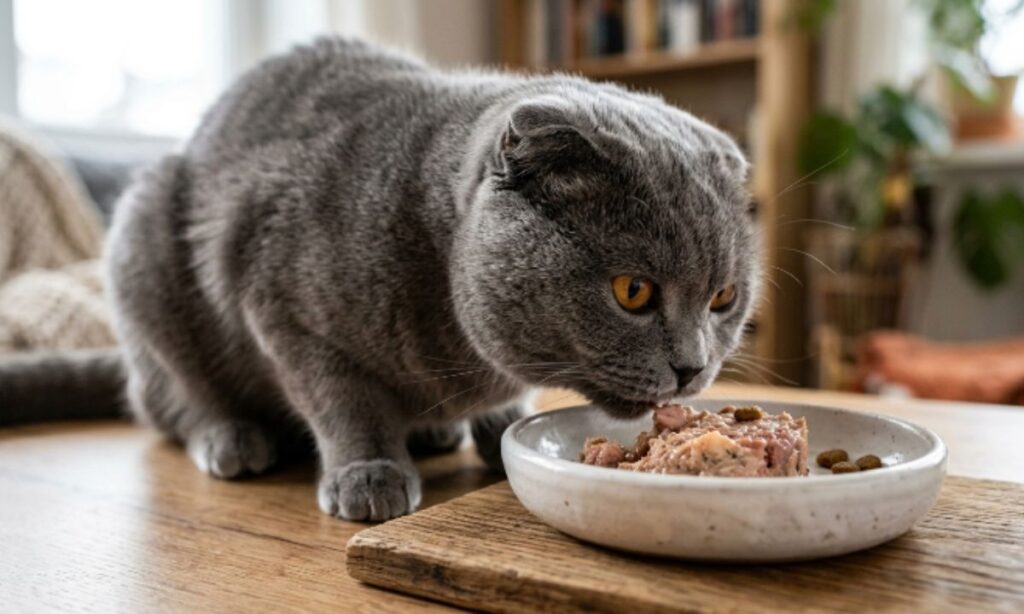
Wet Food vs Dry Food
Both options offer benefits, and many owners combine the two.
Dry food offers convenience, longer shelf life, and some dental benefits
Combination feeding balances hydration with practicality for busy schedules
Talk to your vet if you’re unsure which mix suits your cat’s age and activity level.
Avoid Overfeeding
Scottish Folds have a compact, rounded body shape that hides extra weight easily. A few extra pounds may not look obvious, but it places real strain on joints already prone to stiffness.
Measure every meal instead of free-feeding. Limit treats to occasional rewards rather than daily habits. Weigh your cat monthly, so you catch gradual weight gain before it becomes a problem.
Litter Box Setup for a Scottish Fold
Litter box habits reveal a lot about a cat’s comfort. Scottish Folds are particularly sensitive to box design because of their joint structure.
Pick the Right Box
Choose a low-entry, uncovered litter box. High sides or covered tops force extra bending and stepping, which can strain a Fold’s joints over time.
Follow the One-Plus-One Rule
Keep one litter box per cat, plus one extra. Homes with multiple floors should have a box on each level.
Scoop waste daily
Deep-clean weekly with mild soap
Use unscented, clumping litter
Keep the box in a quiet, low-traffic spot
If your cat suddenly avoids the box, check the litter type or location before assuming behavioral issues.
Reading Behavioral Signals
Litter box avoidance rarely means a cat is “misbehaving.” More often, it signals discomfort with the box itself.
Common causes include strong-smelling litter, a box that’s too small, or high sides that are hard to step over. Scottish Folds tend to stay quiet about discomfort rather than protest loudly, so subtle avoidance deserves quick attention.
Grooming a Scottish Fold: Coat, Ears, and Nails
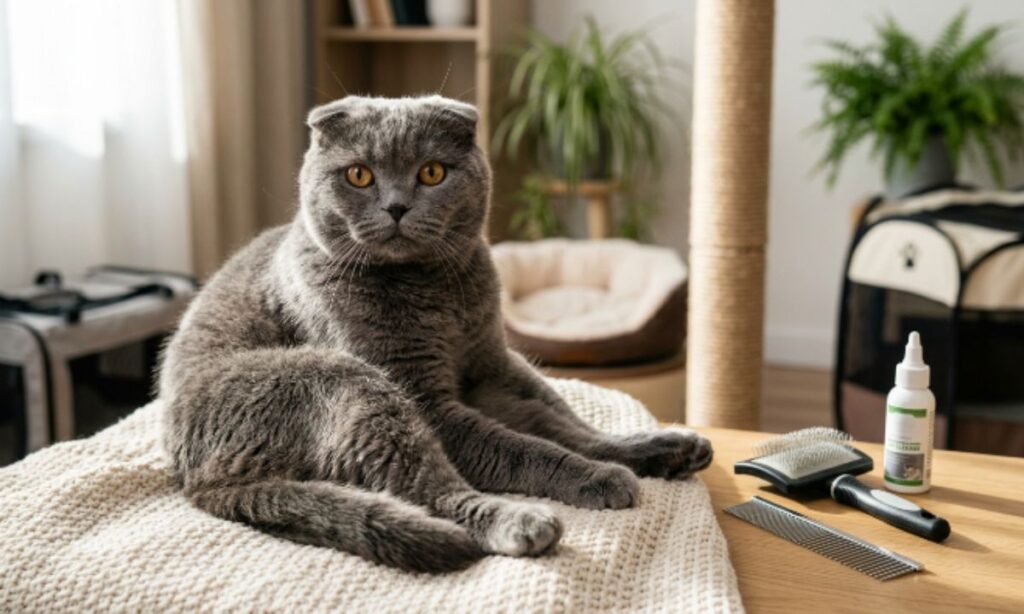
Grooming isn’t just about appearance. It prevents mats, catches health issues early, and builds trust between you and your cat.
Coat Brushing Frequency
Coat length determines how often you brush.
Coat Type
Brushing Frequency
Tool
Shorthaired
2–3 times weekly
Soft bristle brush
Longhaired
3–4 times weekly
Wide-tooth metal comb
Shedding season
Daily
Same tools, more often
Focus on areas prone to matting, especially behind the ears and near the tail base.
Ear Care Deserves Extra Attention
Folded ears trap moisture and wax more than straight ears do. Reduced airflow raises infection risk if ears go unchecked.
Check ears weekly for dark wax, redness, or odor. Clean gently with a vet-approved solution and a cotton pad. Never insert anything deep into the ear canal.
Catching infections early keeps treatment simple. Ignoring symptoms often turns a minor issue into a painful, expensive one.
Nail Trimming and Dental Care
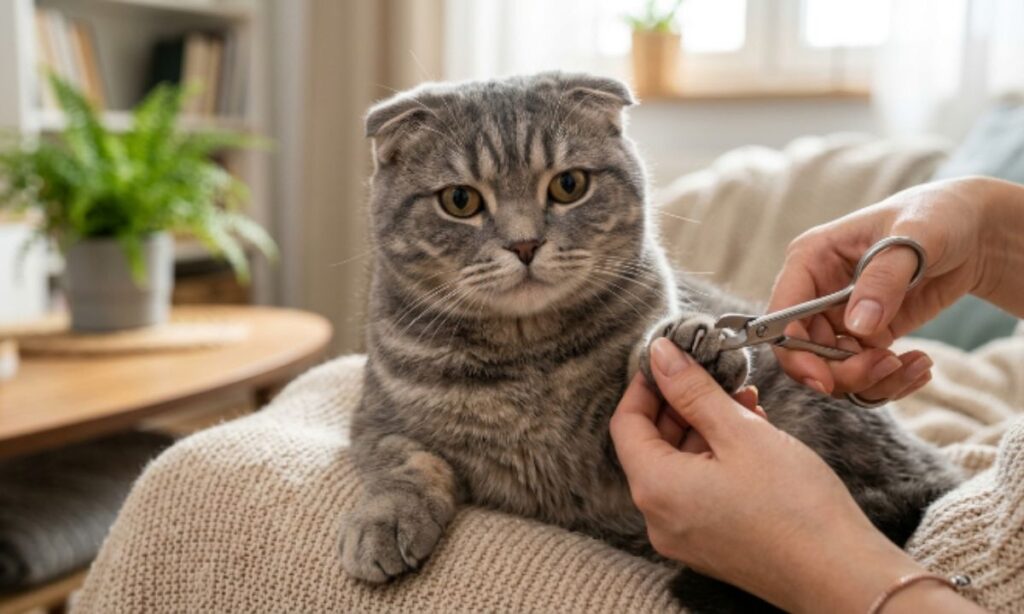
Trim nails every two to three weeks. Start handling paws early so your cat tolerates trimming without stress.
Brush teeth several times a week using cat-specific toothpaste. Human toothpaste contains ingredients unsafe for cats.
Bathing Guidelines
Scottish Folds rarely need frequent baths. Their natural oils keep skin and coat healthy, and over-bathing strips those oils away.
Bathe only when visibly dirty or as advised by your vet, roughly once every few months for most indoor cats. Introduce bathing gradually from kitten age using warm water and a calm, quiet space. This early exposure makes future baths far less stressful for both of you.
Building a Grooming Bond
Regular, gentle handling turns grooming into a bonding ritual rather than a chore. Cats who experience calm grooming from a young age tolerate vet visits and nail trims with far less stress as adults.
Keep sessions short at first. Reward calm behavior with a treat or praise, and stop before your cat becomes restless.
Exercise and Mental Enrichment
Scottish Folds are calm by nature, but calm doesn’t mean inactive. Regular movement protects their joints and their mood.
Daily Play Sessions
Aim for two play sessions of 10 to 15 minutes each day. Wand toys, feather teasers, and laser pointers mimic natural hunting behavior.
This routine prevents boredom, supports healthy weight, and reduces stress-related habits.
Choose Joint-Friendly Toys
Skip tall cat trees that require big jumps. Instead, offer:
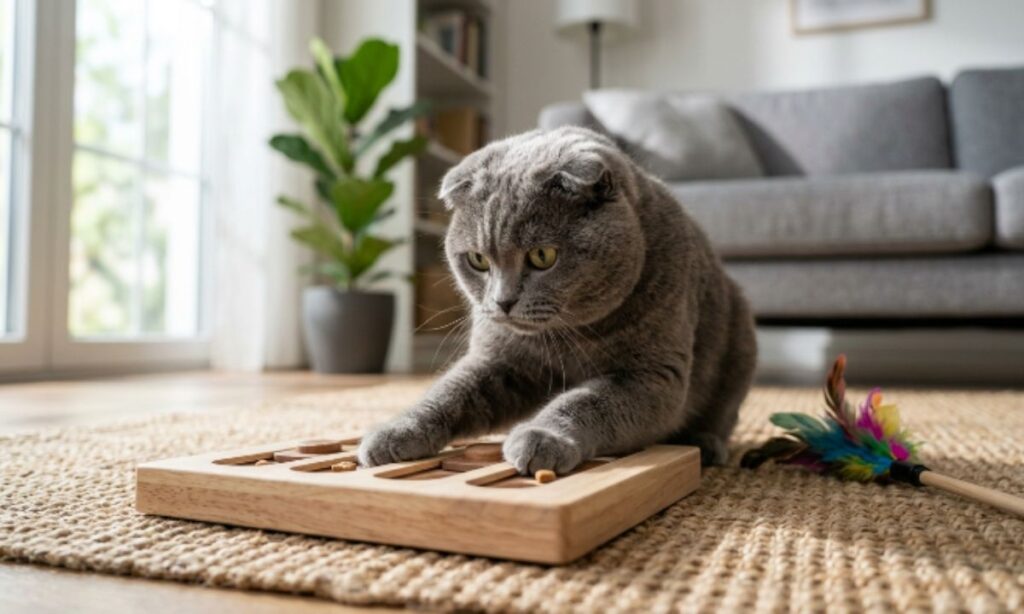
Puzzle feeders for mental stimulation
Low, stable scratching posts
Gentle climbing structures with wide steps
Scottish Folds are intelligent and curious, so puzzle feeders work especially well for this breed.
Signs of Boredom to Watch For
An under-stimulated cat often shows it through behavior rather than words. Watch for:
Excessive sleeping beyond normal patterns
Overeating or begging for food constantly
Scratching furniture instead of designated posts
Increased vocalization or restlessness
Adding one new toy rotation each week keeps play sessions interesting without requiring constant purchases.
Companionship Needs
Scottish Folds bond closely with their families and generally dislike long stretches of isolation. If your household is empty most of the day, consider a second cat for companionship, or set up interactive feeders and window perches to keep your cat engaged while you’re away.
Common Health Issues in Scottish Fold Cats
Understanding breed-specific risks helps you catch problems before they worsen. This is one of the most searched topics among new Scottish Fold owners.
Joint and Cartilage Concerns
The same gene responsible for folded ears also affects cartilage throughout the body. This can lead to a condition called osteochondrodysplasia, particularly in cats bred from two folded parents.
Watch for these warning signs:
Stiffness after resting
Reluctance to jump
Changes in walking gait
Sensitivity when touched near joints
Other Breed-Related Conditions
Scottish Folds also show a higher likelihood of hypertrophic cardiomyopathy and polycystic kidney disease. Neither condition is guaranteed, but awareness helps with early detection.
Annual vet visits should include screening conversations about these specific risks.
Weekly At-Home Health Checks
Between vet visits, a short weekly check helps you catch changes early.
Look at the eyes for clarity and brightness
Feel gently along the spine and legs for flinching
Watch how your cat jumps and walks
Check the coat for bald spots or texture changes
None of these checks take more than a few minutes, but they build a habit of noticing small changes before they become bigger problems.
Veterinary Care and Checkup Schedule
Cats naturally hide illness, which makes routine vet visits essential rather than optional.
What Annual Exams Cover
A standard wellness visit typically includes:
Full physical exam
Weight tracking
Dental assessment
Vaccination updates
Parasite prevention discussion
Vaccination and Prevention Basics
Core vaccines generally protect against feline herpesvirus, calicivirus, and panleukopenia. Your vet will tailor the exact schedule to your cat’s age and lifestyle.
Flea, tick, and worm prevention should continue year-round, with product choice based on weight and health status.
When to Call the Vet Immediately
Contact your vet the same day if your cat:
Refuses food for more than 24 hours
Shows sudden lethargy
Has persistent vomiting or diarrhea
Struggles to urinate
Early action often prevents small issues from becoming emergencies.
Spaying and Neutering
Most vets recommend spaying or neutering between four and six months of age, unless you plan to breed responsibly. This procedure reduces roaming behavior, lowers certain cancer risks, and can ease hormone-related stress in both male and female cats.
Ask your vet about the ideal timing based on your cat’s growth and overall health.
Indoor Living and Lifestyle Considerations
Most veterinarians recommend keeping Scottish Folds strictly indoors. Outdoor environments expose them to traffic, predators, parasites, and infectious disease, none of which pair well with a breed already prone to joint sensitivity.
An indoor lifestyle doesn’t mean a boring one. Window perches, cat trees with gentle steps, and rotating toys give indoor cats plenty of mental stimulation without outdoor risks.
Choosing a Healthy Kitten
If you’re still selecting a Scottish Fold, ask breeders about health testing for both parents. Kittens from two folded parents carry a higher risk of severe joint problems, so reputable breeders typically pair a folded cat with a straight-eared cat instead.
Request to see health records, meet the kitten’s parents when possible, and ask direct questions about known joint or heart issues in the lineage.
Budgeting for Long-Term Care
New owners often focus on adoption costs and overlook ongoing expenses. Food, litter, grooming tools, and annual vet visits form the baseline. Set aside an additional reserve for joint supplements or specialist visits as your cat ages, since breed-specific conditions require ongoing monitoring.
Pet insurance is worth researching early, ideally before any joint symptoms appear, since pre-existing conditions are typically excluded from coverage.
Daily, Weekly, and Monthly Care Checklist
A simple routine keeps care consistent without becoming overwhelming.
Daily
Feed at consistent times
Refresh water
Scoop the litter box
Play for 10–15 minutes, twice
Quick visual health check
Weekly
Brush the coat
Check and clean ears
Assess nails for trimming
Monthly
Weigh your cat to track changes
Deep-clean the litter box area
Annually
Full wellness exam
Vaccinations and parasite prevention
Joint and cardiac health discussion
Frequently Asked Questions
Are Scottish Fold cats easy to take care of for beginners?
Yes, their calm temperament suits beginners well, though their joint sensitivity requires extra attention.
How often should you groom a Scottish Fold cat?
Brush shorthaired cats two to three times weekly and longhaired cats three to four times weekly.
Do Scottish Fold cats need special ear care?
Yes, their folded ears trap moisture, so weekly ear checks and gentle cleaning are essential.
What is the best diet for a Scottish Fold cat?
A protein-rich diet with omega-3 fatty acids supports both muscle health and joint cartilage.
Can Scottish Fold cats live in small apartments?
Yes, their low-energy nature makes them well-suited to apartment living with daily play sessions.
Conclusion
Scottish Fold cats reward attentive owners with calm companionship and genuine affection, but their unique cartilage mutation means beginners can’t rely on generic cat-care advice alone.
Prioritizing joint-friendly routines, consistent grooming, proper nutrition, and regular vet checkups sets the foundation for a long, comfortable life. Start with small, consistent habits, and your Scottish Fold will settle into a happy, healthy routine at home.
I’m a passionate pet writer who loves sharing practical tips, trusted advice, and heartwarming stories about cats, dogs, and other beloved companions. Through PetCaffine.com, I help pet lovers better understand their furry friends with easy-to-read articles on pet care, nutrition, behavior, health, and everyday life.









1 thought on “Scottish Fold Cat Care: Tips for Beginners at Home”