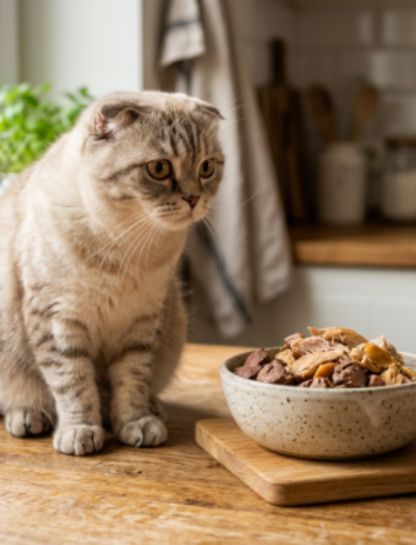
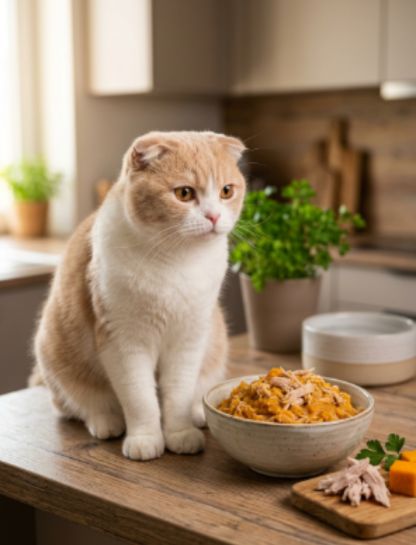
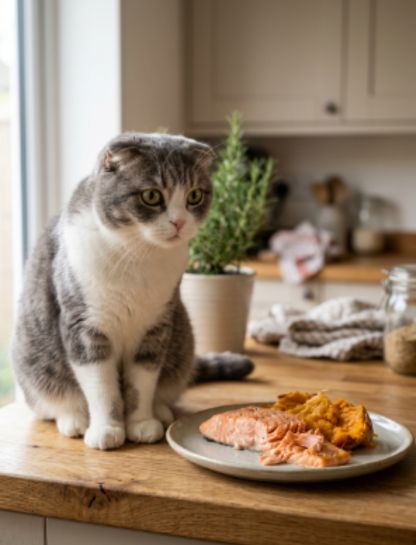
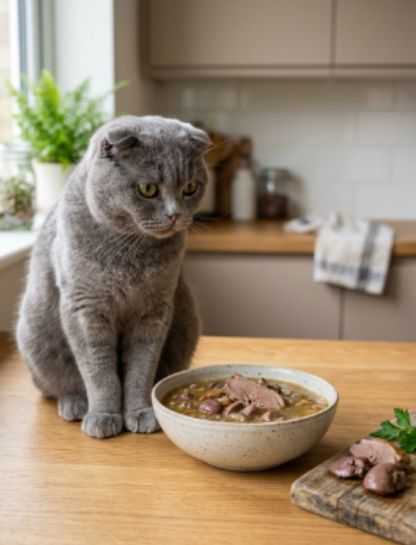
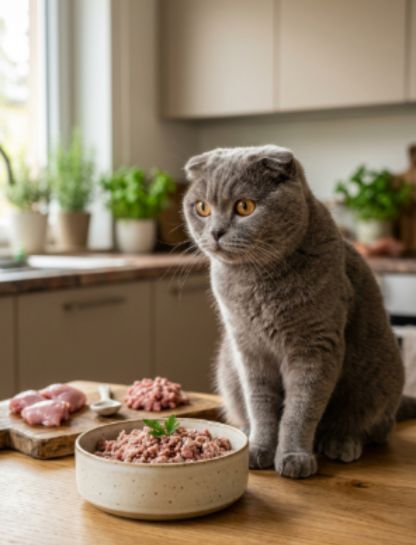
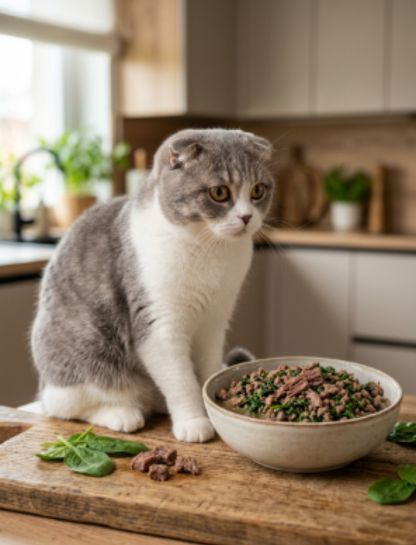
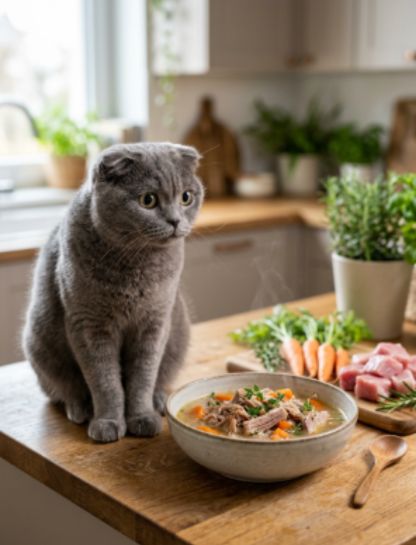
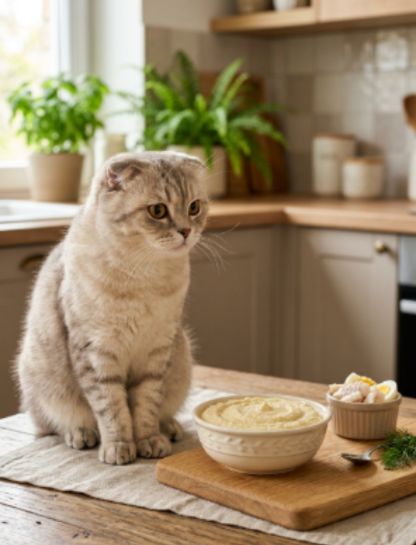
Store-bought kibble is easy, but it doesn’t always fit a Scottish Fold’s needs. Their joints, kidneys, and calm build ask for something closer to real food. These ten recipes give you a starting point, built around protein, moisture, and the supplements that keep a homemade bowl balanced. Read the notes before you cook, because a few extra ingredients matter more than they look.
Scottish Folds carry a genetic trait tied to joint stiffness, so weight control and inflammation-fighting nutrients matter more for them than for many breeds. Homemade food gives you direct control over that.
You choose the protein source and skip fillers, artificial preservatives, and excess carbohydrates.
You control moisture levels, which helps a breed that doesn’t drink much water on its own
You can rotate proteins and organs for variety instead of relying on one commercial formula
You can adjust recipes as your cat ages, especially around kidney and joint support
Homemade food isn’t automatically better, though. Without the right supplements, it can fall short on calcium, taurine, and trace minerals. That’s why every recipe below leans on a premix or targeted supplement rather than meat alone.
Vet-approved homemade cat food recipes share one trait: they treat supplements as non-negotiable, not optional extras. A bowl of plain chicken looks healthy, but on its own it won’t meet a cat’s long-term nutrient needs. Balance comes from what you add around the meat, not just the meat itself.
Nutritional Needs of Scottish Fold Cats
Cats are obligate carnivores, and Scottish Folds are no exception. Their diet should center on animal protein, not grains or fillers.
Nutrient
Why It Matters
Animal protein
Builds and maintains muscle, supports energy
Taurine
Essential amino acid for heart and eye health
Omega-3 fatty acids
Reduces joint inflammation, supports coat and skin
Calcium and phosphorus
Bone strength and a balanced ratio protects kidneys
Moisture
Supports hydration and kidney function
A Scottish Fold prone to joint stiffness benefits from consistent omega-3 intake and a lean body weight more than any single “miracle” ingredient.
Essential Supplements and Premixes
Meat alone won’t cover every nutrient a cat needs. A premix, sometimes called a meal completer, fills the gaps that muscle meat leaves behind.
Calcium source (ground eggshell or a calcium supplement) to balance phosphorus from meat
Taurine powder, since cooking destroys some natural taurine in meat
Fish oil or algae oil for omega-3s
A vitamin and mineral premix formulated for feline diets
Iodine and zinc, often missing from muscle-only recipes
Always follow the premix manufacturer’s dosing instructions, and check in with your vet before feeding any homemade diet long-term.
How Much Premix to Use
Dosing varies by brand, but most premixes are designed around a fixed amount of meat, commonly one to two pounds. Check the label for the exact ratio, since under-dosing leaves gaps and over-dosing can push certain minerals too high. If you’re unsure, a board-certified veterinary nutritionist can review your recipe and adjust quantities for your specific cat.
10 Scottish Fold Cat Homemade Food Recipes
Each recipe below serves as a base you can scale. Nutrient figures are estimates and will shift slightly depending on your exact ingredients and brand of premix.
1. Chicken and Liver Bowl
Ingredients:
200g chicken thigh, boneless
30g chicken liver
1 tsp fish oil
1/4 tsp calcium supplement
1/8 tsp taurine powder
50ml water or unsalted broth
Instructions:
Cook chicken thigh and liver thoroughly, then cool
Some human foods are fine in small amounts. Others are dangerous even in tiny doses.
Safe in Moderation
Always Avoid
Pumpkin, sweet potato, carrot
Onions, garlic, chives
Cooked eggs
Chocolate, caffeine
Fish oil, sardines
Grapes and raisins
Plain cooked rice water
Raw dough, alcohol
Small amounts of liver
Excess salt, processed meats
Dairy is worth a special mention. Many adult cats lose the enzyme needed to digest lactose, so milk and cheese often cause stomach upset rather than doing any good.
Feeding Tips and Transitioning to Homemade Food
Switcstrength and at’s diet works best when it happens slowly, over one to two weeks.
Mix a small portion of homemade food into the current diet for the first few days
Increase the homemade portion gradually while watching stool quality and appetite
Feed two to three small meals a day rather than one large one
Weigh your cat monthly, since extra weight adds pressure to already vulnerable joints
Keep fresh water available at all times, even with moisture-rich meals
Schedule a vet check within the first few months to confirm the diet is working
Storage and Meal Prep
Homemade cat food doesn’t keep as long as commercial food, so prep in small batches. Refrigerate portions for up to three days, or freeze in single-meal containers for up to two months. Thaw frozen portions in the fridge overnight rather than at room temperature, and always warm food slightly before serving, since cold food straight from the fridge is less appealing to most cats.
Frequently Asked Questions
Is homemade food safe for Scottish Fold cats?
Yes, as long as it’s nutritionally balanced with the right supplements and reviewed by a vet.
Do Scottish Folds need special joint supplements in their food?
Omega-3 fatty acids help manage inflammation, which benefits a breed prone to joint stiffness.
How much homemade food should I feed daily?
Most adult cats need around 200 calories a day, adjusted for weight, age, and activity level.
Can I feed raw meat to a Scottish Fold?
Raw diets can work if handled hygienically, but cooked recipes lower the risk of foodborne illness.
What supplement is most important in homemade cat food?
Taurine and calcium are the two most commonly missing nutrients in meat-only homemade meals.
Conclusion
Homemade food can genuinely support a Scottish Fold’s joints, kidneys, and overall health, but only when it’s built the right way, with balanced protein, the correct supplements, and a slow transition from whatever your cat eats now.
Use these ten recipes as a rotating base, keep portions in line with your cat’s weight, and loop your vet in before making homemade food a long-term habit. Done consistently, it becomes less of a chore and more of a simple daily routine that pays off in your cat’s energy and comfort.
I’m a passionate pet writer who loves sharing practical tips, trusted advice, and heartwarming stories about cats, dogs, and other beloved companions. Through PetCaffine.com, I help pet lovers better understand their furry friends with easy-to-read articles on pet care, nutrition, behavior, health, and everyday life.