Are Carnations Safe for Cats? What Every Owner Should Know
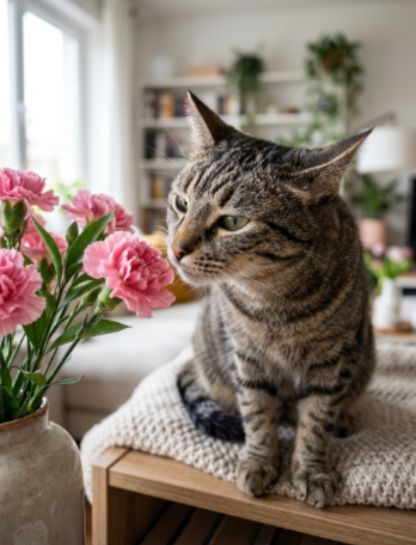
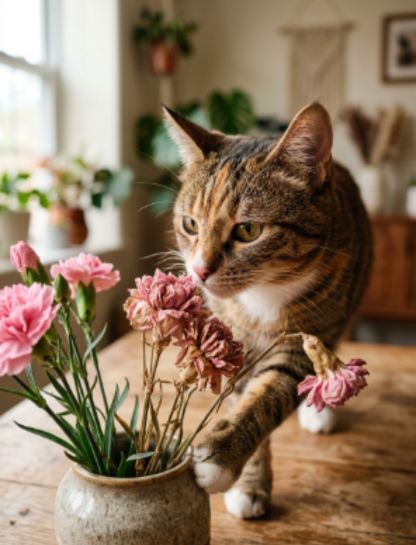
Your cat just took a bite out of the carnation in your kitchen vase. Now what? Before you panic or brush it off, it helps to know exactly what these popular flowers can do to a cat’s stomach. The short answer isn’t as simple as yes or no, and the details matter more than you’d think.
Yes, carnations are toxic to cats, but the good news is that the toxicity is generally mild. Vets don’t put carnations in the same danger category as lilies, which can cause fatal kidney failure in cats. Carnations are more of an irritant than a poison in the strict sense.
That said, “mild” doesn’t mean “safe.” A cat that eats carnation petals or leaves can still end up with an upset stomach, drooling, or a sore mouth. If your cat has a habit of chewing on houseplants or floral arrangements, it’s worth treating carnations as something to keep out of reach rather than a harmless addition to your home.
Carnations belong to the speciesDianthus caryophyllus, part of the Caryophyllaceae plant family. You might also see them sold under the names sweet William, pinks, or gillyflower. Whatever the name on the tag, the risk to cats stays the same across border carnations, dwarf carnations, and perpetual-flowering types.
Why Carnations Bother Cats
The culprit behind carnation toxicity is a group of natural compounds called saponins, specifically triterpenoid saponins. Plants produce saponins partly as a defense mechanism against being eaten, and cats are sensitive to them.
Saponins are found throughout the plant, including the following:
Petals
Stems
Leaves
Some experts also point to trace amounts of essential oils in the plant as a secondary source of irritation. When a cat chews or swallows plant material containing saponins, the compounds irritate the lining of the mouth, throat, and digestive tract. That irritation is what triggers most of the symptoms you’ll see.
Interestingly, carnations have a bitter taste. Many cats take one bite, decide they don’t like it, and walk away. That natural aversion is one reason most cases of carnation exposure in cats turn out to be mild.
Symptoms of Carnation Poisoning in Cats
Not every cat reacts the same way, and the severity usually comes down to how much plant material was eaten.
Mild, more common symptoms
These tend to show up within minutes to a few hours after a cat nibbles on a carnation:
Lip licking
Drooling
Pawing at the mouth
Gagging
Vomiting
Increased thirst
Less common, more serious symptoms
If a cat eats a larger amount, you may see:
Persistent vomiting
Diarrhea
Abdominal discomfort or cramping
Loss of appetite
Lethargy
Skin redness or irritation where the plant touched the cat
Gastrointestinal symptoms can sometimes take longer to appear, developing over the six to twelve hours following ingestion rather than right away. That delay is exactly why it pays to keep an eye on your cat even if they seem fine at first.
What to Do If Your Cat Eats a Carnation
Try not to panic. Most cats recover from carnation exposure without any lasting harm. Here’s a practical sequence to follow.
Remove the plant: Get any remaining carnation material away from your cat immediately, including fallen petals on the floor.
Rinse if needed: If there’s visible plant matter around your cat’s mouth, gently wipe it away with a damp cloth or cotton wool.
Offer water: Fresh water helps flush the mouth and supports digestion.
Skip the milk: It’s a common instinct to offer milk to a sick cat, but most adult cats are lactose intolerant, and milk can make stomach upset worse.
Offer a bland meal: Plain cooked chicken and rice, or your cat’s regular food in a small amount, is easier on an irritated stomach than anything rich or fatty.
Watch closely for about six hours: Mild symptoms often settle on their own within this window.
If your cat seems otherwise bright, alert, and willing to eat, home monitoring is usually enough for a small nibble.
When to Call the Vet
Some situations call for professional advice rather than a wait-and-see approach. Contact your vet if:
Your cat ate a large amount of the plant
Vomiting or diarrhea doesn’t stop
Your cat becomes weak or unusually lethargic
Your cat is a kitten, elderly, or already dealing with a health condition
You’re simply not sure and want peace of mind
If your cat collapses, has trouble breathing, or seems to be getting worse quickly, treat it as an emergency and get to an emergency vet clinic right away.
When you call, it helps to tell the vet exactly what happened: that the plant was a carnation, roughly how much was eaten, and when you noticed it.
How Vets Diagnose Plant Poisoning
There’s no single blood test that confirms “carnation poisoning” specifically. Instead, vets rely on a combination of your report and a physical exam.
A typical visit might include:
A full physical examination
Checking hydration levels
Listening to the heart and lungs
Gently feeling the abdomen for pain or swelling
Checking for fever
If you have the plant, or even just a photo of it, bring that along. It helps the vet rule out other, more dangerous plants and confirm what your cat actually got into. If symptoms don’t match typical mild carnation exposure, the vet may run blood or urine tests to check for other causes of the stomach upset.
Mini, Dried, and Wilted Carnations: Still a Risk?
It’s tempting to assume a smaller flower or a dried-out one is less of a concern. That’s not really the case.
Mini carnations contain the same toxic compounds as full-size blooms. A smaller flower simply means less plant material overall, but a determined cat can still eat enough to feel unwell.
Dried and wilted carnations aren’t automatically safe either. The saponins don’t disappear just because the flower has lost its color or firmness. If you’re clearing out an old bouquet, dispose of the flowers somewhere your cat can’t dig them out of the trash.
Are Carnations Toxic to Dogs Too?
Yes. Dogs can also react to carnations, though most sources describe dogs as somewhat less sensitive than cats. Typical symptoms in dogs include vomiting and drooling, usually appearing after eating a larger quantity than it would take to affect a cat. The same basic advice applies: remove the plant, watch your dog, and call your vet if symptoms persist or worsen.
Preventing Accidental Poisoning
The easiest way to deal with carnation toxicity is to never let it become a problem in the first place.
Choose a cat-free room for bouquets. A table or countertop isn’t enough on its own, since cats climb.
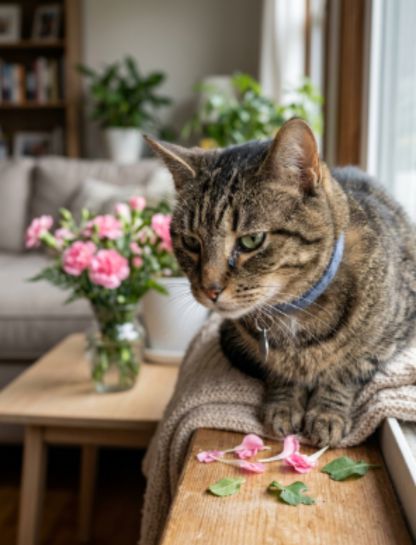
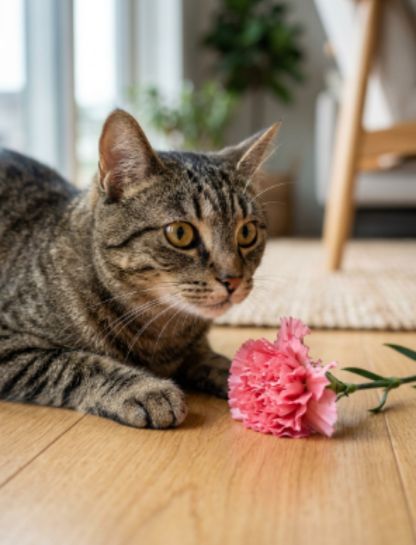
Watch for fallen petals. Cats often go after what’s dropped on the floor, not just the arrangement itself.
Check gift bouquets before bringing them home. Florist arrangements sometimes mix in carnations without you realizing it.
Ask before you buy. If you’re picking up flowers for a household with pets, ask the florist for a pet-safe arrangement.
Label mixed bouquets at home. A quick note on which stems are carnations makes it easier to remove just those, rather than tossing the whole arrangement.
Cat-Safe Flower Alternatives
If you love having fresh flowers around but want to skip the risk, these options are generally considered safer choices for households with cats:
Flower
Why it works
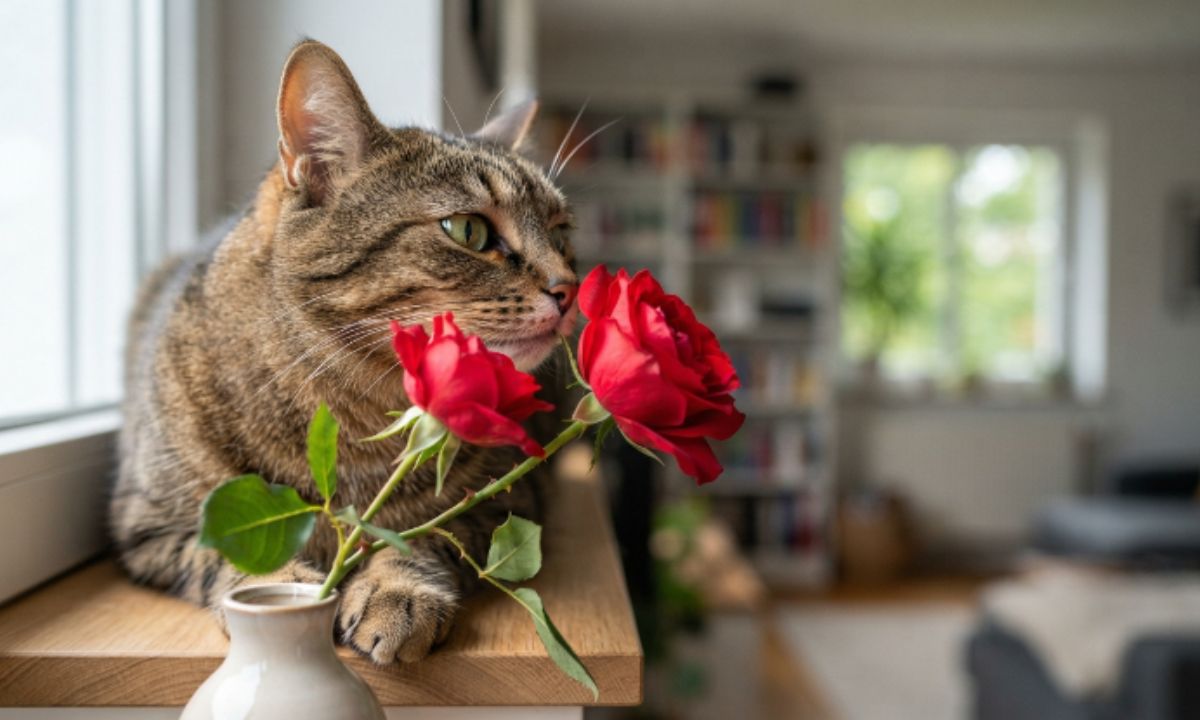
Roses (thorns removed)
Non-toxic to cats, classic choice
Sunflowers
Low toxicity, bright and cat-friendly
Orchids
Generally safe, long-lasting
Gerbera daisies
Non-toxic, colorful option
Marigolds
Pet-friendly and easy to grow
Even with safer flowers, it’s smart to keep any plant out of constant paw’s reach. Curious cats sometimes chew on things simply because of texture, not because a particular flower is more appealing.
Frequently Asked Questions
Can a small nibble of carnation harm my cat?
Usually not seriously. A small bite tends to cause mild symptoms like drooling or an upset stomach at most.
What should I do if my cat chews on carnation leaves?
Remove the plant, offer fresh water and a light meal, and monitor your cat for the next several hours.
Are all types of carnations toxic to cats?
Yes, border, dwarf, mini, and perpetual-flowering carnations all contain the same toxic saponins.
How fast do symptoms show up after a cat eats a carnation?
Drooling and mouth pawing can start within minutes, while stomach symptoms may take six to twelve hours to appear.
Are carnations more dangerous than lilies for cats?
No, lilies are far more dangerous and can cause kidney failure, while carnations typically cause only mild irritation.
Conclusion
Carnations aren’t harmless, but they’re also not the kind of emergency-room threat that lilies or sago palms represent. If your cat eats one, the most likely outcome is a bit of drooling, a queasy stomach, or mild discomfort that clears up within a day. Still, mild doesn’t mean ignorable. Keep bouquets out of reach, watch your cat closely after any exposure, and call your vet whenever symptoms feel like more than a passing upset. A little prevention goes a long way toward keeping both your flowers and your cat safe.
I’m a passionate pet writer who loves sharing practical tips, trusted advice, and heartwarming stories about cats, dogs, and other beloved companions. Through PetCaffine.com, I help pet lovers better understand their furry friends with easy-to-read articles on pet care, nutrition, behavior, health, and everyday life.






2 thoughts on “Are Carnations Safe for Cats? What Every Owner Should Know”