Is Castile Soap Safe for Cats? A Complete Owner’s Guide
Your cat somehow managed to get dirty, and now you’re standing in the bathroom wondering if that bottle of castile soap will do the job. It feels like a harmless choice because it’s made from plant oils and is often marketed as a natural product. Still, when it comes to cats, “natural” doesn’t always mean “safe.”
Whether castile soap is a good option depends on the ingredients inside the bottle. One quick look at the label can tell you whether you’re dealing with a temporary solution or something that should stay far away from your cat.
Castile soap is a vegetable-based soap traditionally made from oils such as olive, coconut, hemp, or similar plant sources. Unlike many regular soaps, it doesn’t rely on synthetic detergents to create a rich lather.
That’s one reason it’s become popular among people looking for simple, environmentally friendly cleaning products. One of the best-known names in this category is Dr. Bronner’s.
Because the ingredient list is often shorter than standard soaps, many pet owners assume it’s automatically gentle enough for animals. That’s understandable, but the soap itself is only part of the picture. The added ingredients matter much more than the base formula.
Is Castile Soap Safe for Cats?
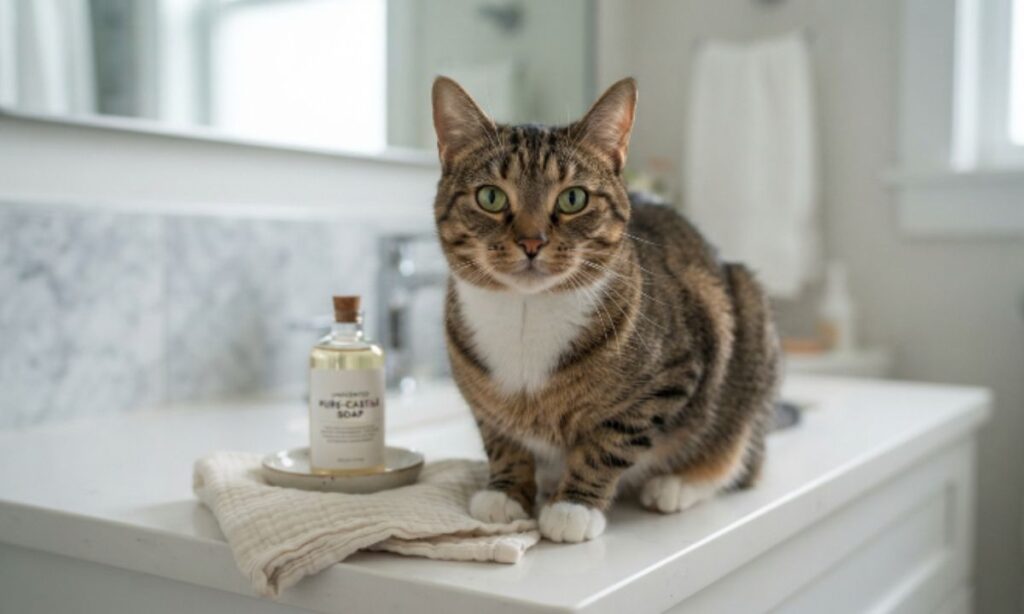
The simple answer is yes, but only in certain situations. An unscented Castile soap may be used as a temporary backup if you have nothing else available. Even then, it should be rinsed thoroughly and used only when necessary. It isn’t designed for routine cat grooming and shouldn’t replace a shampoo made specifically for felines.
Why the Unscented Version Is the Safer Choice
Fragrance-free castile soap contains fewer ingredients that are known to irritate cats. Without added essential oils or perfumes, it acts as a mild cleanser that is generally less likely to cause problems when used carefully.
Even so, cats have delicate skin with natural oils that help protect their coat. Bathing too often with any soap, including unscented castile soap, can dry out the skin and leave the coat looking dull. That’s why it works best as an occasional emergency option rather than an everyday grooming product.
Why Scented Versions Raise Concerns
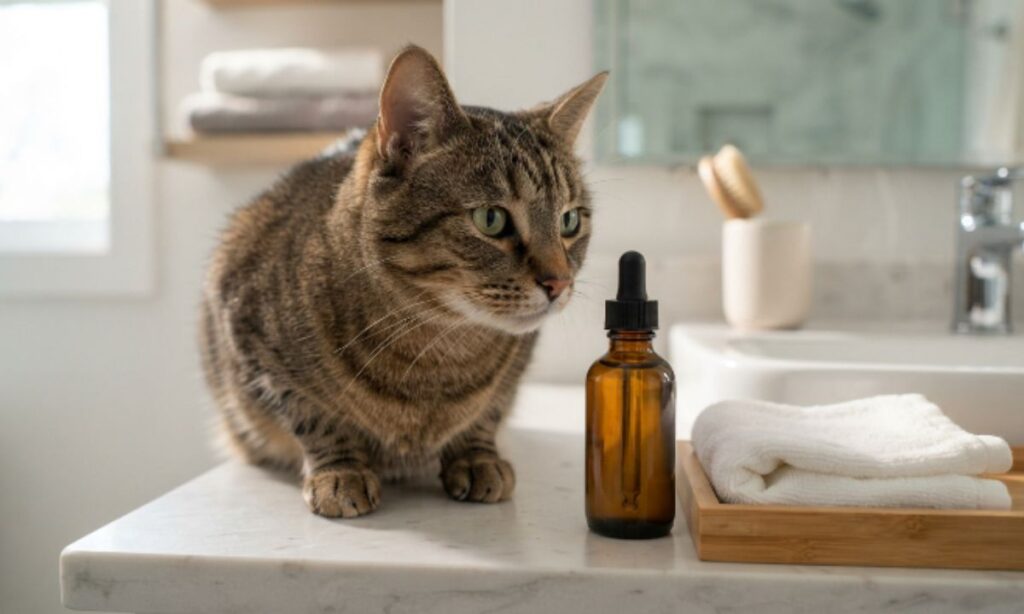
Scented castile soaps are a completely different story. Their pleasant smell usually comes from essential oils, and several of these oils are considered unsafe for cats. A cat’s liver cannot process many of these compounds the same way humans or dogs can, allowing them to remain in the body longer and increasing the risk of harmful effects.
Common scented castile varieties to avoid on cats:
Peppermint
Eucalyptus
Tea tree
Citrus
Lavender
If the bottle lists any fragrance or essential oil on the label, it’s safest to choose another product.
How Cats React to Essential Oils
Essential oils can affect cats in more than one way. Some cats develop skin irritation after direct contact, while others react simply from breathing in strong scents during bath time.
Ways a cat can be affected by essential oils in soap:
Skin contact – May cause redness, itching, irritation, or discomfort.
Inhalation – Strong fragrances can irritate sensitive airways and make breathing uncomfortable for some cats.
Ingestion through grooming – After a bath, cats naturally lick their fur. Any residue left behind can be swallowed, creating the greatest risk of exposure.
Grooming is what makes scented soaps especially concerning. Even if the bath goes smoothly, your cat will almost certainly clean its coat afterward. Any remaining soap or essential oil can end up being ingested, turning what seemed like a harmless bath into an avoidable health risk. For that reason, fragrance-free products are always the safer choice, while shampoos made specifically for cats remain the best option whenever possible.
When It’s Okay to Use Castile Soap on a Cat
Castile soap should never be your first choice for bathing a cat, but there are times when it can be a practical backup. If you only have the unscented version and your cat needs to be cleaned right away, it can help until you can get a shampoo made specifically for cats. Think of it as a temporary solution rather than part of your regular grooming routine.
Emergency Situations
Accidents happen. Cats can get into sticky food, grease, dirt, or even substances that need to be removed quickly before they have a chance to groom themselves. In situations like these, waiting until you can buy pet shampoo may not be the safest option.
Unscented castile soap can help wash away the mess while reducing the chance that your cat will swallow something harmful during grooming. The goal isn’t to give your cat a perfect bath. It’s simply to remove the unwanted substance as safely and quickly as possible.
Situations Where You Should Skip It
There are several cases where castile soap isn’t a good choice, even if it’s fragrance-free.
Routine or frequent bathing
Kittens that are only a few months old
Cats with sensitive skin, allergies, or existing skin conditions
Any situation where cat shampoo is already available
Cat shampoos are made with your pet’s skin and coat in mind. Whenever you have access to one, it’s the better option. Save unscented castile soap for genuine situations where you have no safer alternative.
How to Safely Wash a Cat with Castile Soap
If you decide to use castile soap, following the right steps can make the experience safer and less stressful for both you and your cat.
Steps for a Safer Wash
Choose the unscented version only. Avoid every scented variety, since essential oils can be harmful to cats.
Dilute the soap with water. Applying concentrated soap directly to your cat’s coat can dry out the skin and make rinsing more difficult.
Keep it away from the eyes, ears, nose, and mouth. Castile soap isn’t made for these sensitive areas and may irritate them if it gets into them.
Work gently and finish quickly. Most cats dislike baths, so keeping the process short helps reduce stress and makes the experience easier.
Rinse extremely well. Any soap left behind can stay on the fur, and your cat will likely swallow it during grooming.
Dry your cat completely. Use a soft towel to remove as much moisture as possible. A dry coat is more comfortable and less likely to hold leftover residue.
The biggest mistake people make is rushing through the rinse. Even a mild, unscented soap can upset a cat’s stomach if it remains on the coat and gets licked off later. Taking an extra minute to rinse thoroughly is one of the simplest ways to make the bath much safer.
Castile Soap vs. Cat Shampoo
These two products aren’t interchangeable, even though they can look similar on a shelf.
Feature
Castile Soap
Cat Shampoo
Designed for cats
No
Yes
Tear-free formula
No
Usually
Fragrance-free options
Sometimes
Commonly available
Skin pH match for cats
Not formulated for it
Formulated for it
Best use case
Emergency backup
Routine bathing
Cat shampoo is built around a cat’s skin chemistry. Castile soap wasn’t designed with that in mind, which is exactly why it stays a backup option rather than a go-to.
Signs Your Cat Had a Bad Reaction
After any bath with a non-cat product, keep an eye out for these signs over the next few hours.
Excessive scratching or licking at the skin
Redness or visible irritation
Drooling or pawing at the mouth
Vomiting or loss of appetite
Unusual lethargy or restlessness
Mild irritation from residue often clears up on its own once the coat is fully rinsed and dry. Anything beyond mild discomfort, especially vomiting or drooling, deserves a call to your vet.
What to Do If Your Cat Has a Reaction
Don’t wait to see if it passes on its own if symptoms look more than mild.
Rinse the affected area again with plain water.
Dry your cat and keep them somewhere calm and warm.
Watch closely for the next couple of hours.
Call your vet if symptoms continue or worsen, especially breathing changes or repeated vomiting.
Having the soap bottle nearby when you call helps your vet understand exactly what your cat was exposed to.
Do Cats Even Need Regular Baths?
Most cats don’t need frequent bathing at all. Their grooming habits do most of the work naturally, keeping their coat clean without any help from you.
Situations where a bath actually makes sense:
Your cat got into something sticky, oily, or toxic
A medical condition requires it, per your vet’s instructions
Your cat can’t groom effectively due to age, injury, or weight
There’s visible dirt or residue that grooming alone can’t remove
Outside of these situations, skipping the bath is usually the better call. Less bathing means less chance of any soap, castile or otherwise, causing an issue in the first place.
Frequently Asked Questions
Is castile soap safe for cats?
Unscented castile soap is generally considered safe for occasional, emergency use, but scented versions are not.
Can I wash my cat with Dr. Bronner’s soap?
Only the unscented, fragrance-free version, and only as a backup when pet shampoo isn’t available.
Can cats lick castile soap residue safely?
No, leftover residue should always be rinsed off completely before your cat has a chance to groom it.
Why are scented castile soaps risky for cats?
They contain essential oils that cats can’t process well, which raises the risk of irritation or toxicity.
What’s a better option than castile soap for bathing cats?
A shampoo made specifically for cats is always the better choice for routine bathing.
Conclusion
Castile soap is a gray area for cat owners, and the deciding element is always fragrance. Unscented versions can be used as a backup in a pinch if you dilute them and rinse well, but scented versions have the risk of the essential oils they contain.
Cat shampoo is still the better everyday choice, made exclusively for feline skin and without the guessing of human goods. If you don’t know, don’t bathe the cat at all, or ask your veterinarian, because most cats are cleaner than we think.
I’m a passionate pet writer who loves sharing practical tips, trusted advice, and heartwarming stories about cats, dogs, and other beloved companions. Through PetCaffine.com, I help pet lovers better understand their furry friends with easy-to-read articles on pet care, nutrition, behavior, health, and everyday life.