Can Cats Eat Rice? A Complete Guide to Safe Types, Benefits & Risks
A grain of rice looks harmless enough. Your cat is a strict carnivore, though, and that changes everything. One wrong serving type could trigger vomiting within hours. Here’s what actually matters before rice touches your cat’s bowl.
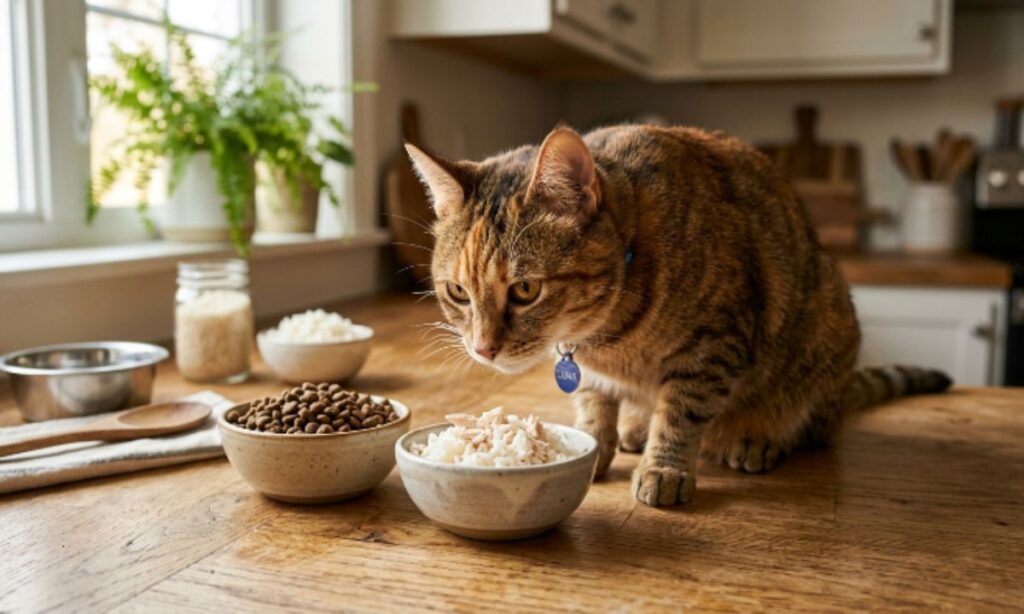
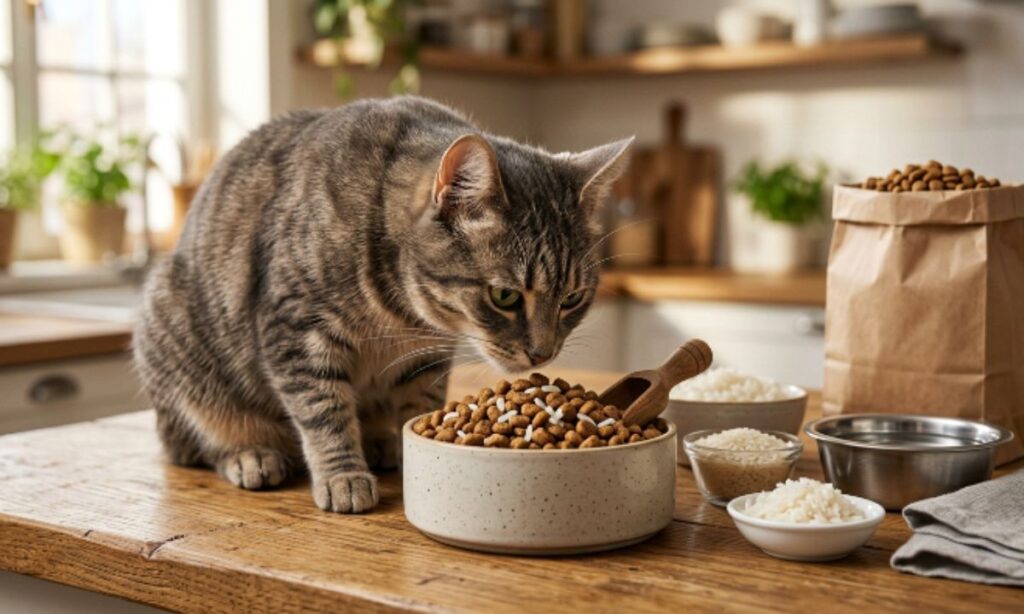
Yes, cats can eat small amounts of plain, fully cooked rice. It’s non-toxic and generally safe as an occasional addition to meals.
That said, safe doesn’t mean beneficial. Rice offers your cat almost nothing nutritionally, so it should never replace a proper meal. Think of rice as a rare topper, not a food group. Your cat’s diet still needs to come primarily from meat.
Quick Answer Summary
For anyone skimming, here’s the short version:
Toxic? No
Nutritionally necessary? No
Safe amount? A teaspoon or less, occasionally
Best type? Plain, fully cooked white rice
Kittens? Best avoided entirely
Is Rice Good for Cats?
Not really. Cats are obligate carnivores, which means their bodies are built to run on animal protein, not carbohydrates.
Why Cats Struggle With Grains
Unlike dogs, cats produce limited amounts of the enzymes needed to break down starches efficiently. Their digestive tract is shorter and built for meat, not plant matter.
This doesn’t make rice dangerous. It simply means rice sits in the “empty calorie” category rather than the “nutritious” one.
What Rice Actually Provides
Rice contributes mostly carbohydrates and a small amount of fiber. It contains almost no protein, taurine, or essential fatty acids, all of which cats need daily.
Feeding too much rice can quietly crowd out the nutrients your cat actually requires, even if the calorie count looks fine on paper.
Comparing Rice to a Cat’s Real Nutritional Needs
Cats need high levels of animal protein, taurine, arachidonic acid, and specific vitamins that only come from meat sources. Rice supplies virtually none of these.
Nutrient
Cat’s Requirement
What Rice Provides
Protein
High, from animal sources
Very low
Taurine
Essential, meat-only
None
Fat
Moderate, animal-based
Minimal
Carbohydrates
Not required
High
Fiber
Small amounts helpful
Low to moderate
This comparison makes it clear why rice belongs in the “occasional extra” category rather than anywhere near a daily meal plan.
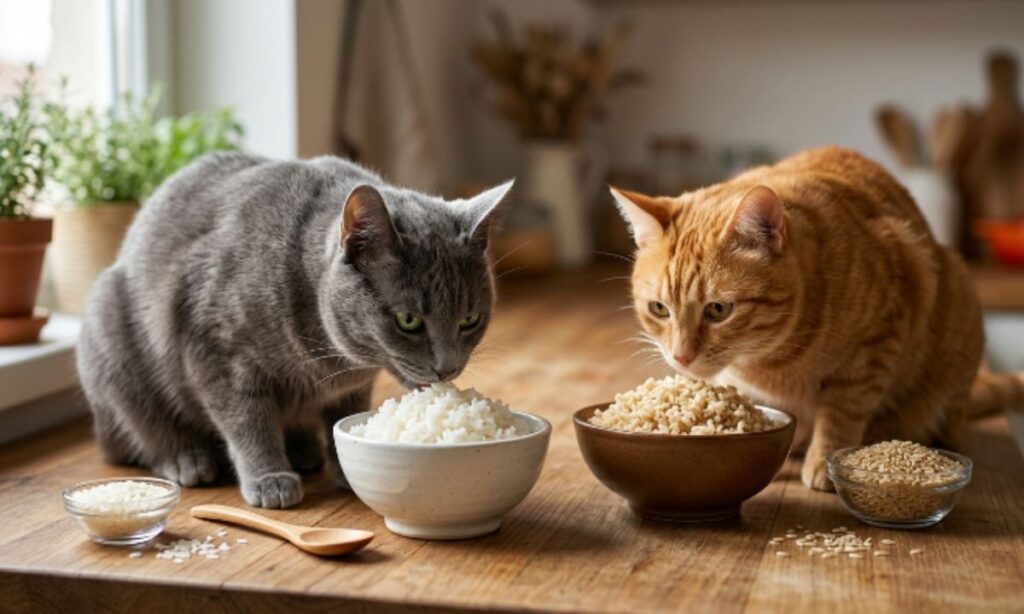
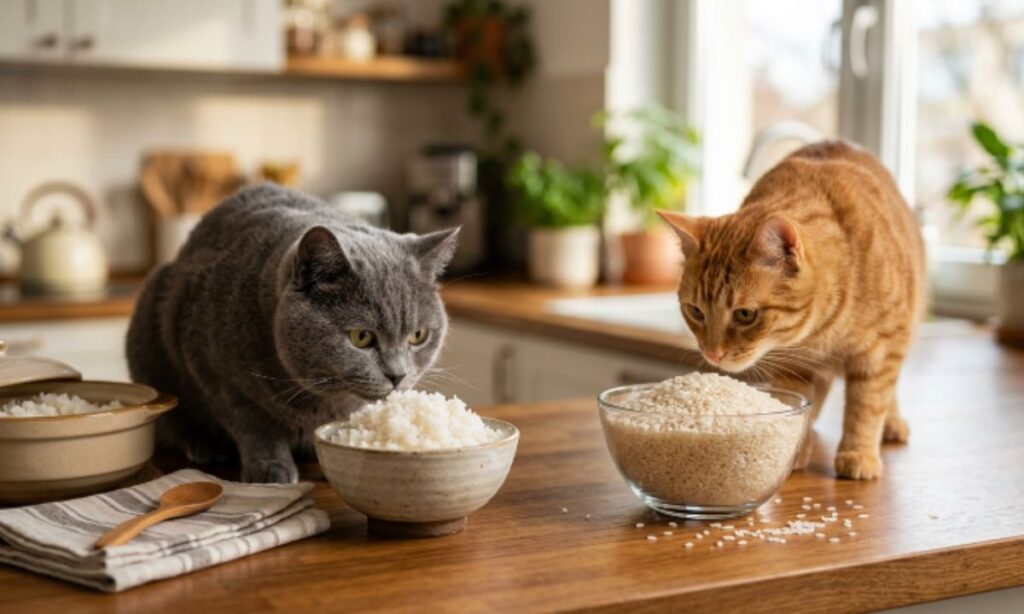
White Rice vs Brown Rice for Cats
Not all rice behaves the same way in a cat’s stomach. Type matters more than most owners expect.
Rice Type
Digestibility
Fiber Content
Best Use
White rice
Easier to digest
Lower fiber
Short-term diarrhea support
Brown rice
Harder to digest
Higher fiber
Occasional constipation relief
Instant rice
Easiest, softest texture
Very low fiber
Small amounts only
Wild rice
Tougher texture
High fiber
Not recommended
White Rice
Plain white rice is the gentler option for a sensitive stomach. Its lower fiber content makes it easier to digest, which is why vets sometimes suggest it briefly during mild digestive upset.
Brown Rice
Brown rice carries more fiber and slightly more nutrients than white rice. That extra fiber can help with occasional constipation, but it also makes brown rice harder for a cat’s short digestive tract to break down.
Specialty Rice Varieties
Jasmine, basmati, and sushi rice aren’t toxic, but they offer no advantage over plain white rice. Skip seasoned or vinegar-treated varieties like sushi rice entirely, since added ingredients can upset a cat’s stomach.
Wild rice is technically a grass seed, not true rice, and its tough texture makes it a poor choice for cats.
Fried Rice, Rice Pudding, and Other Rice Dishes
Plain cooked rice is one thing. Rice dishes are another matter entirely.
Fried rice often contains garlic, onion, soy sauce, or oil, all of which can harm a cat or cause GI upset. Rice pudding and sweetened rice cereals carry sugar and dairy that cats don’t digest well.
Keep it simple: only plain, unseasoned, home-cooked rice belongs anywhere near your cat’s bowl.
Can Kittens Eat Rice?
Kittens need concentrated nutrition to support fast growth. Every calorie should count toward muscle, bone, and organ development.
Rice fails that test. It’s calorie-dense but nutrient-light, which makes it a poor fit for a growing kitten’s limited stomach capacity.
Most vets recommend skipping rice for kittens altogether until they’re fully grown and eating a stable adult diet.
Kitten formulas are already carefully balanced for rapid development. Adding rice on top of that risks diluting the nutrient density these formulas are designed to deliver.
Cooked Rice vs Raw Rice: Why It Matters
This distinction isn’t optional. Cooking rice fundamentally changes how safe it is.
Why Raw Rice Is Risky
Raw rice is extremely hard for a cat’s digestive system to break down. It also contains natural compounds that can irritate the gut when eaten in any real quantity.
Symptoms after raw rice ingestion typically include:
Bloating
Vomiting
Diarrhea
Visible stomach discomfort
What to Do If Your Cat Eats Raw Rice
Watch closely for the first 24 hours. Mild symptoms that resolve on their own usually aren’t an emergency. Persistent vomiting, bloating, or clear pain lasting more than a day warrants a same-day vet call.
The Cooked Rice Rule
Only serve rice that’s fully cooked, soft, and completely plain. No butter, no salt, no sauce, no seasoning of any kind.
How to Prepare Rice Safely
If you decide to offer rice, follow a simple process every time:
Rinse the rice before cooking to remove excess starch
Boil in plain water until fully soft
Let it cool to room temperature
Mix a small amount into your cat’s regular food
Skip butter, oil, salt, and any seasoning blend
This keeps the serving as safe and neutral as possible.
How Much Rice Can Cats Eat?
Portion control matters just as much as rice type. Even safe rice becomes a problem in large amounts.
A simple rule works well here: rice should never exceed about ten percent of your cat’s total daily food intake. Anything more risks displacing the balanced nutrition your cat’s regular food already provides.
Can Rice Help an Upset Stomach?
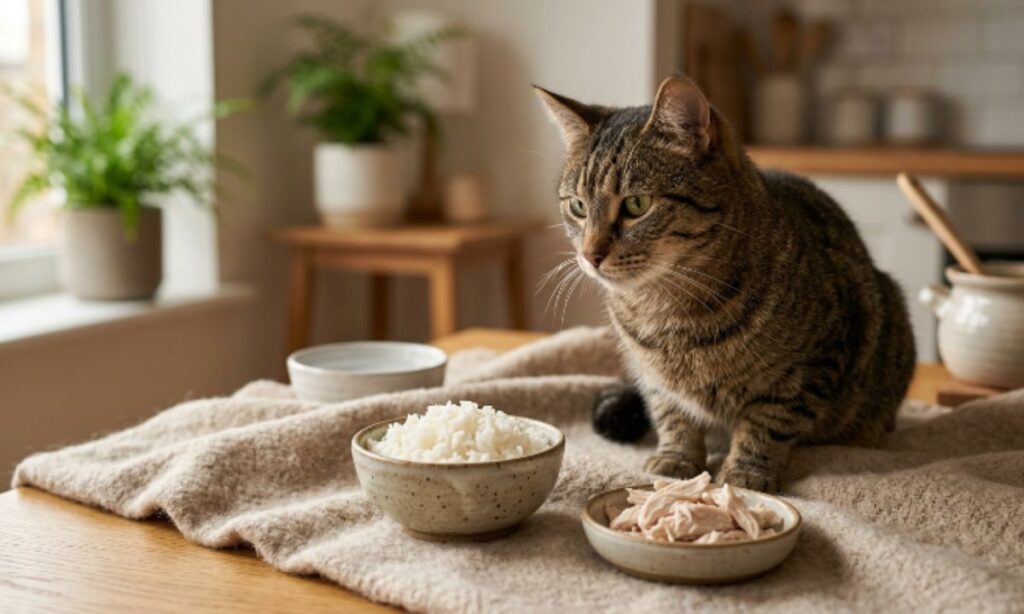
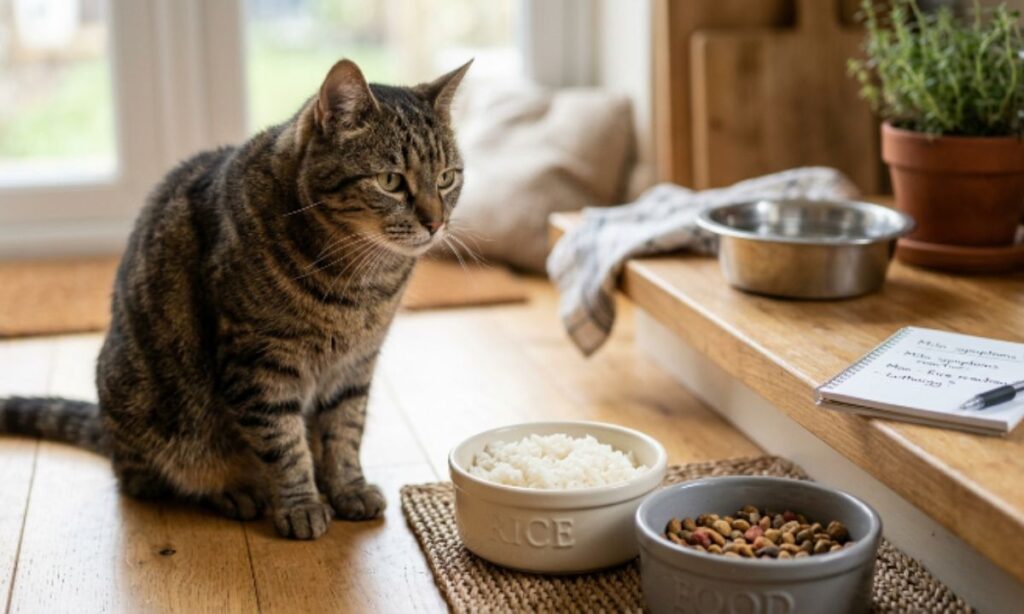
Sometimes, but only under specific conditions. Vets occasionally recommend a small amount of plain white rice mixed with a lean, cooked protein like chicken during brief digestive upset.
Why This Isn’t a DIY Fix
The classic “rice and meat” bland diet works well for dogs, but cats are different. Chronic or recurring vomiting in cats is often linked to an underlying medical issue rather than simple dietary indiscretion.
Feeding rice at home might mask a symptom without addressing the actual cause.
When to Skip Home Remedies and Call the Vet
Reach out to your vet if your cat shows:
Vomiting more than once or twice a month
Diarrhea lasting more than a day
Noticeable weight loss
Lethargy alongside GI symptoms
These signs point toward something a home rice remedy won’t fix.
Why Cats Differ From Dogs Here
The classic bland diet advice for dogs, boiled rice with plain meat, doesn’t translate directly to cats. Dogs are omnivores with digestive systems better suited to processing grains during recovery.
Cats’ stomachs and intestines are shorter and more specialized for meat digestion. A rice-heavy bland diet can leave a cat undernourished exactly when their body needs support most, which is why vets usually favor easily digestible protein over carbohydrate-heavy remedies.
Rice in Commercial Cat Food
Rice shows up in plenty of store-bought cat foods, and that’s worth understanding.
Why Manufacturers Use It
In commercial formulas, rice usually acts as a binder and bulking agent rather than a primary nutrient source. It helps hold kibble together and adds digestible carbohydrate in carefully controlled amounts.
Because it’s measured precisely alongside meat-based protein, rice in commercial food isn’t the same risk as rice added freely at home.
Grain-Inclusive vs Grain-Free Debate
Some owners avoid grain-inclusive foods entirely in favor of grain-free formulas. Current veterinary guidance doesn’t support the idea that grain-free is automatically healthier for most cats.
What matters more is the overall protein quality and nutrient balance of the formula, not whether it happens to contain a small amount of rice.
Rice in Prescription and Veterinary Diets
Some prescription diets for cats with sensitive digestion, pancreatitis, or recovery needs include small, controlled amounts of rice alongside easily digestible protein.
These formulas are developed and tested by veterinary nutritionists, which makes them very different from adding rice at home without guidance. Never substitute a homemade rice mix for a prescription diet without your vet’s direct input.
Signs Your Cat Is Reacting Poorly to Rice
Most cats tolerate small amounts of cooked rice without issue. A few show sensitivity, though, and it’s worth knowing what that looks like.
Loose stool shortly after eating rice
Excessive gas or bloating
Refusal to finish meals containing rice
Straining in the litter box
True rice allergies are rare in cats, but individual sensitivity does happen. If symptoms repeat every time rice appears in a meal, stop offering it and mention the pattern to your vet.
Allergies vs Sensitivities
An allergy involves the immune system and tends to cause skin issues, itching, or more severe reactions. A sensitivity is usually just a digestive intolerance without an immune response.
Rice rarely causes a true allergy in cats, but a mild digestive sensitivity is more common. Keeping a simple food diary helps you spot patterns quickly if you suspect either one.
Elimination Diet Basics
If you suspect rice or another ingredient is causing ongoing issues, a vet-guided elimination diet is the most reliable way to confirm it. This involves removing the suspect ingredient completely for several weeks, then reintroducing it under close observation.
Never attempt a full elimination diet without professional guidance, since cats can develop serious complications if they go without adequate nutrition for too long.
What to Feed Your Cat Instead of Rice
If you’re looking for a safe topper or treat, several options offer far more nutritional value than rice.
Small pieces of fully cooked, unseasoned chicken
Cooked turkey with bones and skin removed
Cooked salmon or tuna in moderation
Plain, cooked lean beef in small portions
Always remove bones, skip seasoning entirely, and introduce any new food gradually. Watch for a day or two to confirm your cat tolerates it well.
Building a Balanced Topper Routine
If you like adding variety to meals, rotate between a few vet-approved options instead of relying on any single food. This keeps nutrition varied without overloading your cat with one ingredient.
Monday: small piece of cooked chicken
Wednesday: flaked cooked salmon
Friday: plain cooked rice with lean protein, if desired
A rotation like this keeps meals interesting while still prioritizing protein over filler.
A Quick Note on Feeding Habits
Sharing table food, including rice, can quietly train a cat to expect it at every meal. That habit often leads to begging behavior and overeating over time.
Keep human food additions occasional and unpredictable rather than routine. This keeps your cat’s regular diet as the clear priority.
Reading Your Cat’s Response
Every cat reacts a little differently to new foods. Some show no interest in rice at all, which is completely normal and not a cause for concern.
Others may eagerly eat it every time it’s offered. Enthusiasm doesn’t mean it’s good for them in larger amounts, so stick to your portion limits regardless of how much your cat seems to want.
Frequently Asked Questions
Is cooked rice safe for cats to eat?
Yes, small amounts of plain, fully cooked rice are safe for most healthy adult cats.
Can cats eat rice every day?
No, rice should stay occasional, limited to one or two small servings per week at most.
Is brown rice healthier than white rice for cats?
Brown rice has more fiber, but white rice digests more easily and suits sensitive stomachs better.
Can rice help a cat with diarrhea?
A small amount of plain white rice mixed with lean protein may help briefly, but persistent diarrhea needs a vet visit.
Can kittens eat rice safely?
It’s best to avoid rice for kittens, since their growing bodies need concentrated, protein-rich nutrition instead.
Conclusion
Rice isn’t dangerous for cats in small, cooked, plain amounts, but it was never designed to nourish an obligate carnivore. Keep portions occasional, choose white rice over brown for sensitive stomachs, skip it entirely for kittens, and always talk to your vet before using it as a home remedy. When in doubt, lean on high-quality cat food and protein-based treats instead of rice, and your cat’s digestion and long-term health will thank you.
I’m a passionate pet writer who loves sharing practical tips, trusted advice, and heartwarming stories about cats, dogs, and other beloved companions. Through PetCaffine.com, I help pet lovers better understand their furry friends with easy-to-read articles on pet care, nutrition, behavior, health, and everyday life.