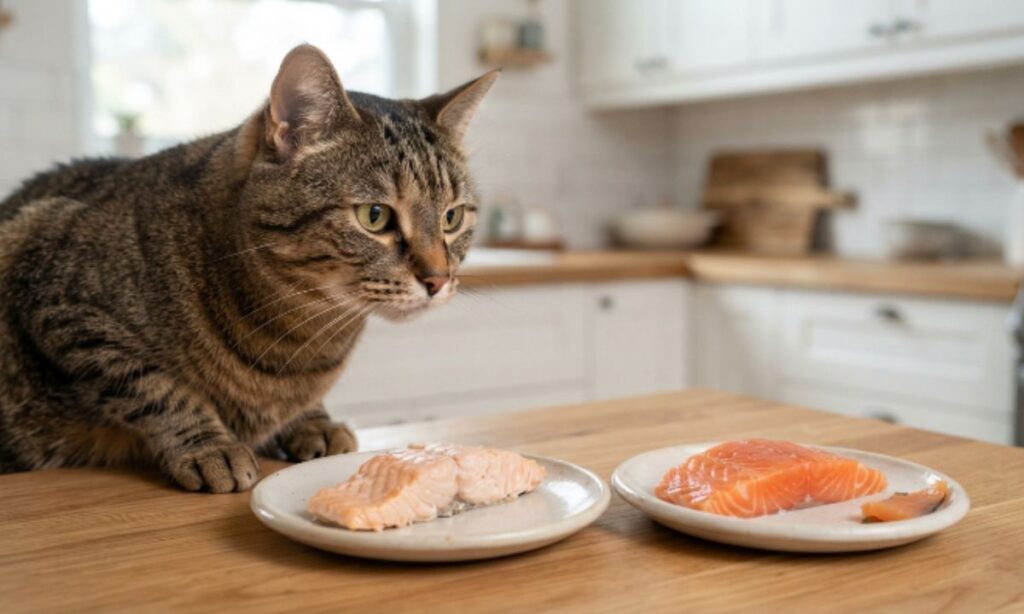
Can Cats Eat Salmon? What’s Safe and What’s Dangerous
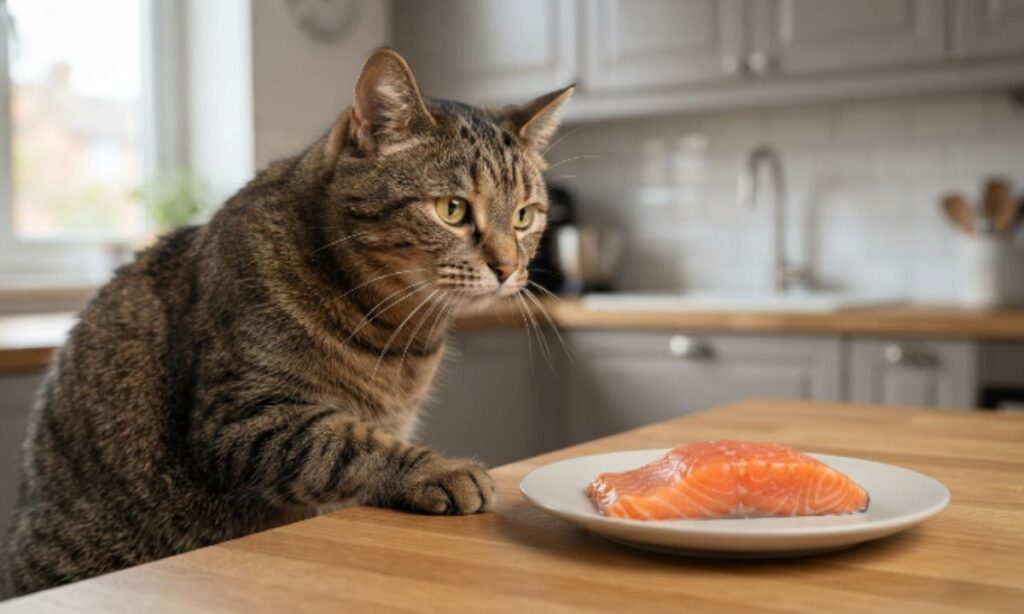
Your cat just stared at a piece of salmon off your plate like it owed her something. That fishy smell is like catnip to a carnivore. But not all salmon is good for her bowl, and raw salmon can turn a treat into a trip to the vet. What really matters before you share a bite?
Yes, cats can eat salmon, but the form is more important than the fish itself. Cooked plain boneless salmon is usually fine as a treat occasionally. Raw, smoked, and canned salmon are another matter, and each has its own problems.
Salmon is not a complete meal for a cat. Consider it a topping, not a main course. Your cat’s main diet should still be a complete and balanced cat food, with salmon being just a small part of her total calories.
Why Cats Love Salmon So Much
Cats are obligate carnivores, which means their bodies are built to run on animal protein. Salmon checks every box that instinct is looking for.
Strong, oily smell that a cat’s nose picks up instantly
High protein content that matches a carnivore’s natural diet
Soft, rich texture that’s easy to eat
None of that makes salmon nutritionally necessary. It just makes it appealing, which is exactly why owners need to control portions instead of letting the cat decide.
The Benefits of Cooked Salmon for Cats
When it’s prepared correctly, salmon does offer some real nutritional upside.
Skin and Coat Support
Omega-3 fatty acids in salmon can help reduce dryness and flaking, leaving a cat’s coat looking smoother and shinier over time.
Joint Comfort
The anti-inflammatory properties of omega-3s may ease stiffness in older cats, particularly those dealing with early arthritis.
Heart and Nervous System Support
Fatty acids in salmon contribute to healthy heart function and support nervous system health, alongside B-vitamins that aid metabolism and energy.
High-Quality Protein
Salmon delivers lean, digestible protein that supports muscle maintenance, especially useful as a supplement rather than a replacement for core meals.
Why Raw Salmon Is Dangerous for Cats
This is the part most cat owners underestimate. Raw salmon isn’t just “less ideal” than cooked. It carries real, documented risks.
Bacterial and Parasitic Contamination
Raw salmon can carry bacteria like Salmonella and Listeria, along with parasites that cause gastrointestinal illness. Cooking kills both. Raw doesn’t.
Thiaminase and Thiamine Deficiency
Raw fish contains an enzyme called thiaminase, which breaks down thiamine, also known as vitamin B1. Thiamine is essential for a cat’s nervous system. Regular raw fish consumption can deplete it over time.
Thiamine deficiency doesn’t show up right away. It builds gradually, and by the time symptoms appear, they can be serious.
Choking and Internal Injury from Bones
Raw salmon often still contains small, thin bones that are easy to miss. These bones can lodge in the throat or cause internal injury if swallowed.
Signs of Thiamine Deficiency in Cats
Watch for these symptoms if your cat eats raw fish regularly or even after a single large exposure:
Loss of appetite
Weakness or wobbliness
Difficulty walking or abnormal gait
Disorientation
Seizures in advanced cases
These signs point to nervous system involvement, which is why thiamine deficiency should never be treated as minor.
What Happens If Your Cat Eats Raw Salmon Once
A single small bite of raw salmon, like the piece that lands on the floor during sushi night, usually isn’t a medical emergency for a healthy adult cat. But it still deserves attention.
Immediate Steps
Don’t panic, but don’t ignore it either.
Check that no bones are visible in your cat’s mouth.
Watch your cat closely for the next 24 to 48 hours.
What to Watch For
Vomiting
Diarrhea
Lethargy or hiding more than usual
Refusing food
If any of these show up, or your cat seems off in a way you can’t explain, call your veterinarian. Don’t wait it out if symptoms get worse.
Why Regular Raw Salmon Feeding Is a Bigger Risk
A one-time accident is very different from a habit. Feeding raw salmon repeatedly compounds every risk on this list.
Risk Factor
One-Time Exposure
Regular Feeding
Bacterial infection
Low likelihood in healthy adults
Higher cumulative exposure
Thiamine deficiency
Unlikely from a single bite
Real risk with ongoing feeding
Parasite exposure
Possible but often minor
Repeated exposure raises odds
Nutritional imbalance
Not applicable
Salmon displacing balanced nutrition
If you’re tempted to feed raw fish as a regular treat because it seems “natural,” this is exactly where that instinct backfires.
How to Prepare Salmon Safely for Your Cat
If you want to share salmon the right way, preparation is everything.
Step-by-Step Prep
Choose a fresh, plain salmon fillet with no seasoning.
Remove the skin, or leave a small amount if it’s fully cooked and unseasoned.
Cook it thoroughly by baking, grilling, or poaching. No oil, butter, garlic, or salt.
Let it cool, then check carefully for bones using your fingers.
Break it into small, bite-sized pieces before serving.
What to Avoid
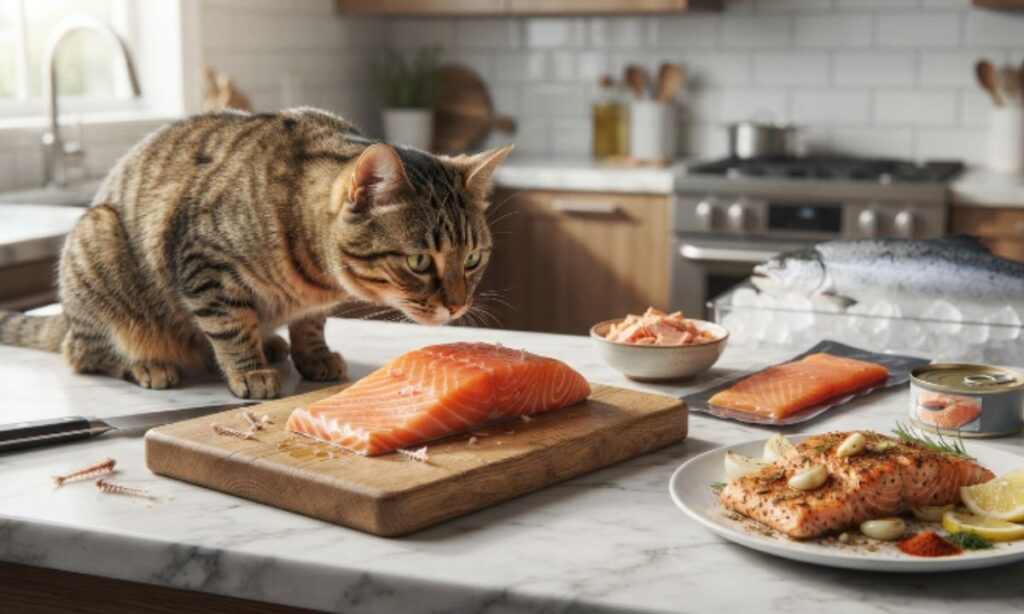
Raw salmon, sushi-grade included
Smoked salmon, due to extremely high sodium
Canned salmon meant for human consumption, which often contains added salt or oils
Any salmon prepared with seasoning, garlic, onion, or sauces
How Much Salmon Is Too Much
Portion control matters just as much as preparation. A good general guideline is the 10% rule: treats, including salmon, shouldn’t make up more than 10% of your cat’s daily calories.
A few small bites, once or twice a week, is a reasonable treat frequency for most healthy adult cats.
Kittens, senior cats, and cats with health conditions need smaller amounts, if any, and a vet’s input first.
Salmon should never replace a full meal of complete cat food.
Cats with kidney disease, pancreatitis, or a history of digestive issues may need to avoid salmon entirely. When in doubt, ask your vet before adding it to the routine.
Other Salmon-Related Risks Worth Knowing
Beyond raw fish specifically, a few other issues come up with salmon and cats.
Sodium Overload from Canned or Smoked Salmon
High sodium levels can cause vomiting, diarrhea, excessive thirst, and lethargy. In severe cases, sodium poisoning becomes a genuine emergency requiring immediate veterinary care.
Allergic Reactions
Fish allergies are uncommon but possible. Watch for itching, skin irritation, or stomach upset after introducing salmon.
Mercury Exposure
Salmon generally contains less mercury than tuna, but it’s not zero. Frequent, large servings over time could still add up, which is another reason salmon should stay an occasional extra rather than a daily habit.
Common Myths About Raw Salmon and Cats
Raw feeding has a loyal following, and some of the claims around it sound convincing. A few of them fall apart under closer scrutiny.
“Wild Cats Eat Raw Fish, So It Must Be Natural”
Wild cats also carry parasites, live shorter lives, and don’t have the luxury of a vet visit when something goes wrong. “Natural” doesn’t mean risk-free, and domestic cats don’t need to replicate every part of a wild diet to stay healthy.
“Freezing Kills All the Risk”
Freezing can reduce certain parasite risks, which is why sushi-grade fish is often frozen first. It does nothing for bacteria like Salmonella, and it doesn’t neutralize thiaminase. Freezing lowers one risk while leaving the others fully intact.
“My Cat Has Eaten Raw Fish Before With No Problem”
A cat not showing symptoms after one exposure doesn’t mean the food was safe. Thiamine deficiency in particular builds up slowly. The absence of an immediate reaction isn’t the same as long-term safety.
“Raw Diets Are Always Healthier”
Some commercial raw diets are formulated with the right balance of nutrients and safety testing. Raw salmon straight from your kitchen, with no formulation behind it, is a completely different situation.
Salmon Compared to Other Fish Cats Commonly Eat
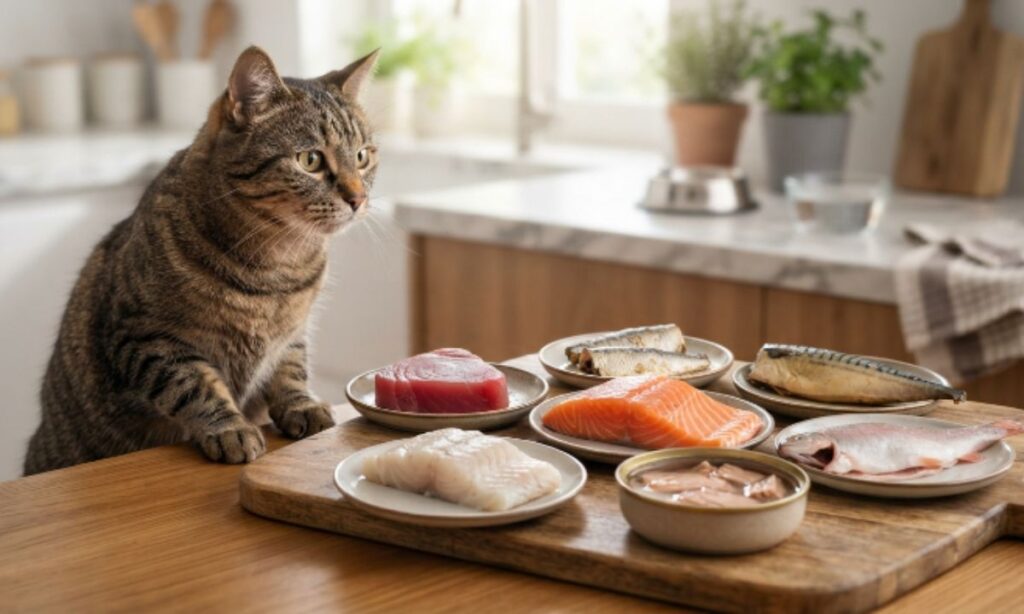
Salmon isn’t the only fish that ends up on a cat’s radar. Here’s how it stacks up against two other common ones.
Fish
Main Benefit
Main Risk
Salmon
High omega-3 content, good for skin and coat
Thiaminase and bacteria if raw
Tuna
Cats find it highly palatable
Higher mercury risk with frequent feeding
Sardines
Small size, lower mercury
Still needs to be plain and boneless
Salmon tends to be a reasonable middle ground: flavorful enough that cats love it, with a manageable risk profile as long as it’s cooked and given in moderation.
Salmon-Based Cat Food vs. Feeding Salmon at Home
There’s a meaningful difference between a cat food that lists salmon as an ingredient and handing your cat a piece of salmon off your plate.
Commercial Salmon Cat Food
Formulated to meet complete and balanced nutrition standards. Includes the taurine, calcium, and other nutrients that salmon alone doesn’t provide. Cooked and processed for safety during manufacturing.
Homemade Salmon Treats
Depends entirely on how it’s prepared. Offers no guarantee of balanced nutrition on its own. Carries all the risks discussed above if served raw or improperly cooked.
If your cat loves the taste of salmon, a high-quality salmon-based cat food or treat is often the safer, more consistent way to satisfy that craving compared to frequent homemade servings.
Reading Labels: What to Look for in Salmon Cat Food or Treats
Not all salmon products are created equal. A few label details are worth checking before you buy.
Salmon or salmon meal listed as one of the first ingredients, not buried near the bottom
A statement confirming the food is “complete and balanced” for your cat’s life stage
No unnecessary fillers, artificial colors, or excess sodium
Clear age guidance, since kitten, adult, and senior formulas aren’t interchangeable
Skipping this check is how owners end up with a product that’s mostly filler with a salmon flavor added on top, rather than something genuinely built around the fish.
When to Skip Salmon Entirely
Some cats are better off avoiding salmon altogether, even the cooked, well-prepared kind.
Cats with a history of pancreatitis, since fatty foods can trigger flare-ups
Cats with diagnosed food allergies to fish
Cats on a prescription or therapeutic diet where outside treats aren’t recommended
If your cat falls into any of these groups, talk to your vet before adding any new treat, salmon included.
How to Introduce Salmon for the First Time
New foods deserve a slow start, even ones that seem harmless.
First Try
Offer a tiny piece, no bigger than a pea, of fully cooked, plain salmon. Wait 24 hours before offering more.
Watch the Response
Check for scratching, redness around the mouth or ears, vomiting, or loose stool. A calm, normal cat with no digestive changes is a good sign.
Build Up Slowly
If the first try goes well, you can offer small amounts as an occasional treat going forward, always sticking to the 10% calorie guideline.
Rushing this step is where a lot of avoidable stomach upset comes from, especially in cats that haven’t had much variety in their diet before.
Cooking Methods That Keep Salmon Safe
How you cook salmon changes both safety and how much your cat will actually enjoy it.
Method
Notes
Baking
Even cooking, easy to keep plain, minimal added fat
Grilling
Good flavor, just skip any marinade or seasoning
Poaching
Gentle method, keeps the fish moist without oil
Pan-searing
Fine without butter or oil, watch for overcooking
Frying
Best avoided due to added oil and potential seasoning
Whichever method you choose, the goal is the same: fully cooked through, no seasoning, no oil, and no bones left behind.
Frequently Asked Questions
Can kittens eat salmon?
Small amounts of fully cooked, plain, deboned salmon are usually fine, but kitten food should remain their main source of nutrition.
Is canned salmon safe for cats?
Human canned salmon is not recommended because of its high sodium content and possible added oils or seasoning.
Can cats eat salmon skin?
Cooked, unseasoned salmon skin in small amounts is generally safe, but raw skin carries the same risks as raw salmon.
What should I do if my cat eats raw salmon?
Check for bones, monitor for vomiting or lethargy over the next 24 to 48 hours, and call your vet if symptoms appear or worsen.
How often can cats have salmon as a treat?
A few small servings per week is a reasonable upper limit for most healthy adult cats, following the 10% treat rule.
Final Thoughts
Yes, salmon can be included in your cat’s treat rotation as long as it’s cooked, plain, and boneless. The real risk lies with raw salmon, from depletion of thiamine to bacterial contamination, so it’s worth skipping altogether rather than hoping for the best.
Portion sizes should be small, preparation should be simple, and you should rely on your vet whenever your cat’s diet, age, or health background creates any uncertainty in the equation.
I’m a passionate pet writer who loves sharing practical tips, trusted advice, and heartwarming stories about cats, dogs, and other beloved companions. Through PetCaffine.com, I help pet lovers better understand their furry friends with easy-to-read articles on pet care, nutrition, behavior, health, and everyday life.