Winter Safety Tips for Indoor Cats: A Complete Care Guide
Cold air can penetrate deep into the home, and your cat can sense the drop in temperature from the comfort of your living room. Making just a few changes can make all the difference in terms of ensuring that your cats remain comfortable throughout the chilly season. Here are a few tips for keeping your feline friend warm during the winter.
While many people would think that an indoor cat is completely protected from the cold winter air, this is not the case. Heat can escape homes in a number of ways, including through the floors and windows, and cats can sense these drops in temperature.
The cold climate can also impact the cat’s eating and drinking patterns as well as their energy levels, even if they do not go outside. This article focuses on ways to prevent these issues from occurring rather than how to treat them when they do.
Keep Indoor Temperatures Stable
Cats appreciate the stability of a regular environment. Sudden temperature changes from one room to another can make cats quite uncomfortable, particularly during the cold night hours
Tried and tested methods of keeping your cats comfortable throughout the year include:
Keeping an Eye on the Temperature
It is a good idea to try and maintain a constant temperature, particularly in the rooms that your cats frequent most. Avoid having one area substantially colder than the rest.
Looking Out for Drafts
Some of the most common draft locations include the bottom of outside doors, around old windows, and vents. Cats are intelligent creatures and will typically avoid cold drafts; however, senior citizens and animals with medical conditions might not be as agile. Look out for possible draft locations on floor level near entrances and exits and block them.
The Special Needs of Senior Citizens
As pets grow older, they begin to experience a decline in their body temperature regulation abilities. If you have a senior citizen cat, it is a good idea to monitor the areas they like to sleep in throughout the day and make sure that they are not too cold, not only at night.
Avoid Direct Heat Sources
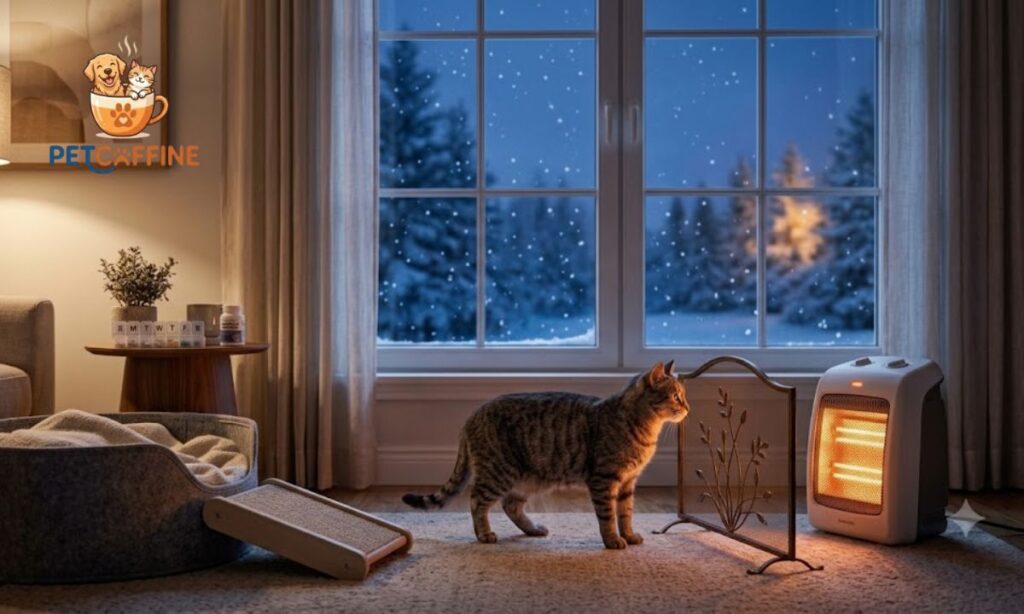
It’s tempting to let your cat curl up right next to a heater. Don’t.
Direct heat sources come with real risks:
Space heaters can burn fur or skin if a cat sits too close for too long.
Fireplaces carry burn risk and can dry out the air quickly.
Radiators get hotter than they look and stay hot long after use.
Electric blankets pose overheating and chewing hazards, especially with cords.
Instead of direct heat, give your cat safer ways to warm up. A cat-safe heating pad designed for pets, used with supervision, is a better option than open heat sources. Always keep an eye on how close your cat gets to anything that generates heat.
Create Warm Sleeping Spots
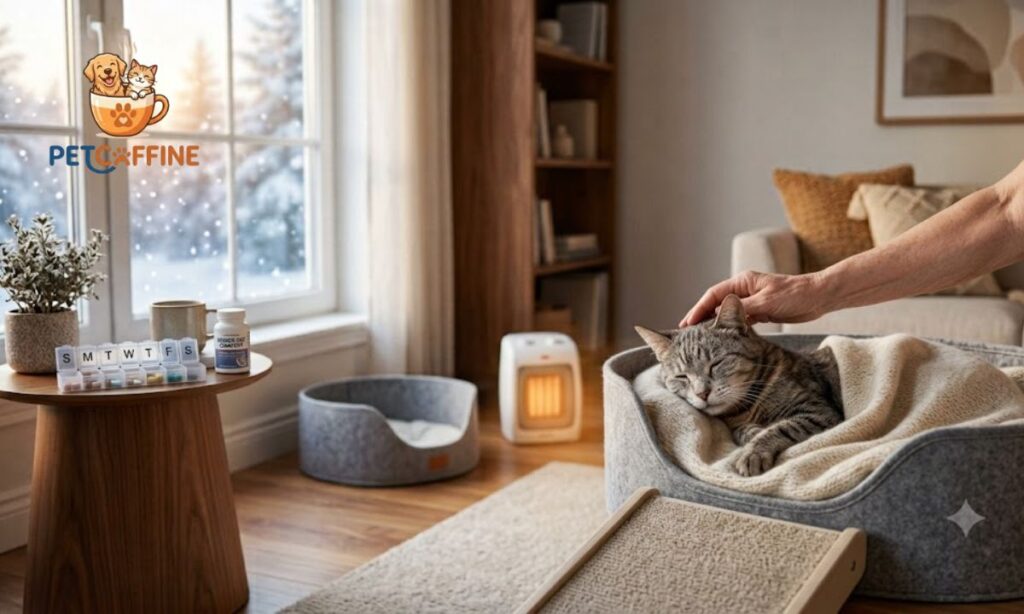
A warm, safe place to sleep matters more in winter than any other season. Cats naturally seek out warmth, so give them good options before they find bad ones.
Here’s what a solid winter sleeping spot includes:
Feature
Why It Helps
Raised bed or blanket
Keeps cat off cold floors
Sunlit spot during the day
Natural, safe warmth
Draft-free corner
Avoids cold air exposure
Away from doors and windows
Reduces temperature swings
Soft, washable bedding
Comfort and easy cleaning
Place at least one bed away from cold floors and entryways. Sunny windowsills work well during the day, but make sure that same spot doesn’t turn into a cold zone at night.
Watch Hydration and Food
Cats tend to drink less water during the winter. Lack of activity and cooler temperatures may dampen their thirst, despite the fact that they still need to maintain proper levels of hydration.
Make sure there is always fresh water available to them, and try to place multiple bowls in different areas of the house. Some cats are more inclined to drink from running water, so consider purchasing a pet water fountain for your feline companion.
Make Adjustments for Lower Levels of Activity
If a cat is less active during the winter, their feeding schedule should be adjusted accordingly. Keep track of how much food they eat, and take note if there are any drastic changes. This is not meant to substitute for professional diagnosis, just to keep a closer eye on the matter.
Provide Winter Enrichment
Cold weather often means less activity, and less activity can lead to boredom. Boredom shows up as restlessness, overgrooming, or extra sleeping.
Keep your cat engaged with simple, low-effort tools:
Puzzle feeders for mealtime engagement
Short, daily play sessions with wand toys
Window perches for outdoor viewing
Rotating toys to keep interest fresh
Ten to fifteen minutes of play a day goes a long way. It keeps muscles active and gives your cat a mental break from an otherwise quiet winter routine.
Adjust Care for Senior Cats
Older cats, cats with mobility issues, or cats with existing health conditions need closer winter monitoring. Cold weather can make joint stiffness more noticeable and lower overall activity even further.
Watch for these changes:
Reduced movement or reluctance to jump
Sleeping in unusual spots
Changes in appetite or water intake
Increased vocalization or restlessness
None of these signs are cause for panic on their own. But tracking changes over time helps you notice patterns early, rather than waiting until something becomes obvious.
Winter Hazards to Avoid
Indoor cats may be safe from a number of outdoor threats, but there are some dangers that can occur in the home during the winter.
Antifreeze
-Antifreeze is very sweet-tasting and attractive to animals and is also very toxic. Keep this chemical securely stored away, and be sure to clean up any spills in your garage or wherever you store it, even if your cat doesn’t usually go there.
Cold Drafts and Frozen Bowls
-Be sure that your cat’s water is not sitting in a draft where the temperature is suddenly going to drop. Water can get colder than you think, and your cat may refuse to drink it. Also, cold weather can cause cats to seek out warmer places to sleep more often, so be sure that the place your cat sleeps is not subject to cold drafts.
Unsafe Outdoor Exposure
-Some cats that should be indoor cats will sometimes escape during the winter, either by sneaking out an open door or window or by running out after being let outside. Either way, cold weather can be incredibly deadly to a cat, so be sure that your cat cannot escape your home, and if it does, you can safely return it.
Indoor Cat Winter Checklist
Use this quick list to confirm your home is ready for the season:
Warm, draft-free bed
Fresh water in multiple spots
Clean litter tray in a warm location
Daily enrichment or play session
No direct access to heaters or fireplaces
Antifreeze and chemicals stored safely
Behavior and appetite checked regularly
Secure doors and windows
Run through this list once at the start of the season, then again anytime the weather shifts.
Frequently Asked Questions
Do indoor cats get cold in winter?
Yes, indoor temperature drops and drafts can still leave cats feeling cold.
Should I use a heating pad for my cat?
Only a pet-safe heating pad with supervision, never a human electric blanket.
How can I tell if my cat is too cold?
Look for shivering, tucked-in posture, or seeking out warm spots more than usual.
Are older cats more sensitive to winter weather?
Yes, senior cats regulate temperature less efficiently and need extra warmth.
How do I keep my cat active indoors in winter?
Use daily play sessions, puzzle feeders, and window perches to prevent boredom.
Conclusion
Provide cats with a stable source of heat, a warm and cozy place to rest, enough water, and special attention if they are elderly or less active. Taking these simple steps will help you avoid the most unpleasant winter experiences for your feline friend.
Remember to examine all the points mentioned above and pay attention to your cat’s behavior, and you will provide excellent winter conditions for your indoor cat.
I’m a passionate pet writer who loves sharing practical tips, trusted advice, and heartwarming stories about cats, dogs, and other beloved companions. Through PetCaffine.com, I help pet lovers better understand their furry friends with easy-to-read articles on pet care, nutrition, behavior, health, and everyday life.